Photo: Afonso Farias/Shutterstock

Matador Network Readers' Choice Awards 2025: Adventure Destination

Argentina
by Matador Creators Dec 5, 2025


Explore all of Matador Network’s
2025 award winners

Patagonia needs no introduction. Argentina’s side of the southernmost region of South America, east of the Andes Mountains, is remote in every sense, and draws people with its mountains, high-elevation steppes, glaciers, lakes, and Atlantic coast.

In Argentina, Patagonia stretches from the lake district around Bariloche to the glacier fields near El Calafate and the Atlantic coastline of Chubut and Santa Cruz. It’s a place where you can string together multi-day treks, ice hikes, whale watching, and long-distance road trips on the same itinerary and just barely skim the surface.
Trekking under mountain peaks

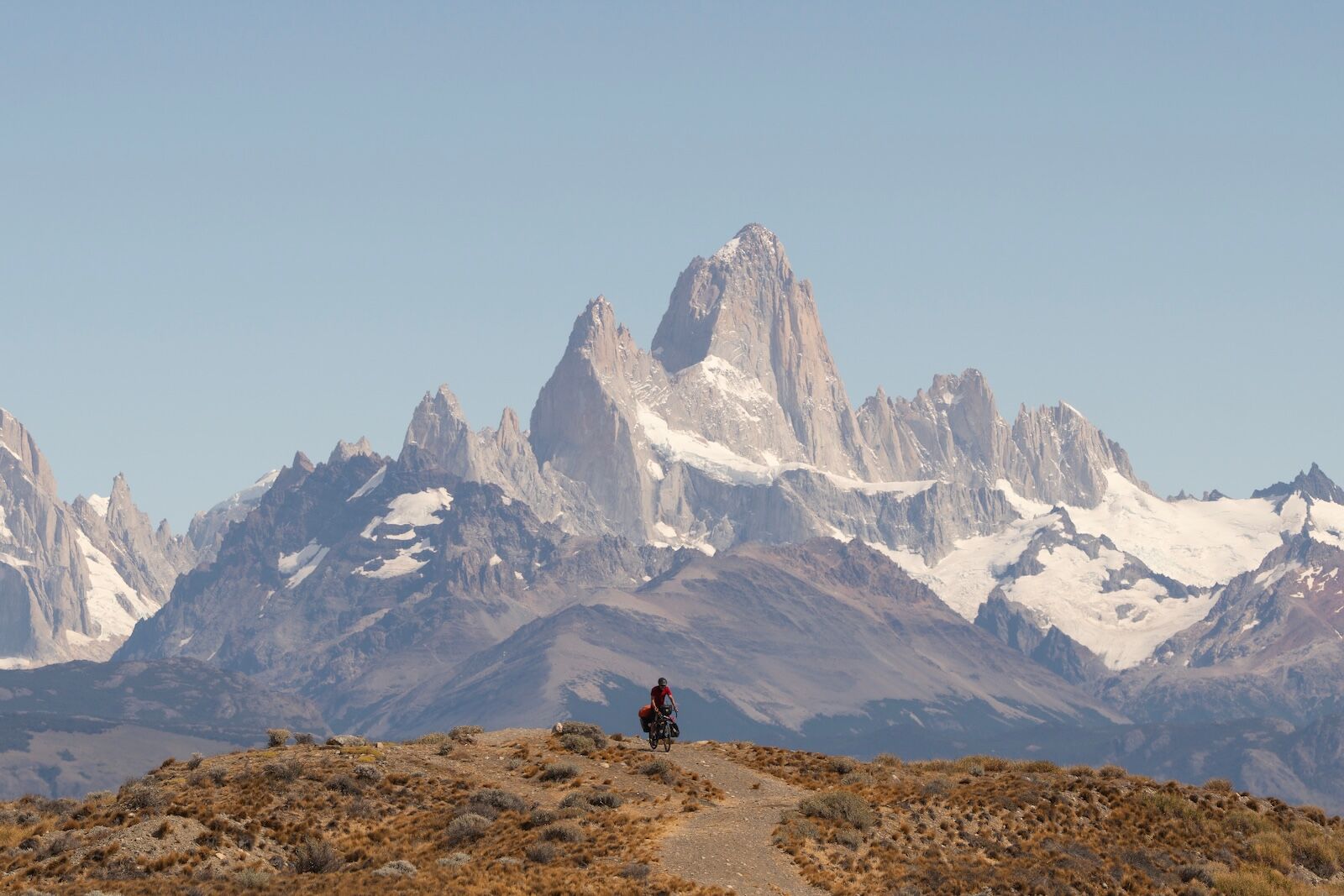
Cyclist bikepacking in front of massive Mount Fitz Roy, Patagonia, Argentina

Photo: ryanmorrisphotography/Shutterstock

Much of Patagonia’s adventure mythology centers on one small town: El Chaltén, founded in the 1980s and now recognized as Argentina’s national trekking capital. It sits at the northern end of Los Glaciares National Park, facing the saw-toothed skyline of Mount Fitz Roy. It has become the go-to base camp for walkers, trail runners, and climbers from around the world.

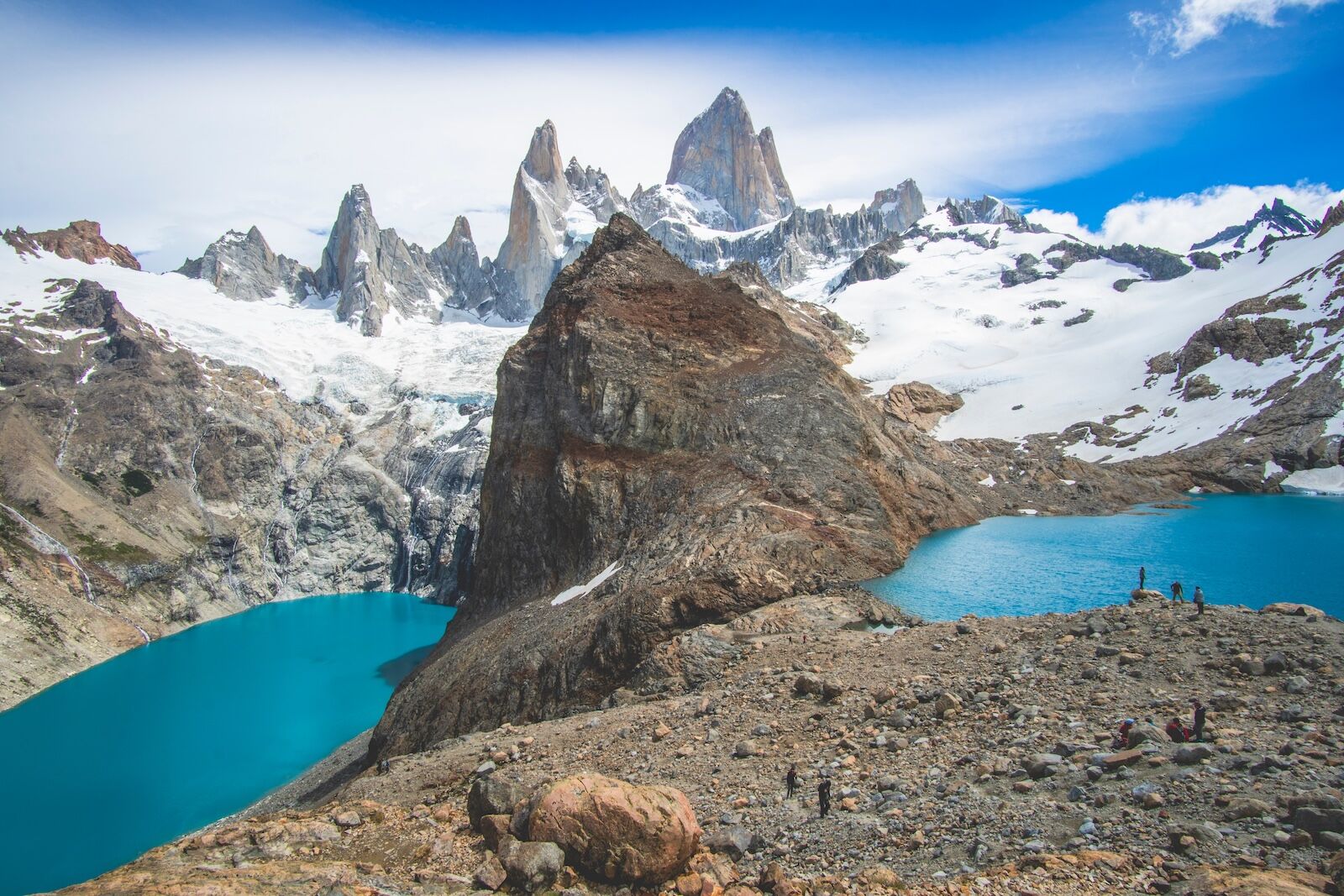
From here, some of the region’s most famous hikes start at the edge of town. The trail to Laguna de los Tres — the classic Fitz Roy viewpoint — is about a 15-mile round-trip journey with nearly 2,000 feet of elevation gain. On good days, the reward is the full granite face of Fitz Roy mirrored in a milky-blue glacial lake.

That’s just the headline trail. Networks of paths fan out toward Laguna Capri, the Torre Valley, and lesser-known lookouts that can be stacked into multi-day hikes, often using free or low-cost campgrounds like Poincenot and De Agostini.

Walking on ice at Perito Moreno Glacier and seeing the coast

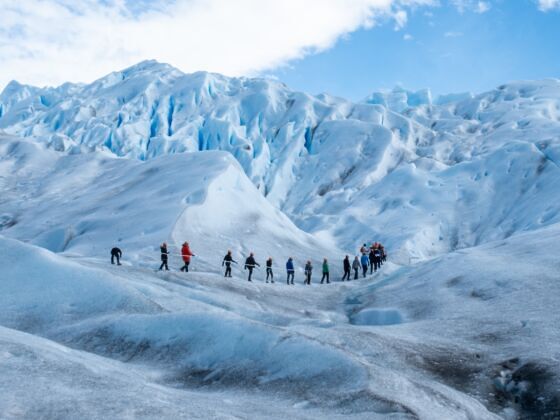
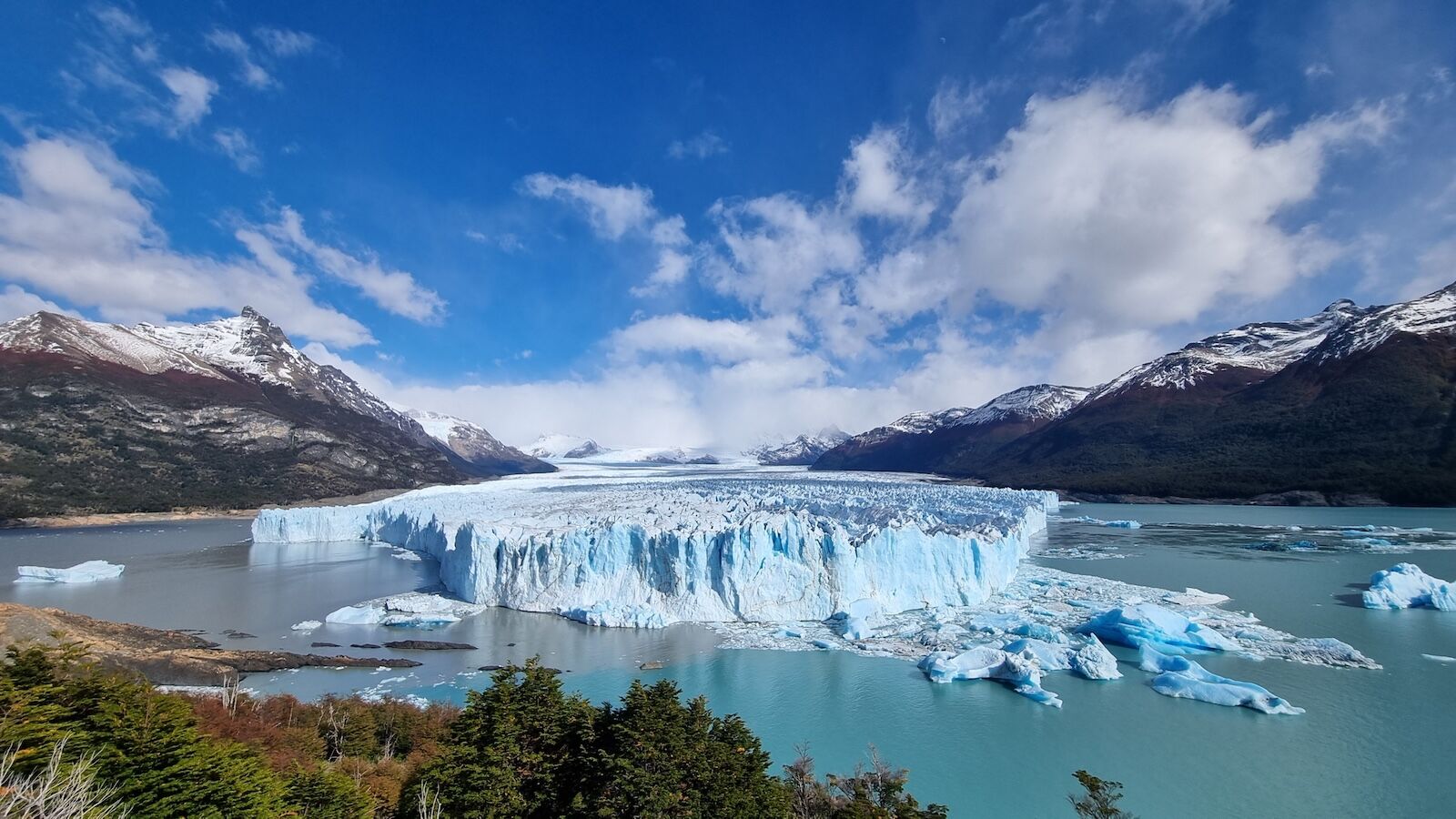
Perito Moreno Glacier, Patagonia, Argentina

Photo: Ororu/Shutterstock

On the southern arm of Los Glaciares National Park near the town of El Calafate, the Perito Moreno Glacier is one of the most famous in the world. Not long ago it was thought to be a rare exception to the extreme glacial melt that’s happening around the world. Unfortunately, this UNESCO World Heritage Site was found to be shrinking at an alarming rate — a major tourist destination that is shrinking and will look drastically different in the future.

While it lasts, adventure travelers can go on partial-day or full-day ice hikes. Outings typically combine a boat crossing, a walk through native forest, and several hours on the glacier itself, weaving between crevasses, meltwater pools, and blue ice ridges in crampons under the supervision of certified guides. It’s one of the most accessible glacier hikes you can take, both because of El Calafate’s connection to Buenos Aires by plane and the lack of technical knowledge needed to hike.

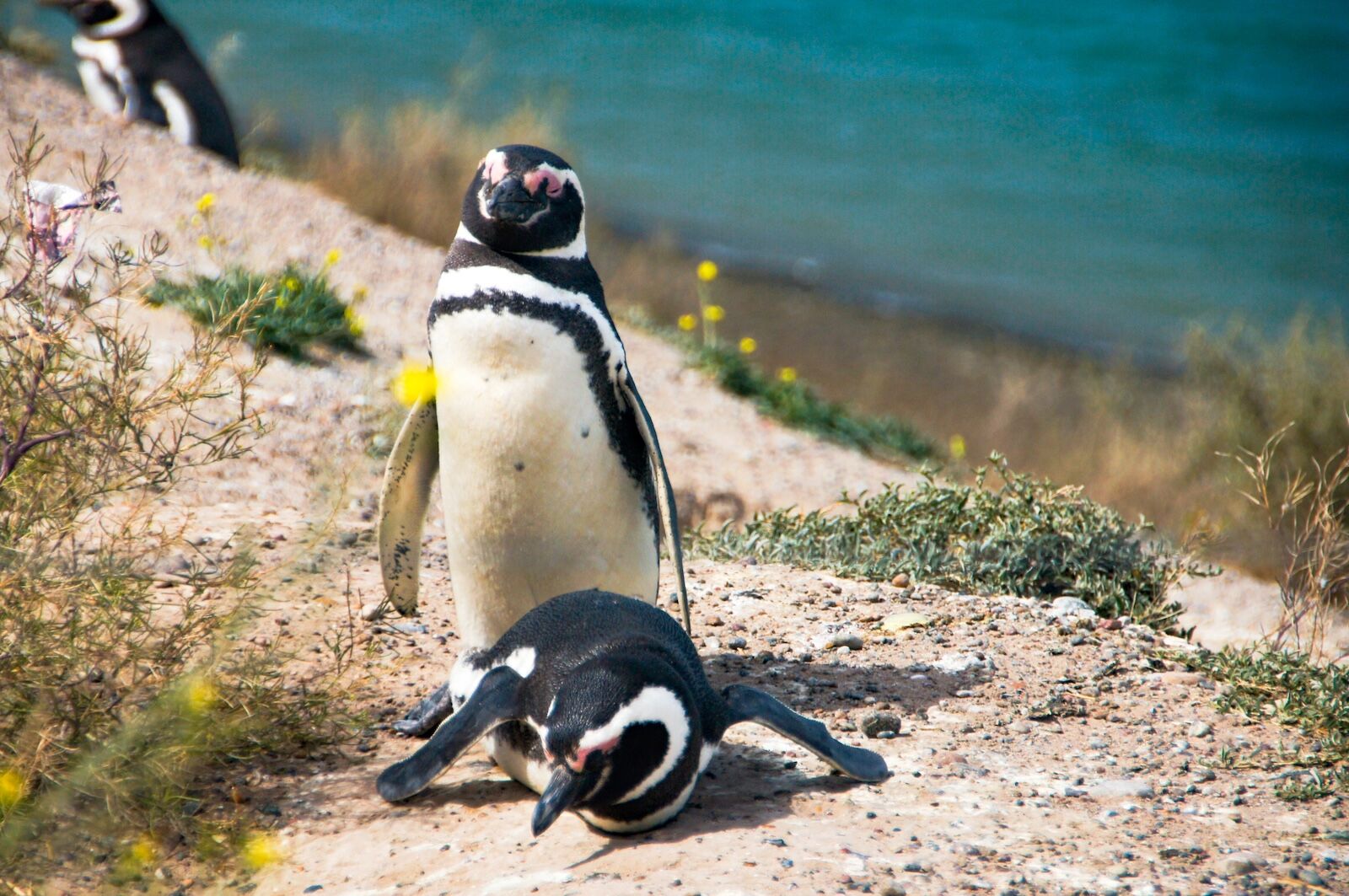
Ask 10 travelers to define Patagonia and you’ll hear 10 different answers: the peaks, the ice, the infamous wind. On the Atlantic side, Patagonia is as much about wildlife-rich coasts as the other side is about mountains and glaciers. In 2025, the province of Chubut created the Patagonia Azul Provincial Park, protecting more than 295,000 hectares of marine and coastal environments around the town of Camarones. The reserve shelters humpback whales, Magellanic penguins, sea lions, and dozens of seabird species, and explicitly leans on low-impact tourism as a tool for conservation and local economic development. No wonder it’s often referred to as the “Galapagos of the Atlantic.”

the Magellanic penguin in the Valdes Peninsula, argentine Patagonia.

Photo: marco antonio carrilho/Shutterstock

For adventure travelers, that opens the door to sea kayaking around volcanic headlands, birding on remote islands, and road trips that hop between little fishing towns and newly marked viewpoints.

Even in the better-known inland areas, the adventure is often in the in-between — long drives on Route 40 (the longest road in Argentina and one of the longest in the world), the possibility of guanacos or rheas trotting alongside the road, watching a storm roll over the steppe from what feels like the edge of the world.

How to make Argentina’s Patagonia your next adventure trip

Magnificent landscape of Laguna de los Tres and Laguna Sucia at the foot of the imposing Fitz Roy. A landscape you can enjoy after a few hours of hiking on green trails.

Photo: Desandando Caminos/Shutterstock

Most trips to Argentine Patagonia start with a flight from Buenos Aires to one of a few key hubs:

  • El Calafate, for Perito Moreno Glacier and access to El Chaltén
  • Bariloche for lake-country hiking, mountain biking, and hut-to-hut trekking
  • Ushuaia, at the far tip of Tierra del Fuego, for penguin colonies, fjord cruises, and launch points to Antarctica

Regardless of where you direct yourself, don’t try to take in too much at once. Patagonia is vast, and it’s best appreciated spending more than a few days in one area.

Seasonality is everything here. The main trekking season in Los Glaciares runs roughly in the Southern Hemisphere’s summer from November through March, when longer daylight hours and (relatively) milder temperatures make high trails accessible, though strong winds and rapid weather shifts are part of the deal year-round. Shoulder months on either end of summer can mean quieter trails and cheaper lodging, but also a higher chance of storms or lingering snowpack on passes.

This is a region for long-distance hikers who want multi-day camping routes, first-time trekkers who want to see something magical, anyone who wants to walk on a glacier, and wildlife lovers who want to see pristine wilderness.

Readers’ Choice Awards methodology

For the 2025 Matador Network Readers’ Choice Awards, we asked our global audience of 300,000-plus email subscribers to vote for the places and experiences that define travel for them. The survey covered six categories: Next Big Destination, Best Adventure Destination, Best Sustainable Destination, Best Wellness Destination, Best Wildlife Destination, and Best Airline. After the voting period closed, our team verified and tallied the results to determine a single Readers’ Choice winner in each category.

Each category included a shortlist of nominees curated by Matador’s editorial team based on reporting, industry trends, and community feedback. Voters could also write in their own picks if a favorite wasn’t listed.

In the Best Adventure Destination category, Patagonia received the highest share of verified votes, earning its place as the Matador Network Readers’ Choice pick for 2025.

Discover Matador

Save Bookmark

We use cookies for analytics tracking and advertising from our partners.

For more information read our privacy policy.