2026 World Cup Guide: Miami
Explore Matador Network’s full
FIFA World Cup 2026 Travel Guide
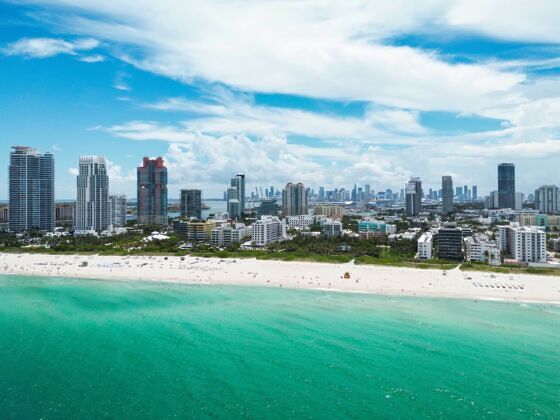
Miami is one of the liveliest, highest-energy cities hosting matches during the 2026 FIFA World Cup, and it’s hard to imagine a better place to watch the world’s biggest tournament. With seven games scheduled at Hard Rock Stadium (including knockout rounds), fans can expect not just world-class soccer but also an electric, city-wide atmosphere that reflects Miami’s global roots and passion for the game. The city’s deep Latin American and Caribbean influences mean fútbol is a part of daily life from an early age, and that culture will likely spill into the streets during the Miami World Cup matches — expect impromptu watch parties, flag-draped celebrations, and nonstop nightlife.
What makes Miami especially appealing for out-of-town visitors is what’s waiting off the pitch: South Beach, art-filled neighborhoods, and fantastic food, from Haitian griot to Cuban lechón. It’s also one of the rare cities where you can catch a World Cup match in the afternoon and be swimming in the ocean or sipping cocktails on a catamaran by sunset. It’s a city Matador is especially enthused about for 2026.
Here’s your guide to all things Miami World Cup.
- About Hard Rock Stadium
- Tickets and matches
- Getting to Miami
- Getting around during the World Cup
- Details on the FIFA Fan Zone
- Hotels, soccer bars, and what else to do
- More about Miami
Venue: Hard Rock Stadium
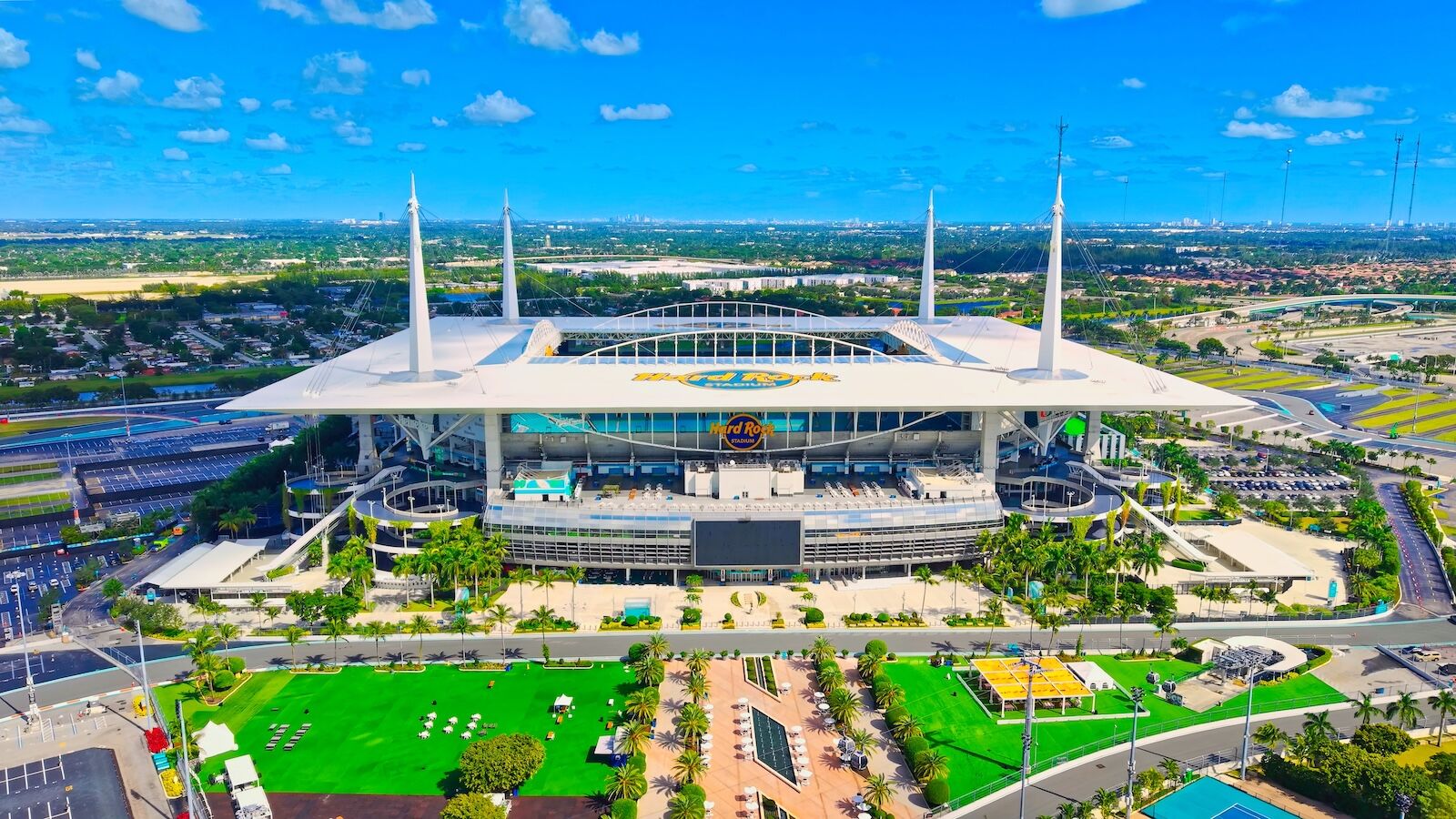
Photo: 4kclips/Shutterstock
Hard Rock Stadium in Miami Gardens is a multi-use venue known primarily as the home of the NFL’sMiami Dolphins and the University of Miami Hurricanes. It’s an older stadium, originally called Joe Robbie Stadium when it opened in 1987. But it’s undergone several major renovations, including the addition of a canopy roof that creates shade on most seats while still leaving the field open.
Beyond football, it regularly hosts the Orange Bowl, college national championships, mega-concerts, and even the Miami Grand Prix Formula 1 race, held on a custom track that wraps around the stadium. It seats about 65,000 people depending on the configuration, and the food scene isn’t too shabby: think Cubanos, Latin street food, and creative takes on the expected stadium classics. The stadium is actually in the city, rather than on the outskirts, making it fairly easy to reach no matter where you stay.
The Miami World Cup Schedule
Miami will host seven FIFA World Cup 2026 matches.
- June 15, 2026: Saudi Arabia vs. Uruguay — Group H, 6 PM ET
- June 21, 2026: Uruguay vs. Cape Verde — Group H, 6 PM ET
- June 24, 2026: Brazil vs. Scotland — Group C, 6 PM ET
- June 27, 2026: Portugal vs. Colombia — Group K, 7 PM ET
- July 3, 2026: Round of 32 — Group J winner vs. Group H winner, 6 PM ET
- July 11, 2026: Quarterfinal — teams TBD, 5 PM ET
- July 18, 2026: Third-place match — teams TBD, 5 PM ET
Tickets are on sale for all World Cup matches, though they’re currently limited to fans who have won various ticket-buying lotteries. Open sales for the general public are expected to start in February or March 2026. FIFA uses dynamic pricing, meaning that prices for tickets change as demand ebbs and flows. Technically, ticket sales for non-supporters club members should start around $150, but resale prices are already much higher, with tickets for the first matches listed around $400 on resale websites.
How to get to Miami
Miami International Airport (MIA) is the primary gateway in the US for much of Latin America and the Caribbean, with extensive nonstop service from cities across Colombia, Brazil, Mexico, Argentina, Peru, and more — so you can expect it to be one of the busier airports in the country when the World Cup rolls around. From MIA, it’s roughly a 15–25 minute drive to downtown or Brickell depending on traffic. However, you can get around easily without renting a car or taking a rideshare: the MIA Mover connects the terminals to the Miami Intermodal Center, where you can hop on Metrorail, Tri-Rail, or Metrobus into downtown and beyond.
For some travelers, especially domestic visitors, arriving to Fort Lauderdale-Hollywood International Airport (FLL) may also be an option. It’s smaller and generally has shorter lines. It’s the airport used by some low-cost carriers like JetBlue, Southwest, and Spirit, and can be a little easier to get in and out of. FLL may be more convenient if you’re staying north of Miami in an area like Fort Lauderdale, Hollywood, or Palm Beach, as you won’t have to drive through Miami’s city traffic.
If you’d rather embrace slow travel, Amtrak’s Silver Meteor line can take you all the way to Miami from New York City, while the Floridian will get you to Miami from as far as Chicago. If you’re already in Florida, Brightline high-speed trains from MiamiCentral make it easy to link Miami with Fort Lauderdale, Boca Raton, and West Palm Beach for broader World Cup travel.
Getting around town during the World Cup
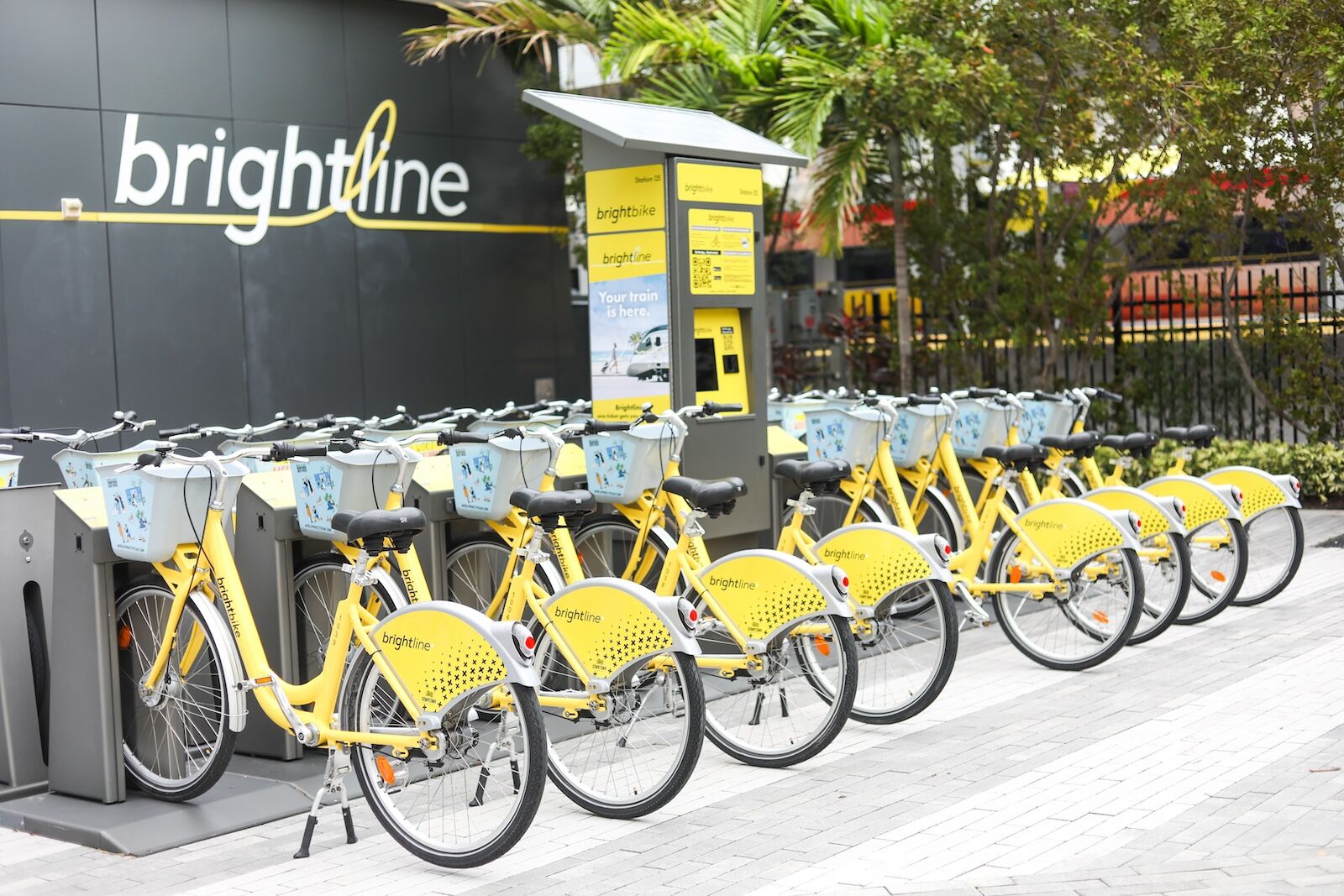
Brightline bikes in Miami. Photo: Brightline
Hard Rock Stadium is in Miami Gardens, about 15 miles north of downtown Miami. Driving is the most direct option. It would normally take only about 20 minutes, but expect delays on match days, especially when it comes to parking. There is ample parking at the stadium, but pre-booking is highly recommended through the Hard Rock Stadium parking portal.
Unfortunately, public transportation to the stadium is limited. You can take the Metrorail to the Golden Glades Interchange or Dr. Martin Luther King Jr. Station, but from there, you’ll need to use a rideshare or taxi to reach the stadium. On select event days, however, shuttle services may be available from major hubs. The Miami World Cup Host Committee also has a helpful transportation page with information on ways to get around in the city, ranging from water taxis to bike rentals. If you’re staying in South Beach, there’s a water taxi that connects between South Beach and Bayside Marketplace. From there, you can use public transportation to reach the stadium, but it’ll take close to two hours.
Some World Cup host cities have introduced special transportation plans during the matches to help fans get around town. While Miami hasn’t yet announced such a plan as of early February 2026, keep an eye on the Host Committee webpage as it gets closer to kickoff to see if that changes.
The Miami World Cup FIFA Fan Zone
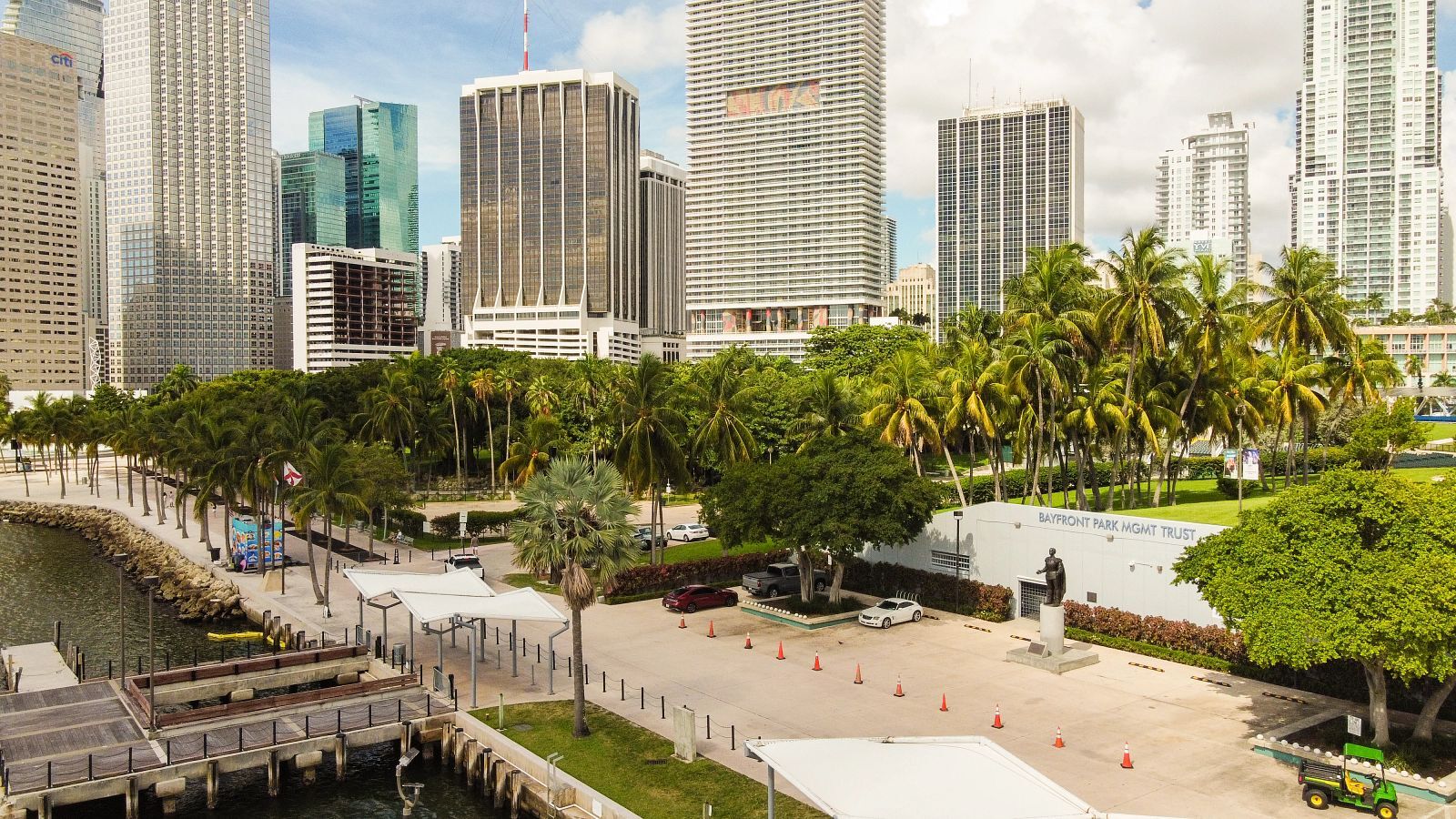
The official FIFA Fan Festival for Miami be at Bayfront Park in downtown Miami. This central waterfront location is a prime spot for live match viewing throughout the tournament, with the event active from June 13 to July 5. Expect not just giant screens for game viewing, but also concerts, food vendors, games, and other entertainment. Official FIFA Fan Festivals are free to attend, whether you have tickets to some matches or didn’t manage to get any. The Fan Festival will run from June 13 to July 5, with the exact schedule of times and entertainment to be posted online closer to kickoff.
Unlike Hard Rock Stadium, Bayfront Park is .
Where to Eat, Play, and Stay in Miami During the World Cup
Where to Eat, Play, and Stay in Miami During the World Cup
You’ll have lots of free time to explore Miami and all it has to offer, from world-class bars and restaurants to colorful neighborhoods.
The Best Hotels Near Hard Rock Stadium
The Best Hotels Near Hard Rock Stadium
These are some of the best hotels near Hard Rock Stadium — perfect for a quick walk, a short drive, or as a base for exploring more of Miami before and after matches.
The 7 Best Soccer Bars in Miami
The 7 Best Soccer Bars in Miami
From fans of UEFA Champions League to Copa América or no matter where your loyalties lie, these are the best soccer bars in Miami for watching the World Cup.
More to do in Miami
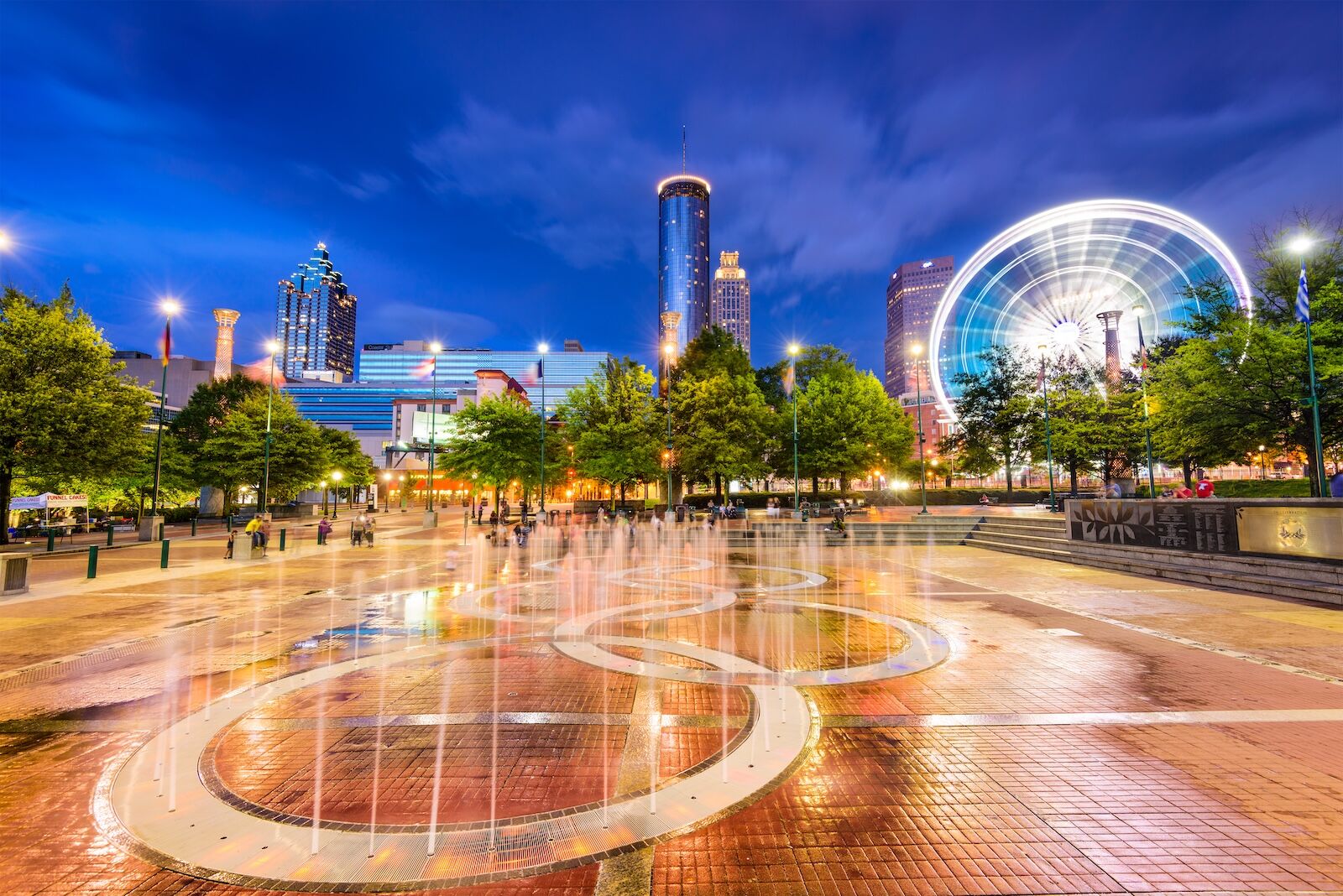
Photo: Sean Pavone/Shutterstock
There’s so much to do in the 305 that there’s no way you could fit it all into one quick trip, especially if you’re spending your days at the Miami World Cup matches. If you don’t manage to snag tickets for all seven games, here’s how to make the most of your time in the fun, colorful city. 
- Biscayne National Park Is the Perfect Day Trip From Miami
- A Seven-Mile-Long Underwater Sculpture Park Is Coming to Miami Beach
- These Airbnbs in Miami Put You Near the City’s Best Beaches and Neighborhoods
- Miami Is a Gateway to Outdoor Adventure on Water, Wheels, or Foot
- The Ultimate LGBTQ Guide to Miami
- Affordable Things to Do in Miami so You Can Splurge on World-Class Food and Hotels
- Miami Is a Rum Lover’s Paradise. This Rum Bar Crawl Features Some of the Best Cocktails in Vice City.
- 8 Stunning Airbnbs in Miami Beach Close to Popular Beachside Amenities.