Photos: Erin Austen Abbott

Birding, Boating, and Bouillabaisse: 3 Days on the Mississippi Coast

Wildlife
by Erin Austen Abbott Jul 7, 2026

I’ve always been drawn to the work of 20th-century artist Walter Anderson, who lived and worked in Ocean Springs, Mississippi, a place where Spanish moss and ferns cover the live oaks lining the downtown area. He painted bunnies, birds, and all the bits of nature that crossed his path. Traveling by rowboat out to Horn Island, one of the barrier islands just off the Mississippi Coast, Anderson would explore, looking for spoonbills, alligators, and any other creature that would give him pause and tap into his sense of wonder.

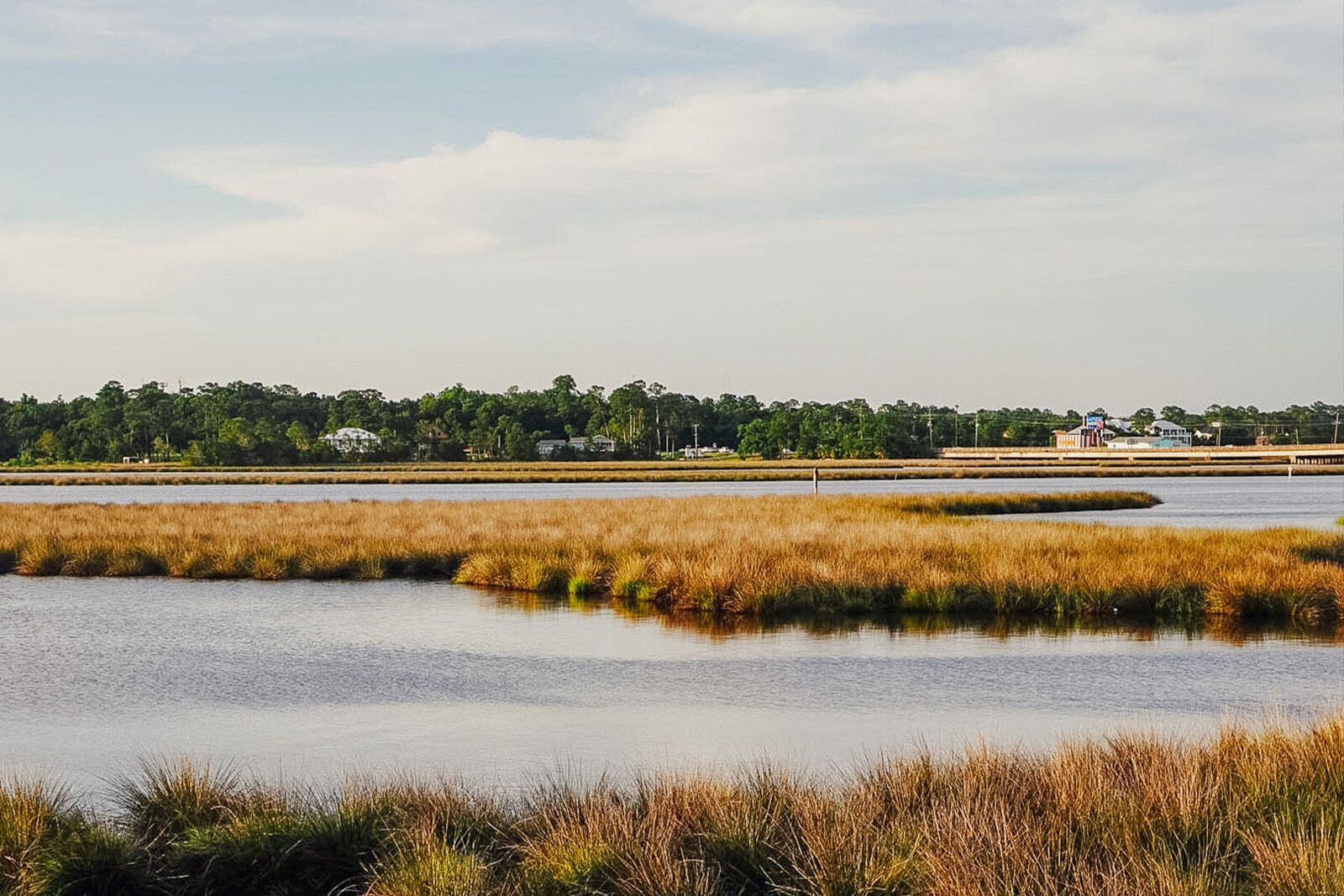
Anderson was an artist, yes, but he was also a conservationist. He brought awareness to the beauty of the region’s creatures and plants. The Mississippi coast he documented is still there if you know where to look: 44 miles of bayou and swamp where you can spot coastal birds like osprey and sandhill cranes, ride along back roads by boat, and walk trails lined with flora ranging from centuries-old live oaks to carnivorous plants and wildflowers.

I went looking for the places that would still inspire Anderson today. You can, too.
Day 1: Ocean Springs, pine savannas, and a bayou full of birds

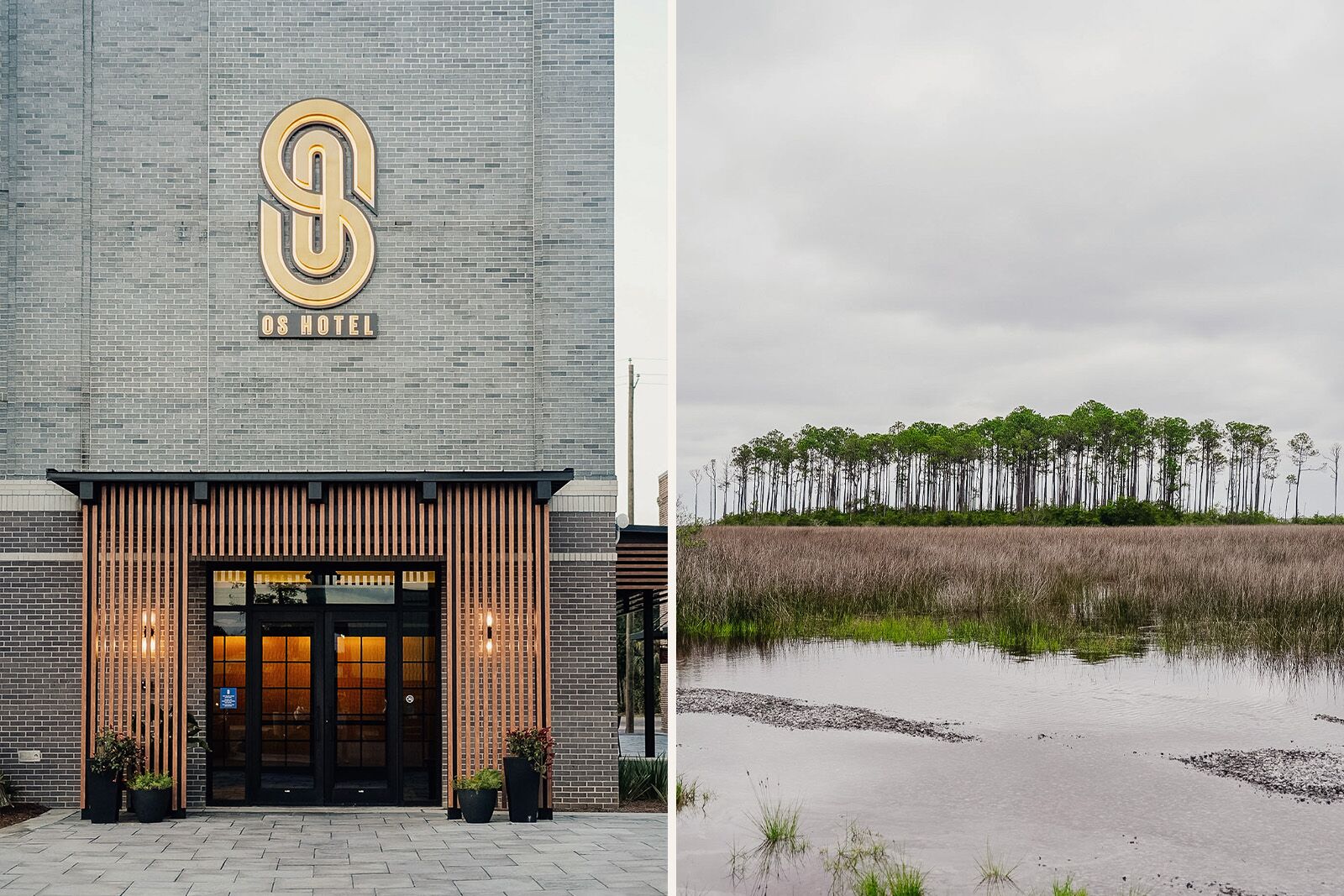
I started my adventure in Ocean Springs. I checked into the OS Hotel, which is within walking distance of the Walter Anderson Museum of Art and the community center whose walls Anderson painted. There’s a cafe at the museum called The Traveler where you can get breakfast. Other worthwhile stops in town include Cat Island Coffeehouse, The Tatonut Donut Shop (specializing in donuts made using potato flour), Crave Food Hall, Pass Books (co-located with Cat Island), and a sweet gift shop called Palmetto.

Mississippi Gulf Coast Travel

Photos: Erin Austen Abbott

From downtown Ocean Springs, I headed to Moss Point a couple of towns over to visit the Grand Bay National Estuarine Research Reserve (NERR). NERR is a working research facility that’s also open to the public. It’s focused on education, with access to open trails through pine savannas and a birding boardwalk where you can look for blue herons, osprey, bald eagles, and other migratory birds that are drawn to the area. Another boardwalk leads to a freshwater marsh, and there’s a boat launch if you’re looking to get out on the water in a kayak or canoe. Stop at the interpretive center for a glimpse into the discoveries NERR is pursuing, such as caterpillar varieties found around the center.

While in Moss Point, I ventured over to the boardwalk nature trail at the Pascagoula River Audubon Center. Surrounded by bayous, the center is a refuge for birds. Standing out on the dock, it feels as if you’re part of their world as they swoop and call to one another. Kayaks are available to rent here, too, if you want to push further into the natural world.

Mississippi Gulf Coast Travel

Photos: Erin Austen Abbott

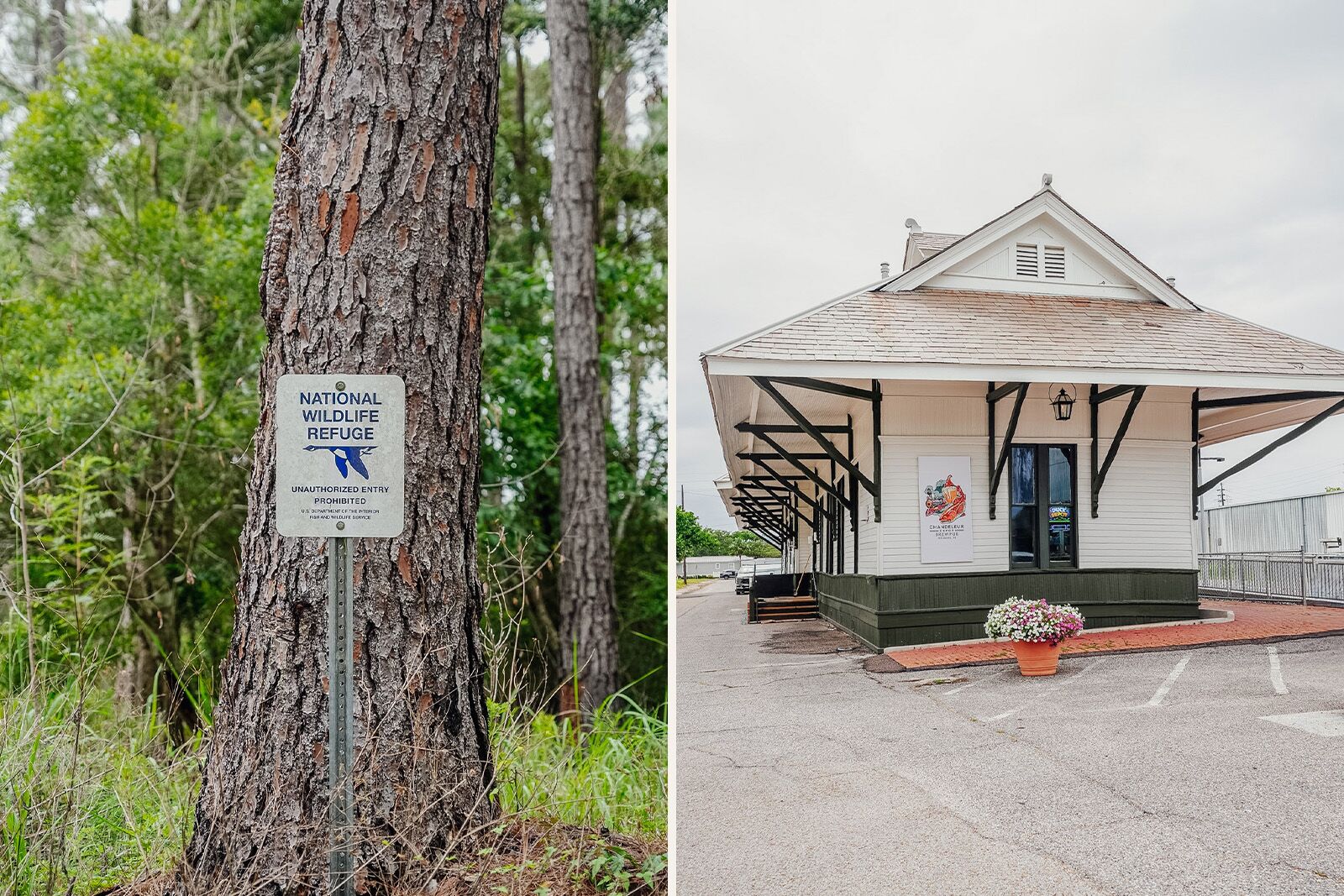
Pascagoula is one waterfront town over from Moss Point. Grab lunch to go there and eat along the boardwalk in Riverfront Park, taking in views of the Pascagoula River, the largest free-flowing river system in the contiguous United States. If a picnic is not for you, grab a bite in the newly restored train depot, home to Chandeleur Depot Brewpub. It’s named for the barrier island, Chandeleur Island, not far from Anderson’s beloved Horn Island. While in town, take note of the public art walk that lines Pascagoula’s main street.

For dinner, I headed back to Ocean Springs to the Maringouin restaurant at The Roost, a boutique hotel. Oyster shells line the entryway’s exterior, a waste-not, want-not reminder of where you are before you’ve even sat down. Chef Lauren Joffrion’s menu is full of fresh-from-the-Gulf seafood and Southern staples that she’s blended with international dishes to make her own. I opted for the bouillabaisse, filled with local shrimp, clams, and redfish, and cooked in a tomato gochujang broth. It was light yet filling, full of flavor, and had the kind of freshness you only get from something caught locally. The cornbread that came with it, some of the best I’ve had, was sweet and served with warm butter and chili salt on top.

Day 2: Harbor Road herons, sandhill cranes, and two hours on the Pascagoula

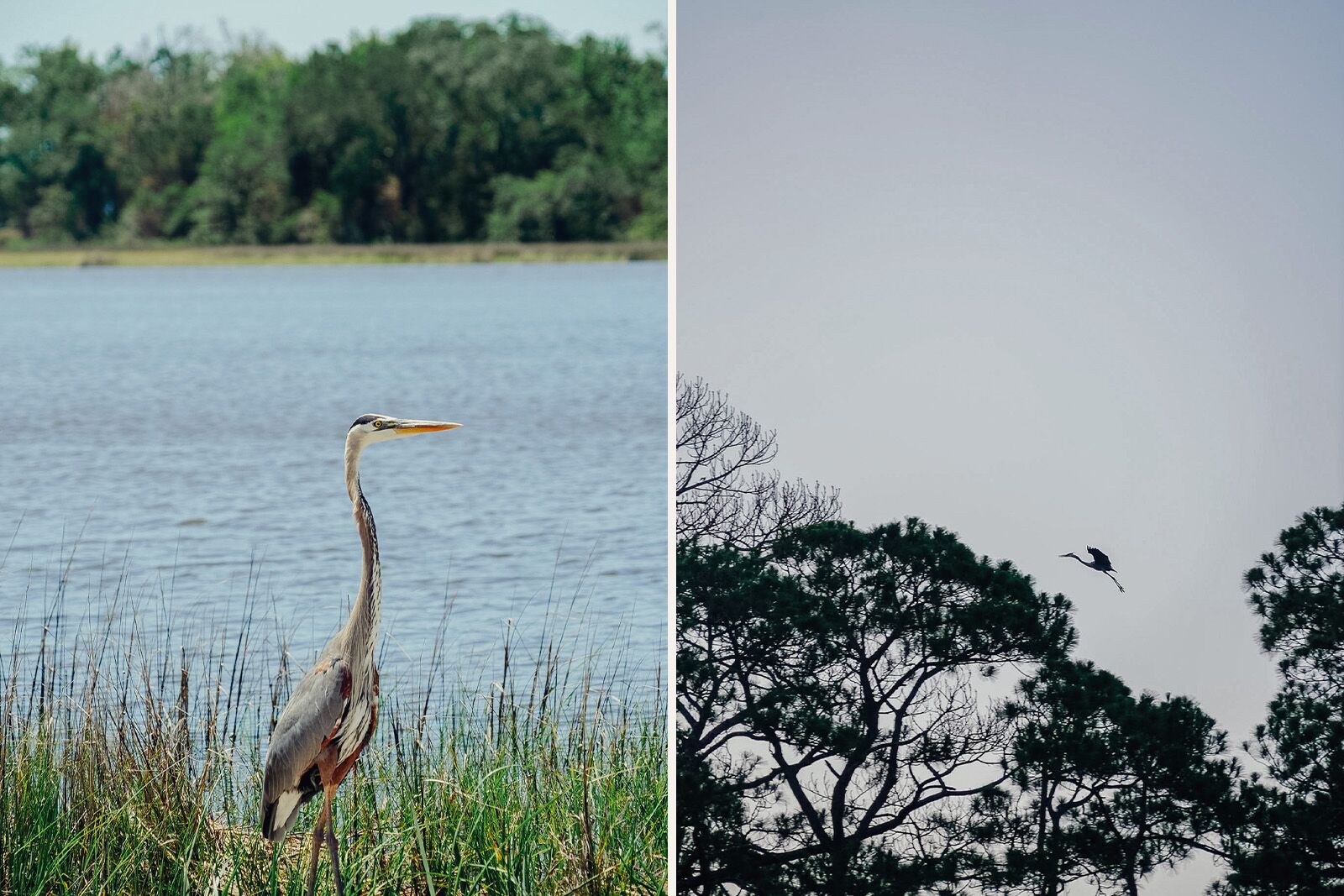
I woke early the next morning to watch the sunrise on the beach and look for great blue herons in their roost, high in the treetops of the pines along the shrimp and oyster boats on Harbor Road. As I rounded the corner on the road leading down to the roost, I feared they might not be there, not knowing if it was the right time of year. But there, dancing in the treetops, I spot one, then three, five, six great blue herons, dotting the trees with movement.

Mississippi Gulf Coast Travel

Photos: Erin Austen Abbott

For a moment, I imagine Anderson also watching the dancing treetops, moving like water on a blistery day on his way to Horn Island. I sink into my spot on the dock and wait for more dancing birds, craving it like a favorite dessert. Unlike most of the birds there, the seagulls, with their black heads and striped wings, watch me as I move my camera closer.

Afterward, I headed to The Traveler for a matcha and a Southern bacon biscuit, then drove to the Mississippi Sandhill Crane National Wildlife Refuge. Mississippi’s sandhill cranes don’t migrate, but that doesn’t mean you’re going to see one. But as luck would have it, I did see one, long and elegant in its gait. While at the refuge, I also walked the almost-mile-long trail, looking for birds and other wild wonders of the coast. Among those that I found were carnivorous pale pitcher plants and many native wildflowers. Before leaving, I stopped by the visitor center to learn more about the curiosities of the sandhill cranes, like the fact that the state’s population had dropped to 30 birds before the refuge was established in 1975. There are around 200 now, and 90 percent of them were captive-reared before release.

Mississippi Gulf Coast Travel

Photos: Erin Austen Abbott

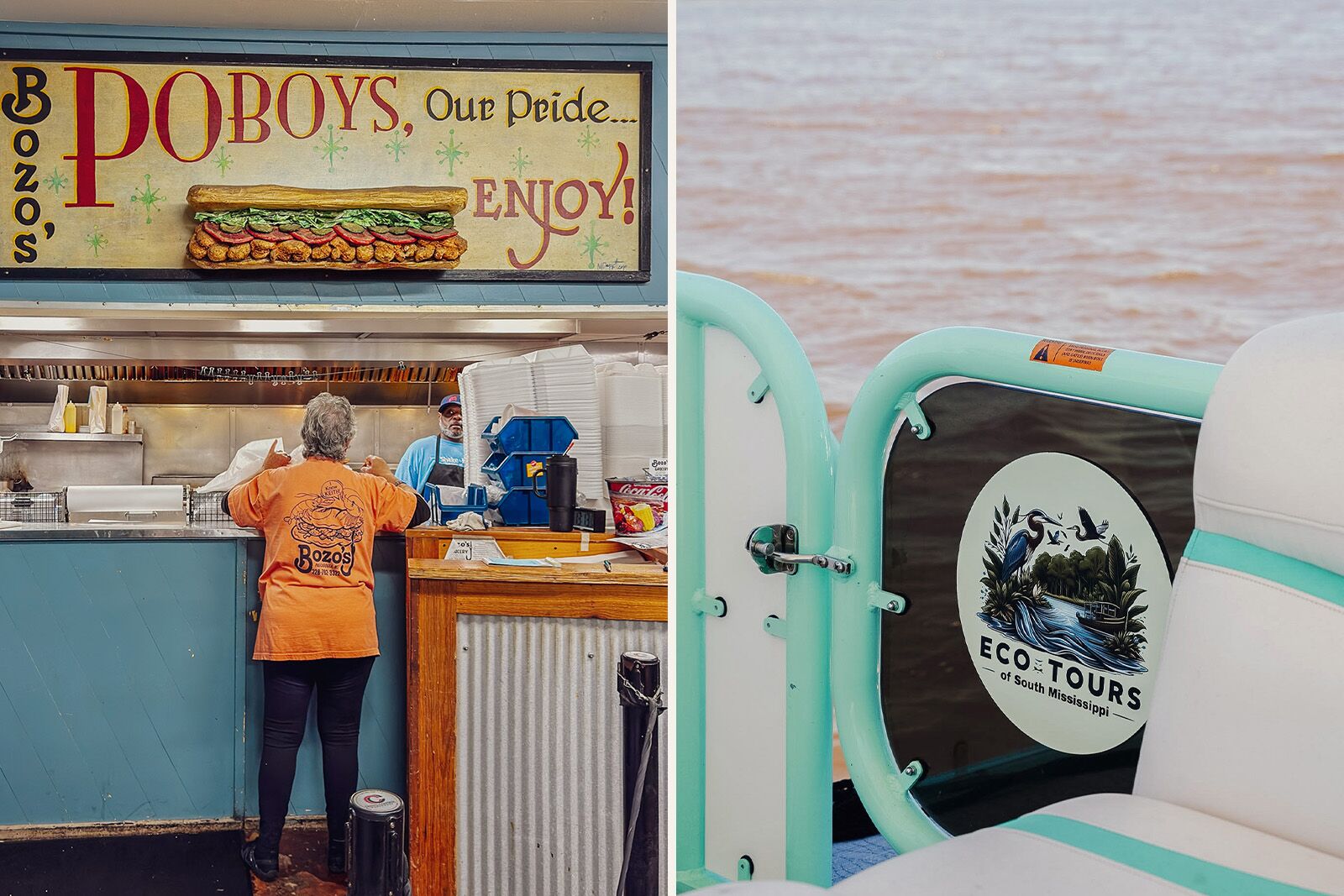
I grabbed lunch at Bozo’s Seafood Market, a local-favorite spot. There are two spots next to one another. The market is the original location, while Bozo’s Too has table service and an extended menu. I opted for the quick and original location and had a delicious Gulf shrimp po’boy at the counter to fill me up before setting out on a boating excursion with Captain Kendall Smith of Eco Tours of South Mississippi.

This woman-owned business operates several boats, taking guests into the bayous and swamps of the Pascagoula River, also known as the Singing River by the Pascagoula people. My excursion entailed two relaxing hours aboard a tritoon boat (a pontoon boat with three tubes instead of two that makes for a smooth ride). Smith narrated the whole way, describing the birds darting about, the trees along the swamp, and the general animal and plant life we might see along the way. She also runs day trips out to three nearby barrier islands.

Before heading in for the evening, I had dinner at 701 Craft, overlooking the bayou. I picked a seat on the deck next to the water, where I could watch for birds and other creatures swimming below.

Day 3: One last walk among the oaks

Mississippi Gulf Coast Travel

Photo: Erin Austen Abbott

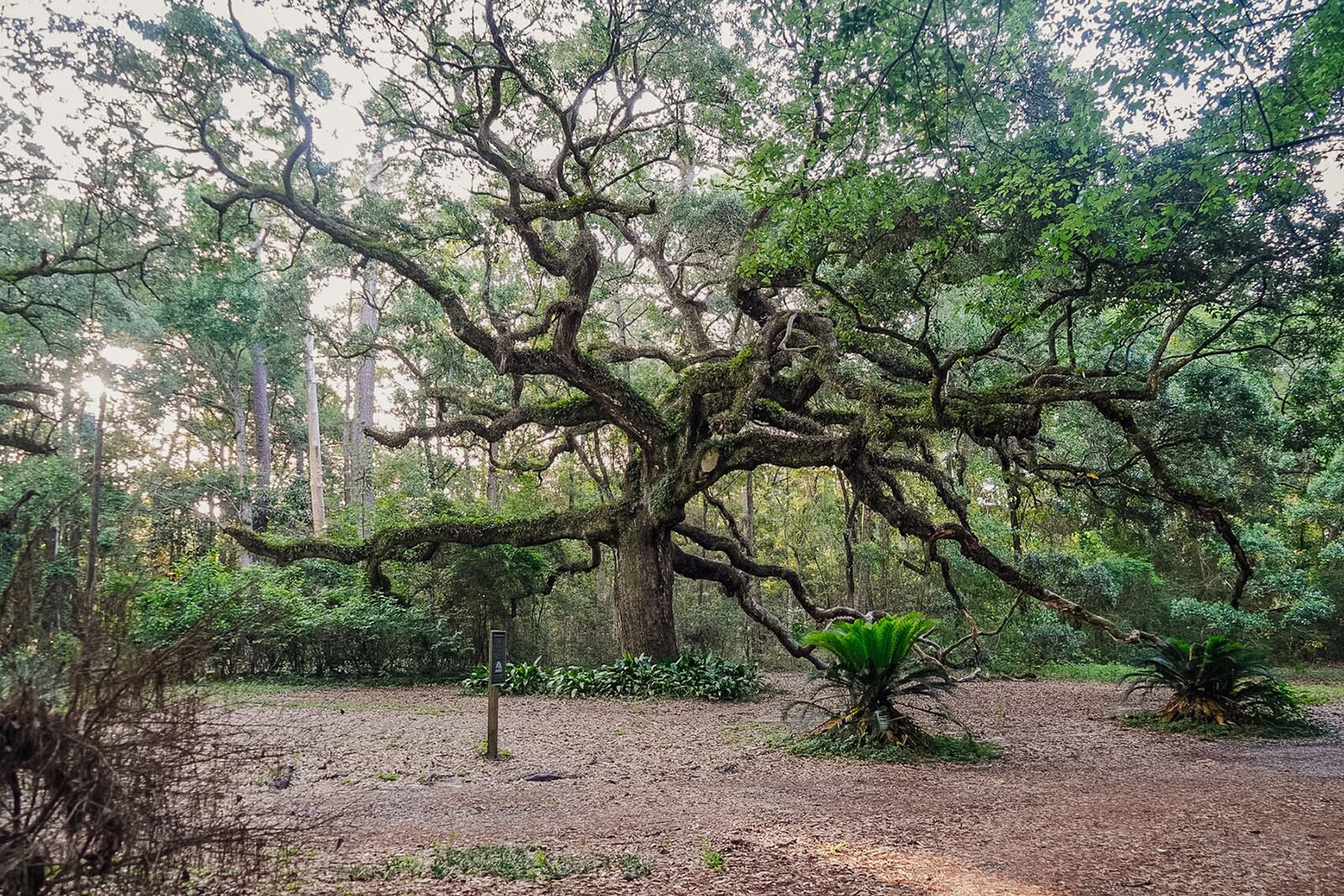
The next morning, I stopped into Cat Island Coffee House in Ocean Springs before heading out to Twelve Oaks Nature Preserve for one last hike. The turnoff is easy to miss, hidden down a little gravel road just off the main highway along the coast, and the preserve is only three acres, with a half-mile trail and 400-year-old live oak trees. Two of them, named Charity and Faith by a former owner of the preserve who registered them as national treasures, have been here since before the Civil War. Walking among the oaks, finding budding ferns and saplings along the trail, I could feel my nerves settle. I imagined Anderson sitting under the same canopy, drawing and taking note of his surroundings, overlooking the bayou.

Getting to and around the Mississippi Coast

Mississippi Gulf Coast Travel

Photo: Erin Austen Abbott

Gulfport-Biloxi International Airport (GPT) is the closest airport to Ocean Springs, about a 30-minute drive. For a bigger hub, Louis Armstrong New Orleans International Airport (MSY) is just over two hours away by car. If you’re flying to the area, you’ll want to rent a car to get around. Towns like Ocean Springs, Moss Point, and Pasacagoula are spread out along the coast and not walkable between them. Most of the nature sites require driving, and several, like the Sandhill Crane refuge and Twelve Oaks, are off the main highway entirely. A car also lets you pull over on Harbor Road at dawn without negotiating a ride.

Discover Matador

Save Bookmark

We use cookies for analytics tracking and advertising from our partners.

For more information read our privacy policy.