At the end of the road in East Tennessee, the pavement gives way to gravel and then to dark. Cell service drops. The birds go quiet around dusk, and then the forest — the whole forest — holds its breath. You stand there in the pitch black with strangers, waiting, and for a long few minutes nothing happens. Then a single flash, low to the ground. Then another. Then, in a slow, building wave that moves through the trees like something exhaling, thousands of Photinus carolinus begin to pulse in unison.
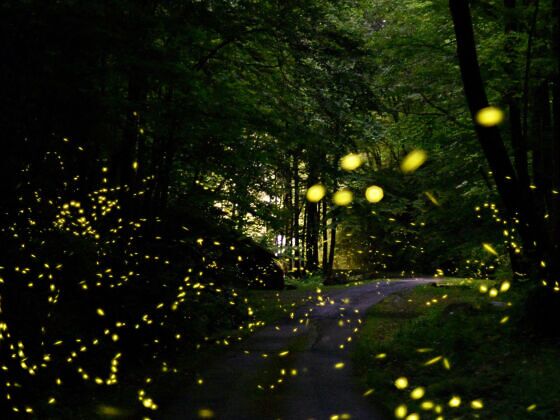
Photo: Elgin Akin/Shutterstock
Bypassing the Lottery: An Insider's Guide to Seeing the Smokies’ Synchronous Fireflies
Photinus carolinus is one of a handful of firefly species in the world known to synchronize their flashing. It’s a mating ritual: males pulse in unison as they fly, and stationary females answer from the ground. The Smokies are about the only place in the US where you can reliably see it happen. The display runs for about two weeks each year, usually landing somewhere in early June, though the timing shifts based on factors the park service models but can’t fully predict.
I’ve traveled to 92 countries. I know the difference between a thing that photographs well and a thing that actually changes how you see. The Great Smoky Mountains’ synchronous fireflies are the second kind.
Getting there is the first challenge. The National Park Service runs a public lottery each summer for vehicle passes into Elkmont, where the fireflies have followed the same creek beds for longer than the park has existed. Hundreds of thousands of people apply. Most don’t get in; I tried three times myself and had no luck. If you’re one of them — and the odds say you will be — there’s a quieter option worth knowing about.
Norton Creek Preserve: a private firefly viewing near Gatlinburg
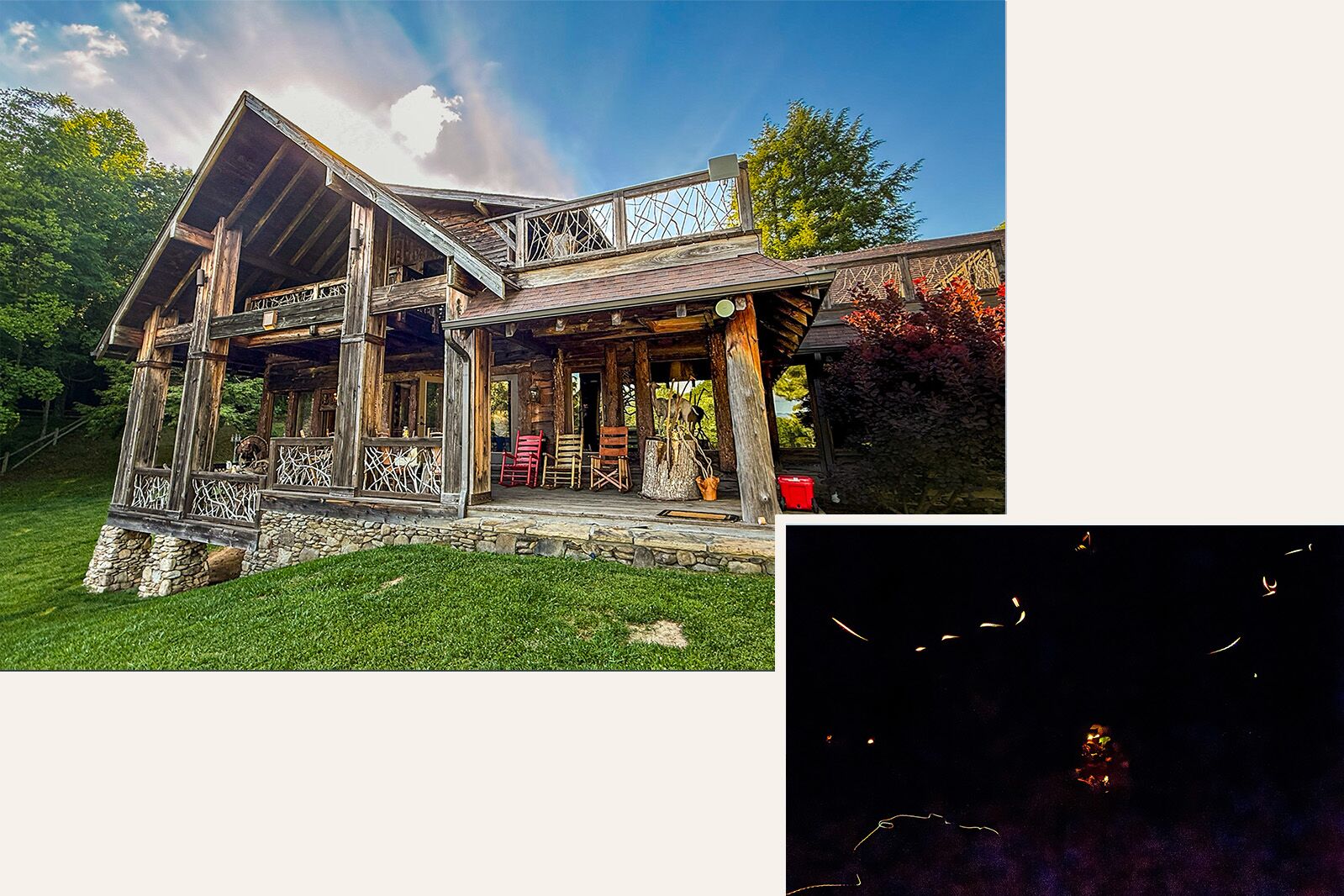
Norton Creek cabin and fireflies. Photos: Patriana Sonia
Norton Creek Preserve is a roughly 2,000-acre tract of private land bordering Great Smoky Mountains National Park near Gatlinburg that’s home to its own population of synchronous fireflies, along with blue ghost fireflies and a handful of other glowing species. Discover Life in America, a nonprofit dedicated to protecting the park’s biodiversity, holds a private viewing event there each year. Because it’s closed to the general public, the group stays small, and the forest stays dark and genuinely quiet.
I stood in the trees for nearly 20 minutes before the first flash appeared. By the time the synchrony built into full rolling waves across the tree line, nobody around me was moving. The lights spread across the landscape, scattered through sections of dark woods, randomly illuminating the entire stretch of road. It’s a raw encounter with Appalachian wildlife that shifts something in how you think about the natural world.
Tickets are limited and need to be secured months out. In 2026, they cost $325 per person, and the money directly funds the nonprofit. When you go, bring red cellophane to cover your flashlight lens. A white beam can scatter the insects mid-display and ruin the show for everyone around you.
Where to eat in Gatlinburg: Crockett’s Breakfast Camp and The Park Grill

Photo: Patriana Sonia
The next morning, you need breakfast. Crockett’s Breakfast Camp opens early and fills up fast — walk in after 8 AM on a weekend and you’ll wait. Get on the digital waitlist before you leave your room. The dining room is warm, loud, and paneled in rough wood. I ordered the country fried steak. It comes out on a plate that takes up most of the table: a thick cutlet, white pepper gravy, two eggs, biscuits, and grits. The portions are massive and great for two people to share.
For lunch, The Park Grill sits along the Parkway in a building made from timber so large the beams overhead read more structural than decorative. The mountain lodge feel is entirely genuine. The tenderloin is the right call — cut to order, cooked properly. And the salad bar is worth noting for one specific reason: it’s built inside a retrofitted wooden boat sitting right in the middle of the dining room. It shouldn’t work as well as it does, but it does. It’s a heavy, satisfying midday stop before you head up into the ridges.
Anakeesta: a year-round firefly experience above the Smokies
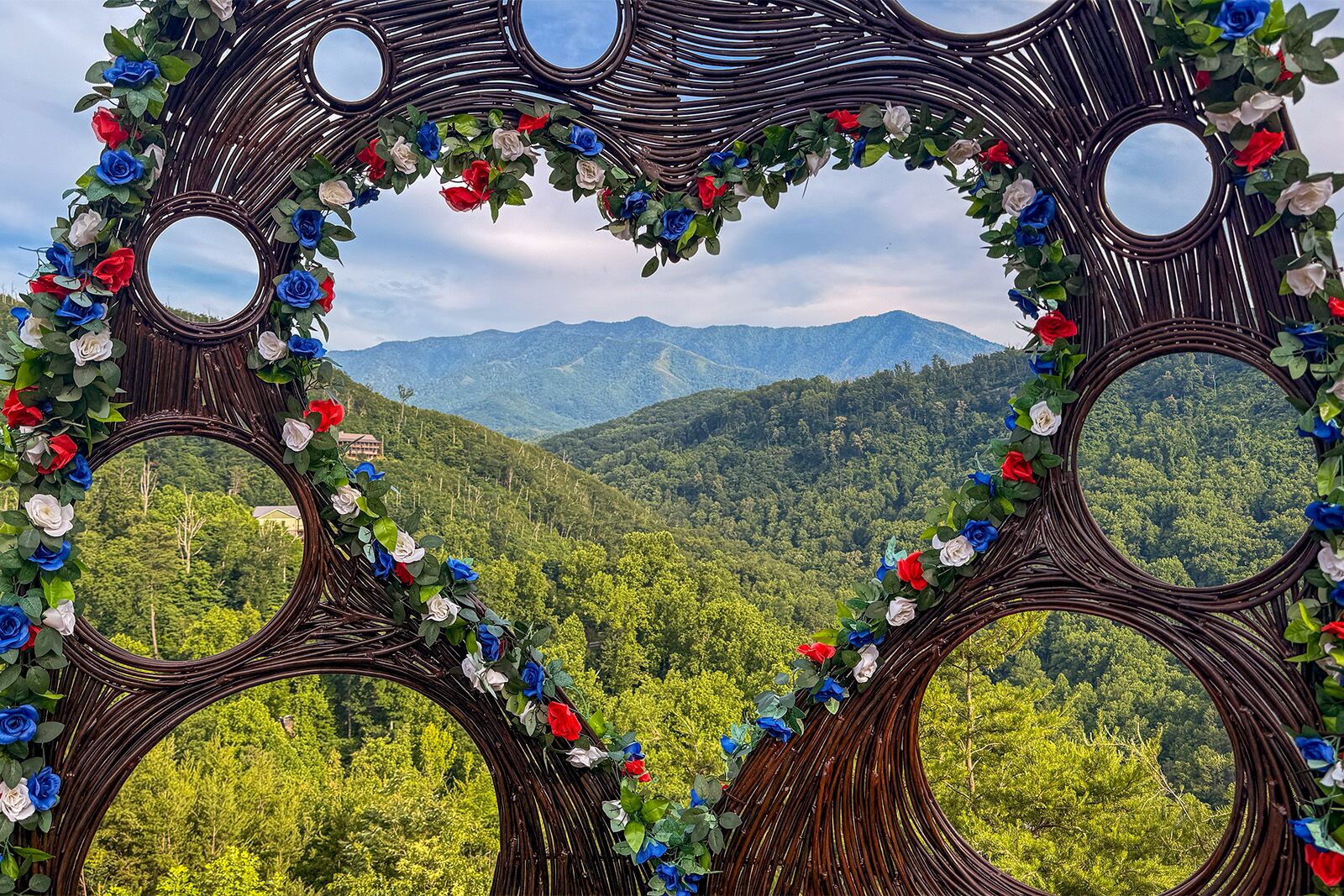
Photo: Patriana Sonia
If you’re traveling outside of the wild fireflies’ roughly two-week window in June, or if the season slips past you, there’s still a reason to make the drive out to Anakeesta on the ridge above Gatlinburg. Anakeesta is a roughly 70-acre adventure park that’s part skywalk, part garden, and part treehouse village, with zip lines and a mountain coaster layered into the ridge itself.
Bob and Karen Bentz built the park after the 2016 wildfires burned through the surrounding hills. Its name comes from a Cherokee word meaning “place of high ground.” There are two ways to get to the top: hop on the park’s safari-style Ridge Rambler for a 20-minute ride that’s included with general admission, or take The Crystal Express, the world’s only all-glass gondola, to the summit. Once there, walkways open over the ridgeline, and the views of the Smokies below are honest. It is exactly what it claims to be.
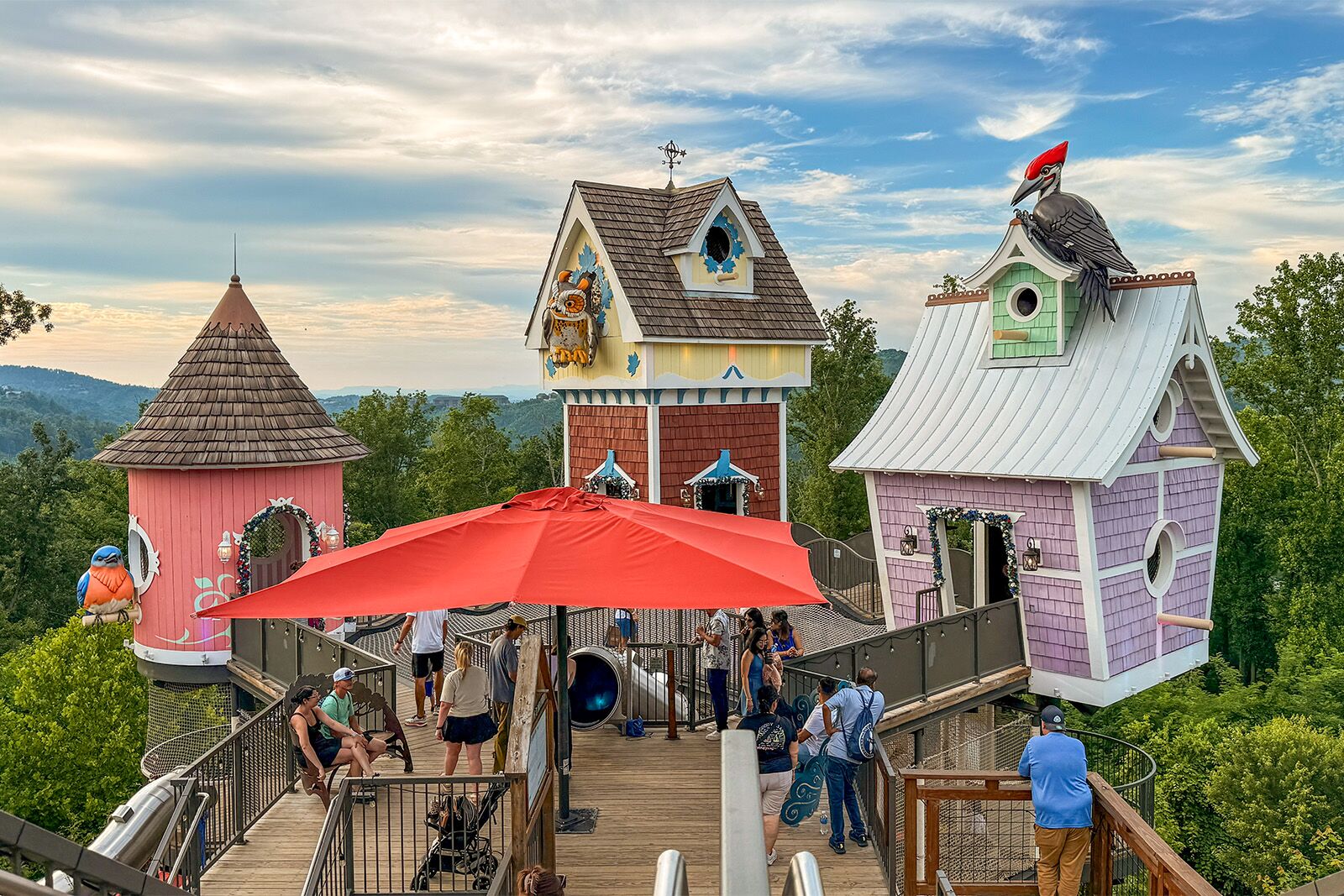
Photo: Patriana Sonia
What makes this ridge worth the detour is a permanent firefly installation built in partnership with Moment Factory, a multimedia studio out of Montreal. Before designing it, they studied the actual biological rhythms of Photinus carolinus — the flash intervals, the duration, the way synchrony spreads across a field.
What they built is a network of low-set light arrays along a forest trail, positioned close to the ground, pulsing on the same timing as the real insects. You walk through it at night at roughly the same height your eyes would be if you were crouched in Elkmont. The soundscape is quiet enough that you can still hear the woods. The pulse timing is accurate enough that your brain starts filling in the gaps, searching for movement between flashes the way it did in the actual forest. It runs every day of the year regardless of season or lottery odds. The biological rigor behind it makes you realize that tech doesn’t always have to cheapen nature; sometimes it takes the pressure off a fragile habitat entirely.
The trail leads into the Astra Lumina night walk along the same ridge, turning the path after dark into a light-and-sound installation that threads through the trees without demanding too much of you. The open-air Lumina Pavilion sits midway through; it’s a good place to stop, grab a cold regional beer, and let the forest settle around you before heading back down.
Where to stay: The Park Vista
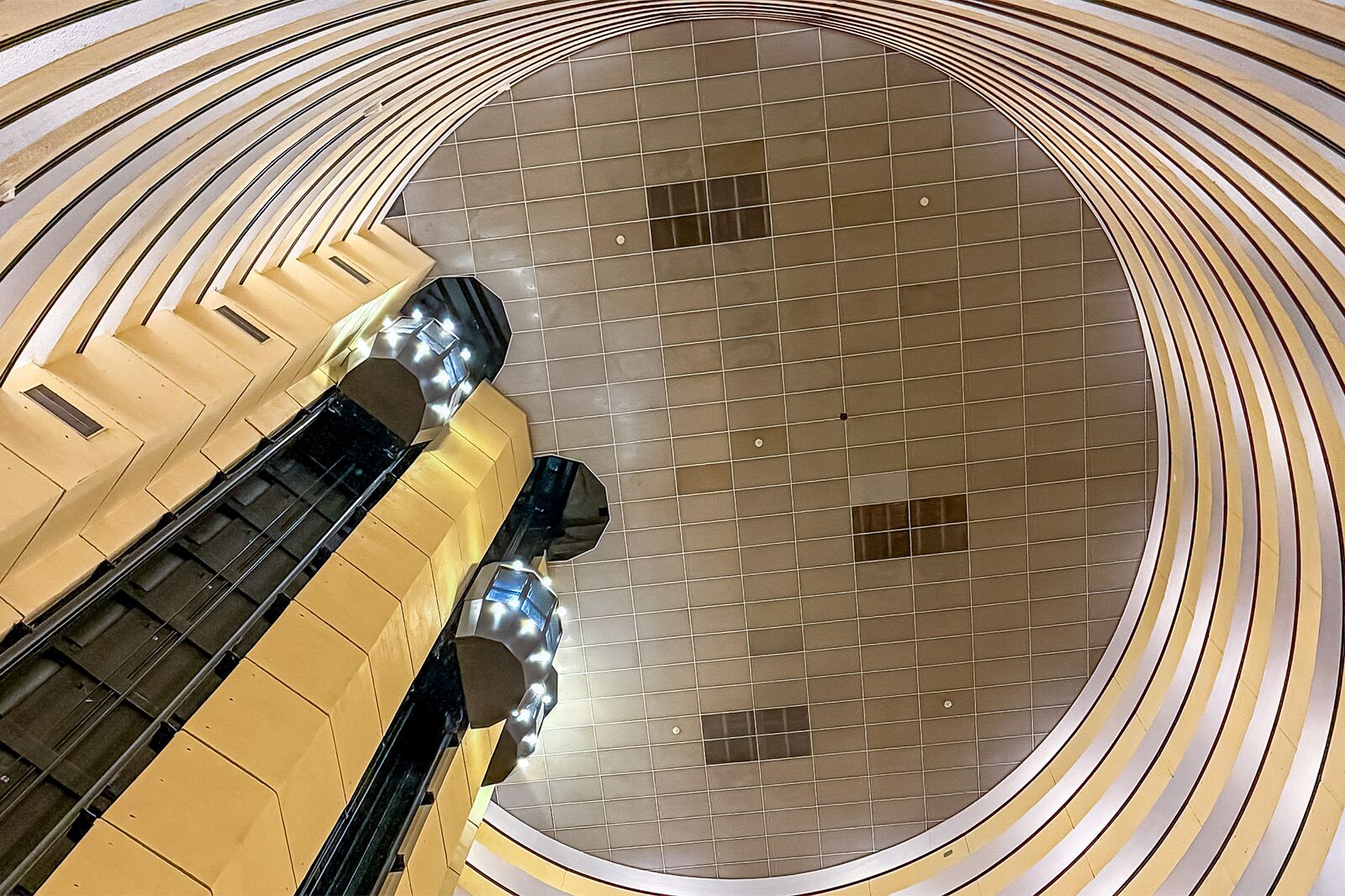
Park Vista Hotel. Photo: Patriana Sonia
For a basecamp, The Park Vista (a DoubleTree Hilton property) hits the mark. The building is cylindrical brutalist style, which sounds odd until you’re standing on your balcony at six in the morning watching fog move through the valleys below in slow, flat channels. The multi-story atrium and tiered pool complex are impressive in scale, and the quiet after a long night on the mountain is exactly what you want. It’s one of the few places in Gatlinburg that feels like the landscape shaped the building rather than the other way around.
Getting to and around Gatlinburg
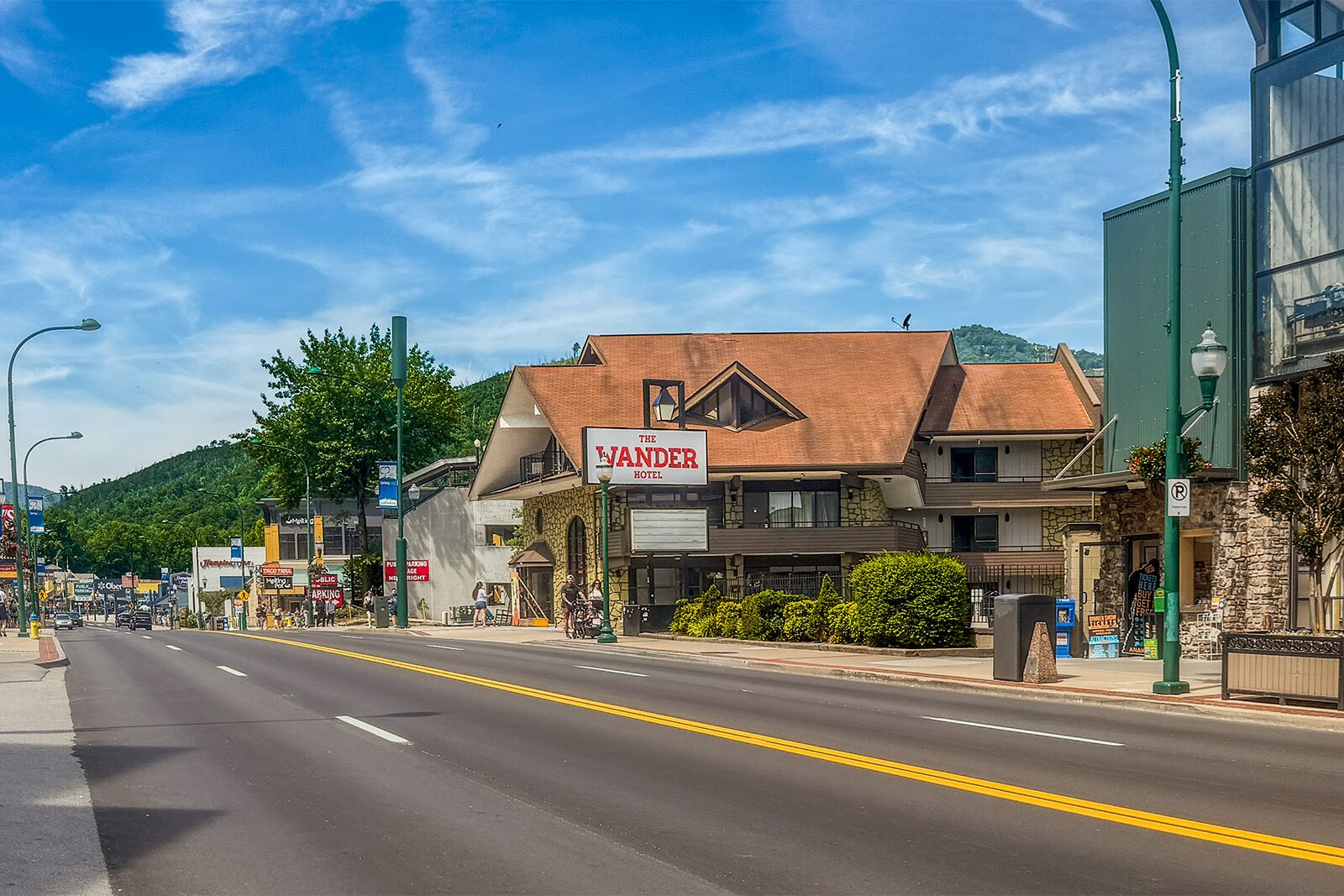
Photo: Patriana Sonia
Fly into Knoxville McGhee Tyson Airport (TYS), about an hour from Gatlinburg. Grab a rental car at the terminal; rideshare isn’t widely available once you’re in the mountains. If you’re road-tripping from elsewhere on the East Coast, I-40 drops you right into the valley, though the last stretch winds more than the map suggests.
Once you’re in town, leave the car at the hotel. The Parkway is walkable, parking is tight and expensive, and summer evening traffic simply doesn’t move. Take the local trolley. On a dark mountain road after a late night on the ridges, it’s a decision you’ll be glad you made. 