Photo: Te Puia

Why Travelers Are Venturing Into New Zealand’s Forests After Dark

New Zealand Wildlife Sustainability
by Keri Bridgwater Jun 29, 2026

For Māori, New Zealand’s Indigenous people, the kiwi is more than a national symbol. And now, decades of conservation work have made it possible to encounter New Zealand’s beloved taonga species in the wild.

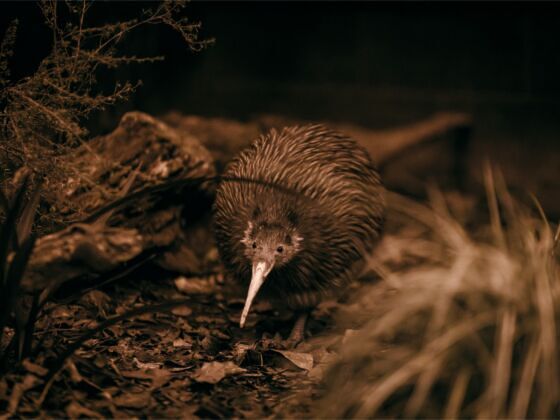
The town of Rotorua, on New Zealand’s North Island, has long drawn visitors for its geothermal landscapes and Māori culture. But just 10 minutes from downtown, another part of the country’s story is unfolding inside the National Kiwi Hatchery. The facility houses resident adult kiwi in a purpose-built nocturnal house designed to mimic New Zealand’s native forest. And before long, I found myself standing just inches from one.
It took a moment for my eyes to adjust to the darkness. A dim red glow illuminated the plants and leaf litter within the habitat, which is kept in permanent twilight, allowing visitors to watch kiwi as they go about their dusk-to-dawn routines. At first, I saw nothing. But soon, the outline of a long, slender beak emerged, followed by a small brown body purposefully picking its way along the glass right in front of me. Smaller, rounder, and somehow fluffier than I’d imagined, the kiwi looked both prehistoric and undeniably cute.

kiwi conservation new zealand - brooding area

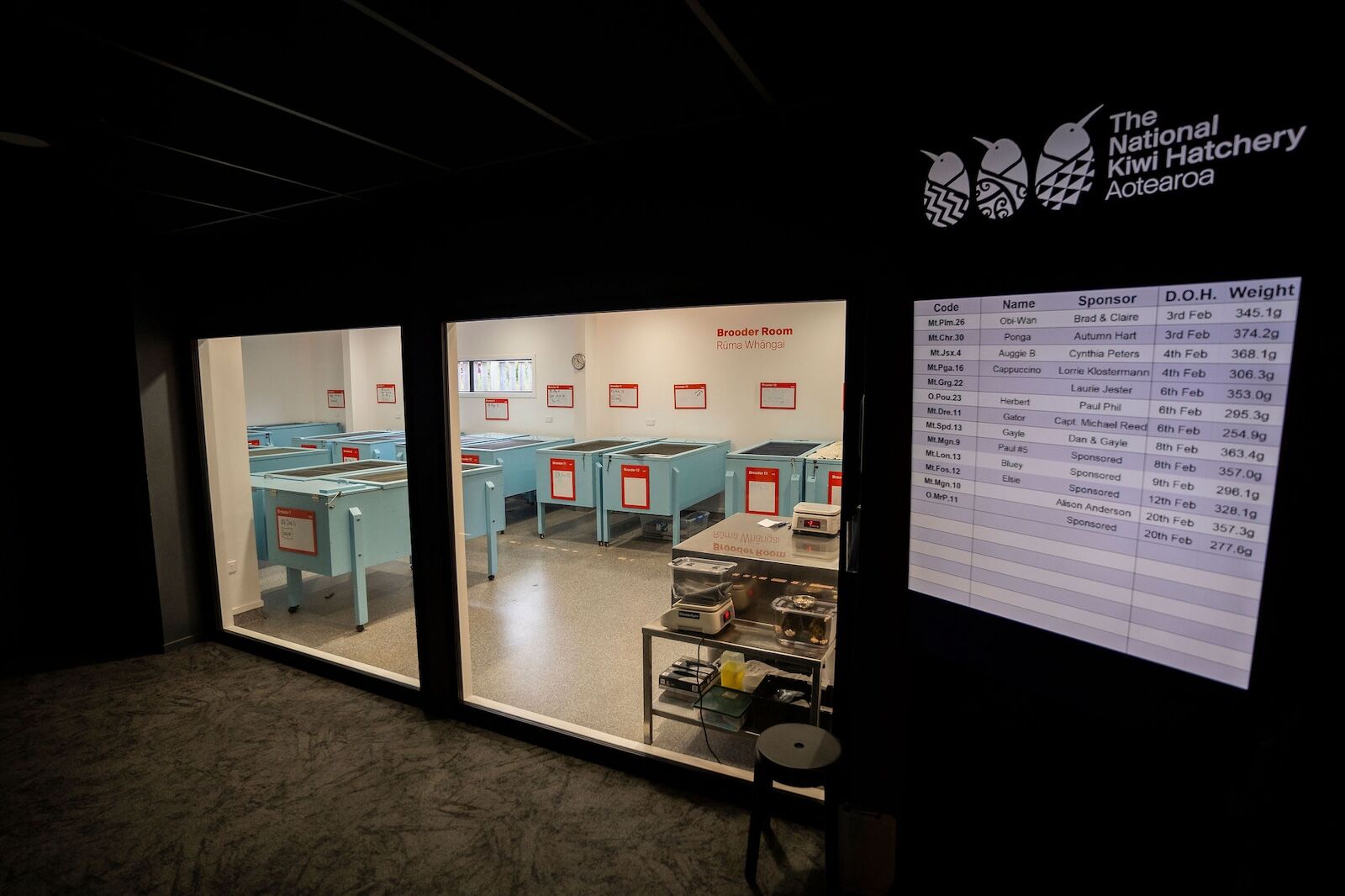
The Brooder Room at the National Kiwi Hatchery, where baby kiwi are raised by hand. Photo: Keri Bridgwater

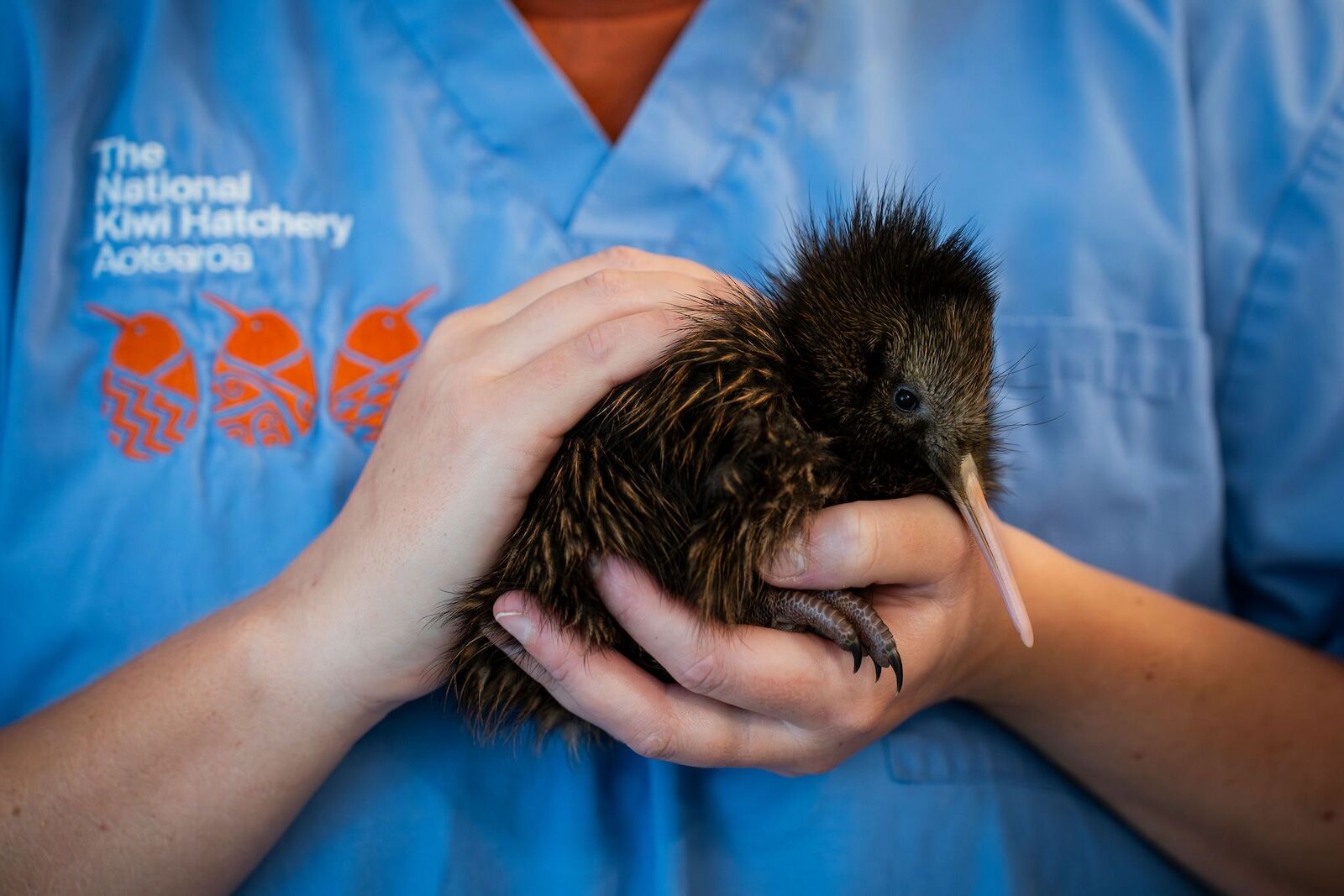
From there, my behind-the-scenes tour continued to the hatchery’s outdoor crèche, where kiwi keepers normally care for juvenile birds in specially designed enclosures that help prepare them for life in the forest. On the day I visited, however, I stood quietly as an older bird named Aituā received a routine health check. Nearing 40 years old, he was missing two toes on one foot — the legacy of a spring trap accident decades ago, before humane predator-control methods replaced the controversial leg-hold hunting devices.

Manager Emma Bean shared that his name means “to have a disaster or tragedy” in te reo Māori — the Māori language. Deemed unsuitable for release, he spent decades helping boost kiwi numbers through breeding programs. Today, conservationists know kiwi can survive despite missing a toe or two. Following a recent veterinary assessment, staff are working with local iwi (Māori tribal groups) to identify a suitable release site for Aituā’s return to the wild.​

Kiwi, culture, and kaitiakitanga

kiwi conservation new zealand - close up of feathers

Photo: Te Puia

Most visitors know the kiwi as New Zealand’s national bird. But to Māori, the Indigenous people of New Zealand, it’s much more than just a symbol.

According to one well-known Māori story, Tāne Mahuta, the god of the forest, asked all the birds to help protect it. Of all the species, only kiwi accepted the challenge, sacrificing life in the canopy to live on the ground and eating the insects that might otherwise damage root systems. It’s a story of voluntary sacrifice for the collective good, and it shapes how the bird is understood to this day.

Eraia Kiel, General Manager of the New Zealand Māori Arts and Crafts Institute at Te Puia, describes the kiwi as a taonga species — a treasure of ancestral significance. “Kiwi represents a willingness to put the well-being of others ahead of himself,” he says. “Kiwi demonstrated those values of courage, selflessness and commitment to the collective.” For Kiel, that story also carries the Māori concept of kaitiakitanga — the responsibility to care for and protect the natural world for future generations.

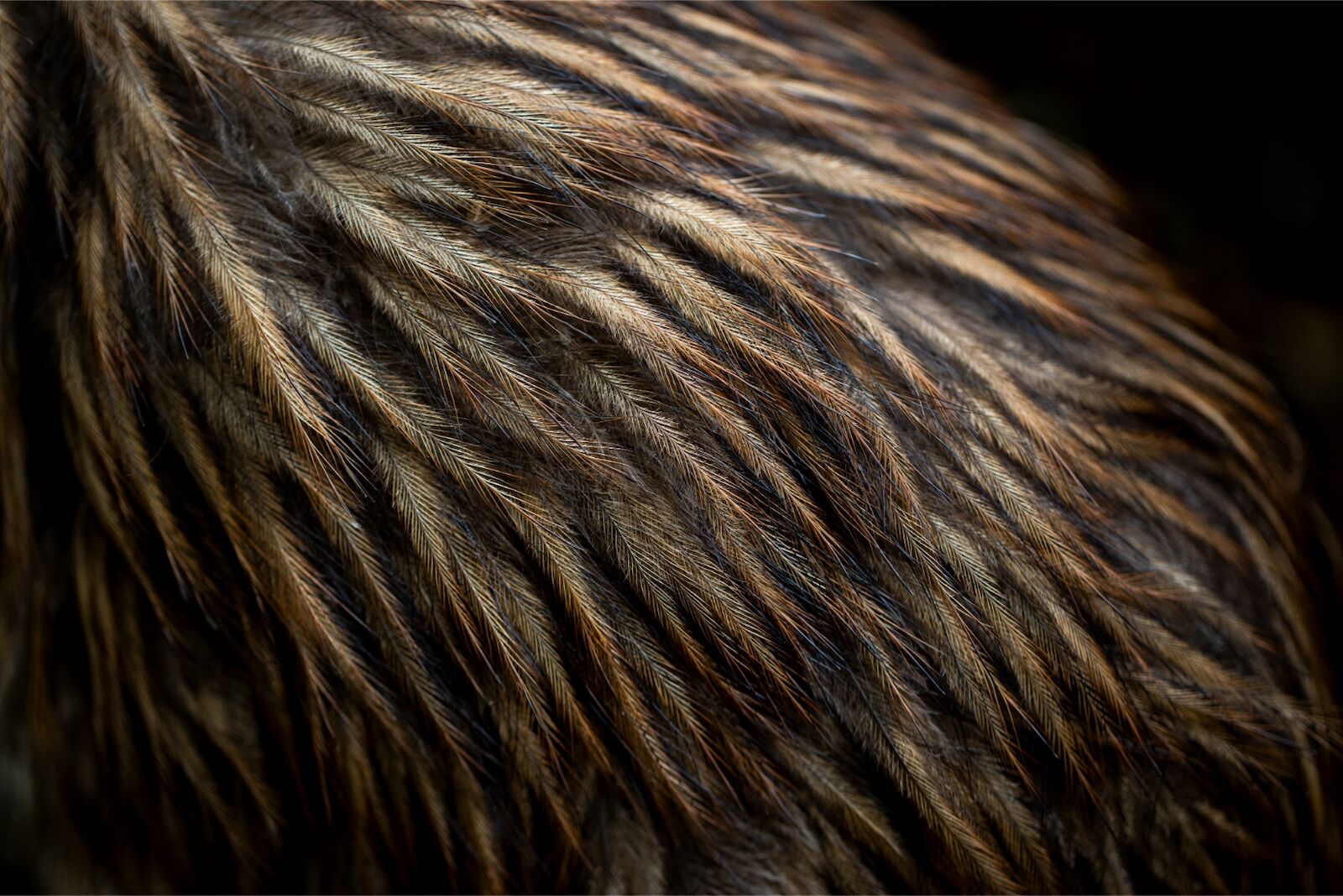
Kiwi feathers also held a special place in Māori weaving. Historically, they were among the most prized materials used in kākahu, traditional Māori cloaks worn by high-ranking leaders. Because the birds were so difficult to find, the feathers themselves were deeply valued.

But for Kiel, the bird’s importance extends beyond mythology, status, or symbolism. The kiwi plays a part in whakapapa — the Māori understanding that people, wildlife, and the land are bound together as descendants of the same whole. “The well-being of people is inseparable from the well-being of nature and the environment,” he says. To learn more about kiwi within the broader context of Māori culture and heritage, Te Puia, one of New Zealand’s leading cultural centers, is a good place to start.

Protecting a taonga species

That philosophy is also reflected in New Zealand’s nationwide effort to restore kiwi populations. Kiwi were once found across New Zealand in the tens of millions. Today, around 68,000 remain, and in areas without active predator management, populations decline at roughly 2 percent per year, or around 20 birds a week. The scale of that loss prompted a national response, and in 1991, DOC launched the first Kiwi Recovery Plan.

Since then, across New Zealand, predator-control programs, fenced eco-sanctuaries, kiwi-focused conservation initiatives, and community trapping projects are all helping restore kiwi populations. One of the most effective tools in the recovery effort is Operation Nest Egg. It’s a program that collects eggs from vulnerable wild nests, incubates them at the hatchery, and raises chicks to around 2.2 pounds, at which point they’re far less vulnerable to one of their biggest introduced predators: stoats. Without intervention, only about five percent survive to adulthood. Under the program, survival rates climb to around 65 percent.

The National Kiwi Hatchery in Rotorua has been running Operation Nest Egg since 1995 and has raised more than 2,600 chicks. It’s a significant contribution to a recovery effort that depends on many organizations working together. While Manager Emma Bean has spent nearly two decades there and been involved in many releases, one in particular stands out: the hatchery’s 2,500th kiwi. It was marked quietly with a colleague and Dr. John McLennan, whose research first sounded the alarm over rapidly declining populations in the 1990s. “To have Dr. McLennan involved in such a significant release was special,” Bean says. The number mattered less than what it represented: another kiwi back where it belongs.

How kiwi returned to New Zealand’s capital

kiwi at night zealandia new zealand

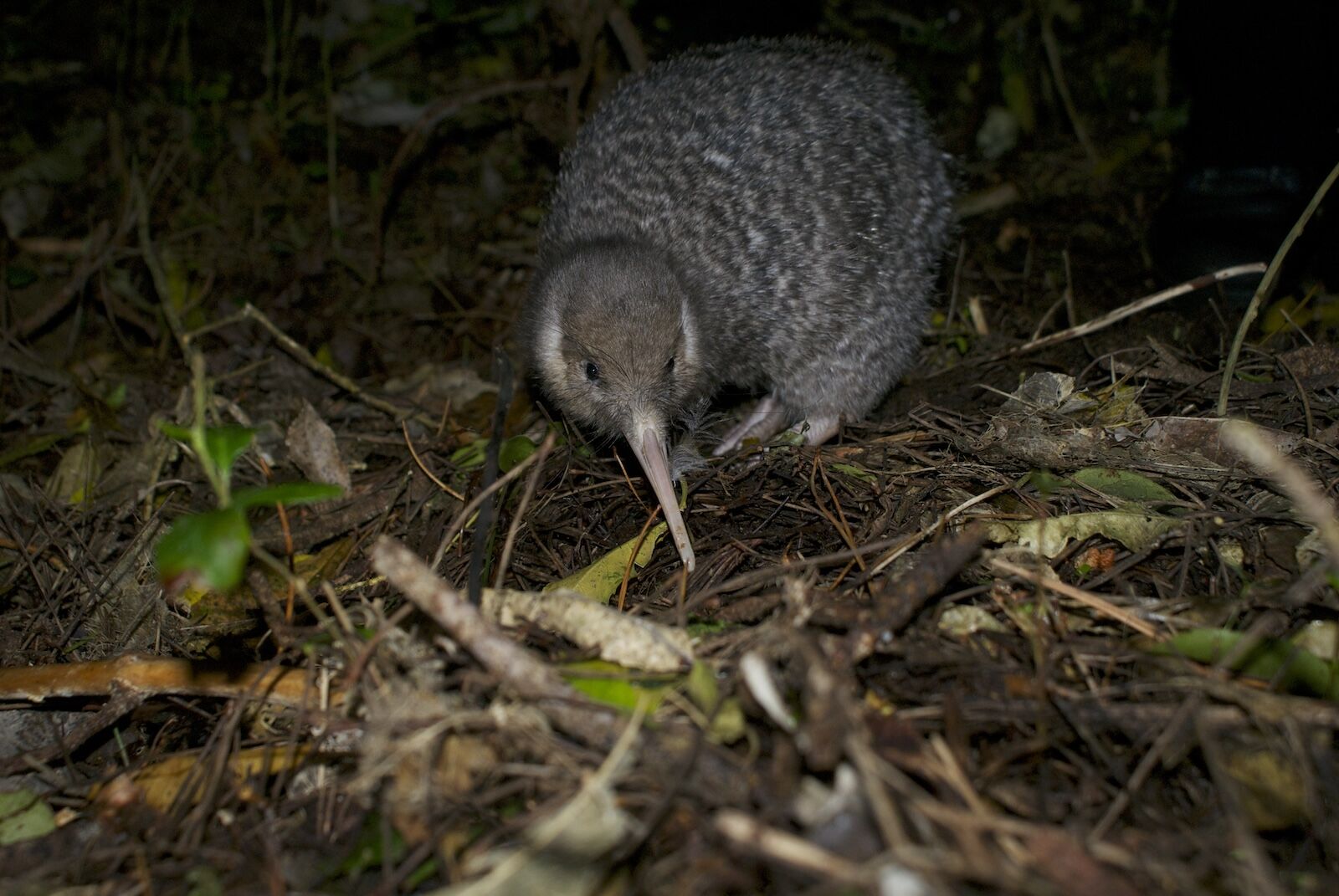
A kiwi after dark. Photo: Zealandia

Stewart Island may be New Zealand’s ultimate kiwi-spotting destination, but few places better demonstrate how far the country’s recovery efforts have come than Zealandia Te Māra a Tāne. Just 10 minutes from downtown Wellington, the 556-acre urban eco-sanctuary is one of New Zealand’s most accessible places to encounter kiwi.

Since opening in 1999, the predator-free reserve has helped reestablish little spotted kiwi in the Wellington region after an absence of nearly a century, creating the country’s second-largest population of roughly 250 birds. According to Kristine Fix, who oversees tours at Zealandia, that success goes beyond the bounds of the sanctuary, with kiwi now sometimes heard calling from nearby hillsides beyond the fences.

kiwi conservation new zealand - night tour

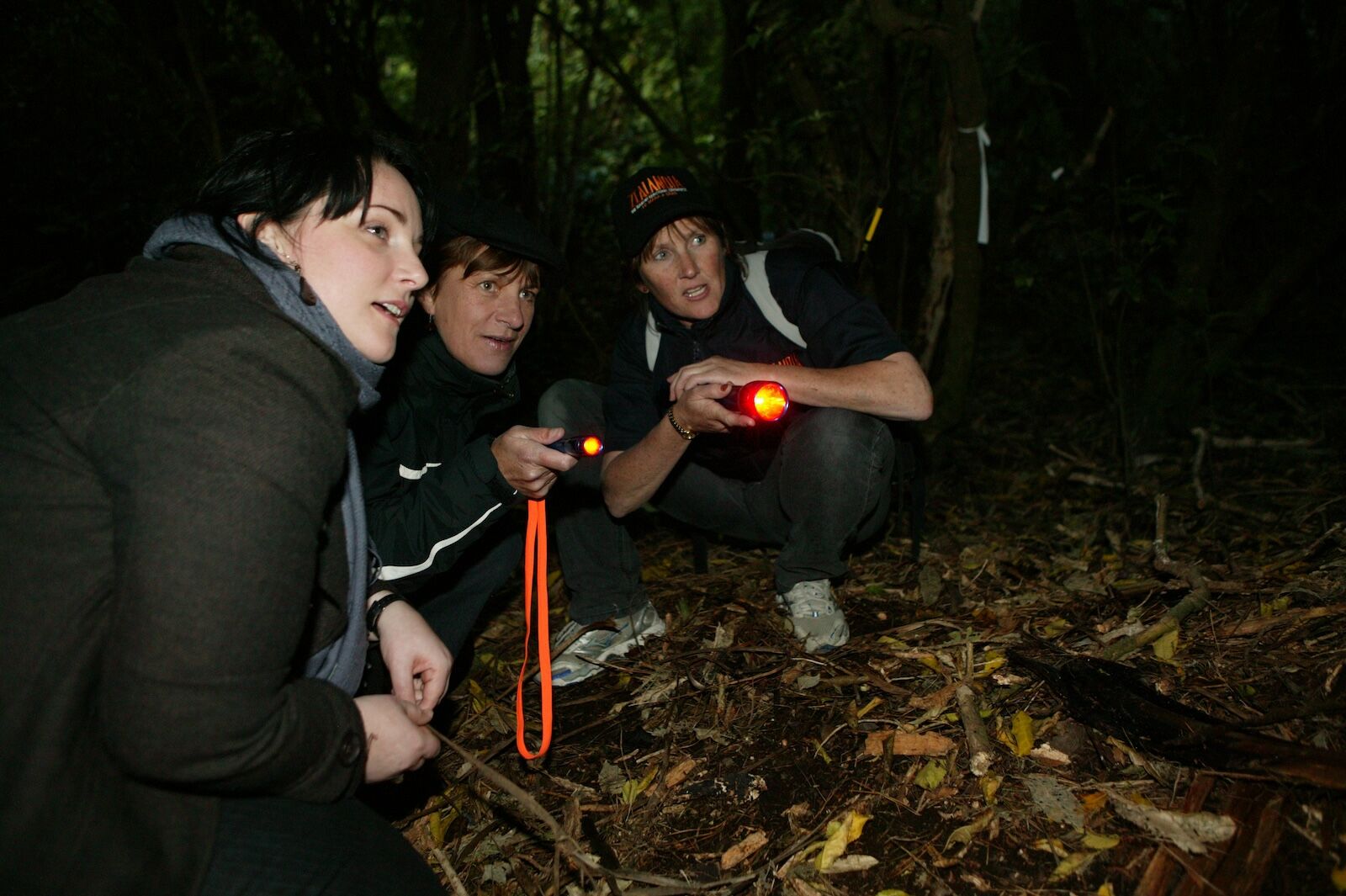
Guests on an evening kiwi-spotting walk. Photo: Zealandia

On Zealandia’s night tours, guides lead visitors through the bush by the light of red-beam flashlights in search of kiwi. Often, guests will hear ruru (New Zealand’s only surviving native owl) calling overhead and giant wētā (a larger relative of the cricket) clinging to flax leaves. Kiwi are seen on about 80 percent of outings, though sightings are never guaranteed. Fix says that uncertainty is part of what makes the experience so memorable.

She recalls a certain evening when a group fell completely silent as a kiwi emerged from the darkness and walked directly toward them. Probing the ground, the bird navigated its way between visitors’ feet, gently tapping a couple of boots before disappearing. “I don’t think any of us breathed the whole time,” she says. But more often, sightings are fleeting — usually no more than a brief glimpse in a flashlight beam before a bird slips back into the undergrowth.

A recovery story still unfolding

kiwi conservation new zealand - kiwi crossing sign

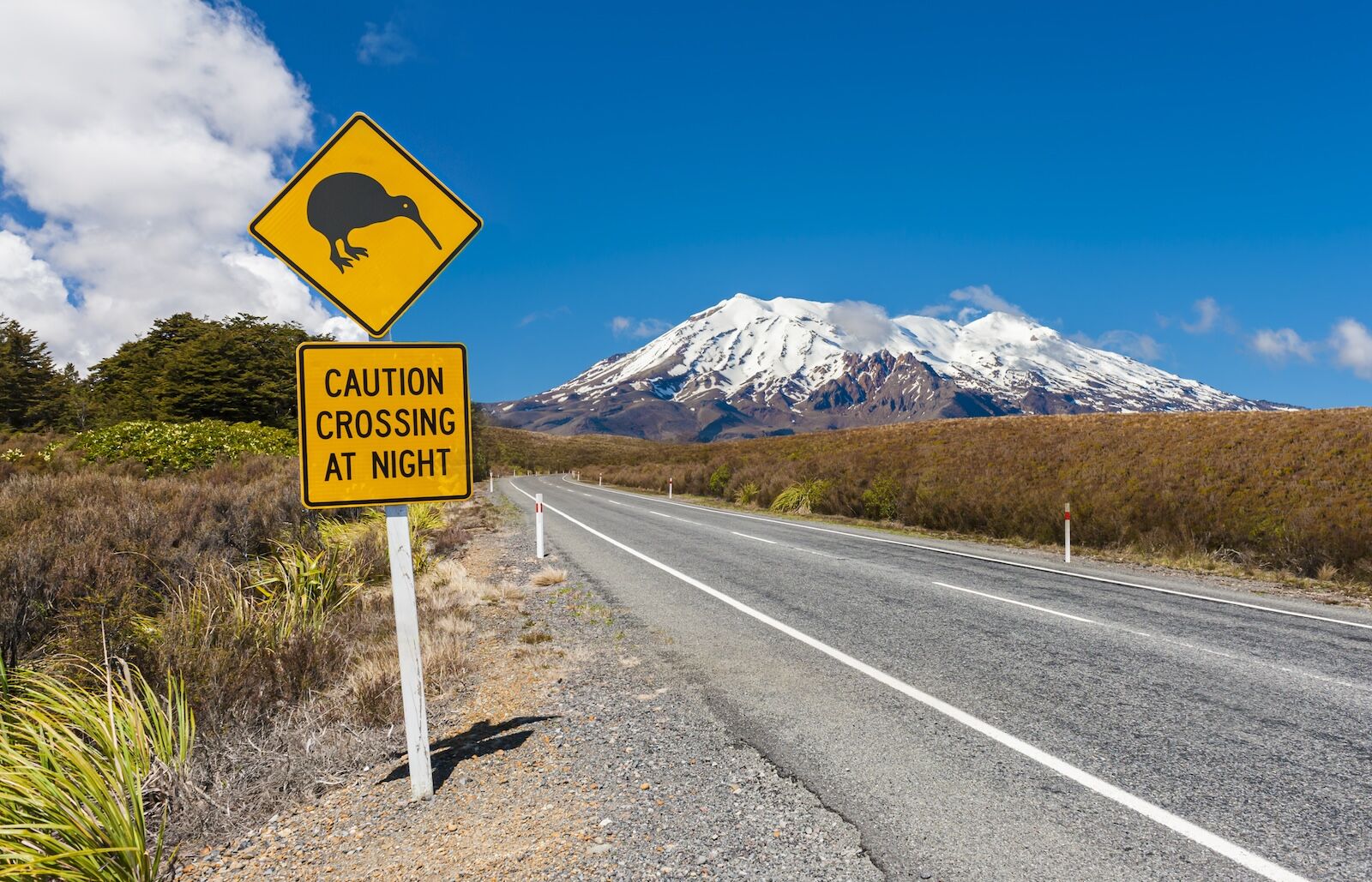
Photo: Filip Fuxa/Shutterstock

For most of us, a kiwi encounter might last just a few seconds. For the people working to protect them, the effort spans decades. And at the National Kiwi Hatchery, Aituā‘s long-awaited release still lies ahead. Staff plan to return him to the wild this year, though no date has been set.

Seeing one within a sanctuary or hearing one call from the bush is only possible because scientists, conservationists, and iwi refused to let the bird disappear. This joint effort reflects an understanding that protecting kiwi has never been about just one species. “By helping save kiwi, you can save the forest — the ngahere — and the ecological community that shares it,” Bean says. “We hope people come away from their visit buzzing, and even if they’re not from New Zealand, hopefully they go home inspired by the species and wild places where they live.”

Discover Matador

Save Bookmark

We use cookies for analytics tracking and advertising from our partners.

For more information read our privacy policy.