Photo: Arizona Department of Tourism

Dino Poop, Rattlesnakes, and Renaissance Villas: The Best Museums on Route 66

Road Trips Museums
by Suzie Dundas Mar 13, 2026

Route 66 has been romanticized to the point of cliché. But if you leave the interstates that replaced it behind, slow down on the original two-lane, and start poking around the museums strung along its 2,450-ish-mile run from Chicago to Santa Monica, you’ll start to see why so many decades of travelers fell in love with the experience.

The best museums on Route 66 will show you the postcard version of smiling, happy family road trips, sure. But they’ll also teach you about the regions’ grittier, stranger, and more layered histories. Museums along Route 66 cover topics ranging from Dust Bowl refugees and tech pioneers determined to light up the night to free-spirited cartoonists and modern Indigenous art shaping current-day cultures. Whether you’re into history, art, space exploration, quirky “only-in-America” type displays, or even rattlesnakes, you’ll find a museum about it on Route 66 (and it’s probably packed with one-of-a-kind artifacts, too).

The museums along this road don’t have the budgets of the Smithsonian or the foot traffic of the Boston MFA, but that’s what makes them special. These are the eight museums worth pulling over for that you won’t find anywhere else in the country.

Illinois Route 66 Hall of Fame & Museum — Pontiac, Illinois

best museums on route 66 - pontiac route 66 museum

Photo: Enjoy Illinois/Ryan Donnell for Meredith Corporation

  • Address: 10 W Howard St, Pontiac, IL 61764
  • Admission: Free (donations welcome)
  • Hours: Daily 9 AM-5 PM (’til 4 PM Nov-Mar)

About 100 miles southwest of Chicago, the Route 66 Hall of Fame and Museum was established in 2004 by the Illinois Route 66 Association, housed inside the historic firehouse building. One of the museum’s more unique exhibits is a section on Bob Waldmire, a nomadic artist and cartoonist who spent decades driving Route 66 and documenting it via charming hand-drawn maps and illustrations. You may be slightly familiar with Bob if you’ve seen the Pixar movie Cars, as Bob’s 1966 orange VW Microbus (which is on display in the museum) inspired the character Fillmore.

Also on display is his “Road Yacht:” a converted school bus he sometimes used to explore Route 66. He was quite the character and often described as the “Johnny Appleseed of Route 66,” which you’ll come to understand when you see his quirky possessions like a rocking chair made from tree branches and his hand-built sauna and toilet.

The museum also has other Americana items, like booths from what it claims was the world’s first Steak ‘n Shake location plus old jail artifacts and shelves packed full of nostalgia. In front of the museum, you’ll also find a small section of original Route 66 pavement bricks, saved by the town and re-laid by the entrance.

Devil’s Rope Museum — McLean, Texas

best museums on route 66 - devil's rope museum

Photo: nick clephane/Shutterstock

  • Address: 100 Kingsley St, McLean, TX 79057
  • Admission: Free (donations welcome)
  • Hours: Mar 1-Nov 1, 9 AM-4 PM. Closed Sundays

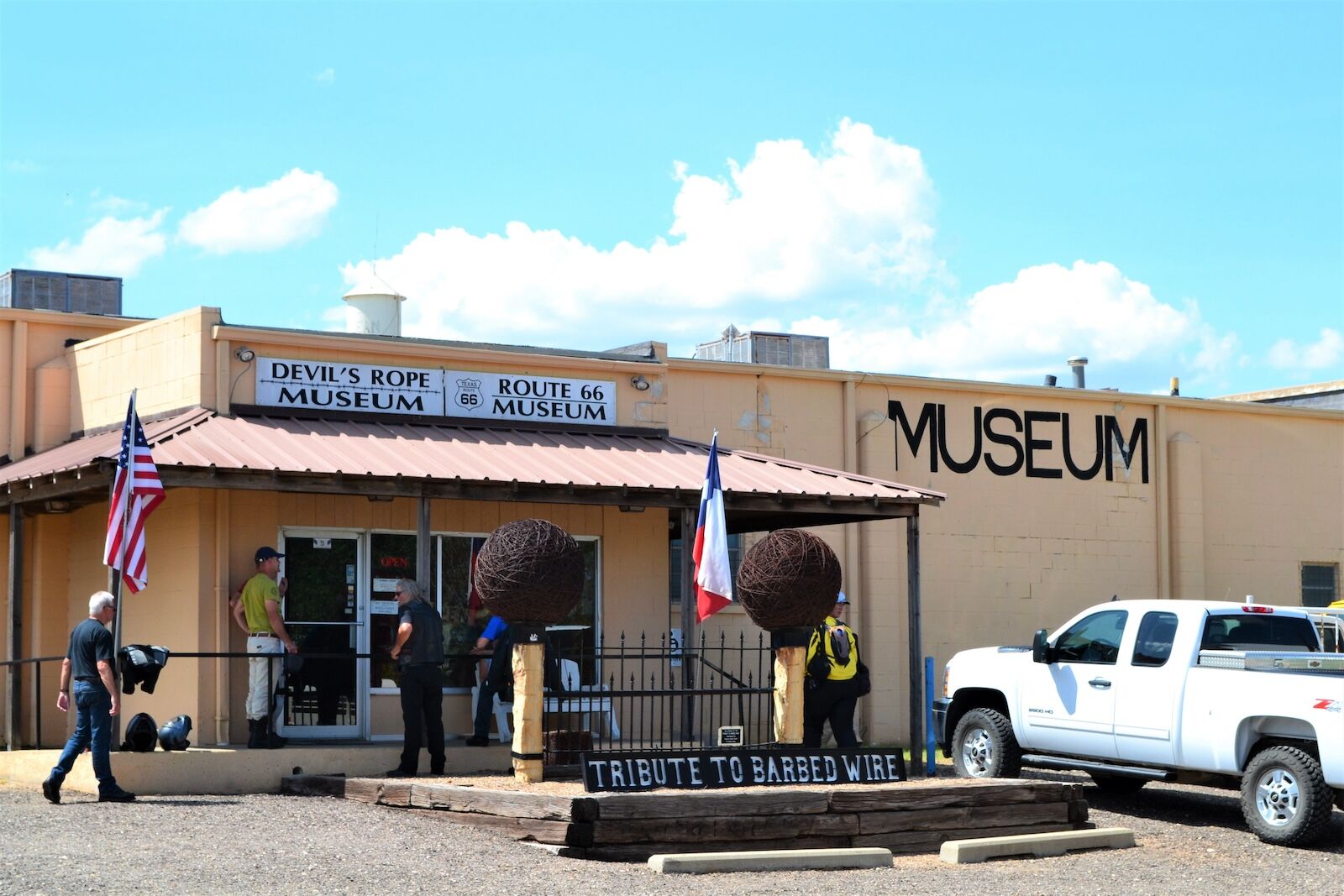
To enter the Devil’s Rope Museum, you’ll need to pull into the Texas Panhandle town of McLean along old Route 66 and walk past two three-foot-wide balls of rusty barbed wire. From the moment you enter, you’ll realize there’s a whole lot more to “devil’s rope” (a.k.a. barbed wire) than you ever knew, including the role it played in settling the American West. Humorously, it’s housed in what used to be an old bra factory.

Inside, exhibits shed light on the impact barbed wire had on Texas’ history. It was invented in the 1870s and allowed ranchers to control their cattle and farmers to protect their fields. It allowed for settlers to aggressively protect the land they claimed to own and truly changed the development of the American West. It’s probably the largest collection of barbed wire-related items in the world, with an extensive (2,000-plus) collection of various types of barbed wire. The museum also has a dedicated Dust Bowl room, covering one of America’s most devastating ecological disasters. It’s one of those museums that you wouldn’t think would be interesting — until you leave, and realize you were in there for two hours.

The Poozeum — Williams, Arizona

fossilized dinosaur poop

Photo: EWY Media/Shutterstock

  • Address: 109 W Railroad Ave, Williams, AZ 86046
  • Admission: Free
  • Hours: Wed-Sun, 9 AM-5 PM

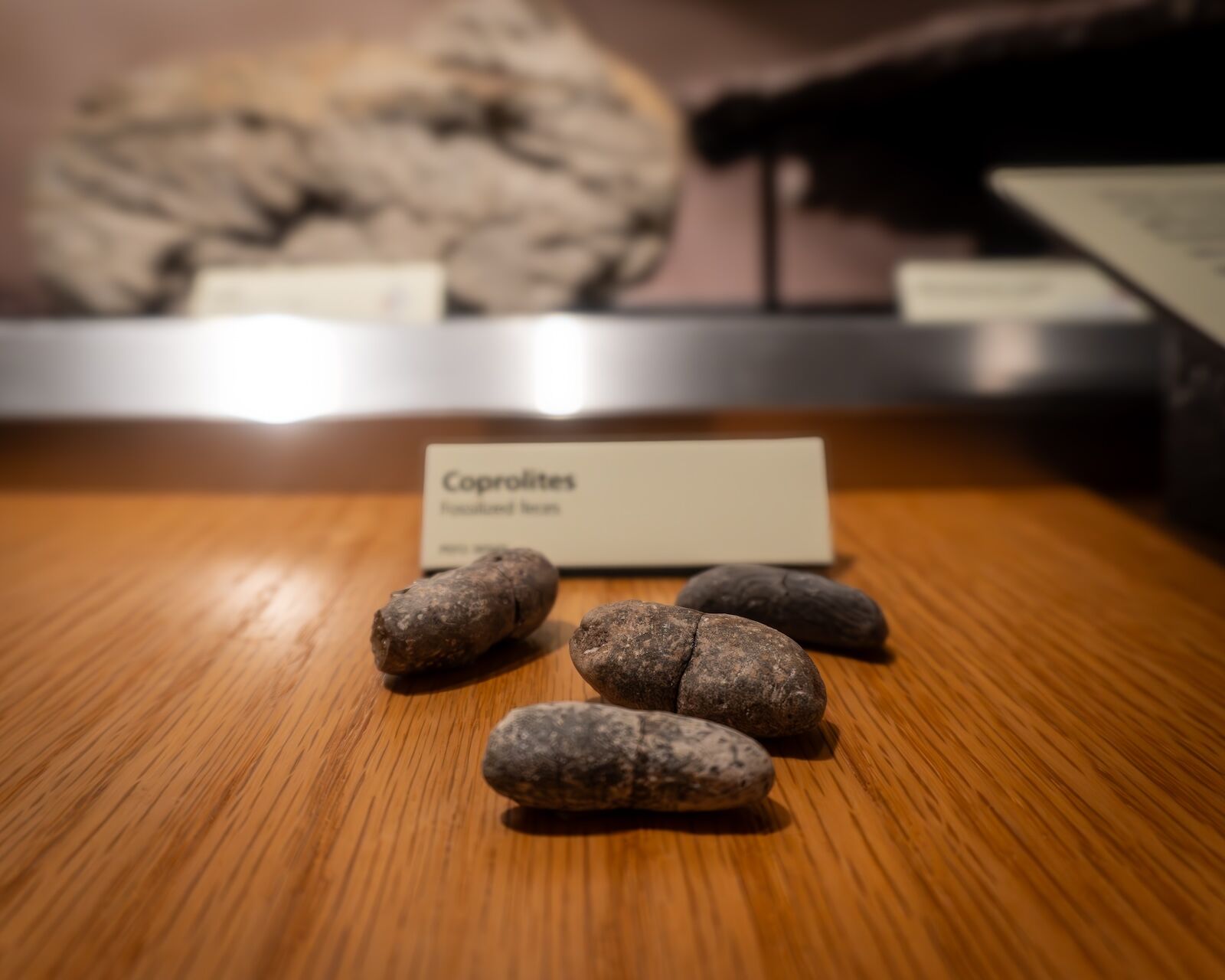
The Poozeum is the world’s only museum dedicated to fossilized feces — and it’s free. The idea for the museum began way back when Founder George Frandsen bought a chunk of fossilized poop from a rock shop in Moab, Utah, at age 18. By 2024, he’d amassed enough to quit his job and move to the town of Williams to open a home for his collection.

In the Poozeum, cases line the walls with specimens ranging from teeny-tiny termite droppings to a massive 20-pound poop. The star is a two-foot-long piece known as “Barnum,” the largest coprolite ever found from a carnivore, believed to be from a T. rex. Bone fragments inside suggest to researchers that T. rex swallowed whole chunks of prey, rather than chewing. It’s potentially the quirkiest museum on Route 66, and The New York Post called it the sh*tiest museum in the world. They meant it as a compliment, of course. And if you’re wondering, naturally, there is a gift shop.

First Americans Museum — Oklahoma City, Oklahoma

best museums on route 66 - first americans museum

Photo: Visit OKC

  • Address: 659 First Americans Blvd, Oklahoma City, OK 73129
  • Admission: Adults $20, Youth $10
  • Hours: Mon-Fri, 10 AM-5 PM; Sat & Sun, 11 AM-5 PM. Closed Tuesdays

Oklahoma City may not be the place most Route 66 travelers spend the majority of their time — which means they miss what’s arguably the most important new museum opened this decade in the US. The First Americans Museum is wildely considered the largest single-building tribal cultural center in the country. It opened September 18, 2021 and sits on 40 acres along the Oklahoma River. The grounds function as a huge clock, tracking seasons by tracing the sun as it moves across two intersecting circles. The noticeable focal point is the “Hall of the People,” a 110-foot-tall glass dome inspired by Wichita and Caddo grass lodges. It’s supported by 10 columns that represent the 10 miles walked every day by Indigenous Americans forced to walk during forced removals like the Trail of Tears.

Inside, exhibits focus on the history of all of Oklahoma’s 39 federally recognized tribes and is curated entirely by members of those tribes. It frequently has exhibits on loan from the Smithsonian’s National Museum of the American Indian in DC, and if you’re into native plants, don’t miss the on-site teaching garden, open year-round.

American International Rattlesnake Museum — Albuquerque, New Mexico

  • Address: 202 San Felipe St NW, Albuquerque, NM 87104
  • Admission: Adults $9
  • Hours: Tue-Sat, 11:30 AM-5:30 PM

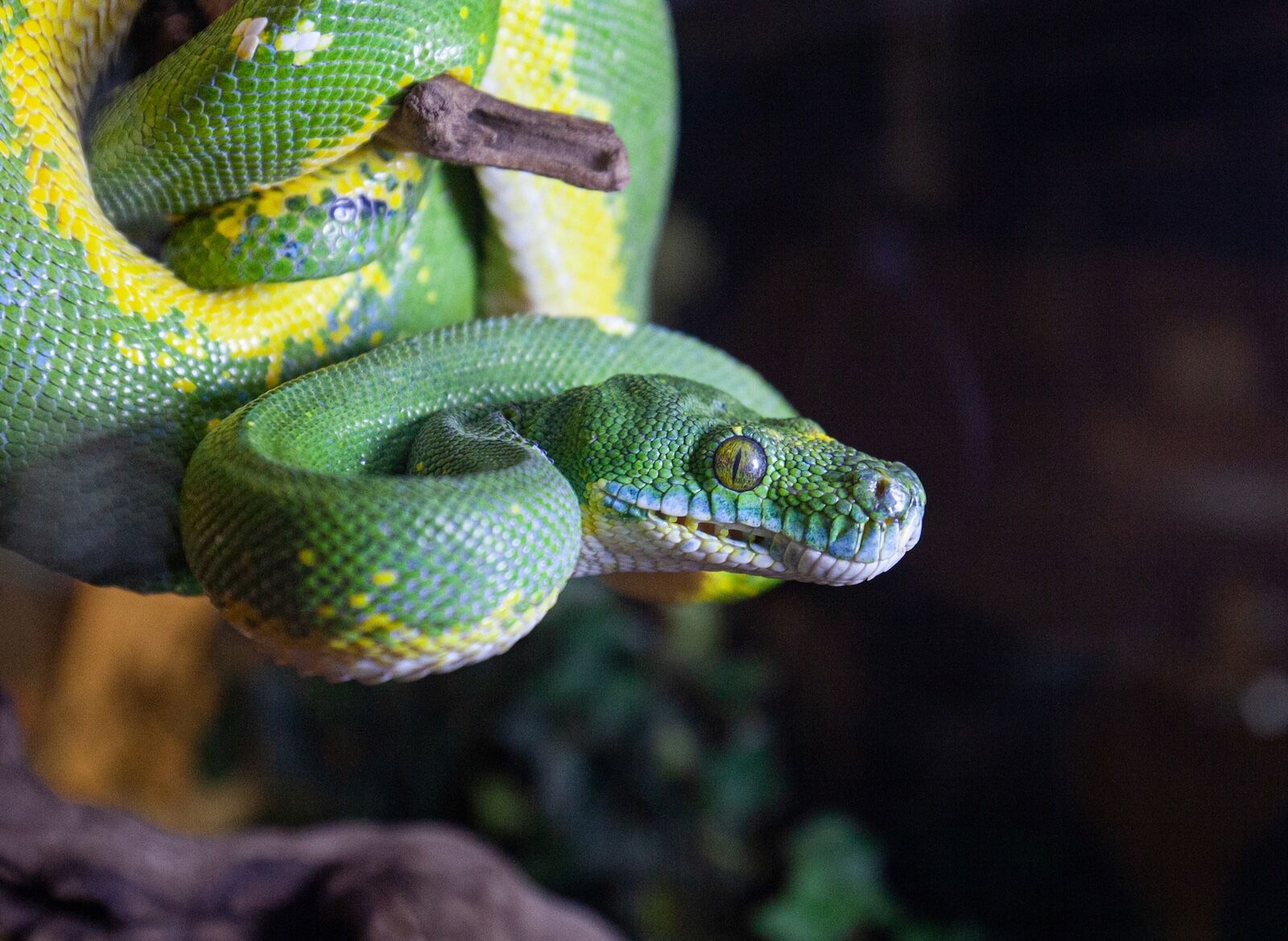
Sitting near the boutiques and coffee shops of Albuquerque’s Old Town Plaza is perhaps the town’s quirkiest draw: the American International Rattlesnake Museum. It’s directly on historic Route 66, now called Central Avenue, and continues the tradition of random side-of-the-road pull-offs Route 66 has long been known for. It’s a passion project from founder Bob Myers, a local who taught high school biology before opening the museum in 1990. According to Myers, it has more rattlesnakes than the Bronx Zoo, the Philadelphia Zoo, the National Zoo, the Denver Zoo, the San Francisco Zoo, and the San Diego Zoo combined. There are 34 species on display, as well as a Gila monster, tortoises, salamanders, and African spurred tortoises (all of whom are rescues). Bonus: every visitor leaves with a Certificate of Bravery, signed by Myers himself.

Meteor Crater & Barringer Space Museum – Winslow, Arizona

  • Address: I-40 Exit 233, Winslow, AZ 86047
  • Admission: Adults $29, Youth $25
  • Hours: Daily 8 AM-5 PM

Roughly 550,000 years ago, a massive meteorite approximately 150 feet wide hit the ground in what’s now Winslow, Arizona. Researchers think it would have hit with a force 150 times more powerful than an atomic bomb.  What it left behind was a crater about 3,900 feet wide and 560 feet deep, blasting a rim 149 feet tall upward around the edges. Today, it’s one of the best-preserved meteorite impact craters on Earth — and the site of one of the best museums on Route 66: the Meteor Crater and Barringer Space Museum.

The crater remains privately owned but open to the public. It also opened to NASA, which used it to train astronauts from several Apollo missions (including Neil Armstrong and Buzz Aldrin), thanks to its remarkable similarity to the surface of the moon. Inside the museum and visitor center, exhibits cover everything from meteorites and asteroids to the space program and the solar system more broadly. And yes, you can touch a real meteorite.

Philbrook Museum of Art — Tulsa, Oklahoma

  • Address: 2727 S Rockford Rd, Tulsa, OK 74114
  • Admission: Adults $20, Youth $9
  • Hours: Wed-Sun, 9 AM-5 PM

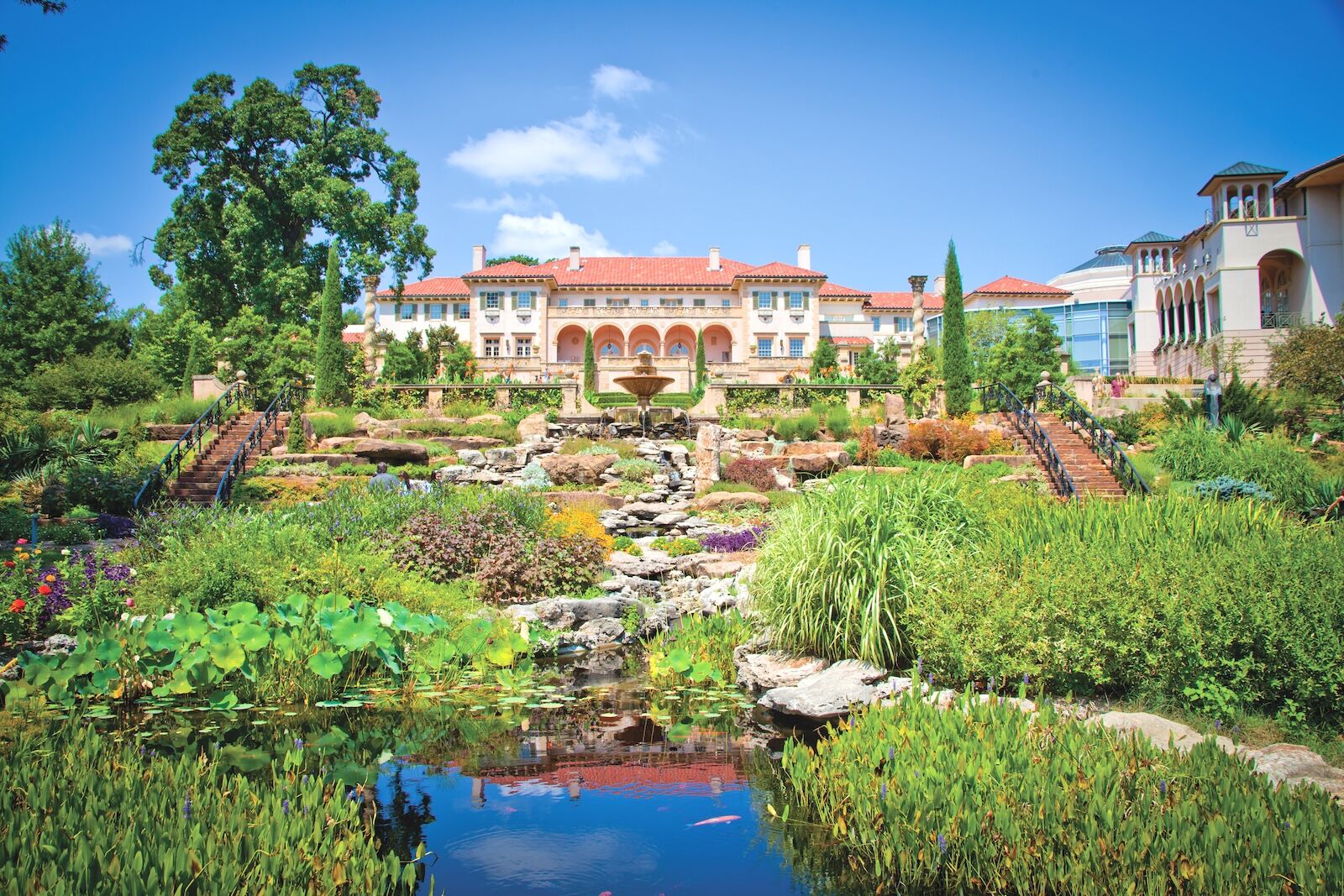
Tulsa is sometimes called the birthplace of Route 66, and fittingly, it’s home to one of the most renowned art museums along the route. The Philbrook Museum of Art is in a former 1920s villa once owned by an Oklahoma oil tycoon. It’s a three-story Italian Renaissance mansion complete with 25 acres of formal, manicured gardens with sculptures and fountains. The family donated the property to the city in the late 1930s and since then, it’s been used as a base for collecting some of the country’s most magnificent art.

The Philbrook is often considered one of the top 40 best art museums in the United States and one of only a few that allows visitors to see a  historic home, formal gardens, and an extremely noteworthy art collection. You’ll find exhibits on Native American basketry, pottery, and jewelry, Italian Renaissance paintings, and modern works from Picasso and Pollock.

Route 66 Car Museum — Springfield, Missouri

  • Address: 1634 W College St, Springfield, MO 65806
  • Admission: Adults $15, Youth $5, Seniors $13
  • Hours: Daily, 9 AM-5 PM

Springfield, Missouri doesn’t get as much Route 66 glory as some of the bigger stops along the route, but it’s definitely worth your time (and not just for fun photo ops). It’s home to the Route 66 Car Museum, one of the most entertaining museums along the entire route. The 20,000-square-foot museum holds a privately owned collection started in 1990 when the owner bought a Jaguar, and expanded from there. Now, the museum holds 75 vehicles going back as early as 1907.  It has seven Jaguars, two Rolls Royces, the famous truck from the 1940 film The Grapes of Wrath, a Batmobile, a car from Ghostbusters, and a DeLorean identical to the one from Back to the Future. It’s the kind of museum that will appeal to both seven-year-olds and 70-year-olds, and is worth a stop even if you wouldn’t consider yourself a car aficionado.

Discover Matador

Save Bookmark

We use cookies for analytics tracking and advertising from our partners.

For more information read our privacy policy.