I was beginning to think I had taken a wrong turn when a small wooden sign appeared in the road ahead of me. It read “Paradero Hotel” in bright red letters, with an arrow pointing toward a dirt road that looked even narrower and bumpier than the one I had been following. As I drove through the scattered farmlands south of Todos Santos, Baja California Sur, with nothing but desert and mountains in the distance, no one would have imagined I was just a few feet away from one of the region’s most distinctive boutique stays.
Photos: Rulo Luna
This Todos Santos Hotel Is Rethinking What All-Inclusive Luxury Can Mean
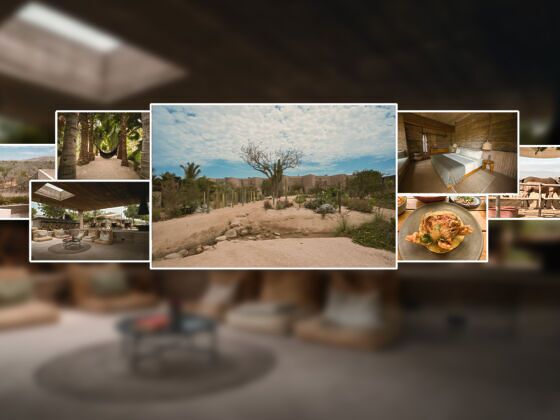
The farmlands suddenly gave way to desert gardens planted with cacti, torote trees and other species native to Baja Sur. This unexpected amount of green was followed by the hotel’s stables and the parking lot, where the staff pointed me toward a low concrete wall curving into a dark tunnel. I walked through it into the smell of copal and incense. Someone handed me a cold, scented towel. In front of me stood a large cardón cactus in the middle of the main courtyard. Still, I couldn’t figure out exactly where the hotel was.
This low-profile approach also shapes Paradero’s take on all-inclusive luxury. Its most complete package, called Unbound, does not rely on the usual promise of indulgence within the resort’s walls. It keeps the convenience of having a trip planned for you, but uses that planning to deliver experiences that define a stay here: outdoor activities, local food, wellness practices, the town of Todos Santos, and the desert around the property.
Experiencing luxury without noticing it
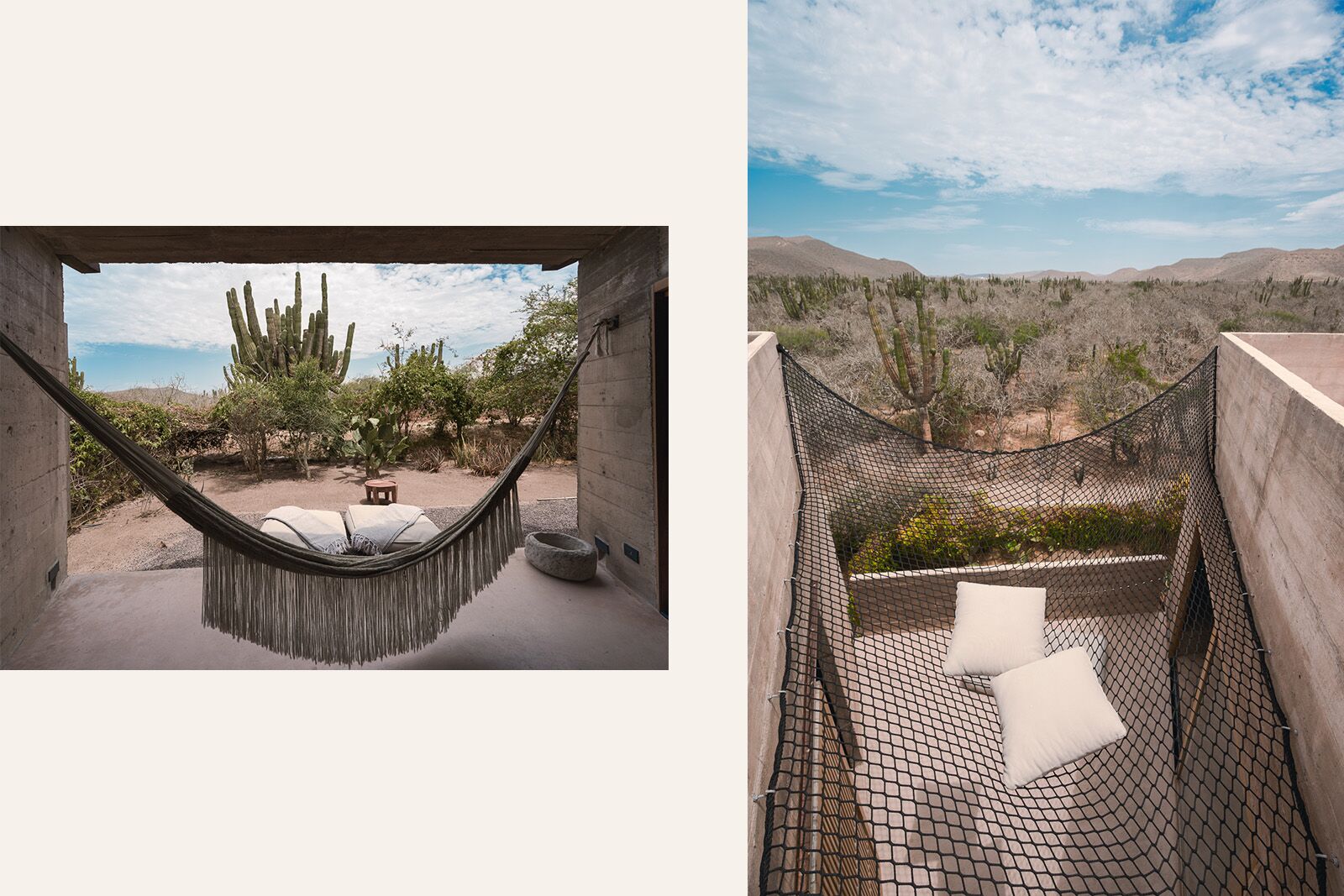
The amenities in each room allow guests to immerse themselves in the desert landscape. Photos: Rulo Luna
In Baja California Sur, high-end hospitality is moving away from a single idea of luxury. Los Cabos still has the polished beachfront resorts, golf communities, private villas, and large-scale properties that made the destination famous. Around Todos Santos, things are starting to look different, with farm-driven restaurants, smaller hotels, surf-centered beaches, and access to the Sierra de la Laguna mountains. Paradero belongs in this second version of luxury.
Beyond the main courtyard I found the lobby, a shaded open area with hammocks and views toward TENOCH’s open kitchen and an infinity pool mostly hidden behind concrete walls. In the distance, the suites barely stood out from the gardens around them. After a few minutes here, I began to understand this was, in fact, a hotel disguised as the local desert.
Frederic Cappello, general manager of the hotel, told me the architects behind the project focused on reducing visual noise. The buildings are meant to look as if they emerged from the ground, and share the color and texture of the soil.
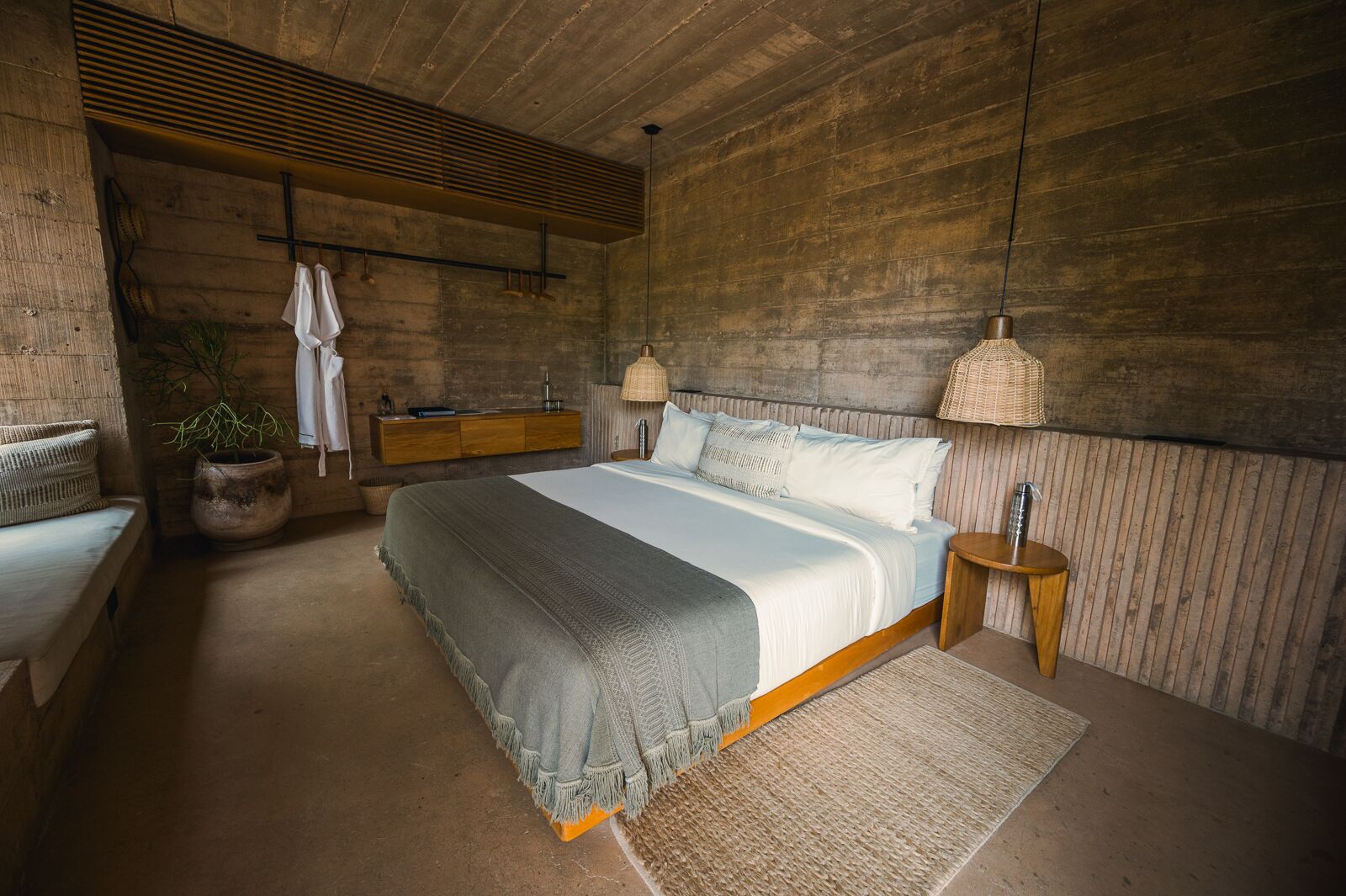
The design of Paradero’s rooms is minimal but warm.
Photo: Rulo Luna
The rooms echo the main arrival, starting with the curved passage that opens into a private patio, small garden, and bedroom framed by concrete walls the color of the earth. Some ground-floor suites have outdoor tubs, while others have hammocks. Upper-level suites have observation nets that look over the cactus gardens or toward the mountains. The design is spare, but far from cold with beige concrete, wood, metal, and textiles.
There are no TVs, and guests are encouraged to leave their phones with the staff after check-in, though this is not mandatory. The rooms have Wi-Fi, which keeps the limited-technology gesture from feeling rigid, but the message is clear: Paradero wants guests to notice the desert, the silence, the occasional wildlife, and the changing light before reaching for another screen. The same idea extends to the activities bundled into the hotel’s “all-inclusive” program.
A different kind of all-inclusive
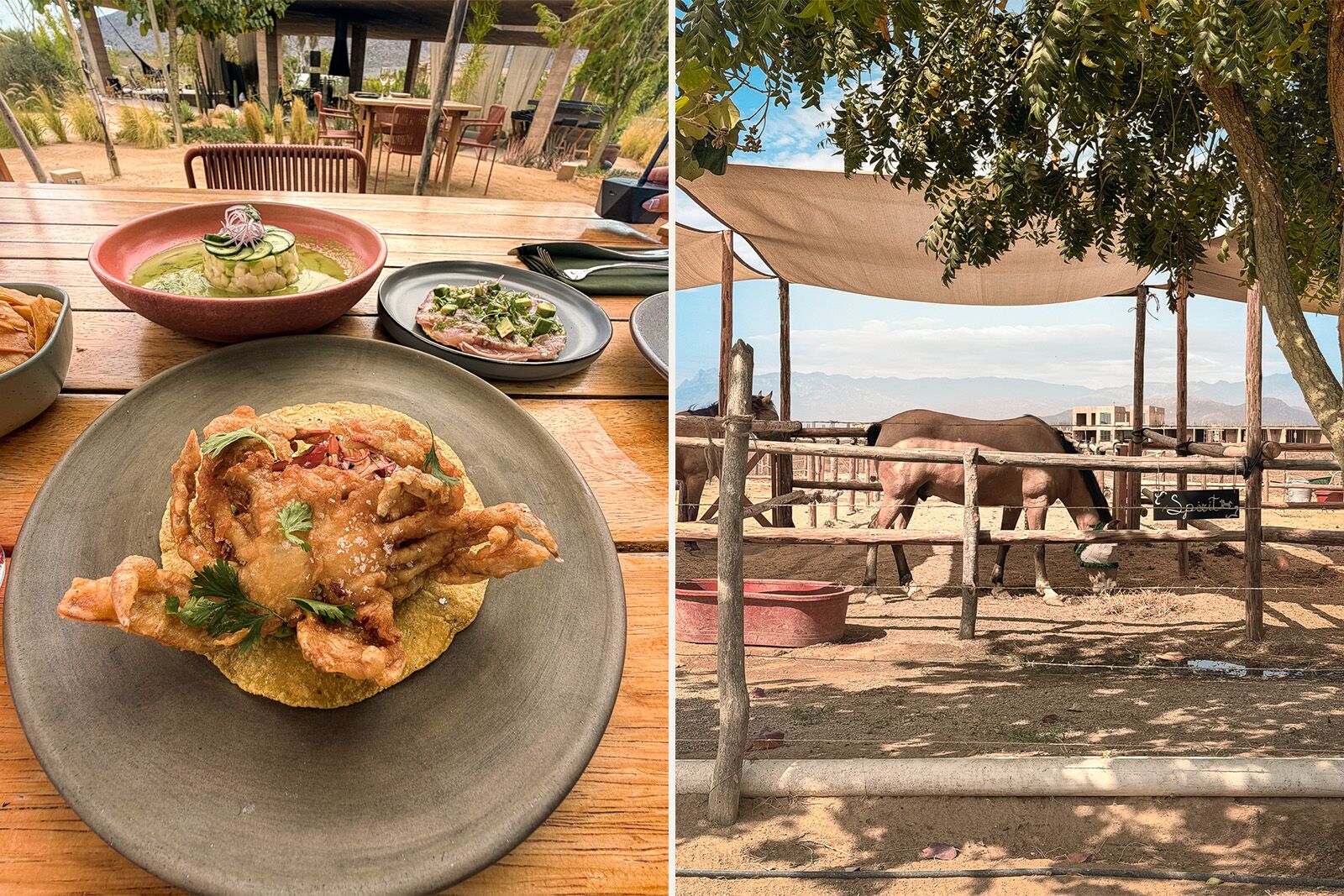
The Unbound package includes both Michelin-recognized dinner options and outdoor activities like horseback riding. Photos: Rulo Luna
Behind the front desk, surfboards lean against the wall. Nearby, an activity board lists what guests can do that day, and the list is long: surfing, hiking, horseback riding, cooking classes, and tours of Todos Santos. These activities are included with the all-inclusive Unbound package, which also covers meals and beverages at TENOCH, the property’s Michelin-recognized restaurant, along with spa access, wellness practices, and airport transfers.
A traditional all-inclusive often uses abundance as the main argument: more restaurants, more drinks, more entertainment, and more reasons to stay on property. Paradero’s version is built around the promise of disconnection. It does not give guests more to consume as much as it removes the friction between them and the place they came to experience. Guests can arrive for the Unbound package and let the property handle the structure of their trip.
The activities promoted through the Unbound package are Baja experiences made legible to a luxury traveler. Uriel, the guide who walked me through the property, put it perfectly: “It’s mind-blowing to me that people from all around the world come here to experience all the things I used to do as a kid. Go up the mountains, ride a bike through the fields, or stay out at night to see the stars.”
Beyond the outdoor and wellness activities, TENOCH gives the package much of its weight. Since Paradero has only one restaurant, the food cannot feel like an afterthought. The menu leans on local seafood and the property’s garden produce, while also bringing in ingredients and techniques from other regions of Mexico. I tried two of its signature dishes: the crab taco — a visually striking tempura-battered whole crab with a rich, smoky flavor on a homemade blue-corn tortilla — and the green apple aguachile, where the sweet acidity of apples and limes contrasted with the fresh seafood. The menu is seasonal and the restaurant also helps connect the guest’s day to what grows in the property’s garden, nearby farms, and around Todos Santos.
Todos Santos and the new luxury model in Baja
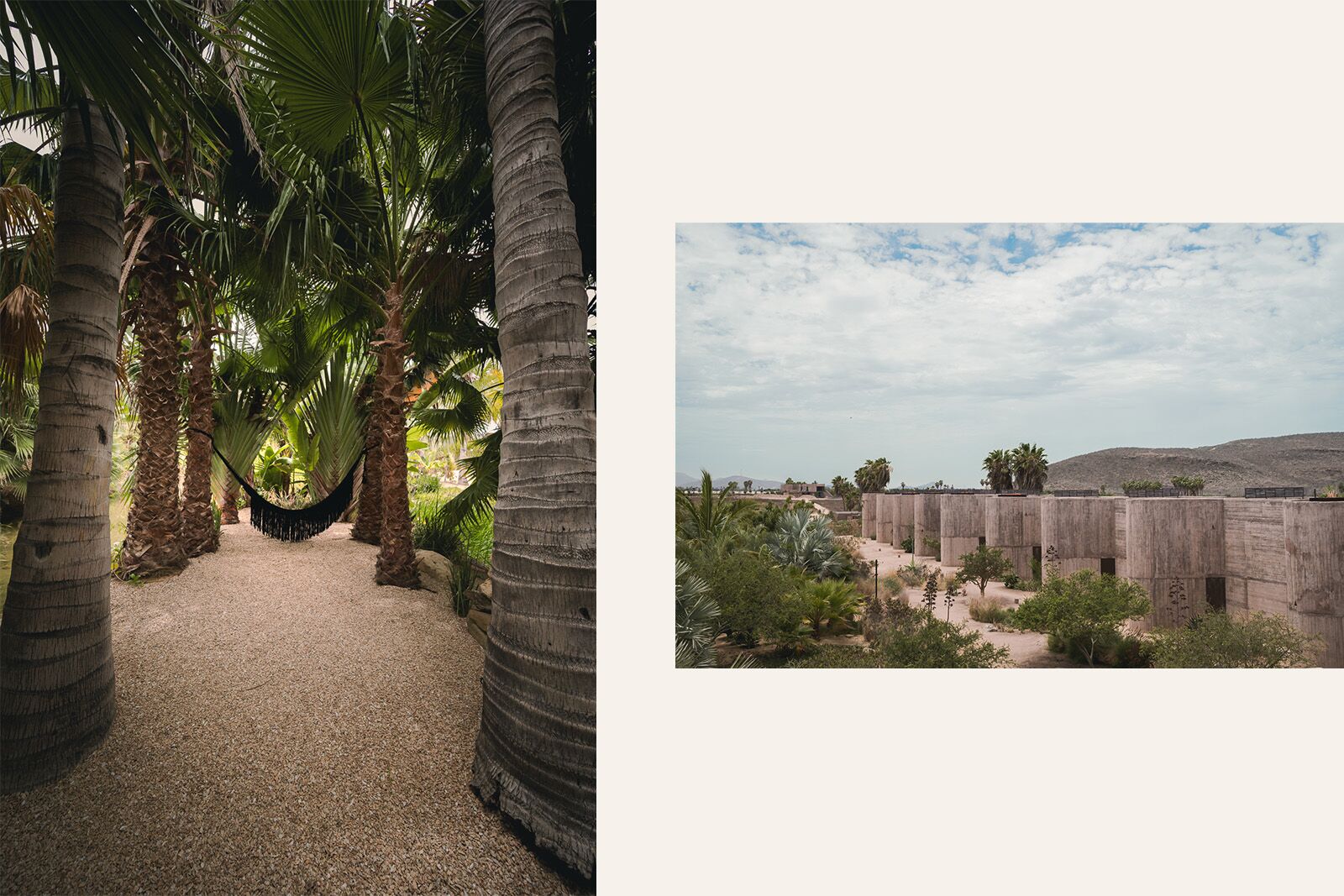
Properties like Paradero let the natural landscape take the lead. Photos: Rulo Luna
Todos Santos and its surrounding agricultural communities are close enough to Los Cabos to be part of the same travel conversation, but they do not feel like a smaller version of more touristed areas like Cabo San Lucas or San José del Cabo. The area south of town has become one of Baja California Sur’s strongest food corridors, with TENOCH, Cocina de Campo by Agricole, Benno, Oystera, and DŪM all appearing in the latest Michelin Guide. Farm-to-table dining and agrotourism are becoming key parts of how the region presents itself to travelers.
It’s not only a culinary story. New properties are building their appeal around nature, outdoor activities, wellness practices, and connection with local communities.
This is where the contrast with traditional all-inclusives becomes clearer. Those resorts often work by making the destination feel optional. Guests can arrive, eat, drink, and be entertained without ever needing to understand much about the place outside the resort. Paradero’s Unbound package offers the comfort and ease of having everything arranged, but the structure points outward.
This version of “less” is highly designed, staffed, packaged, and priced. The disconnection is intentional and the sense of remoteness comes with Wi-Fi, good service, and a Michelin-recognized restaurant. Paradero gives travelers a way to experience the slower, more rural side of Baja without asking them to give up the comforts that brought them to a luxury hotel in the first place. Its all-inclusive package is not designed to keep guests inside the resort. It is meant to make the surroundings easier to experience. 