Deep in the remote wilderness of northern Zambia, something extraordinary (and untested) is happening along the muddy riverbanks of the Lunga River. For the first time in 15 years, lions are again prowling the landscape of Lolelunga Private Reserve. Their reintroduction, which began on April 12, 2026, is a major moment not just for the 74,000-acre reserve, but for lion conservation across the country: It marks the first time in Zambia’s history that captive lions have been reintroduced to the wild.
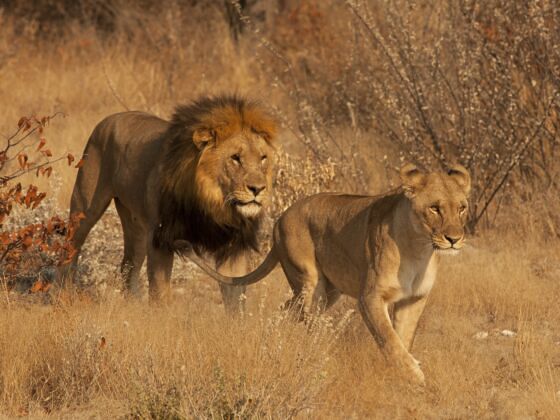
Photo: DDniki
/Shutterstock
A Zambian Reserve Is Attempting Something Never Done in the Country: Rewilding Captive Lions
The project is being managed in partnership with Zambia’s Department of National Parks and Wildlife and the Ministry of Tourism. A male and female lion, each seven years old, were relocated from Mukuni Big Five in Livingstone. Mukuni Big Five is a tourist attraction near Victoria Falls where people pay to walk next to lions, interact with cheetahs, and ride elephants. It’s a commercial wildlife entertainment facility, and while it does run some conservation programs, it’s also attracted criticism over animal welfare.
Rewilding the lions into Lolelunga’s ecosystem could take months, but the various conservation partners involved have spent years preparing the effort to be as successful as possible.
Why lions, and why now?
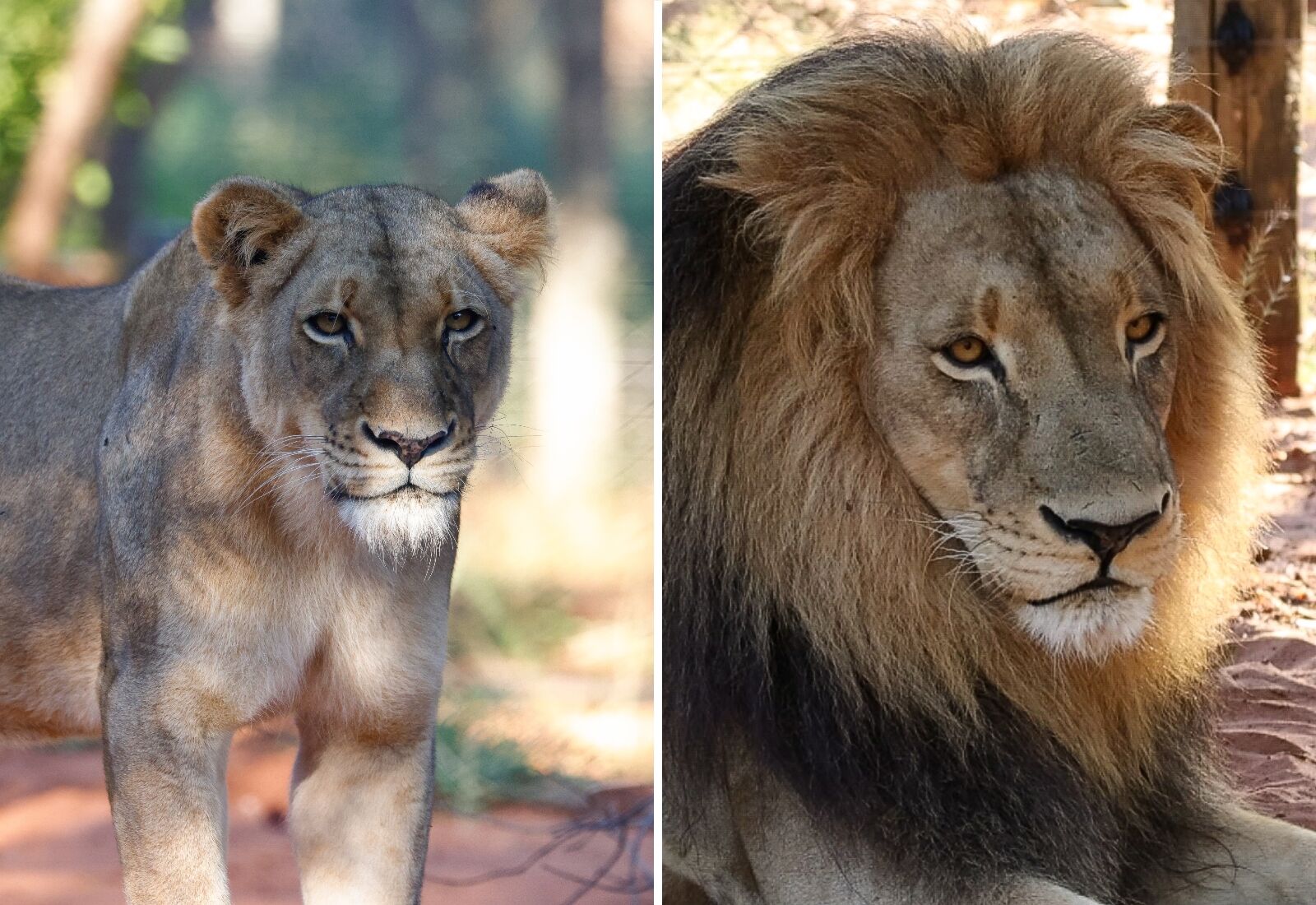
The female and male lions, dubbed R7A and R7. Photo: Lolelunga Private Reserve
The African lion is classified as “vulnerable” on the IUCN Red List. Its range has shrunk by an estimated 36 percent over the last three generations, and today only around 23,000 remain on the continent, down from as many as 200,000 a century ago. Zambia is one of only a handful of countries estimated to have more than 1,000 resident wild lions, but most of the population is in major national parks like South Luangwa and Kafue. That means the surrounding landscapes are mostly devoid of the apex predators, despite nearly the entire African continent being their native habitat.
At Lolelunga, lions have been gone for more than 15 years. But long before that, land in the area was made unusable through livestock farming, deforestation, aggressive fishing, and logging. Lolelunga opened in August 2025 and is Zambia’s first fully fenced private reserve, but the effort to open it started more than a decade prior. The Zambian owners acquired and fenced the massive reserve by working with the local Kaonde community (many of whom are now reserve rangers), rewilding the land, and working to reintroduce native flora and fauna. It’s most famous for its cheetah program, launched in 2024, when it reintroduced five cheetahs from a more park-type environment to the wild (though it’s worth noting the cheetahs weren’t fully captive). Less than a year after the release, three cubs were born — the first-ever cheetahs born on a private reserve in the country.
How the process will (hopefully) work
View this post on Instagram
The lion pair is currently housed in a secure enclosure at the reserve about 10 times larger than their previous habitat. The process of rewilding them, or preparing them to live in the wild, will take at least six to eight weeks and is being overseen by a wildlife veterinarian, a lion rewilding specialist, and Lolelunga’s on-site management team. Lolelunga Reserve Manager Divan Grobler described the process in three phases to Matador Network, beginning with ensuring the lions are physically healthy and socially bonded. “A bonded pair is more likely to hunt successfully and defend themselves once released,” he says.
The second stage is “scavenging trials,” where staff will leave carcasses in the area in a way that mimics what they might naturally find. “A common misconception is that lions only hunt live prey,” Grobler says. “In reality, they are opportunistic survivors.” The goal is to teach the lions that food is found in the environment, not provided by people. This prepares them also to practice active hunting by understanding that opportunities to eat are in their surroundings.
Finally, once the experts think the lions are ready to head out on their own, the last phase begins: monitoring them as they adjust to their new lives. Both lions will have GPS tracking collars to monitor their locations and make sure they’re following natural movement patterns. If the lions remain stationary for extended periods, it probably means it’s a kill site, explains Grobler. In those cases, the teams can investigate to make sure they’re successfully hunting and maintaining a healthy, normal diet.
Key throughout all of this is “human aversion tracking,” as the lions first years of life were spent surrounded by tourists. Monitors in the field will continue to report on the pair to both visually gauge their health and make sure they’re developing a healthy wariness of humans, combined with a natural predatory curiosity. But the team will aim to keep contact with the lions minimal, if at all. “Maintaining their ‘wildness’ by minimizing contact is key to their safety post-release,” says Grobler.
Why Lolelunga Private Reserve?
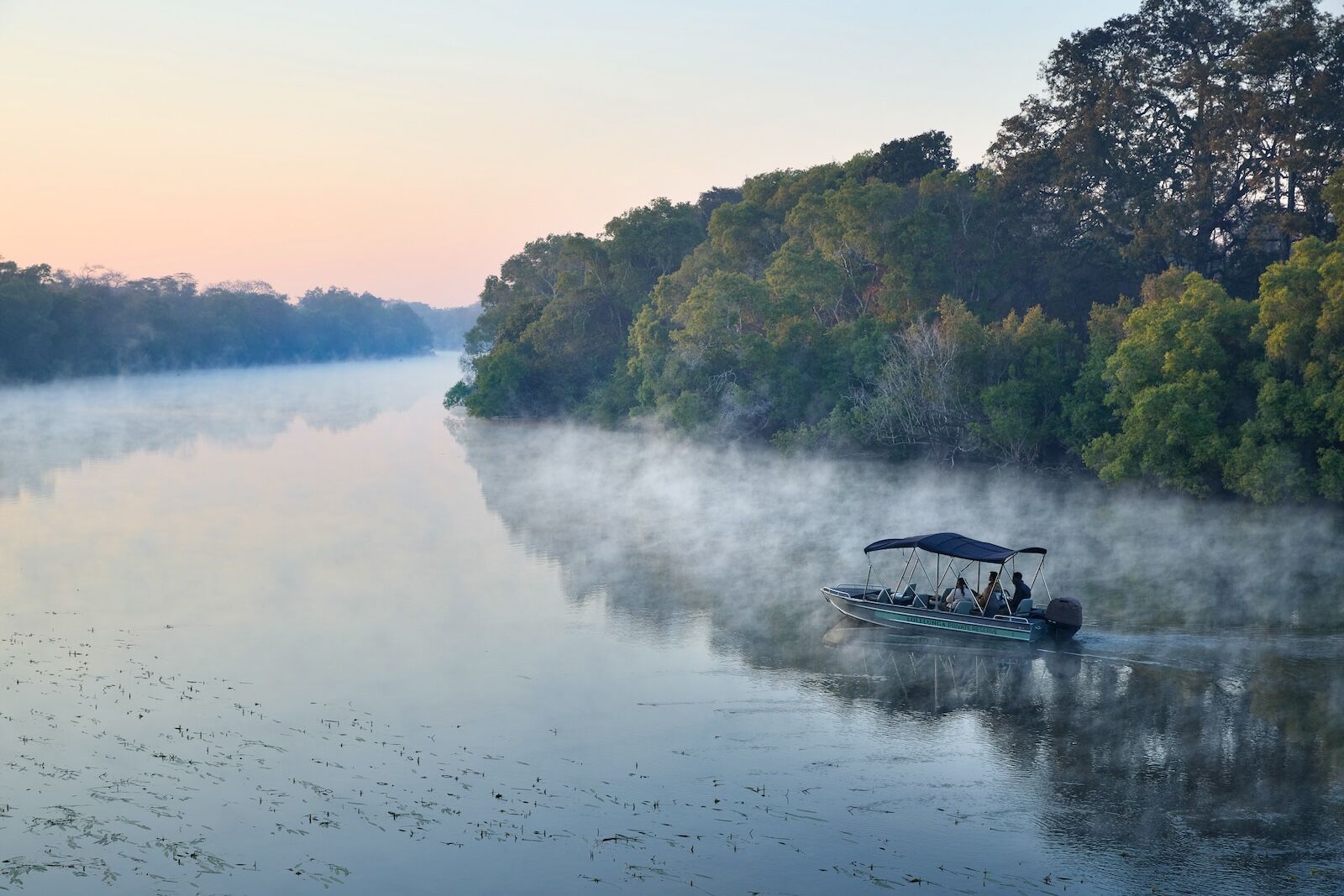
The Lunga River, bordering the reserve. Photo: Lolelunga Private Reserve
One reason the lions came from Mukuni Big Five and were transferred to Lolelunga relates to protecting the genetic integrity of future generations. Lolelunga is in the northern part of the country while Mukuni Big Five is on the southern border with Zimbabwe. This ensures the lions won’t have any genetic overlap with lions they could breed with in other nearby game management areas or bordering Kafue National Park.
The reserve’s existence is also fully supported by the local Kaonde community, many of whom work at the reserve. They’ve drilled more than 50 boreholes to supply fresh water for animals and humans, built two secondary schools for area children, and provided agricultural support to 500 local families. The reserve’s locally owned management group has also committed to supporting future animal conservation projects in partnership with local communities and Zambia’s Department of National Parks and Wildlife.
“If this pair thrives by demonstrating they can hunt, defend territory, and remain independent of human support, it paves the way for a larger vision,” Grobler tells Matador Network. “Success with these pioneers will serve as the blueprint for future releases, helping Lolelunga establish a genetically diverse and self-sustaining lion population.”
Have captive animals successfully been rewilded before?
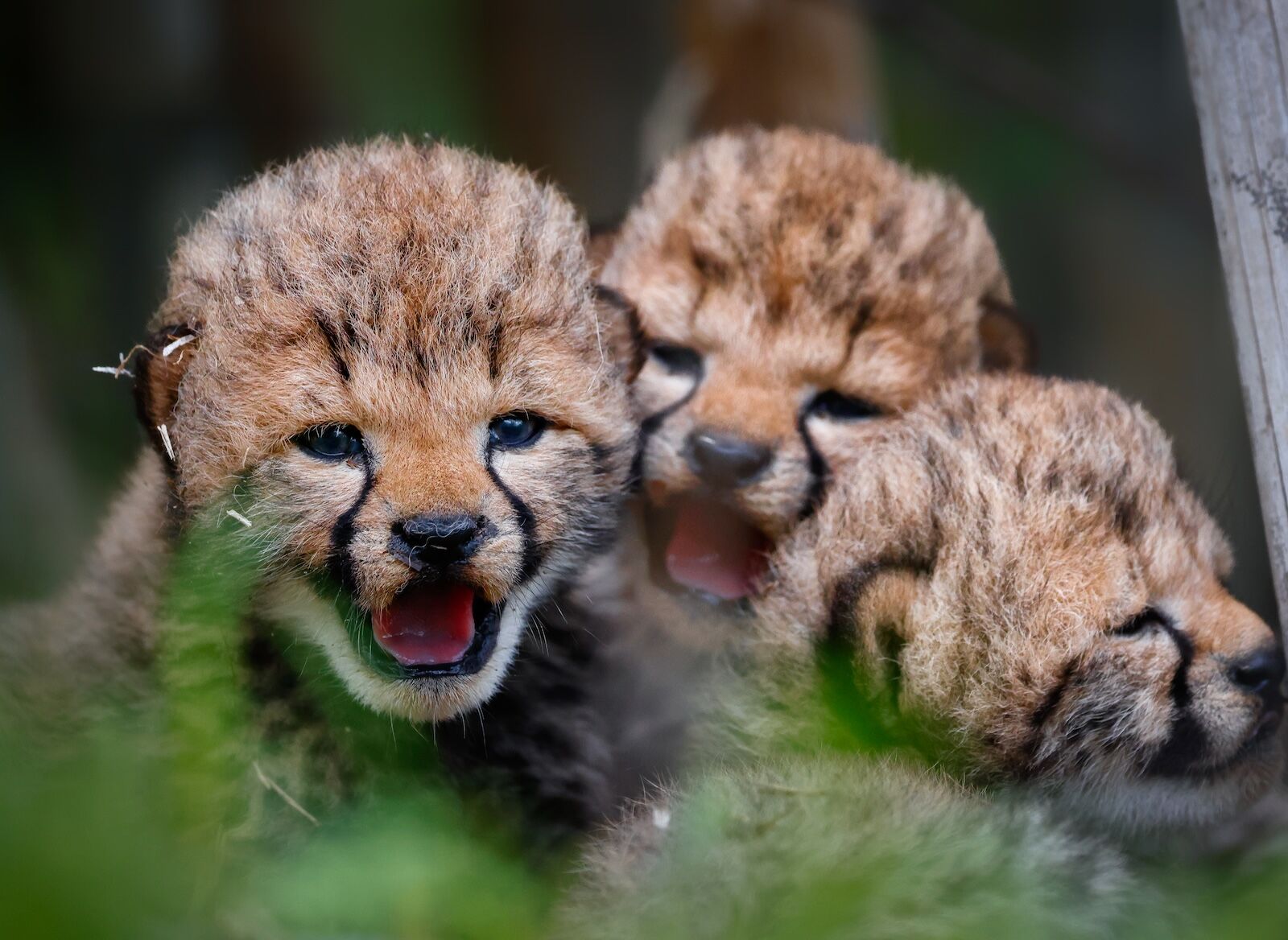
Photo: Lolelunga Private Reserve
There is some precedent that these lions could thrive in the wild, though captive animal rehabilitation is still in the early stages. A study from a private reserve in South Africa’s Limpopo Province found that captive-bred lions, once released into a free-roaming environment, were able to form social groups, hunt independently, reproduce, and raise cubs to maturity. In October 2024, the Aspinall Foundation reported that a captive-born lion rewilded to the South African wilderness made its first successful kill — something they said defied expert expectations.
But there’s also skepticism, and one study concluded that “no lions have been restored to the wild by captive lion rewilding since efforts started in 1999,” and that it “cannot be considered a model that should be widely adopted for large felids.” However, Lolelunga’s program is pioneering new ways to make it work, as modeled after its successful cheetah release program. So it’s perhaps most accurate to say the science is still evolving and for now, is being treated as an ambitious, well-planned, and closely-monitored wildlife experiment.
How to visit
Lolelunga opened to guests in August 2025 and holds just 14 guests at a time in rooms overlooking the Lunga River. It offers all-inclusive packages that cover accommodation, meals, beverages, and activities including game drives, fishing, and guided walks. If you’re flying into Zambia’s Kenneth Kaunda International Airport (LUN) in Lusaka, where most international flights arrive, getting to the reserve is pretty straightforward. The reserve has a private airstrip with direct flights available from Lusaka (as well as Livingstone, the Lower Zambezi, and Mfuwe). From Lusaka, the flight takes just under an hour and is coordinated for guests by the reserve.
Unlike most established safari destinations in the country, which are connected to or part of national parks, Lolelunga is a privately owned and fully fenced reserve. So wildlife management, visitor numbers, and conservation decisions are controlled entirely by the reserve, rather than the government. It’s planning for future releases targeted on the Big Five, and is one of the only places in the country where you have a chance to see cheetahs, as fewer than 100 remain in Zambia’s wilds. 