Photo: Anna Pasichnyk/Shutterstock

Skip the Cookout. Take the Revolutionary Road Trip.

South Carolina North Carolina Road Trips Holidays
by Tim Wenger Jul 7, 2026

The cookout, the flag bunting, the fireworks. We all know the routine on the 4th of July. This year the ritual comes with extra weight, as it’s the semiquincentennial, marking 250 years since 1776.

In that light, I want to make an unfashionable case: the most clarifying thing you can do this summer isn’t to simply raise a toast, and it’s certainly not to argue about what America means. Rather, it’s to travel deeply around the country for insight into the American experiment that is still very much evolving.
This article first appeared on Matador Network’s behind-the-scenes Substack newsletter, where our editorial team shares the inside dirt on being professional travelers.


Subscribe to Matador Network’s
Free Insider Travel Substack


I got onto this after talking with Darley Newman, host of the PBS series Travels With Darley and author of the recently published book Revolutionary Road Trip. She calls the book a “storytelling vehicle” that chases the margins of the well-trod stories for the lesser-known topics. What stuck with me from our conversation was her insistence that history isn’t done.

“People think of the past and they’re like, I’m going to this historic home and I’m just going to see the static history,” she told me. But in many cases, “it’s still evolving.” The rangers and historians she met, she said, are “safeguarding the history and learning new history because there’s constantly things being discovered.”

The American idea isn’t set in stone. Amendments happen for a reason. Things are, literally, still being discovered. A few things covered in Newman’s book include:

john dickenson plantation - revolutionary road trip

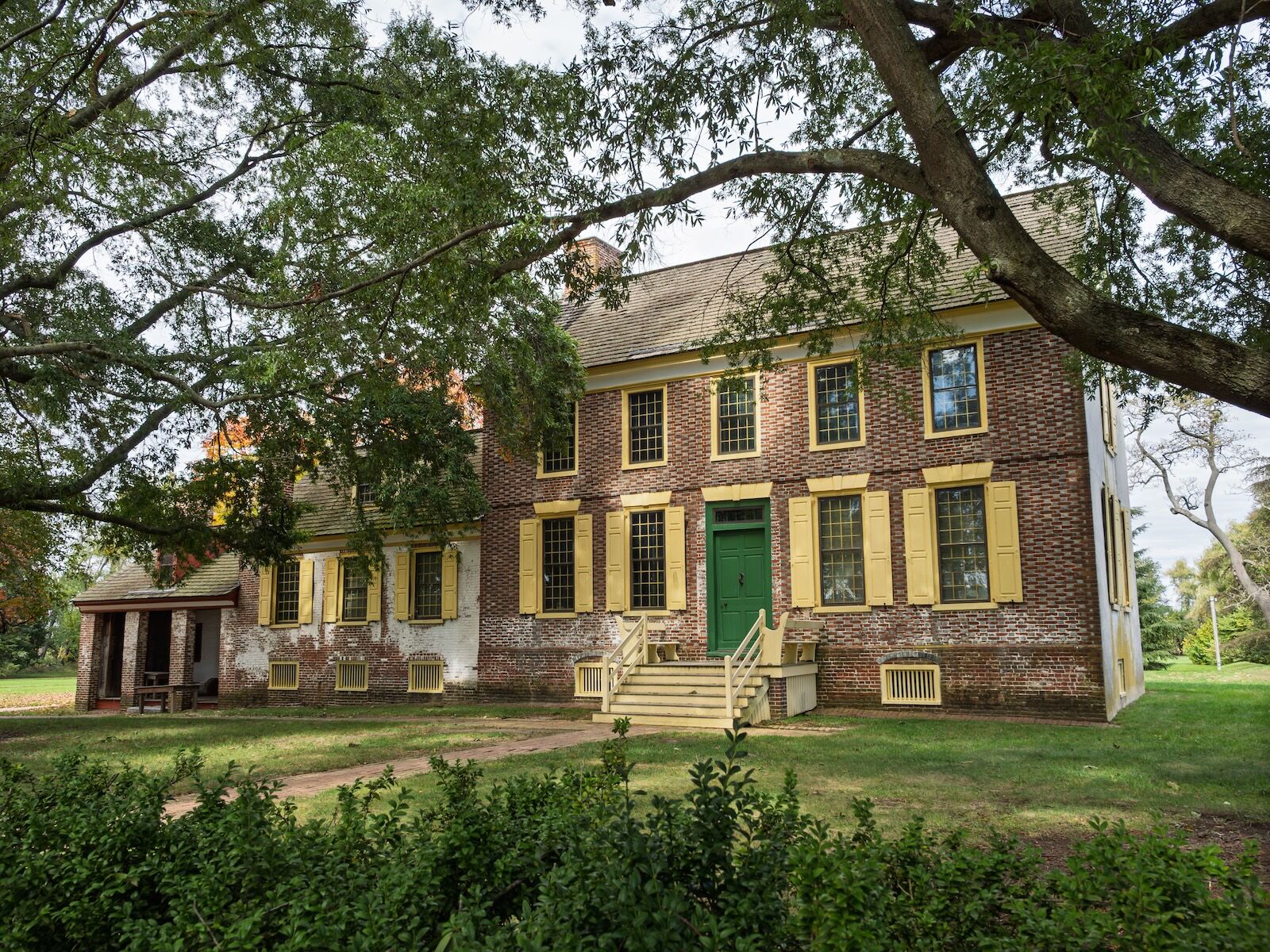
Layers of America’s history are still being discovered every day at places like the John Dickinson Plantation. Photo: Karlsson Photo/Shutterstock

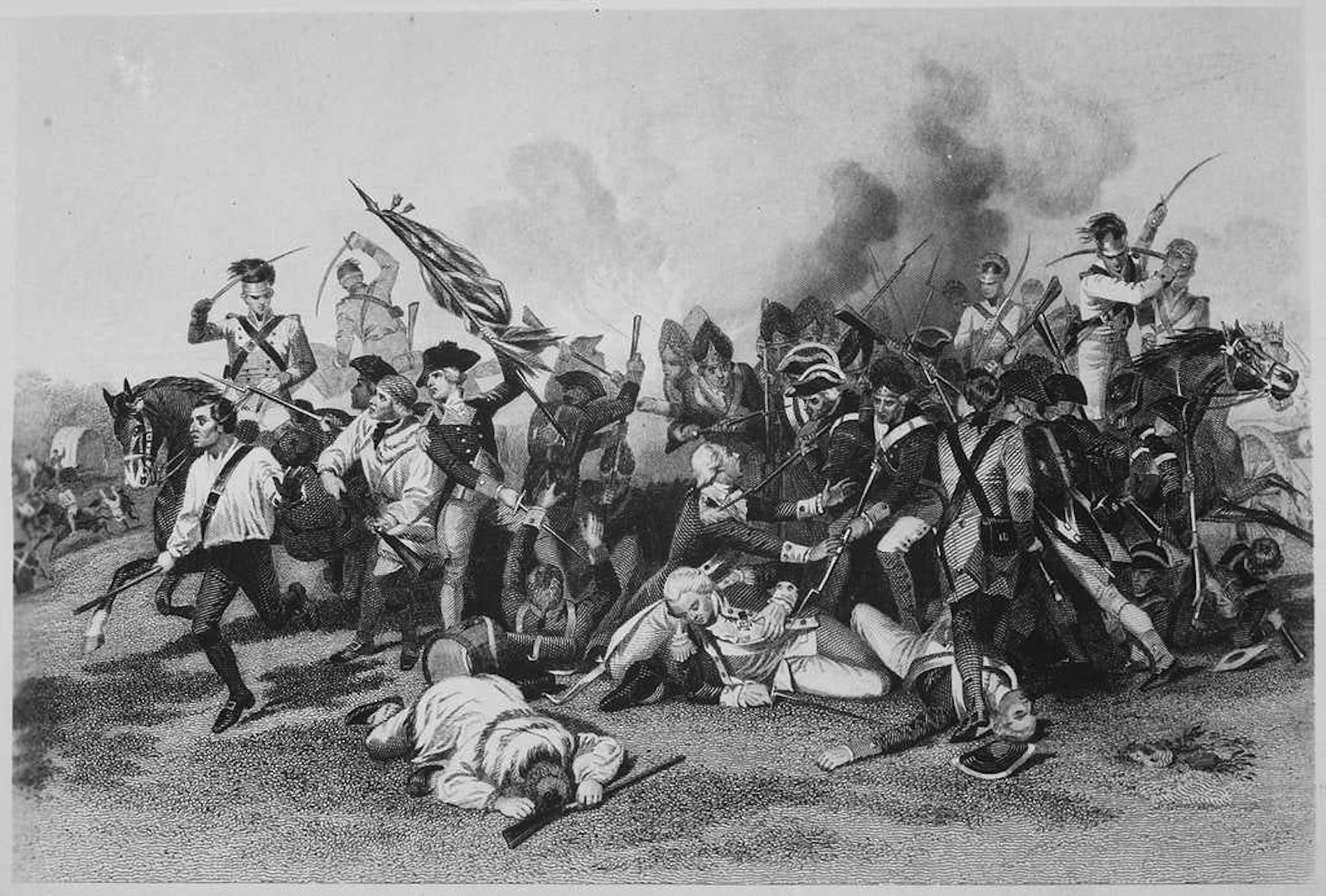
At Camden Battlefield in South Carolina, where the British took one of their worst beatings of the Revolutionary War in 1780, archaeologists recently recovered the remains of 14 soldiers from Maryland’s 1st Brigade across several burial sites. Forensic analysis put two of them between 16 and 19 years old. Two and a half centuries on, we’re still learning the names and the ages of the people who died in America’s first war.

The Greensboro History Museum in North Carolina holds a striped knit “liberty cap” worn by a militia farmer named Arthur Forbis at the Battle of Guilford Courthouse. He was wounded there in 1781 and died days after he made it home. His family kept the cap for generations — in a sock drawer, in a closet — until a descendant donated it in 1926. Everyday objects almost never survive a war, particularly uniforms (which get buried with their owners) and anything wool (which gets worn to nothing). This one survived because somebody refused to let go of it. Newman told me people still walk into museums with artifacts that may be of interest, and the record grows over time.

A few miles away, at Guilford Courthouse National Military Park, a Citizen Archivist Project is identifying Black Patriots who fought for the new nation in the 1781 battle and were written out of the story afterward. At least 40 have been connected to the battle so far, among them Andrew Pebbles, who rode with “Light Horse” Harry Lee’s Legion and was wounded at Eutaw Springs. Most of these men fought for an independence that would not be extended to them or their descendants for generations.

In 2021, at the John Dickinson Plantation in Delaware, where Dickinson became the so-called “Penman of the Revolution,” researchers confirmed the location of an African-American burial ground about half a mile from the main house. They found it through archaeology and archival work, yes, but also through the recorded recollections of an enslaved woman named Violet, whose words pointed them to a sacred site that history had misplaced. Gloria Henry, who works at the site, is now coordinating with descendants and community members on how the ground should be honored.

Outside Charleston, Lisa Collins, chief of the Wassamasaw Tribe of Varnertown Indians, is documenting her people’s role in the Revolution, including supplying beef to Francis Marion, the guerrilla fighter you may know as the “Swamp Fox.” That history lived in oral tradition, outside the archive, until someone decided it was worth writing down.

Traveling on the 4th of july -  historic image

“Battle of Camden, Death of DeKalb.” Engraving after a painting by Alonzo Chappel. Battle fought August 16, 1780. Photo: National Archives

Here’s what all of it added up to for me.

The founding of the country was contested from the start by people who disagreed bitterly about what the new country was and who it was for. That story is being contested and widened still as we get a deeper understanding of the people who lived that history, through burial grounds and attic drawers and tribal oral histories and the soil of battlefields. The story keeps getting bigger. It keeps adding names. And the inarguable takeaway is that the desire for the freedom to live, to love, to roam, to provide, is embedded deep within each of us, no matter where we’ve been or where we’re going. The most beautiful thing about America is that we’ve sought to recognize that, and at our best, even celebrate it.

The more I see of this country, the more I understand that the ways I have looked at it throughout my life are flawed or, at the very least, lack the nuance needed to grasp why we haven’t reached a “perfect union.” We’re still building 250 years on. Yet each of us remains stuck in what we’ve experienced and observed only in our lifetimes and, too often, only in the very recent past.

“History isn’t distant,” Newman told me. “It lives in communities, landscapes, and the people who preserve these stories every day.”

I’d push it a step further. The American tradition isn’t a fixed set of truths handed down in 1776 and defended ever since. The tradition is the digging and the willingness to go back to a place you thought you understood only to find out you didn’t have the whole story and adjust as necessary. Sometimes it takes traveling to these places to fully grasp that.

When we’re able to embrace that nuance, we’ll find ourselves in a more perfect union.

Newman put it more plainly than I can: “America’s founding story isn’t just in the history books — it’s waiting for you at the end of a road trip.”

Grab Darley Newman’s book, Revolutionary Road Trip.


Subscribe to Matador Network’s
Free Insider Travel Substack

Discover Matador

Save Bookmark

We use cookies for analytics tracking and advertising from our partners.

For more information read our privacy policy.