I only had a faint idea of what growing up in Colorado entailed when my daughter, Margot, was born in 2022. My wife and I are from California’s central coast and moved to Denver after five years in New York City. What I did know about Colorado is no secret: people here know their way around the outdoors, and there only seem to be upsides to getting our kid started early. Part of that, for us, included having our daughter be confident on a bike before enrolling in kindergarten.
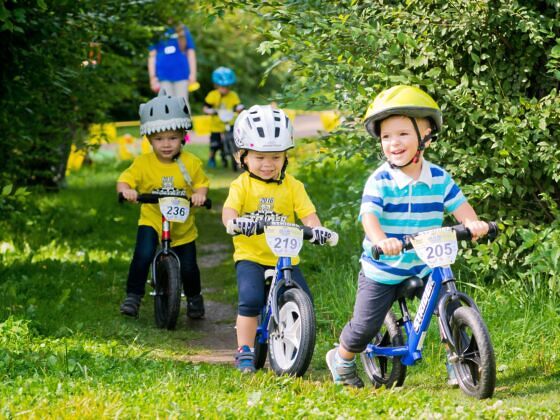
Photo: Juliya Shangarey/Shutterstock
How a Balance Bike Can Jumpstart Your Toddler’s Love for Family Bike Trips
My mom is a lifelong educator and suggested Strider balance bikes. Ryan McFarland started the company in 2007 in Rapid City, South Dakota, and Strider has sold more than 4 million bikes around the world since then. When I spoke with the company in November, a representative mentioned Margot could be riding her Strider as early as spring if she practiced through the winter.
Photos: Nickolaus Hines
Research backs the benefits of a balance bike. One study found that kids who used a balance bike learned to ride a traditional bike at about 4 years old. With training wheels, the average was about 6 years old. Another retrospective study also found that balance bikes lead to independent cycling faster than training wheels, and that balance bikes better develop posture control.
Balance bikes aren’t new. In fact, they predate the pedal bike: the first was called the Dandy Horse, built in 1817 — more than 40 years before the first commercial bikes with pedals. McFarland came to his design for Strider while creating a bike that would fit his 2-year-old son. The children’s bike designs he encountered at the time were too tall and too heavy. In short, they were something to grow into rather than ride immediately.
So McFarland started cutting back: the upper half of the frame, the handlebars, the seat height. That made the pedals out of proportion and they couldn’t be scaled down enough and remain useful.
“I simply removed them,” McFarland says. “Coming to terms with that was a breakthrough moment because it caused me to ask if it would still be a bike. What I learned is that the pedals are simply a means of propulsion, the bike is the frame, seat, wheels, and handlebar that can be ridden while balanced. Therefore, all items with a frame, seat, handlebar, and two wheels become one class, from a balance bike to a pedal bike to a motorcycle. They all balance and steer in the same manner, they simply differ by what propels them. In the case of a 2-year-old, the best means of propulsion was walking/running.”
The learning process begins with sitting on the bike, walking with it between the legs, and moving the bike from side to side. Next, kids sit and push with their feet, progressing to resting their feet on the footrests while leaning into turns. The final stage is independently balancing and gliding, steering comfortably with their feet lifted. From there, it’s a quick transition to a pedal bike.
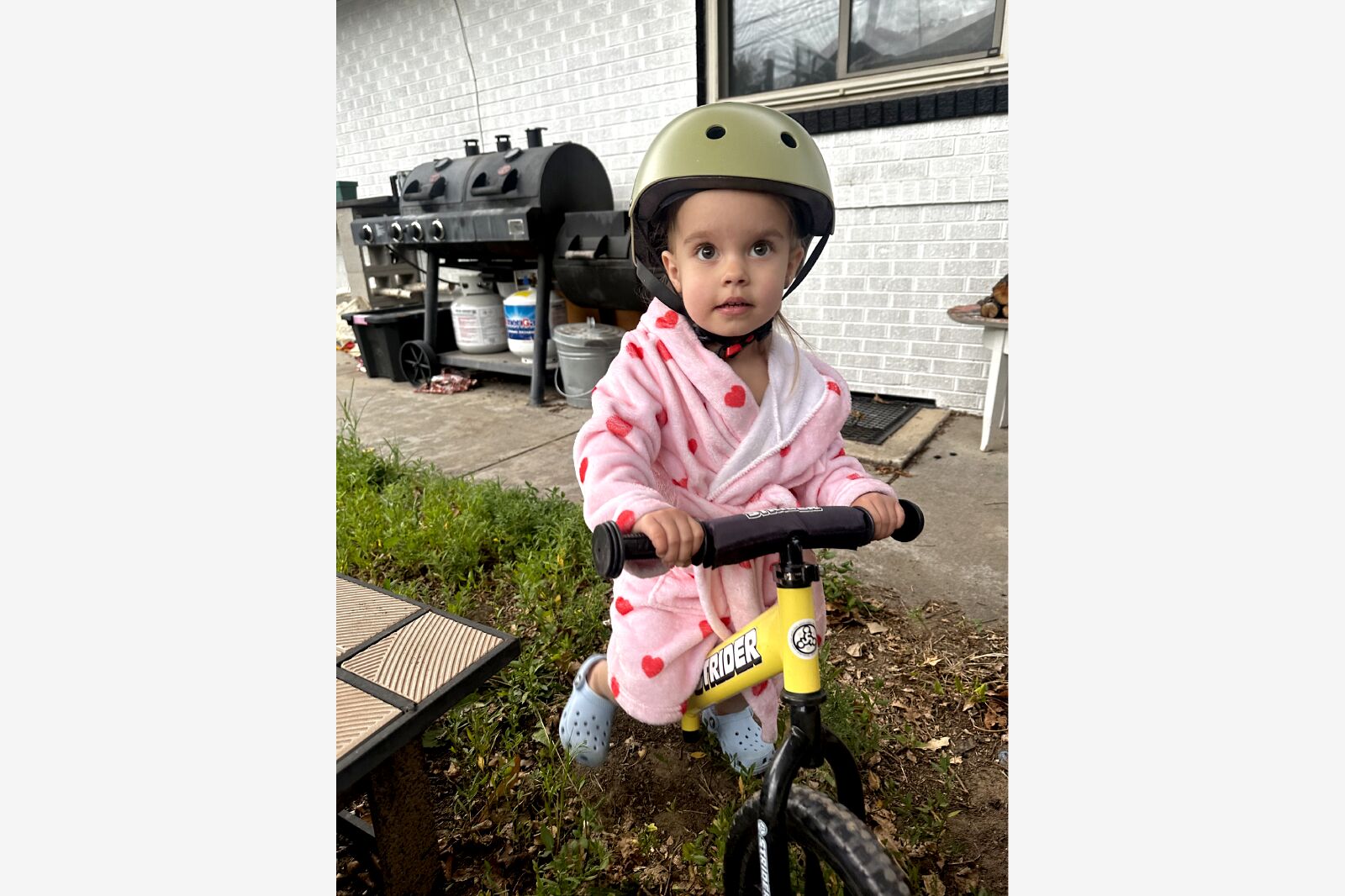
Photo: Nickolaus Hines
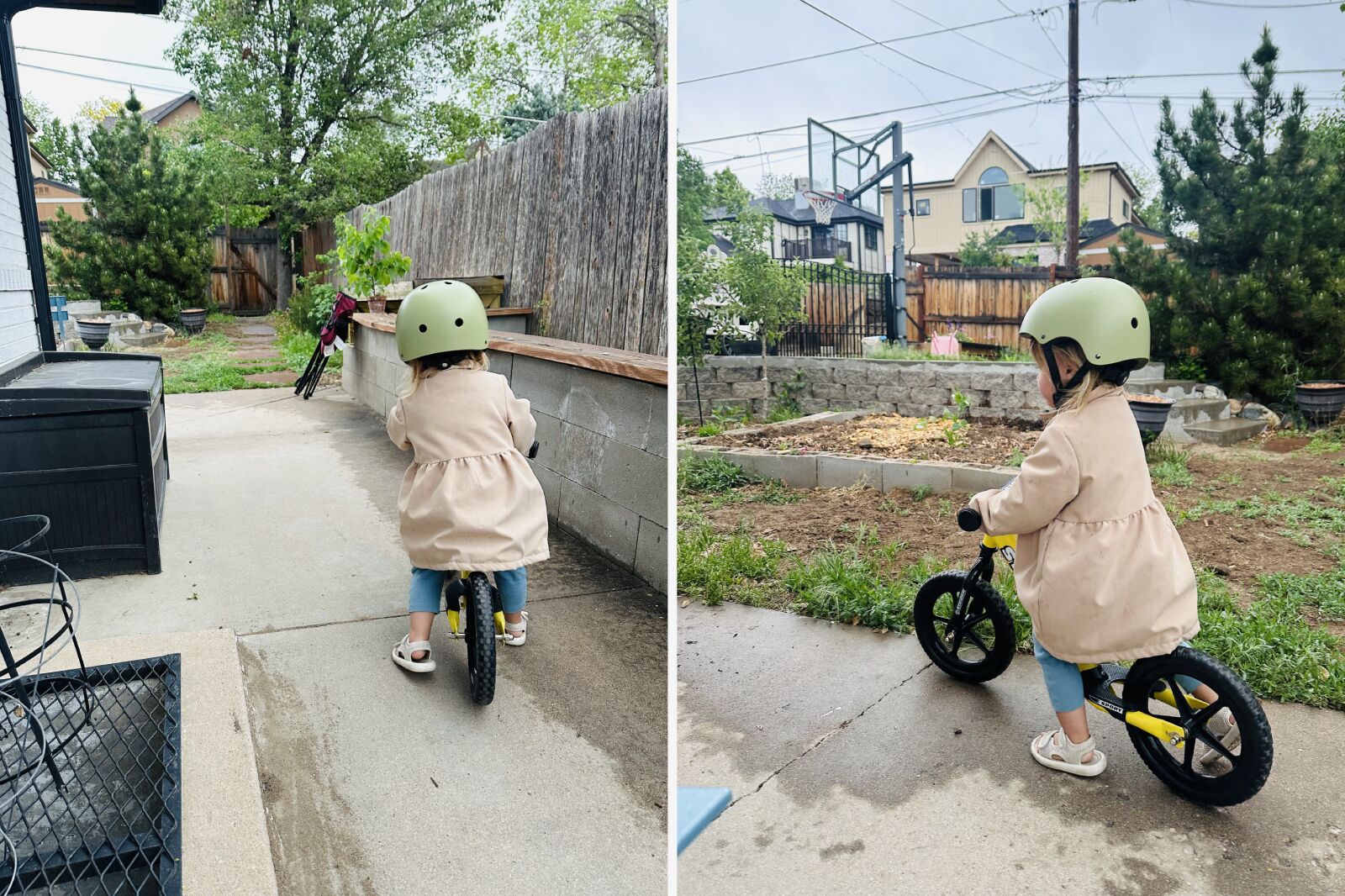
In November, just after Margot’s second birthday, I helped her sit and balance as I steadied her new banana-yellow Strider bike. By her third attempt about a week later, Margot said she wanted to do it by herself, and she naturally started walking with the bike between her legs. She went farther and farther each day. When winter kept her inside, she practiced in the hallway until that became a hazard to our walls. Finally spring came and Margot would hand us her helmet half the time we were in the backyard so she could practice by herself. Day or night, whether she was in a dress or a diaper or a robe, she wanted on her Strider bike. Now at 2-and-a-half, she still needs help buckling her helmet. But she’s just getting started lifting her feet onto the footrests and gliding.
I’ll of course never know how fast she would have picked things up with training wheels. Aside from climbing and now riding, she’s generally cautious about pushing herself physically (a blessing for any parent keeping up with the cost of Band-Aids). Riding is an area where we’ve been able to give her a head start, preparing her for many family bike trips ahead.
I caught up with McFarland to learn more about Strider’s origins, improvements on the first prototype, and what’s coming up from the company.
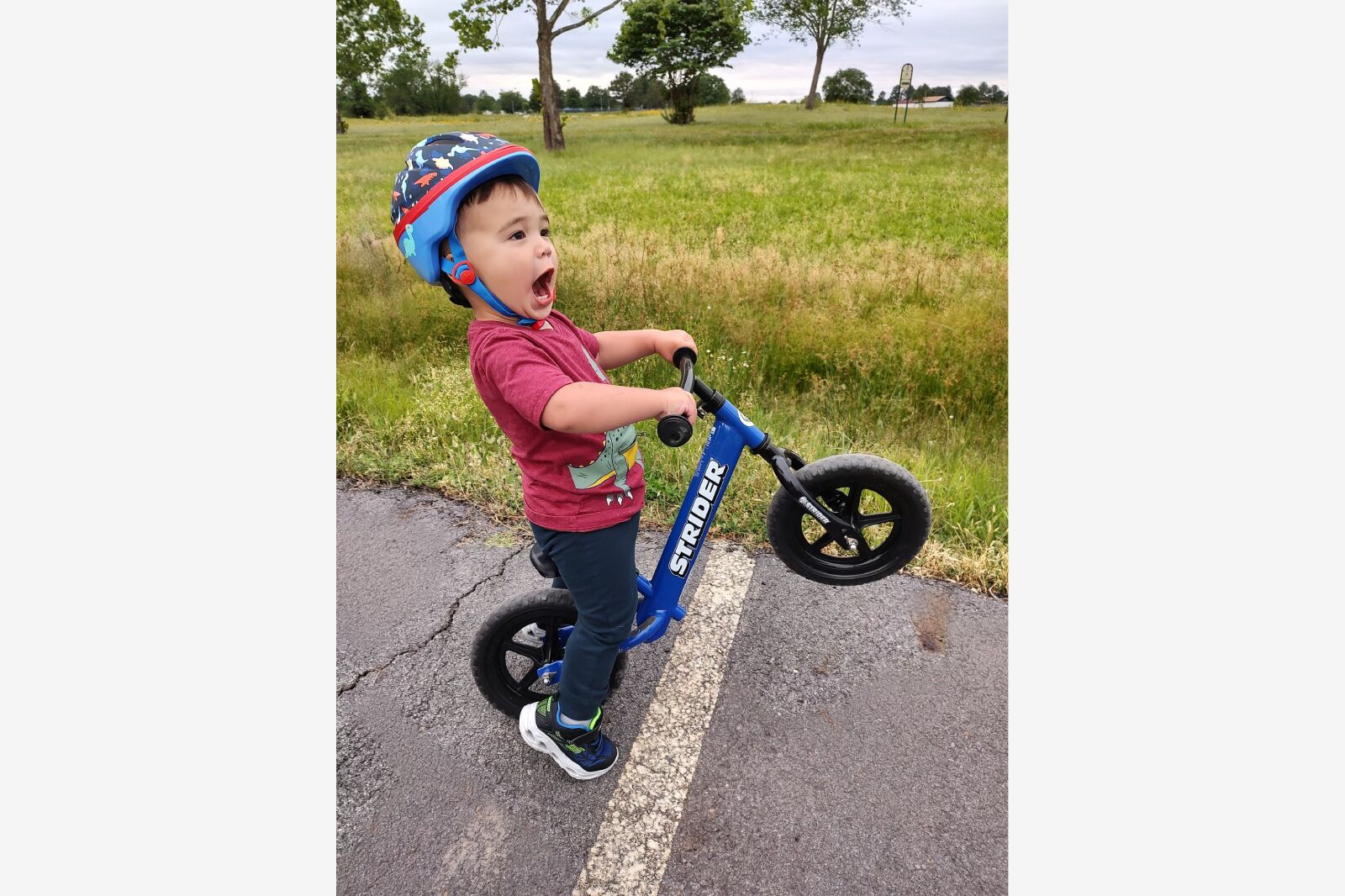
Photo: Strider
Matador Network: How did your own parenting experience shape the early design and further iterations?
Ryan McFarland: I am an avid bicycle and motorcycle rider, so I was motivated to encourage my son on his bike. I also encouraged adventurous riding such as little dirt trails, going over tree roots, riding through puddles. Because of this, I was more aware of his interaction with the original [Strider] bike and how it could be improved.
One of the early realizations is that he easily learned the Basic Balanced Riding skills of how to sit on the seat and stride along, but he could also learn Advanced Balanced Riding techniques if I added some footpegs like on a motorcycle. This would allow him to stand on the pegs while gliding and absorb terrain and maneuver the bike. So the first prototype after his initial bike focused on the foot position for standing riding.
What was the biggest challenge in developing a bike without pedals that still felt “complete” to a child?
It has never been an issue for a child — until an adult tells them it isn’t a “real bike” or something like that. In reality, this is where the child is smarter than the adult.
The Strider is a more capable machine than a tricycle or a 12” bike with pedals and training wheels. The Strider is much lighter. The striding action lets a child develop more power using their full leg motion (not just a tiny pedal circle), the combination allows the Strider to go on nearly any terrain where other trikes and bikes are limited to flat concrete. So, the biggest challenge is to get adults to let go of their misguided, traditional ideas of what a good child’s bike really is.
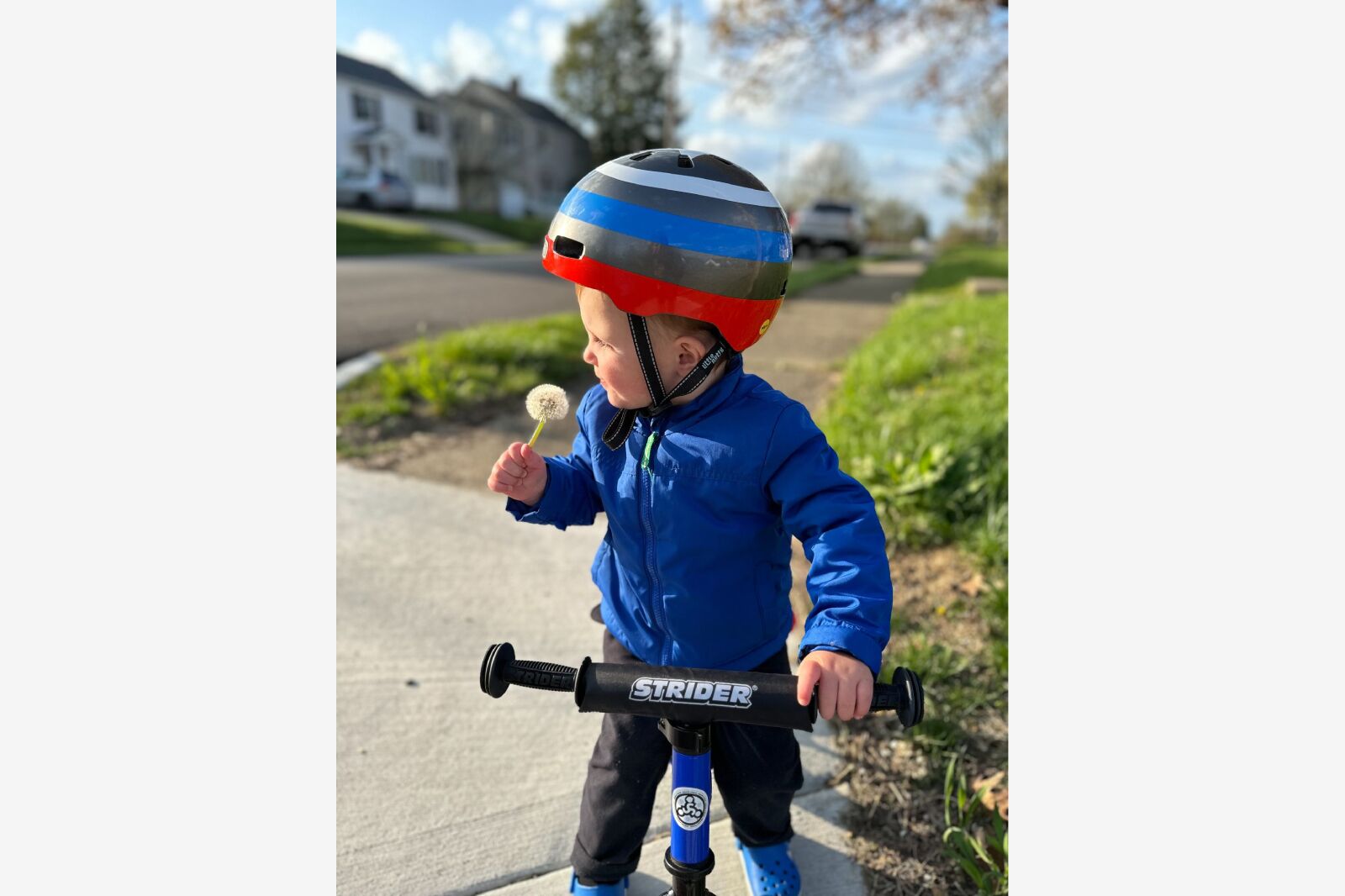
Photo: Strider
How does starting with a balance bike affect a child’s coordination or motor development long-term?
Trikes and Bikes with training wheels don’t teach balance. They actually shield a child from balance, delaying the child’s ability to even experience what they are trying to learn. The steering also functions differently based on whether a child is on two wheels leaning into turns, or on three or four wheels and subject to centrifugal forces to the outside of a turn.
Scientific studies have confirmed that children who start on balance bikes and avoid all three- and four-wheel options, end up independently pedaling a two-wheeled standard bike two years sooner than kids who use a tricycle or training wheels. And two years at that young age is a significant life percentage. The difference is four years versus six years to be independently riding.
At what age range do you typically see the most success in kids adapting quickly to a Strider Bike?
Kids can learn to ride a Strider Bike as soon as they can walk because they’ve already learned the means of propulsion for the bike. We say that kids between 1 and 3 years old can intuitively pick up a Strider 12″ Balance Bike and start riding it right away. The skill development timeline of each child will always be unique to them, but the point of the bike is that it’s simple to learn on from a very young age.
Realistically, kids who are even younger can get started on the basics of riding, which is why we developed the Strider 2-in-1 Rocking Bike. They may not be strong enough on their own two feet to walk just yet, but by 6 months old, they can grip the handlebars, stand on the rocking base (or sit on the seat) and rock back and forth. That’s introductory riding, too!
What should parents do if their child isn’t picking up balancing as quickly as others?
Just cheer them on! Everyone learns at their own pace. Don’t pressure them. Keep the bike available and fun. It may help some children to watch others on bikes as a source of motivation and learning.
How has Strider shaped or responded to the rise of kid-focused biking culture, like family trail riding and bike parks?
I believe Strider has contributed greatly to the family bike culture, mainly because we have proven through our performance design that kids can ride and do much more than ever thought possible if given the right tool for the job. Young kids can now go more places, ride more difficult terrain, and do it independently of assistance than ever before. We hear from many families that the young Strider rider has been so mobile and fast on their little bike that the rest of the family had to buy bikes just to keep up.
What does it feel like to see Strider races or tiny kids bombing down trails around the world on your bikes?
After nearly 20 years, that never gets old. Part of that is because, after 50 years of riding on two wheels myself, I know how much fun and adventure lies ahead for them and I can see that little flame is already lit and only going to grow brighter
Are there any upcoming innovations or products Strider is developing to further support early riders?
Yes, but if I told you, I’d have to silence you. Stay tuned!! 