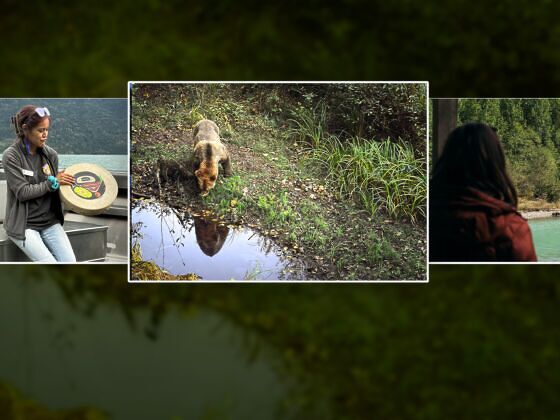
Spotted: the fuzziest grizzly cub, gorging itself on salmon only a few feet away, in a landscape of island shoreline and shallow creeks. I was entranced, watching for what felt like hours as the cub’s mother hauled another fresh catch from the river for her own dinner. Immediately, the cub lost interest in its own fish to go after hers. She surrendered her meal without a fight and huffed herself back to the river to start fishing all over again. Kids seem to be the same, no matter the species.
Photos: Kelsey Wilking and Destination BC/Jordan Dyck
Bears, Whales, and the People Who Keep the Coast Alive
Kalvin Hackett, my guide from the Homalco First Nation, watched the whole thing with only a knife on his belt for protection. But it probably wouldn’t ever be needed. If a bear ever comes too close, he told me between soft chuckles, he’d just sing to it until it backs down.
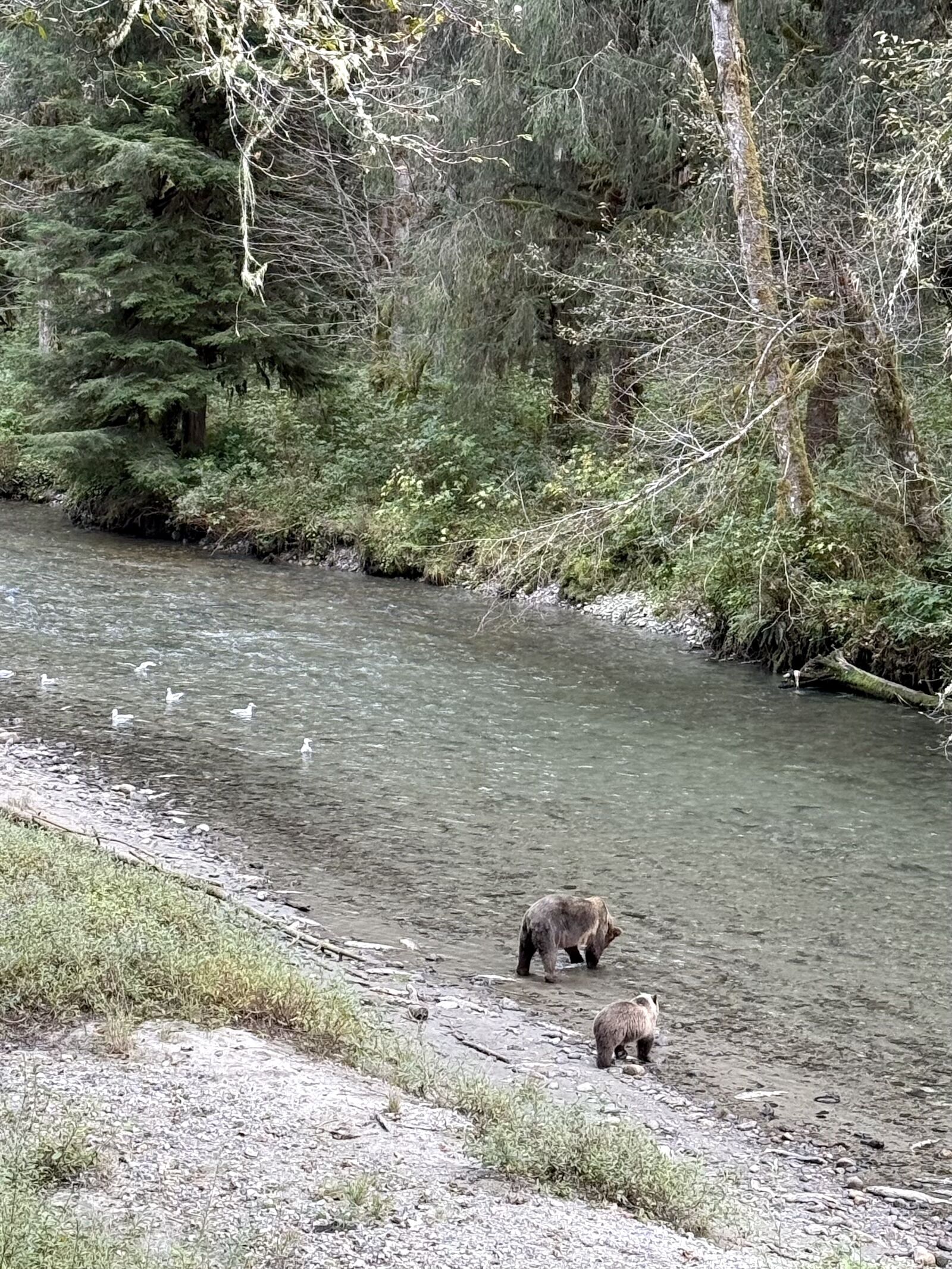
Photo: Kelsey Wilking
That’s the thing about watching wildlife on the north end of Vancouver Island. The animals are the reason you come, but the people showing them to you are a big part of the reason why they’re still here. The grizzlies, the humpbacks, the sea otters all depend on salmon runs, coastline, and a way of managing them that the First Nations of this coast have held for thousands of years, through a century that tried hard to break it. Over a week of Indigenous-led tours, the wildlife and its stewards started to look like one story: you can’t have one without the other.
The morning started in Campbell River, which brands itself “the Salmon Capital of the World.” It’s there that tours with Homalco Wildlife & Cultural Tours begin, running guests across the water to Orford Bay to watch grizzlies feast through mid-October. The company is Indigenous owned and operated, working on the traditional territory of the Xwémalhkwu, or Homalco people. The name loosely translates to “the people of the fast-running waters.” As Hackett tells me, this is the land of his people, and has been for thousands of years. A senior guide and a member of the Homalco First Nation Band, he has worked with the company for over a decade.
Bears, the land, and its stewardship
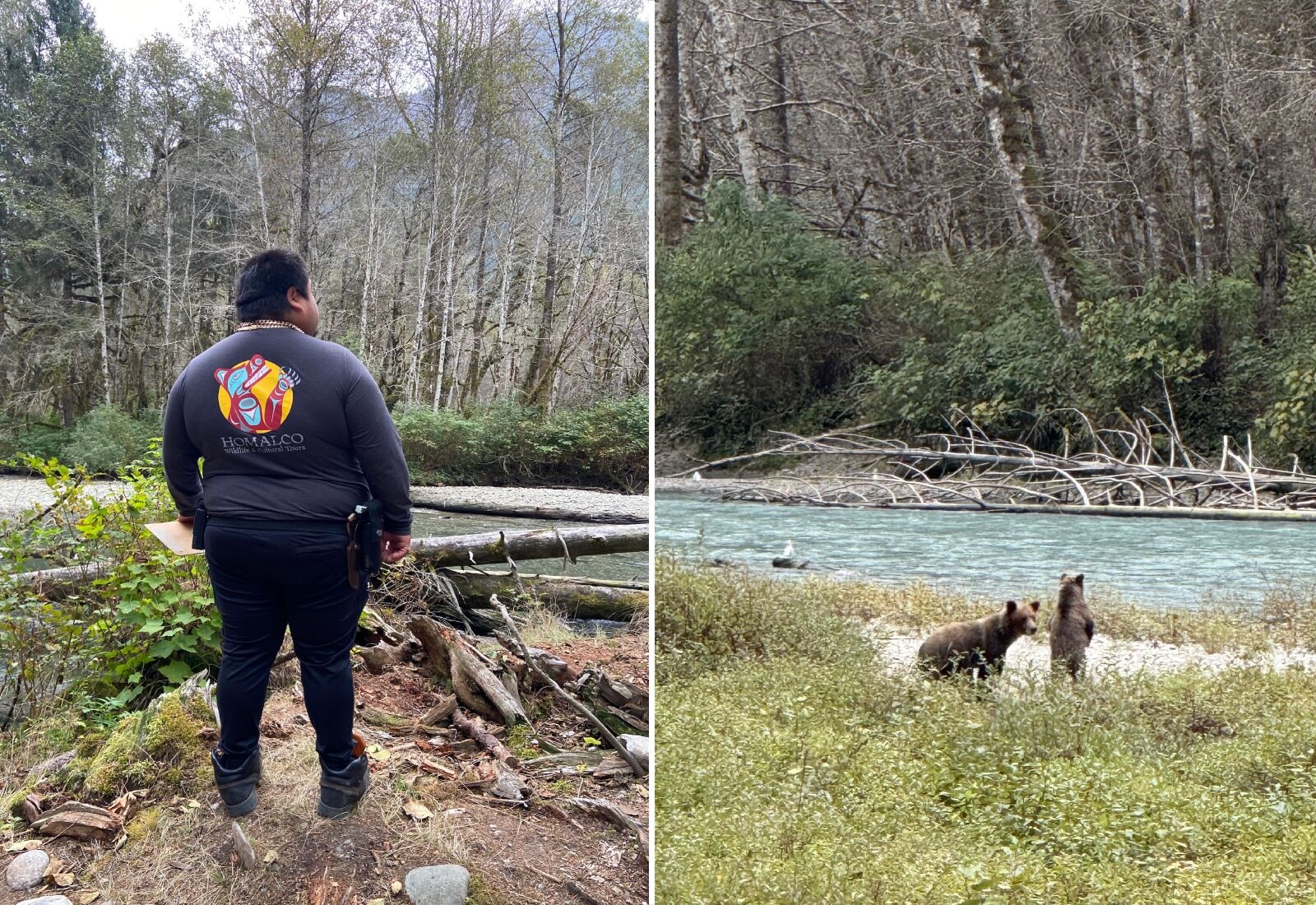
Photo: Kelsey Wilking
Plenty of destinations advertise local-guided tours, but it doesn’t get much more local than one led by descendants of people who have been on this coast for millennia. It’s a growing demand in BC, where one in four visitors say they now seek out Indigenous experiences. It’s a rise that runs parallel to a larger movement of land returning to First Nations.
Watching the grizzlies fish along the creeks near Orford Bay as their cubs played nearby burned itself into my memory. But it was learning the stories of the people of this place, their history, their songs, their struggles and their triumphs, that gave the experience its weight.
The boat ride to Orford Bay is its own reward. We left Campbell River through a maze of islands and inlets, water changing from bright turquoise to deep emerald to midnight blue as we entered the Salish Sea toward Homalco traditional land. Every fall, the salmon fight their way upstream to spawn, turning the rivers into an all-you-can-eat buffet for the grizzlies that come down to fatten up. On the other side, I spent roughly three hours being guided around Butte Inlet on a small bus, stopping at raised platforms and designated areas to safely look for bears. While we drove, Hackett weaved in stories about his friends, his family, and the history of the land.
Those tours pay for more than a fun day out. Money from these tours funds the conservation work First Nations lead here, from salmon restoration to bear research to marine health. Helicopters aren’t allowed overhead, since the noise disturbs the wildlife. In the Homalco worldview, the land is something to share, and as I learned, every step is taken to preserve the animals and their habitat.
Generous with their stories and gracious with their history
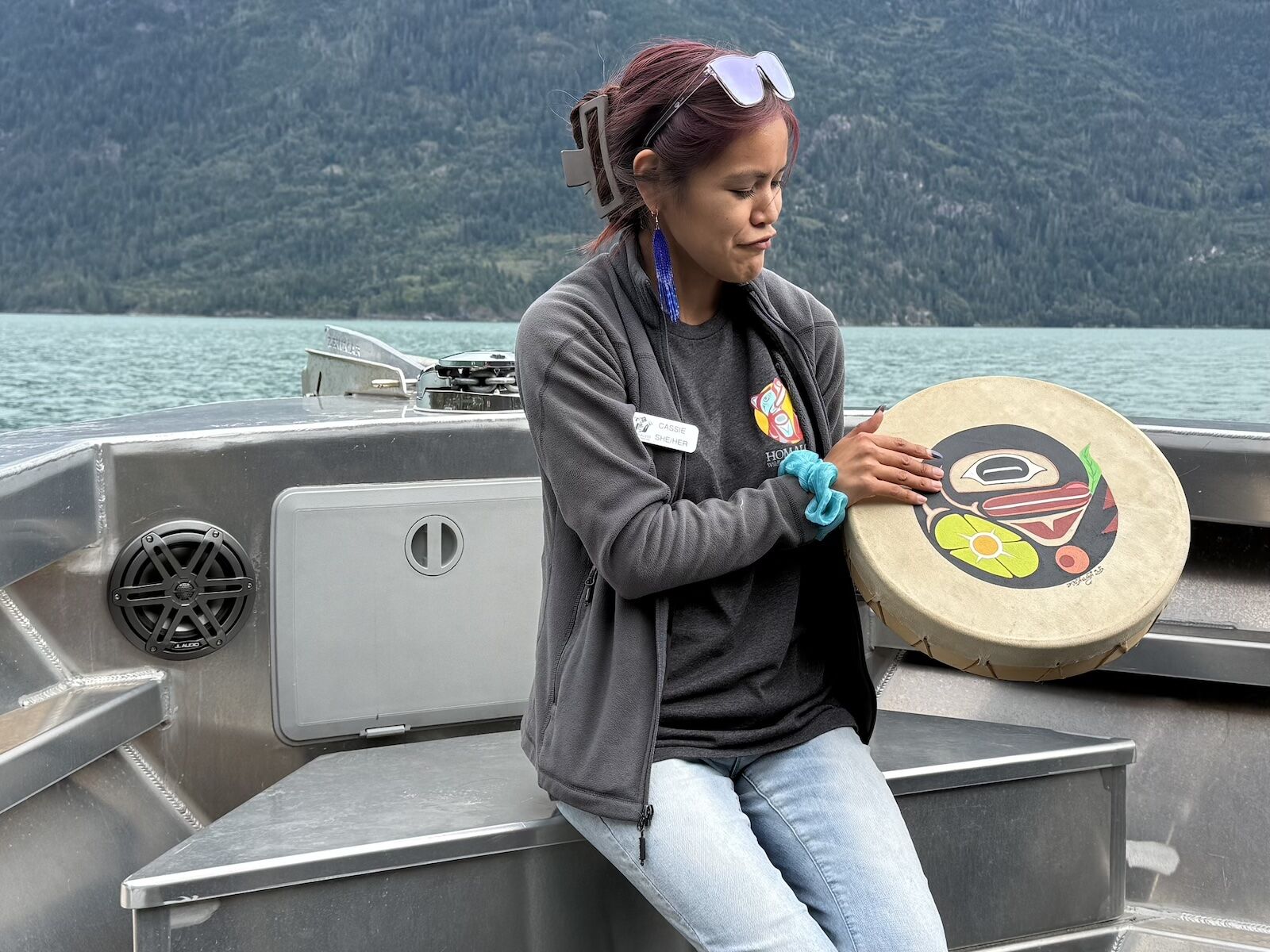
Photo: Kelsey Wilking
“If you’re ever feeling very down or low energy,” said Cassie Francis, one of the Homalco guides on board the boat, “go hug a cedar tree. The cedar tree gives you strength when you need it.”
Understanding that relationship to the land is the other half of the tour. Boating up toward Bute Inlet, the first stop was Aupe, also known as Church House. It’s a former Homalco village site where the Nation hopes to rebuild.
While the boat paused there, Francis sang a Homalco song and told two stories. The first was about Th’owxeya, the wild woman who ate children in the woods and whose ashes became mosquitoes, and the second was on the origin of the cedar, known as the Tree of Life. Cedar, the legend goes, was a young boy known across the villages for helping anyone who asked, never wanting anything in return. When old age finally claimed him, the Creator grew the first cedar tree from his burial site a year later to remember a life spent giving.
On the tour, Francis showed me how to make cedar bracelets from wet shavings to help explain why the tree matters so much. “It’s used for anything and everything,” she said. “Our canoes, paddles, cradles, coffins, baskets.”
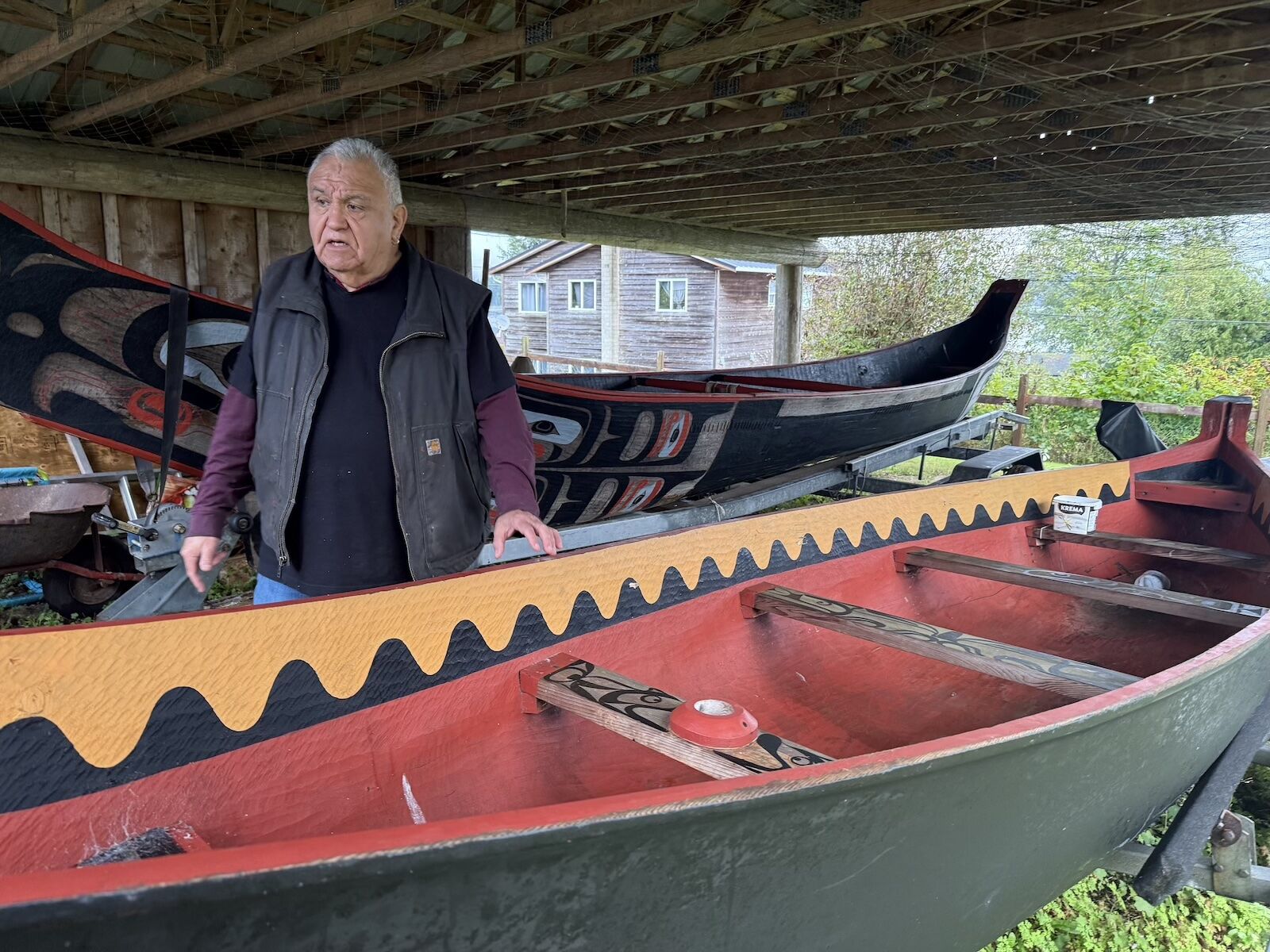
First Nation carver Calvin Hunt. Photo: Kelsey Wilking
A few days later, I learned about another use for cedar near Fort Rupert, crossing into the territory of the Kwakwaka’wakw people. This is where I met Calvin Hunt, one of the most respected Northwest Coast artists alive. Hunt carries two hereditary titles: Chief Tłasutiwalis of the Kwakwaka’wakw and Hereditary Chief Nas’a̱m’yus of the Mowachaht. He walked me through the art of carving totem poles the way you might explain your own family. Each “crest” is a real or mythical animal that belongs to a specific family, and you never carve another Nation’s or family’s crest as your own. His family’s main crest is the eagle. He showed me a traditional Wasp costume used to “get rid of evil spirits” and a totem he’d carved as a gift for his granddaughter.
Then, Hunt told my small tour about the Huhmutzah, or Big House: a large cedar longhouse that serves as the center of ceremonial and political life. From 1885 until 1951, Canada’s Indian Act outlawed the potlatch, a ceremonial gathering where communities come together for major life events. Banning it was an attempt to dismantle the systems that tied these Nations to one another and to their ancestral land. When the ban was finally lifted, the Kwakwaka’wakw could gather, dance, sing, and hold potlatches in the open again. The Big House is where those ceremonies and family business still take place.
Whales, otters, and only taking what you need
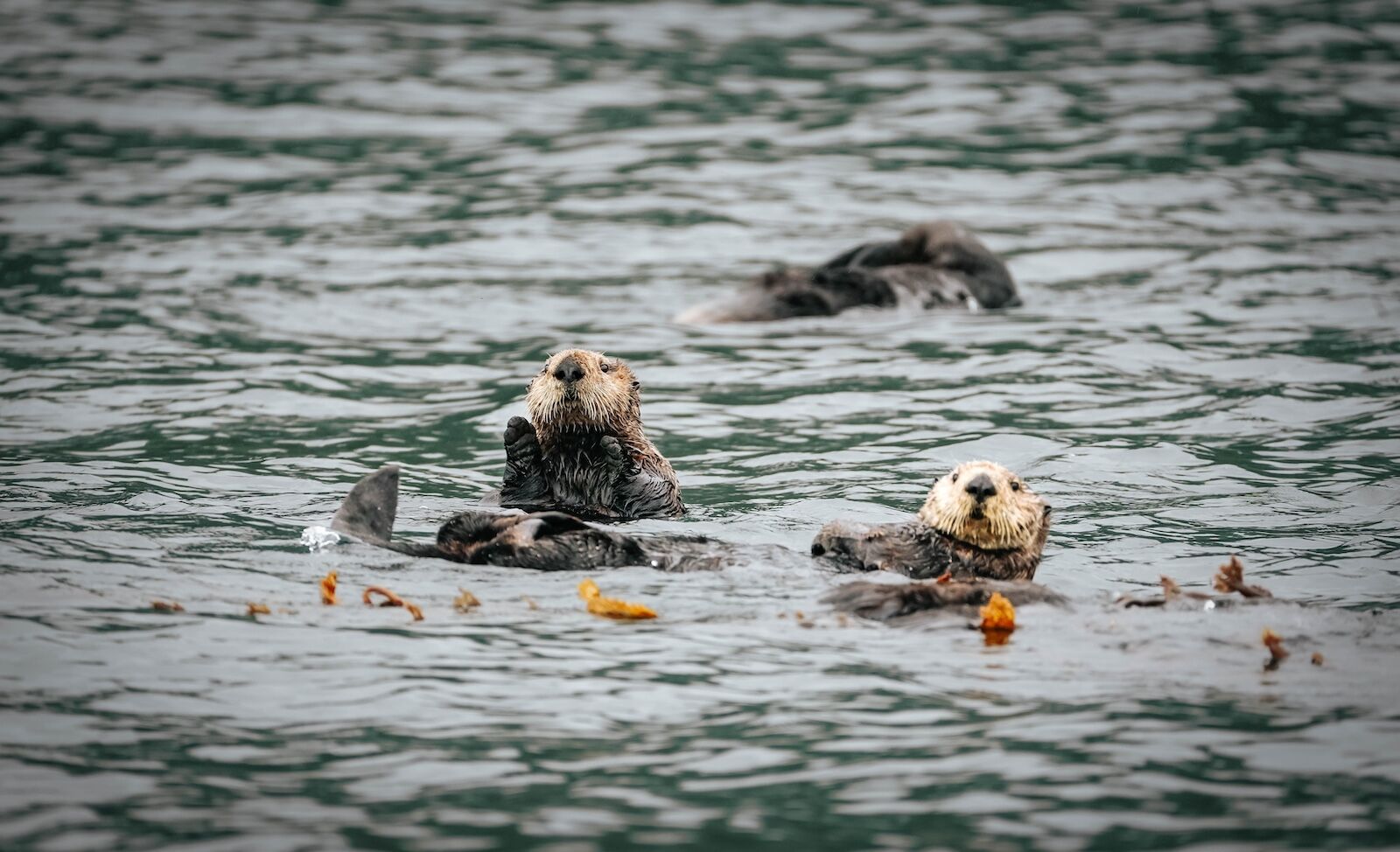
Photo: Suzie Dundas
If you want to see what that stewardship actually does, look at the otters. Three days later, and a few hours farther north, I drove up to Port Hardy at the top of Vancouver Island. The rain that met me there was nothing unusual for this coast. Out of Port Hardy, the wildlife is managed by the Kwakwaka’wakw People, and Coastal Rainforest Safaris runs boat tours into the Great Bear Rainforest. My guide, Thomas Wamiss Jr., comes from the Dzawada’enuxw and Gusgimukw Nations, both part of the Kwakwaka’wakw.
The weather was cold, rainy, and gloomy, though it didn’t match my mood as I watched sea otters and their pups float along the waterways. Wamiss told me the otters’ history here. They are native to this coast, where Indigenous people lived alongside them for thousands of years. When the fur trade arrived in the 1700s, hunters working the coast wiped the otters out of these waters entirely. They were reintroduced to the BC coast in the 1970s, and First Nations have helped manage their recovery since. The lesson isn’t subtle: the animals vanished when outsiders took everything, and came back when the people who live here were again part of the conversation. Wamiss put his people’s worldview simply: take only what you need, and nothing more. That teaching is the whole foundation of conservation here.
When there is no land to give back
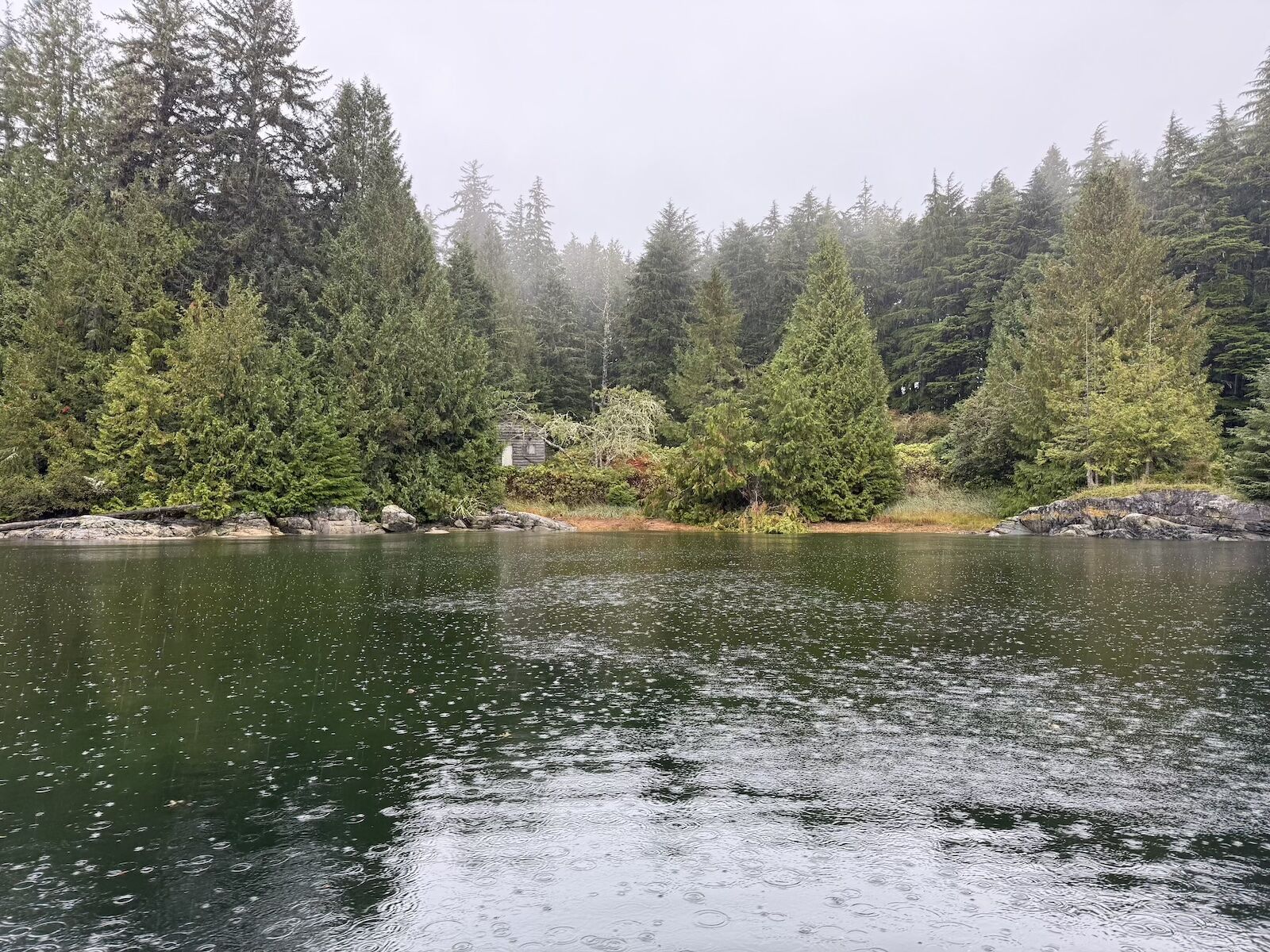
Much of the land near Port Hardy is the ancestral land of the Kwakwaka’wakw. Photo: Kelsey Wilking
That stewardship works best when the stewards actually hold the land, and slowly, they are getting it back. Returning it on Vancouver Island is a complicated process, because much of it is now privately owned. It’s the legacy of an 1884 railway land grant that predates most of the province’s land deals. The government generally cannot hand over what it doesn’t own. Instead, it has to find someone willing to sell, purchase the land, and then transfer the land to First Nations people.
But it can happen. In a deal finalized in May 2025, BC bought about 771 acres near Skutz Falls from Mosaic Forest Management for $8.55 million, then transferred it to the Lyackson First Nation and Cowichan Tribes. Slowly, more First Nations are regaining land.
Coming back to the land — and the people
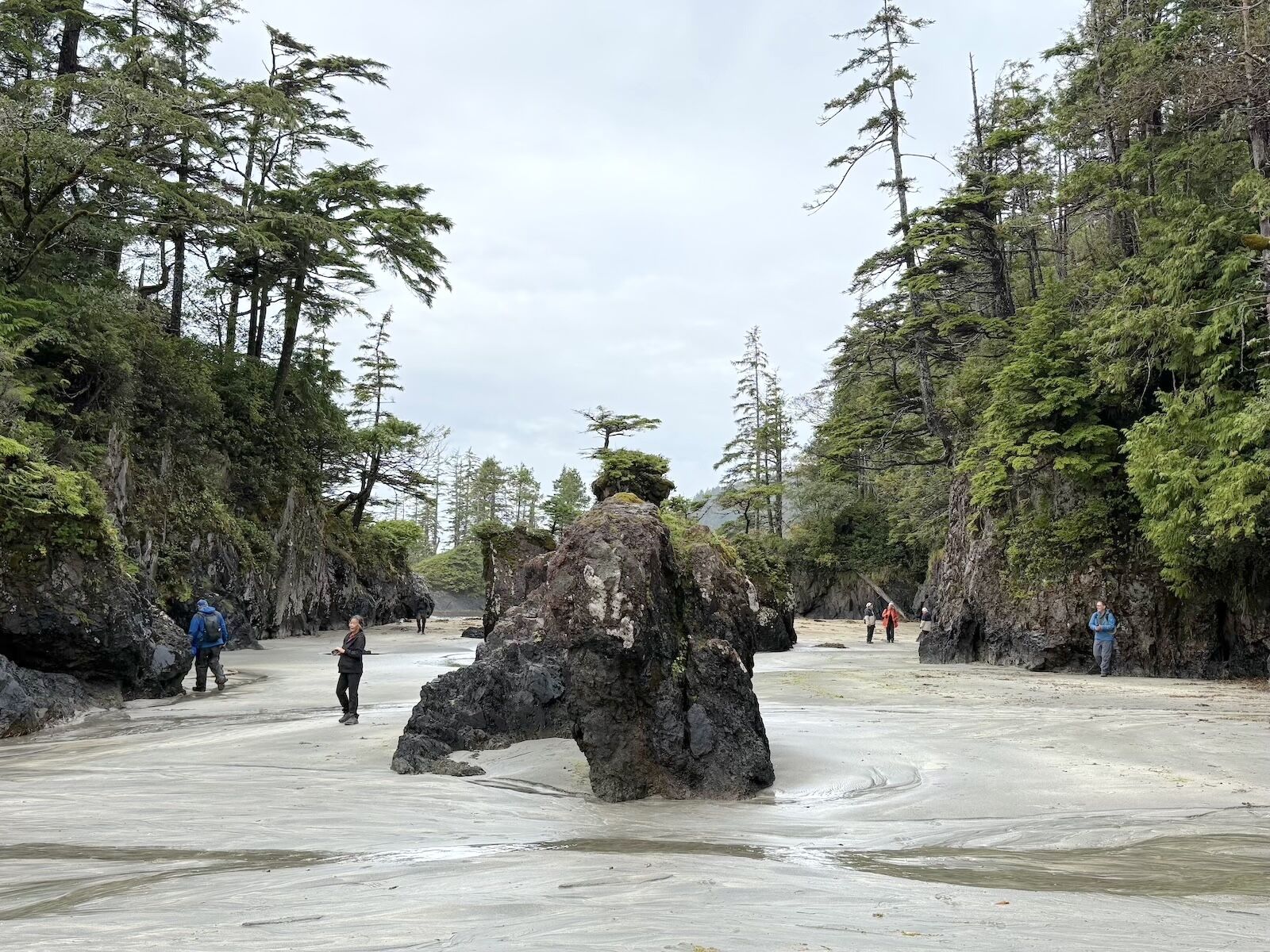
San Josef Bay in Cape Scott Provincial Park. Photo: Kelsey Wilking
Seeing a grizzly haul a salmon from the river is remarkable on its own. But it means much more once you understand that the salmon run, the bear, and the coast they depend on have been cared for by the same people for thousands of years, and that the land itself is now being handed back to them, parcel by parcel. The animals and their stewards are one story. On this coast, the best way to see these creatures is with the people whose story it is and who are still willing, after everything colonization took, to share their homes and stories again.. 