New study finds community based tourism, in its current form, has not proven economically viable. Recommends changes.

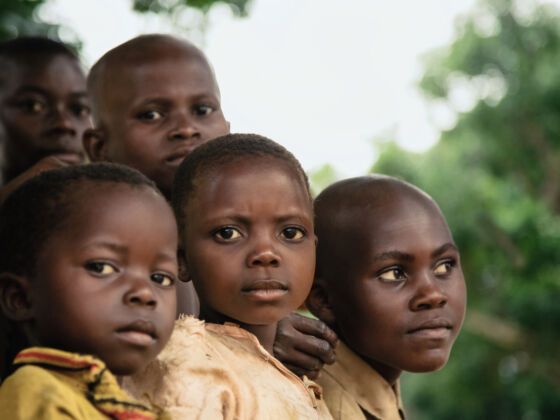
Community Tourism in Kilengi / Photo: The Dilly Lama

What exactly is Community Based Tourism (CBT)? You may not be the only person who doesn’t know what this phrase means.

In the world of “funders, conservationists and development workers,” Community Based Tourism denotes visitors who live and work within a community – usually a poor, rural one.

The purpose is to help implement projects that will benefit the community over the long term.

Or, as ResponsibleTravel.com explains:

The residents (of the community) earn income as land managers, entrepreneurs, service and produce providers, and employees. At least part of the tourist income is set aside for projects which provide benefits to the community as a whole…CBT enables the tourist to discover local habitats and wildlife, and celebrates and respects traditional cultures, rituals and wisdom.

Sounds good and cheery, doesn’t it? Well a new study has found that the economic viability of these projects is not quite…viable.

Harold Goodwin, of the of main researchers on the study, writes in his blog that out of 116 CBT initiatives nominated from all over the world, only four were economically sustainable (keeping in mind that only 28 of the projects responded).

What’s the problem?

Issues ranging from donor dependence, lack of adequate markets (average bed occupancy achieved by CBT initiatives is around 5%), vague definitions of what CBT actually is, and the fact that there is not much difference between CBT projects and conventional investments are all working against this form of tourism.

Interestingly, Goodwin notes:

The research has demonstrated that there are a number of initiatives which are not CBT which have demonstrated very considerable employment, local economic development and collective community benefits, for example Manda Wilderness (Mozambique), Aga Khan Development Network in Pakistan (Baltit and Shigar Forts) and Chumbe Island (Tanzania).

He still lists off 6 recommendations that would strengthen CBT.

Still, many of us like to believe that working from the ground-up is the way to implement sustainable ways of living, and that as tourists, we can help a community achieve this goal.

Even Goodwin asks: “If you know of examples of successful CBT initiatives where success is demonstrable by data please let me have them – I am still looking for successes.”

Do you think Community Based Tourism has been mis-judged, or should it be discarded? Share your thoughts below.

Volunteer + Work
 

About The Author

Christine Garvin

Christine Garvin is a certified Nutrition Educator and holds a MA in Holistic Health Education. She is the founder/editor of Living Holistically...with a sense of humor and co-founder of Confronting Love. When she is not out traveling the world, she is busy writing, doing yoga, and performing hip-hop and bhangra. She also likes to pretend living in her hippie town of Fairfax, CA is like being on vacation.

  • http://www.matadorabroad.com Tim Patterson

    There are success stories – like the community based eco-tourism in Luang Namtha, Laos. On the whole though, its extremely difficult to get the right balance between attracting enough tourists to sustain the operation and getting too many, which overwhelms the entire community.

  • http://Travel-Writers-Exchange.com Rebecca

    I never heard of CBT. Thanks for bringing this to my attention. I agree that there would need to be a balance between the community and tourists. Further research and development of CBT’s will be necessary if it’s going to be a success.

  • http://www.maketravelfair.co.uk Stephen Chapman

    I tend to think that all these labels are a real hinderance and this study seems to suggest that too. There are “a number of initiatives which are not CBT which have demonstrated very considerable employment, local economic development and collective community benefits”. Maybe part of the problem here lies in academics trying too hard to assess and classify projects, perhaps they should be casting a wider net to understand what really works and not present such a negative outlook.

    I think a massive problem also lies in the fact that there’s a great deal of support for the creation of these types of initiatives, but very little thought and assistance given to establising a sustainable route to market for them – something that whl.travel and whlconsulting have quite admirably been working hard to address.

  • http://www.truequanimity.com/ Christine Garvin

    Stephen, thanks for your comment. I tend to agree with you that our western academic approach always wants results in widgets, and if the particular data that we are looking for isn’t showing up, it means it’s no good.

    And I also agree that there is often a great deal of work at the outset of projects, but not enough long term support (or even having properly assessed if the community wants a particular project in the first place).

  • http://www.maketravelfair.co.uk Stephen Chapman

    I had read this study a while ago but pleasantly surprised to see it crop up on here for discussion, nice one Christine. Good to know we agree on a few things :)

  • Alnoor Tejpar

    Very interesting obeservation. Good to hear that there are some successes, no matter how small. You point out AKDN.s example of Baltit fort . I understand that the AKDN has restored a park in Cairo where they converted a dump site to a park and as a result created jobs and economic revival in the area. Have you heard about this Cairo project, ?

  • David Coathup

    The problem with most CBT projects is that they are developed by academics/consultants who have very little practical experience of owning or operating a tourism enterprise. They themselves are funder reliant, therefore it is no wonder that they carry this mind set into the projects. CBT, like all forms of tourism must be based on sound business principles and therefore the “bottom Line” counts.The projects cannot achieve their stated community goals if they are not viable, in fact they will foster discontent within the communities because the results will not match the communities expectations. I believe there are success stories but they have not been classified as CBT projects and therefore don’t appear on the screen. A farm which offers accommodation and food to travelers in a rural community and provides jobs, an therefore income, within that community would not normally be classified as a CBT initiative. It however meets the needs of the owner and the community but is simply not recognized as fulfilling these goals.

  • wimba anenggata

    So far I know in around ubud gianyar bali indonesia, the enormous complex of cbt ‘hotel’ are well operated. No aid only villagers creativity and economy. Do they picturing the life of cbt? I think absolutely yes. No wonder the study must meet some details of rural-archicteure value to go along with. Thank you

  • http://www,out.ac.tz Sammy Makilla

    Am embarking on a Doctoral study on Applied Research in Community Based Tourism in selected coastal areas of Tanzania. Would like to learn from everyone and everybody as well as find future partners where together with a chosen community we can establish Community Based Projects which are generating themselves daily in my head.

    Happy New Year to you all there,

    Sammy

  • http://matadornetwork.com mariah

    Thanx for bringing up this discussion on Community Based Tourism(CBT)T in my country Tanzania there are several projects but the main problem is on the awareness of people about them because they have not being receiving any benefits since these projects were initiated currently am doing my research on the benefit sharing and participation on decision making and obstacles in achieving a sustainable community based tourism

  • Agnes

    We might think that we know CBT initiatives in Tanzania, how many do we have so far? can they all be categorised as CBT projects? how can we point out the ones which are not, using what criteria? Do we even have a policy, regulations which mainly focuses on CBT initiatives in Tanzania or the one aligned to the Tanzanian Tourism policy? Is it the incapability to think outside the box or its just an academic fever trying to use communities in a wrong way? am also looking for success stories…most of these fails after the cut down of donor funding …. if the communities are not aware, then who is managing the projects? who decide what should or should not be done, if not the communities who are not aware?
    Am also from Tanzania and need to know much about these projects!!!!
    Good observation Christine

Volunteer + Work →

As much as it hurts to think that I will soon leave him, I know it is for the best.

Volunteer + Work →

Advances in mobile and computing technologies enrich the lives of those who need it.

Volunteer + Work →

Alyssa Martino reflects on language barriers while volunteering in Italy.

Activism + Politics →

Angela Corrias highlights volunteer opportunities in Jordan after talking with two locals...

Volunteer + Work →

A smile can be the best reward for volunteers working in India or Guatemala with...

Volunteer + Work →

Here are 25 volunteering opportunities to experience before you die. What would you add...

Activism + Politics →

What Took You So Long sets off on a 14,000+km. journey in Africa to document hopeful...

Activism + Politics →

Stephanie Downs looks ahead as she prepares for a voluntourism trip to Greece.

Volunteer + Work →

If you enter into the volunteer experience with unrealistic expectations, says seasoned...

Volunteer + Work →

Is this really the way you want to travel? Marieke van der Velden explains why your...

Volunteer + Work →

Can the average person pay or raise enough funds to volunteer their help?

Food →

The Culinary Corps, dubbed the "Peace Corps for Cooks," makes annual trips to the Gulf...