Previous Next
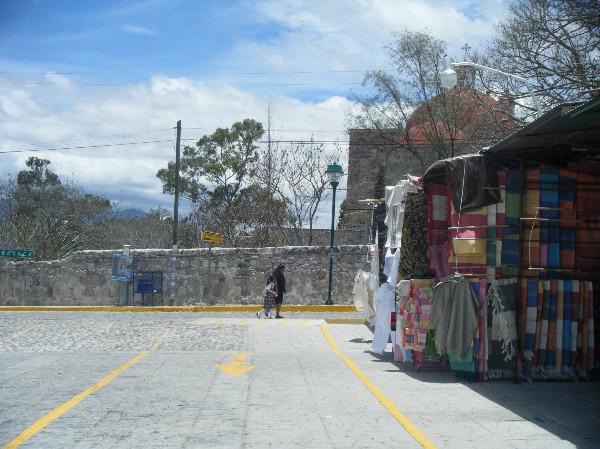
Normally at this time of year–the low season for tourism in Oaxaca–120 tourists visit the Zapotec ruins at Mitla every day.

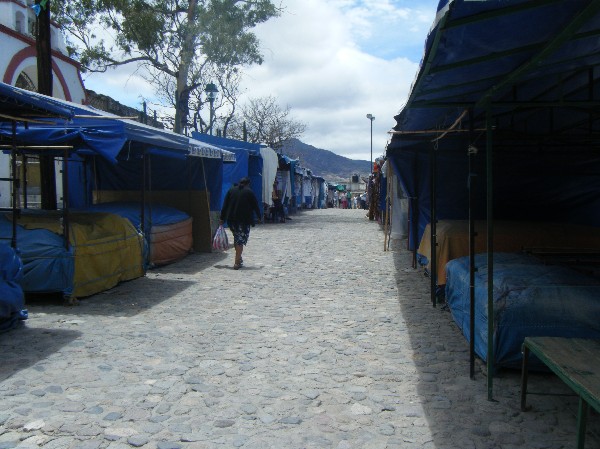
These days–since swine flu hit–on a good day, twelve people show up. On a bad day, the guides and ticket takers wait out their shifts without seeing a single tourist. At the nearby artisans’ market, it’s the same story.
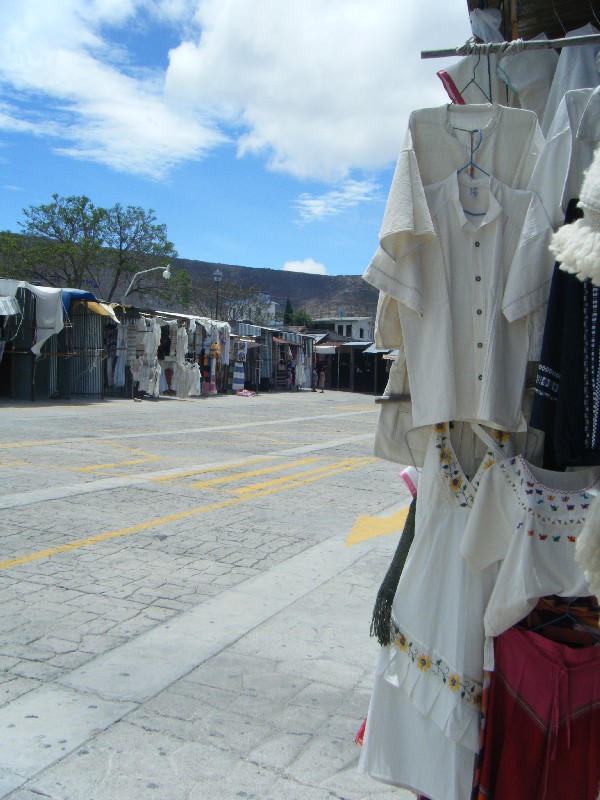
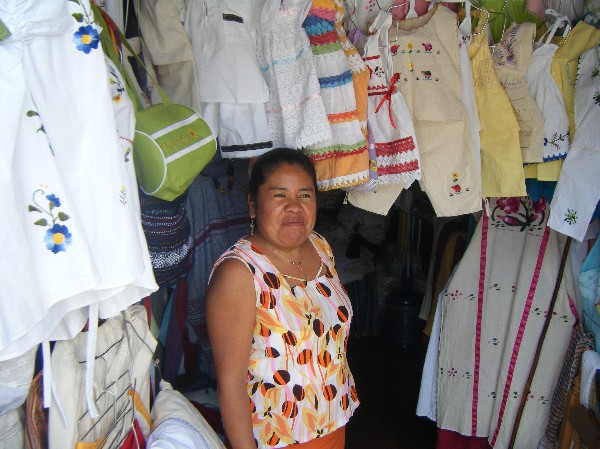
Many vendors haven’t even bothered to open their stands lately. Those who do can hope for one or two sales on a good day–for a total of around ten dollars.

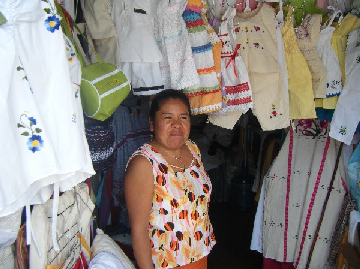
This woman and her husband both have clothing stands in the market near the ruins. Other members of their family cut and stitch and embroider the blouses and shirts. The daily earnings from the stands are divided among several people. These days, each person’s cut is enough to keep tortillas on the table, not much else.

Fortunately families here look out for each other, even in hard times. Whoever has a little more spreads it around. But this can’t go on forever.

Mitla’s economy is almost entirely dependent on tourism. Which means that right now, nearly its entire economy is at a standstill.

The few–and mostly national–tourists who do arrive have the ruins to themselves, and get rock bottom prices on clothing and crafts. They are much appreciated.

Everyone here is hoping that by July, for the high season of the Guelaguetza festival, swine flu panic will die down and things will pick up.

Until then, it’s tortillas and beans for dinner.

Narrative


About The Author

Teresa Ponikvar

Teresa Ponikvar is a former Matador editor, a current reluctant English teacher, and a future mini-farmer. She lives in rural Oaxaca, Mexico, with her husband, young son, and assorted animals and arthropods. She blogs here.

Archived Responses to Notes on Oaxaca Since the Swine Flu

  1. joshywashington says:

    This must be an excellent time to go and take advantage of the quiet spaces and low prices…swine flu, I’m sorry i just don’t buy it. oink oink!

  2. Anna says:

    Thanks for bringing attention to the economic situation of Oaxaca’s artisans.

  3. the H1N1 or Swine Flu Virus is very scary at first but now it is well controlled by vaccines and prevention by avoiding going into places with incidence of swine flu.

  4. | H1N1 or Swine Flu is a bit scary but it a good thing to note that this virus is not that very deadly

  5. One of my sisters got infected with H1N1 or more commonly known as Swine Flu. Fortunately, she did not have very high fever and she was able to recover fast .
    ,

  6. My brother got infected with H1N1 or Swine Flu in Mexico. He got a mild fever and luckily he did not die.

  7. If you look at the pandemic of 1977, when H1N1 or Swine Flu re-emerged after a 20 year absence, there is no shift in age-related mortality pattern. The 1977 “pandemic” is, of course, not considered a true pandemic by experts today, for reasons that are not entierely consistent. It certainly was an antigenic shift and not an antigenic drift. As far as I have been able to follow the current events, the most significant factor seems to have been that most people, who were severely affected, were people with other medical conditions.

Peter snags a bus to Oaxaca, finds a suitably cheap hostel and chills out in the plaza...
While traveling in Mexico, contributor Melanie Pinkert learns that sometimes "you just...
It's a creative measure by a visionary mayor to woo tourists back to the Mexican capital....
How travelers can take on the mass media.
Photos from an expedition to the Sierra Norte.
Your editor's adventures and musings in Mexico.
Drag queens from the Oaxacan isthmus and Oaxaca's gay and lesbian community join forces.
A tour through a routine day of this Mex-pat in Oaxaca, and a call for submissions on the...
Cows Narrowly Avoided While Maneuvering Van Through Roadless Desert To Avoid Roadblocks: 3