Tewfic El-Sawy

All photos courtesy of Tewfic El-Sawy

In a new series on Notebook, we interview professional photographers, and discuss their different perspectives on travel photography as well as tips for taking better pictures.

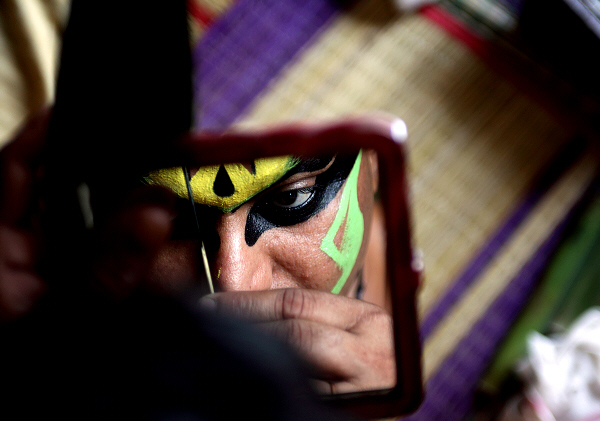
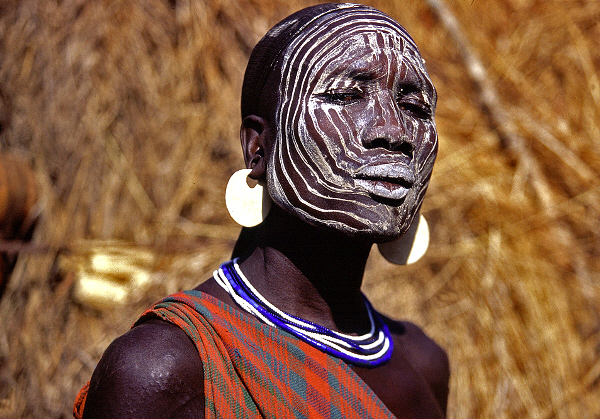
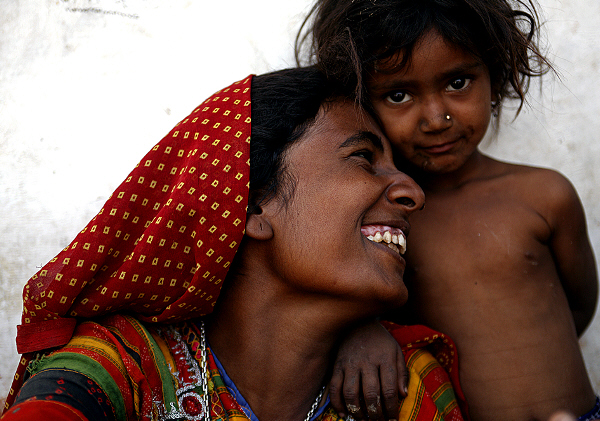
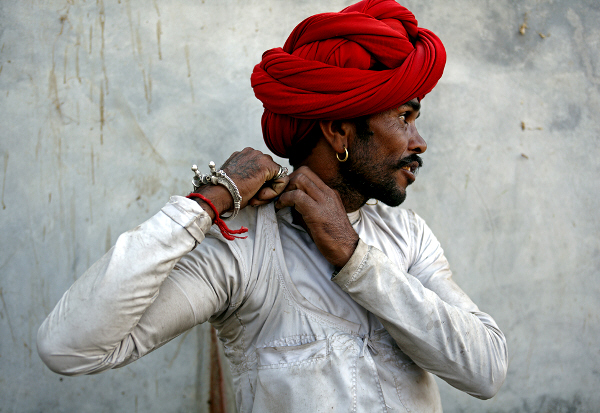
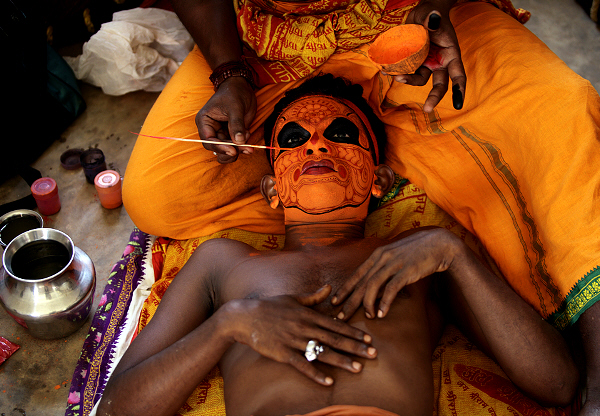
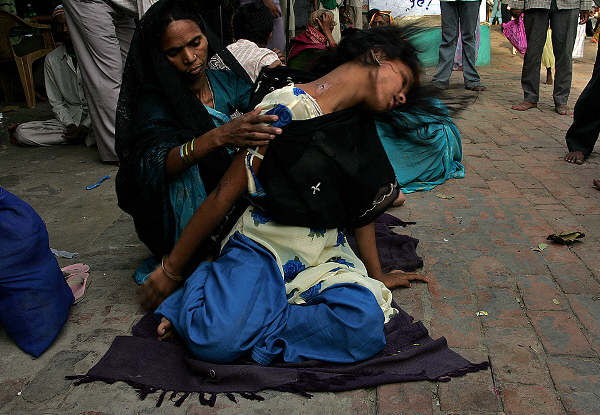
The creative force behind “The Travel Photographer“, Tewfic El-Sawy specializes in documenting endangered cultures and traditional life ways of Asia, Latin America and Africa.

His photography has been published in Outdoor Photography, Digital Photographer, GlobalPost, and have been featured by some of the largest adventure travel companies in the United States and Great Britain. He also organizes and leads exciting photo expeditions to places such as Bali, Bhutan, India, and Mexico.

MatadorU faculty and travel photographer Lola Akinmade caught up with Tewfic in the midst of planning his next photo expedition to learn more about the photographer behind the popular The Travel Photographer blog.
How long have you been a professional photographer?

It was a slow and progressive morphing from international banking to travel photography over the past 20 years, however I can say that it really got going in 2000.

Before that, it was almost like having two personalities; one being a “starched” banker during workdays, and a more relaxed personality befitting that of a travel photographer during the weekends.

What – or who – got your initial interest going in terms of photography?

There’s no doubt that my traveling on banking business to various countries ignited my interest in travel photography as a genre. These business trips made me realize that I liked having access to different cultures.

When living in London, my wife booked me in an 8-weekends course in black & white photography at the home/studio of Uri Lewinski and his wife Mayotte Magnus; both professional photographers with opposite stylistic disciplines where I learned basic darkroom work, developing and processing film and prints.

I also attended a street photography class with Constantine Manos in Havana, and a photojournalism workshop with John Stanmeyer and Gary Knight in Bali.

Tewfic El-Sawy
What were your first photographic experiments or experiences?

My first serious camera was a Canon A1 bought when working and living in Houston. It was essentially to photograph the family and my children growing up, however I also started experimenting with still life photography.

My favorite set-up was to back-light wine bottles, with a plate of grapes placed just so. I still have some of those prints, which are probably the most hideous still life studies ever done.

Eventually, I took my camera on my trips, and whenever I had a few moments I would walk the streets of Taipei, Athens or Stockholm and photograph whatever caught my eye. I used to be a black & white shooter at the time, and would return home to process the negatives, and print them in my basement darkroom.

I also experimented with unorthodox photo emulsions, and still have a couple of beautiful calla lilies photographs printed on liquid emulsion which hang on our walls.

However it was the adrenaline of travel photography that turned me on the most…especially exotic cultures. Photographing Stockholm’s Gamla stan or Paris was nice, but I was more in my element shooting in the back alleys of Taipei and Istanbul. It was on the back of these business trips that I started to specialize in documenting endangered cultures.

Tewfic El-Sawy
How would you describe the work you do now…obviously there’s a strong reportage / photojournalistic element, but are you involved in the commercial world also? Any stock photography?

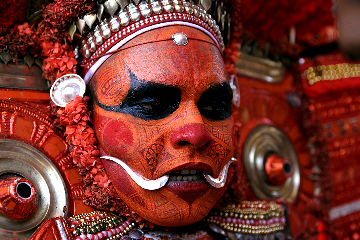
I am drawn to religious rituals and cultural festivals (especially those which have ancient history to them), and by definition these require a photojournalistic approach to them.

I try to research these rituals and festivals so as to become reasonably familiar with their cultural background, history and origins. This allows me to have a better understanding of what’s going on, which I hope come through my images.

Because of this affinity, my work is more reportage-oriented as I try to weave imagery and cultural information together.

I did get involved in stock photography for a few years, but recently found that it wasn’t for me. I’ve moved away from the traditional travel imagery required by stock agencies and travel catalogs/brochures.

The stock photography industry has considerably changed over the past few years, so I lost interest. There are many other excellent photographers who make a living from commercial and stock imagery, and I admire them for doing so.

It’s highly competitive and very tough.

What 3 tips would you share for amateur photographers who are interested in pursuing your documentary style of photography?

In my view, the most important qualification is to have (and continuously develop) a strong and wide-ranging interest in foreign cultures, history and geo-political events. This is the underpinning foundation for the emerging photojournalist.

As for tips, I’d say the first would be to drop the ego, and to remain humble and helpful to others, whether they are in the same field or not.

The second would be to learn and use ancillary visual add-ons to still photography such as multimedia, audio recording, etc.

The third would be to learn some words and sentences in as many foreign languages as possible.

Tewfic El-Sawy

Read full article on MatadorU

Community Connection

Please read our other recent interviews with Travel Photographers.

MatadorU Travel Photography Program

MatadorU’s Travel Photography Program gives you direct feedback on your work, and lifetime access to the most supportive, dynamic, and fun community of Travel Writers, Travel Photographers, and New Media Professionals on the web.

Interviews
 

About The Author

Lola (Akinmade) Åkerström

Lola (Akinmade) Åkerström is a MatadorU faculty member and Network contributor. Her work has appeared in National Geographic Traveler, Vogue, BBC, Fodors.com, and many more. Follow her photoblog at Sweden.se.

  • http://joshywashington.wordpress.com Joshywashington

    Terrific interview and tremendous shots. I ate up the insights as well as the travel photos, thanks for another great interview.

  • Adri

    Very inspiring.Thank you for the great interview Lola!

  • M. Bakunin

    ““If you take a picture of a human that does not make him noble, there is no reason to take this picture”

    Really?! May I suggest, Mr El-Sawy, that you mentally step back and think about this statement?
    Nobility, as used here in a sense which has nothing to do with hereditary titles, means
    having or showing fine personal qualities or high moral principles and ideals.
    Why would you try to photographically bestow that on anybody you are photographing? This kind of statement means that you are misrepresenting the reality you are recording. Showing people in a light (no pun intended) that doesn’t represent as close as possible who they are is in fact creating a fantasy world. What’s wrong with representing people as they are? People like you are distorting reality in a futile attempt to make a representation matching your aspirations, or your political stances. You specializing in showing, and making money from, the third-world countries and their inhabitants may be perceived as the motivation behind showing people as ‘noble’. In my opinion, this is pathetic, dishonest, bordering the propaganda-style of photography, and in any case counter-productive if your aim is to try to help your subjects, as you seem to be keen to do in the comments on your blog.
    Indeed, you are truly a banker turned photographer.

    • HyderabadChick

      What’s wrong with representing people as they are?

      Suppose nobility is “as they are” from his point of view?

      Who gets to choose what is “as they are”?

      Have no fear: For every Tewfic El-Sawy there are several who portray the very same cultures and individuals in less glorious lights. Sometimes they feel this is “as they are”

  • http://matadortrips.com/ Hal Amen

    Great shots, great interview.

  • http://www.escapenewyork.blogspot.com Wendy-Escape NY

    Tewfic’s photography is stunning and The Travel Photographer is a daily read. I smiled at the two personalities banker/travel photographer quote. I got my start in travel photography while traveling to major finance centers as a finance journo and spent nights photographing the neon of Tokyo, Shanghai and Hong Kong when the journo hat was taken off after business hours. Many travel photographers and travel writers double dip before going full time.

Interviews →

Social documentary and UN photographer Phil Borges breaks it down for Matador.

Interviews →

Travel photographer (and writer) Terence Carter has shot dozens of travel guidebooks for...

Interviews →

New York-based travel photographer Wendy Connett's work has appeared in various travel...

Interviews →

Travel and documentary photographer, Mitchell Kanashkevich travels the world, shooting...

Interviews →

Photojournalist Glenna Gordon's work has appeared in the New York Times Magazine, Time,...

Interviews →

Japan-based wildlife photographer Michael Lynch's work has appeared in various...

Interviews →

Larry Louie is an award-winning photographer whose work has appeared in National...

Interviews →

Matador Editor at Large Paul Sullivan talks with Matheiu Young about lighting, equipment,...

Interviews →

MATADOR'S EXPERT ON HOKKAIDO, Ryan Libre is a freelance photographer based out of Japan...

Interviews →

Photographer Gabby Salazar, BBC's 2004 Young Wildlife Photographer of the Year, talks...

Culture + Religion →

Producer Jamie Catto shares what he learned about shooting his world music doc on the...

Interviews →

Brook Silva-Braga shares his story and tips on filmmaking from the road.

Music + Events →

Heading to the Bay Area this summer, and keen to learn more about travel writing and...