Covering the Lewis Range of the Rockies, along the northwestern edge of Montana, Glacier National Park is one of America’s oldest and most popular national parks. Millions of years ago, the region’s distinct geologic features were carved by ancient tectonic events and ice ages that formed the mountains and glaciers. The hanging valleys, retreating glacial lakes, moraines, and cirques create a humbling sense of scale.
Most people visit Glacier National Park during July and August, when the roads are finally clear of snow and campgrounds are fully open. Many see Going-to-the-Sun Road through a windshield, inching past crowded pullouts and lines of idling cars.
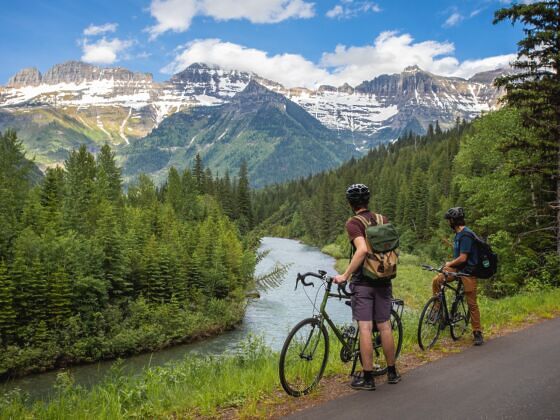
Photo: Glacier National Park/Public domain
The Best Way to See Going-to-the-Sun Road Is Only Possible a Few Days a Year
Biking Going-to-the-Sun Road is widely considered one of the world’s greatest bike routes because cyclists can ride directly through the heart of the park on a paved mountain road that feels remote and wild without requiring technical bikepacking or backcountry skills. That, and it’s just ridiculously pretty.
Every spring, there’s a fleeting window of time when cyclists can ride the entire 50-mile stretch of Going-to-the-Sun Road completely free of cars, creating a safer and more unique experience. The road is often bike-only for several weeks, but for most of that time, higher elevations of the road are still blocked by snow — meaning cyclists can’t make it all the way up and over from one end to another. Biking Going-to-the-Sun Road during the sweet spot when it’s fully clear but not open to cars is one of the best biking experiences in the national parks system, but it’s often less than a week that you can do it.
Last June, I finally got to ride it.
“Show Me” Day
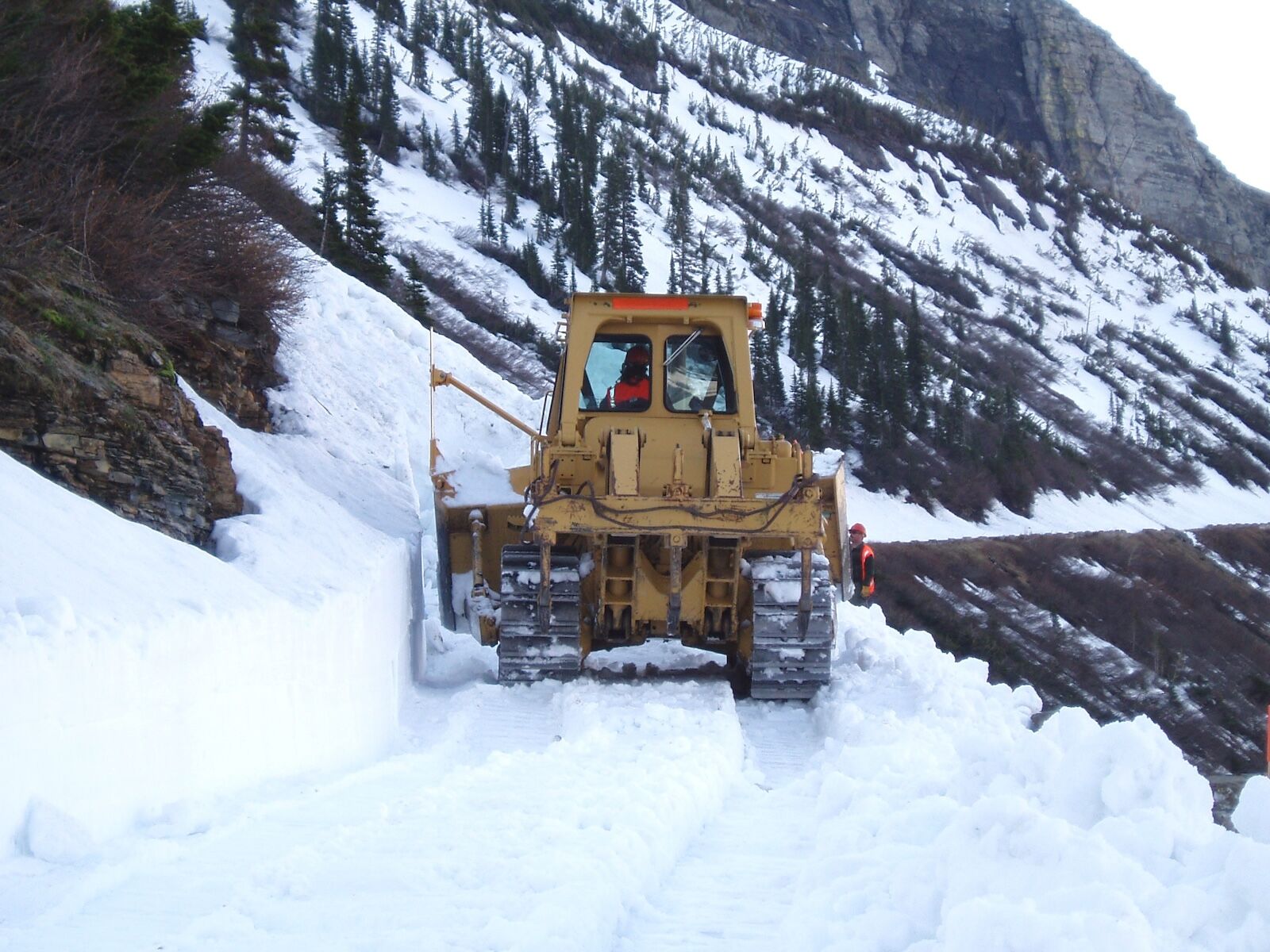
Plowing the Going-to-the-Sun Road just above Triple Arches. Photo: Glacier National Park/Public Domain
The challenge with timing a Going-to-the-Sun bike trip is that the dates change every year, because there’s no fixed opening date for Logan Pass. Everything depends on snowpack, avalanches, and plowing progress. The upper elevations of the road get an average of 15-16 feet of snow each year, though it can get much deeper in sections due to avalanches and wind deposits. This takes no small effort to plow, but has to be done each spring, as the final stretch near Logan Pass is a big deal because it reconnects West and East Glacier for the season. How many days the pass is fully clear of snow but open only to bikes depends mostly on park staff, as they complete tasks like clearing rocks and repainting road lines – factors that cyclists can work around, but drivers can’t.
Before the turn of the century, the park celebrated the annual event with “Show Me Day.” Visitors could take park shuttles to Logan Pass for close-up views of rotary plows clearing the last snow and debris from the summit, but the event was eventually discontinued because the timing of the opening became too unpredictable.
The average opening date
Based on historical opening dates published by the National Park Service dating back to 1933, the average opening date for Logan Pass is June 15. In heavy snow years, it can happen as late as mid-July, while lighter snowpack years have seen openings in late May. Glacier cycling enthusiasts monitor plowing updates the way surfers track ocean swells and skiers obsess over snow reports.
Cyclists can usually access portions of Going-to-the-Sun Road beginning Memorial Day weekend through early September, but my goal was to ride it during the sweet spot when it’s open to bikes, closed to cars, and clear enough to ride the whole thing. You can still ride Going-to-the-Sun Road after it opens to vehicles, but you’ll have to contend with bumper-to-bumper gridlock, distracted drivers, tight shoulders, and general park congestion. During the car-free interval, the road transforms into something entirely different: peaceful and spacious.
Riding Going-to-the-Sun Road
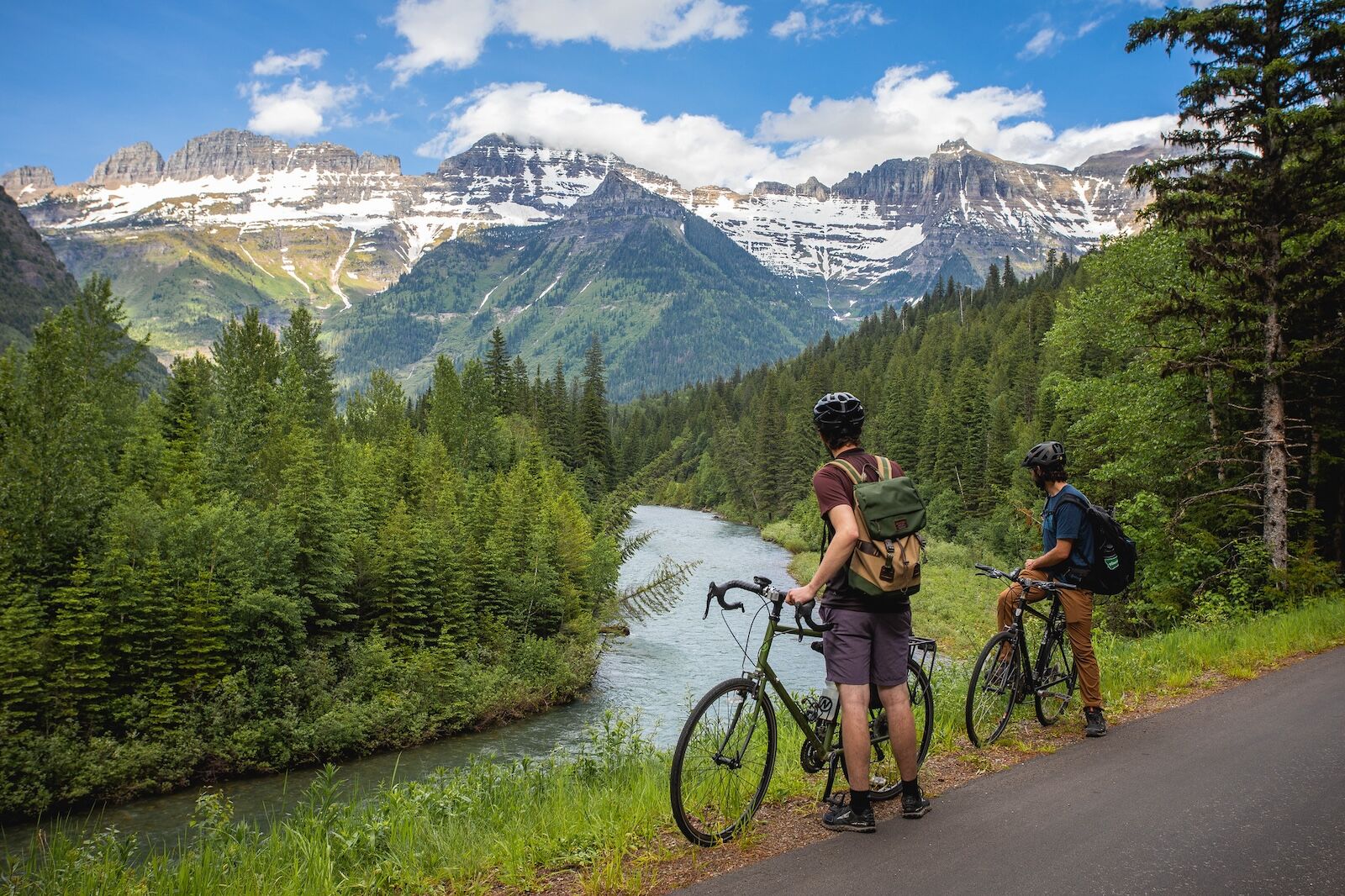
Photo: Glacier National Park/Public domain
My friends and I gambled on a second-week-of-June opening, and it paid off. Planning the trip was a bit like trying to time peak fall colors. Snowpack, avalanches, weather, and plowing progress all determine when the road finally opens, and nobody knows the exact date until it happens. Fortunately, Going-to-the-Sun Road opened on the third day of our Glacier National Park trip.
We rented e-bikes, a bike rack, and bear spray from Glacier Outfitters in Apgar Village on the west side of the park and headed to Avalanche Campground, the easiest place to park for riding Going-to-the-Sun Road. Once we geared up and assembled our foldable e-bikes, we started climbing toward Logan Pass.
Going-to-the-Sun Road stretches 50 miles from West to East Glacier and climbs more than 3,200 feet, rising from 3,500 feet above sea level to 6,646 feet at Logan Pass, with sustained grades of six to 8.5 percent. Riders in our group who live at sea level noticed the impact of the altitude immediately, but the e-bikes made the climb significantly more manageable.
While we opted for e-bikes, regular road bikes are also common – but require, of course, significant physical fitness. It also takes longer; park rangers estimate it takes four to five hours to reach the pass on a standard bike (and considerably longer for the purists riding fixies.) On e-bikes, it took us about 2 1/2 to 3 hours with several photo and snack stops.
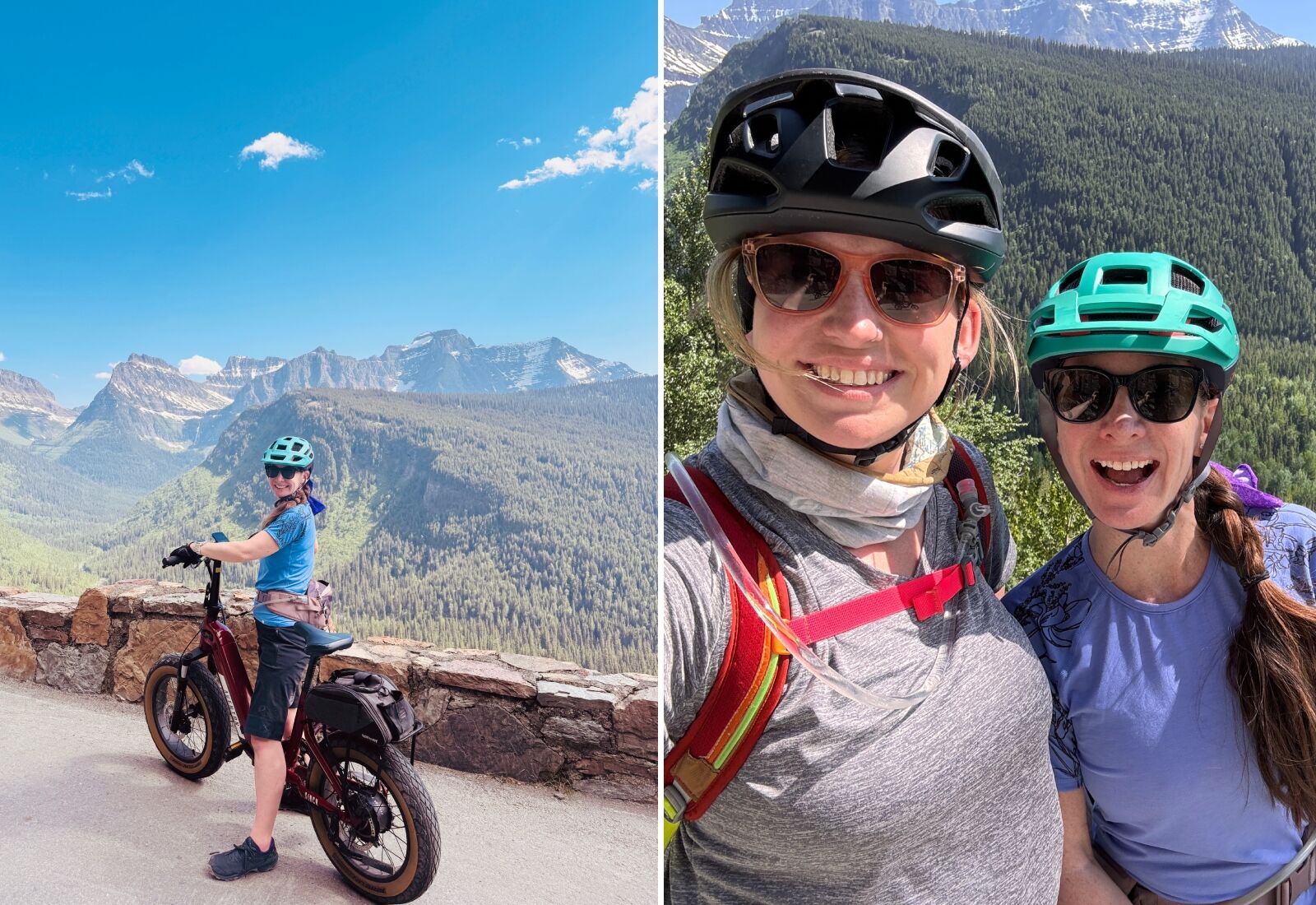
The author on Going-to-the-Sun Road. Photos: Melissa McGibbon and Angelica Haggert
We kept our eyes out for grizzly bears, gray wolves, peregrine falcons, and bald eagles. Along the way, we passed McDonald Creek, the Garden Wall, Heaven’s Peak, Bird Woman Falls, a 492-foot waterfall cascading from a hanging valley, the West Side Tunnel with Triple Arches, and sweeping alpine views around nearly every bend.
We could hear waterfalls long before we saw them, listen to avalanche runoff crashing down the cliffs, coast down the middle of the empty road, and stop whenever we wanted without worrying about a bottleneck piling up behind us. There were no RVs lumbering around blind corners, no packed overlooks, and no exhaust fumes drifting through the alpine air. The scenic byway blended into the scenery.
The lack of vehicles makes the silence striking. We could hear the wind moving through the trees and birds singing. I was able to appreciate how extraordinary it was, as there were no cars to jolt me out of the moment suddenly by coming too close around a corner or hitting the gas immediately behind me. Every year, Glacier National Park welcomes 3.1 million visitors, but there I was, one of perhaps 50 cyclists we saw all day, experiencing the park in near solitude.
Respect wildlife on and around the road
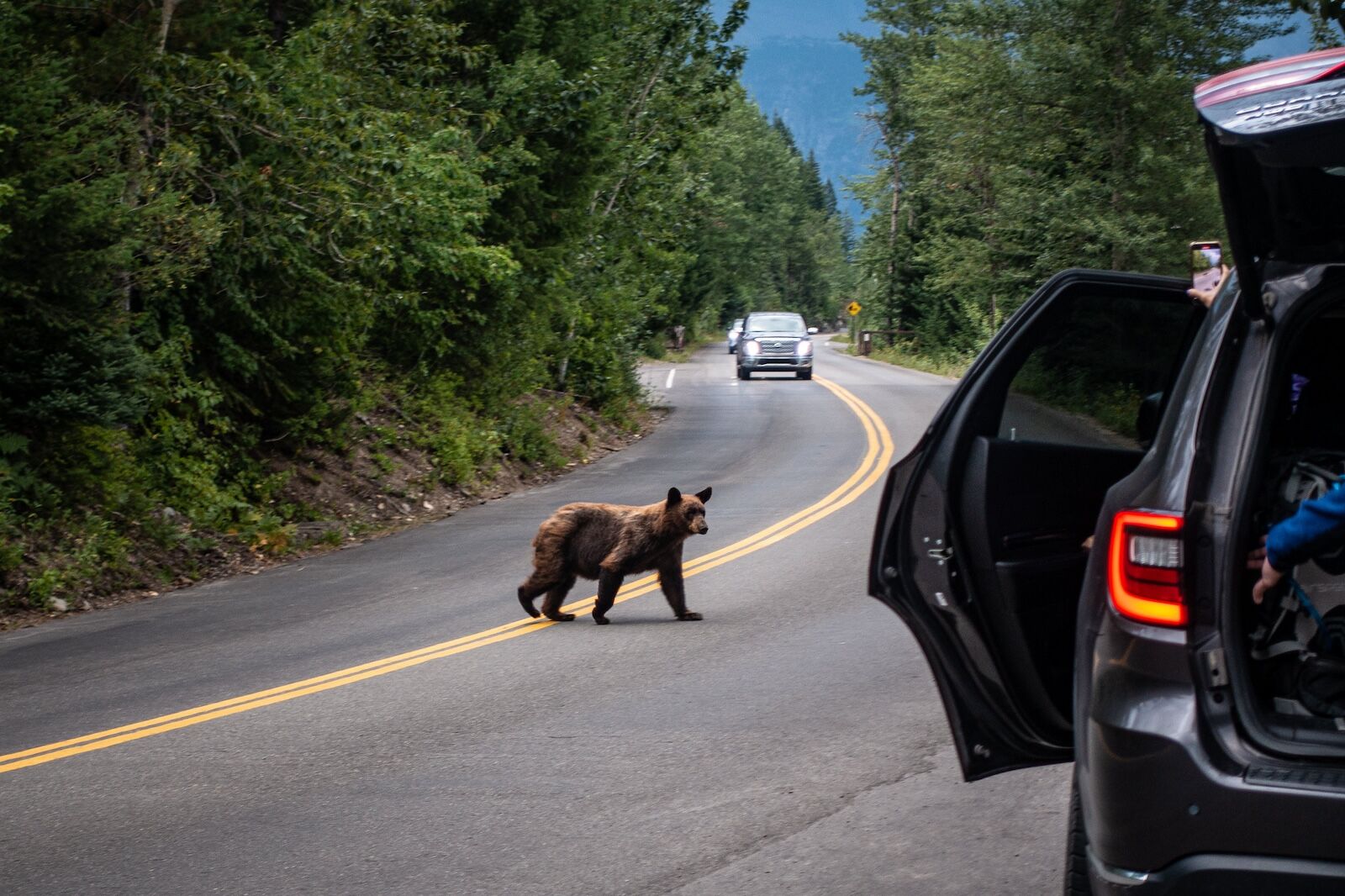
Photo: Glacier National Park/Public domain
After about 2.5 hours of riding, we started the approach to Logan Pass. There, we were met by park rangers who had just cordoned off the road because of nearby bear activity.
They told us that a young hiker and her dad left a backpack full of snacks unattended. Naturally, it attracted a grizzly bear and her cubs. No one was injured, but because bears are known to hang out and return to places where they’ve found easy food, rangers were forced to close the area for the foreseeable future and stop everyone from moving any farther.
Many visitors get so taken with seeing a park’s main sights that they forget they’re wild places and home to endangered animals. Bears are believed to have one of the strongest senses of smell in the animal kingdom, estimated to be up to 2,100 times stronger than a human’s. They can run 30 to 40 mph, and they love snacks.
If a bear harms a visitor, the bear will likely be tracked down and euthanized, regardless of whether the human wandered into bear country with the survival instincts of an unsupervised charcuterie board. A mistake from an uneducated human can mean death for a bear, and when you’re moving on a bike (or on foot), you have a responsibility to be bear aware. In fact, you can be fined or potentially face jail time for wildlife violations.
Ultimately, the closure foiled our West-to-East crossing. But we still managed to fit in a joyful 32-mile roundtrip ride with the return ride to the campground, filled with bewitching landscapes, solid pedaling, and more than a few sing alongs. A few days later, the road reopened to cars, and the empty lanes we’d pedaled gave way to the buzz of peak season. But for a few brief days, we got to explore Glacier in a way most visitors never will.
Biking outside of the bike-only window
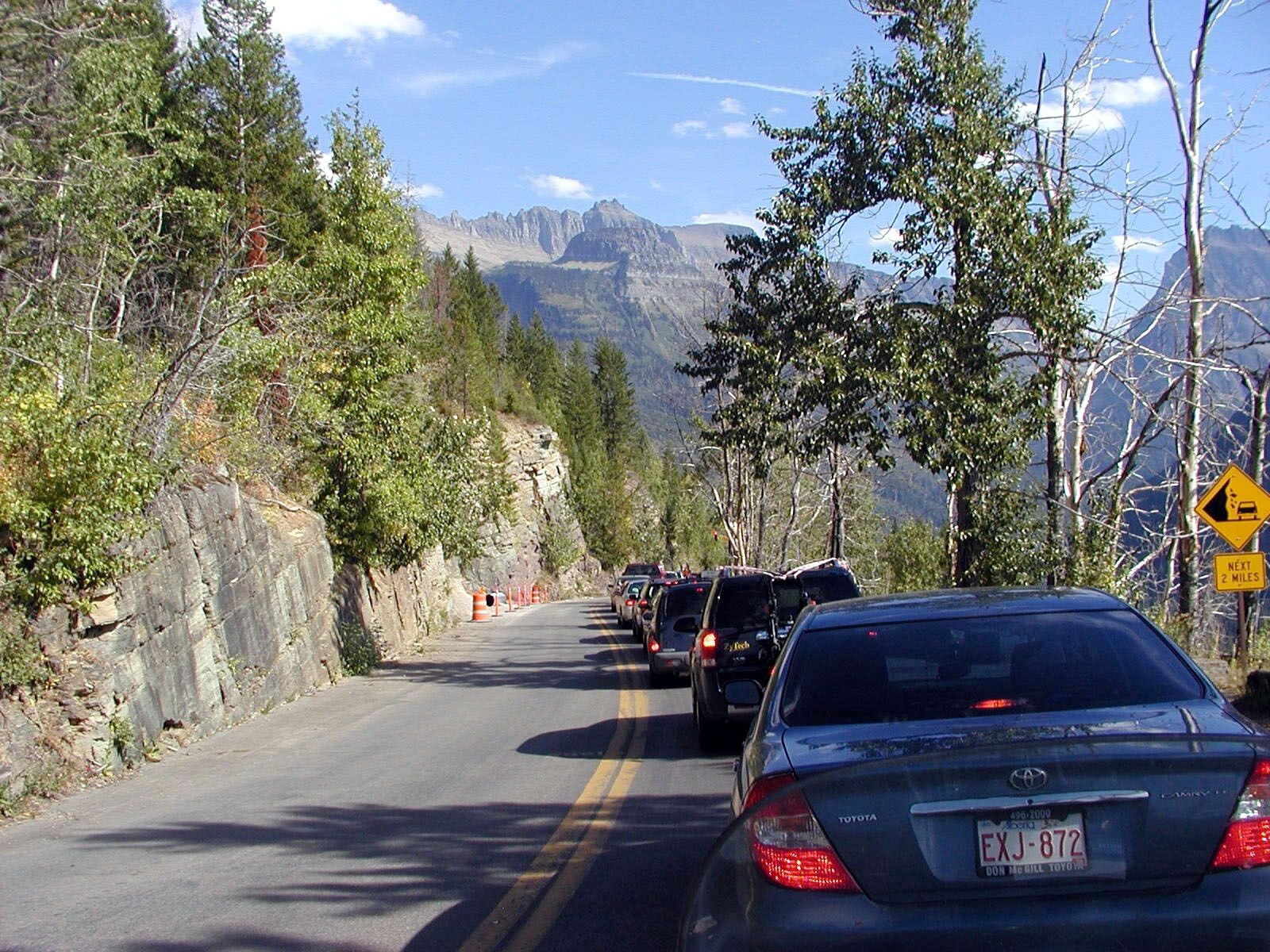
Most of Glacier’s roads are narrow, winding, and lacking in bike lanes. Photo: Glacier National Park/Public domain
While you can cycle on the road all summer, there are some restrictions on cycling access during the busy tourist season. From the day it opens to vehicles through September 27, cyclists are banned from climbing from Apgar to Logan Pass (our route) between noon and 6 PM. The road going west from Logan Pass to Apgar is closed to cyclists between 3 PM and 6 PM daily, so plan accordingly.
Fueling up for the ride
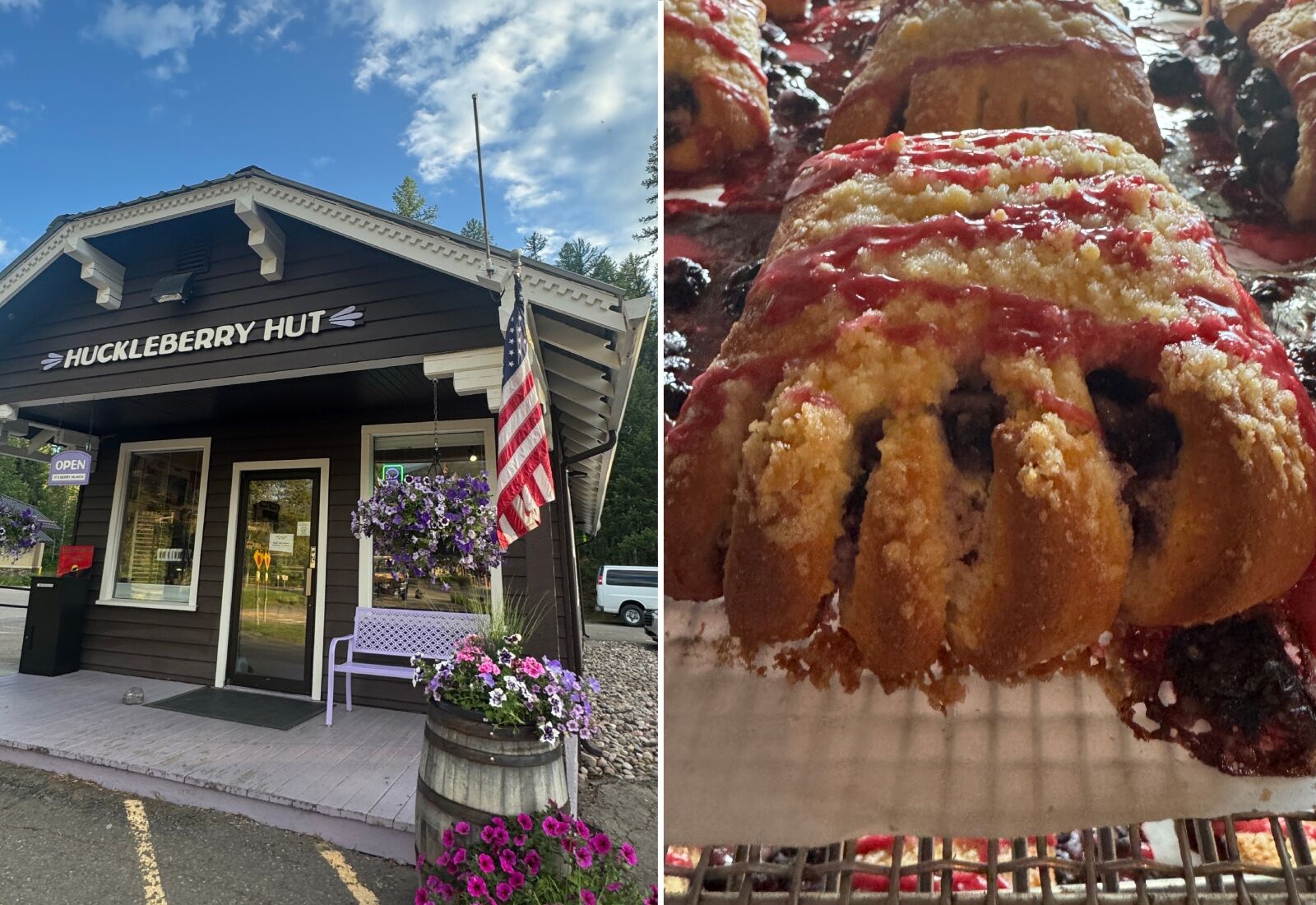
Photo: Melissa McGibbon
Stocking up on bike-ready snacks at a camp store is recommended, as is potentially carrying a bike lock if you plan to stop for extended periods of time at the Logan Pass Visitor Center or stopping to explore on foot. But refueling after your ride is just as important, and after our ride, we went on one essential side quest, as no trip to Glacier National Park is complete without a fresh huckleberry bear claw.
After we returned our bikes, we headed to Polebridge Mercantile and Bakery. The historic bakery is known for its large, sugar-glazed pastries made with tart wild blueberries and huckleberries and served warm on request. Naturally, they’re shaped like bear paws, with notches cut out to shape the claws. It was probably the best bear claw of my life and worth the roughly 40-minute drive from West Glacier, MT.
Where to stay
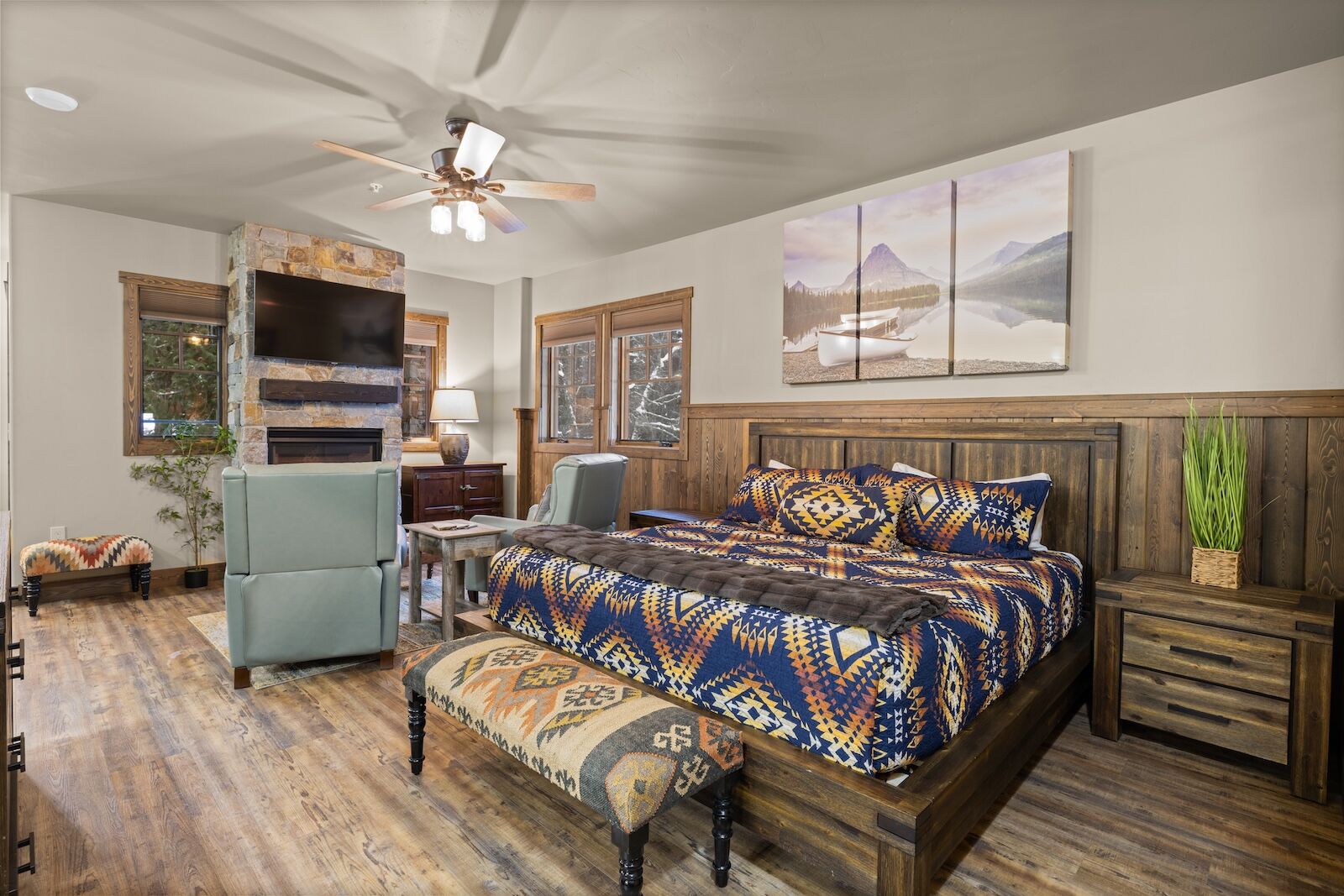
A room at Apgar Lookout Suites. Photo: Pursuit
Glacier’s lodging options are numerous, as it’s such a popular park with hotels both inside and outside the borders. There are plenty of nearby Airbnbs for visitors who want more space (sometimes set a bit into the woods), while hotels in the vicinity offer everything from budget-friendly convenience to high-end glamping. It can also be worth it to stay inside the park for at least one night, especially if you want to wake up near the trails without fighting crowds at the entrance to drive in.
West Glacier Cabins
These adorably appointed one- and two-bedroom cabins in West Glacier have full kitchens, bathrooms, living rooms, dining tables, bedrooms, and a front deck with chairs. They’re about a 5-minute walk from West Glacier Village and have air conditioning, free Wi-Fi, and laundry facilities, making them a popular place to stay after backpacking trips.
Apgar Lookout Suites
For a more upscale stay, the Apgar Lookout Suites are hard to beat. They’re in the park and a bit more high-end, with similar layouts including full kitchens, dining areas, and living rooms. 