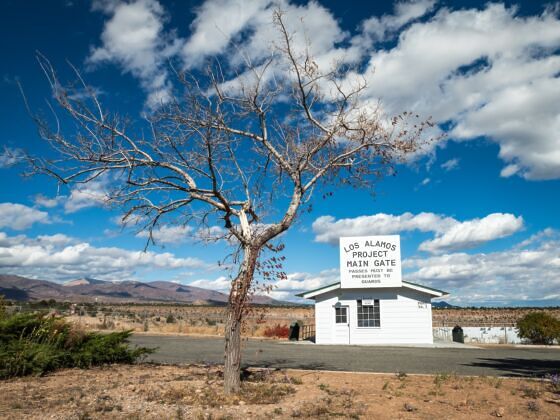
From the time it was established in 1943 until the end of World War II, the town of Los Alamos, New Mexico didn’t officially exist. More than 6,000 scientists, engineers, technicians, and military personnel were quickly moved to the mountains of New Mexico, where the government set up a top-secret military base and laboratory. It was built in weeks, and the only people there were affiliated with its secret mission. That mission was the Manhattan Project: the development and testing of the nuclear weapons that were dropped on Hiroshima and Nagasaki in Japan in August 1945. The men and women who lived and worked here didn’t appear on census records, their mail was directed to a remote post office box, and to the outside world, they just weren’t there.
A Once-Top-Secret Government City Is Open to Tours — if You Can Win the Lottery
In 1957, the town’s gates came down, and since then, anyone has been allowed to drive in and walk the small downtown area. But the fence still remains around Los Alamos National Laboratory, the active federal security facility at the center of town. It still houses many of the original Manhattan Project structures, sitting in a facility that most people will never see. But twice a year, a highly competitive lottery changes that for a small handful of people — and the next lottery opens on June 1.
What is Los Alamos?
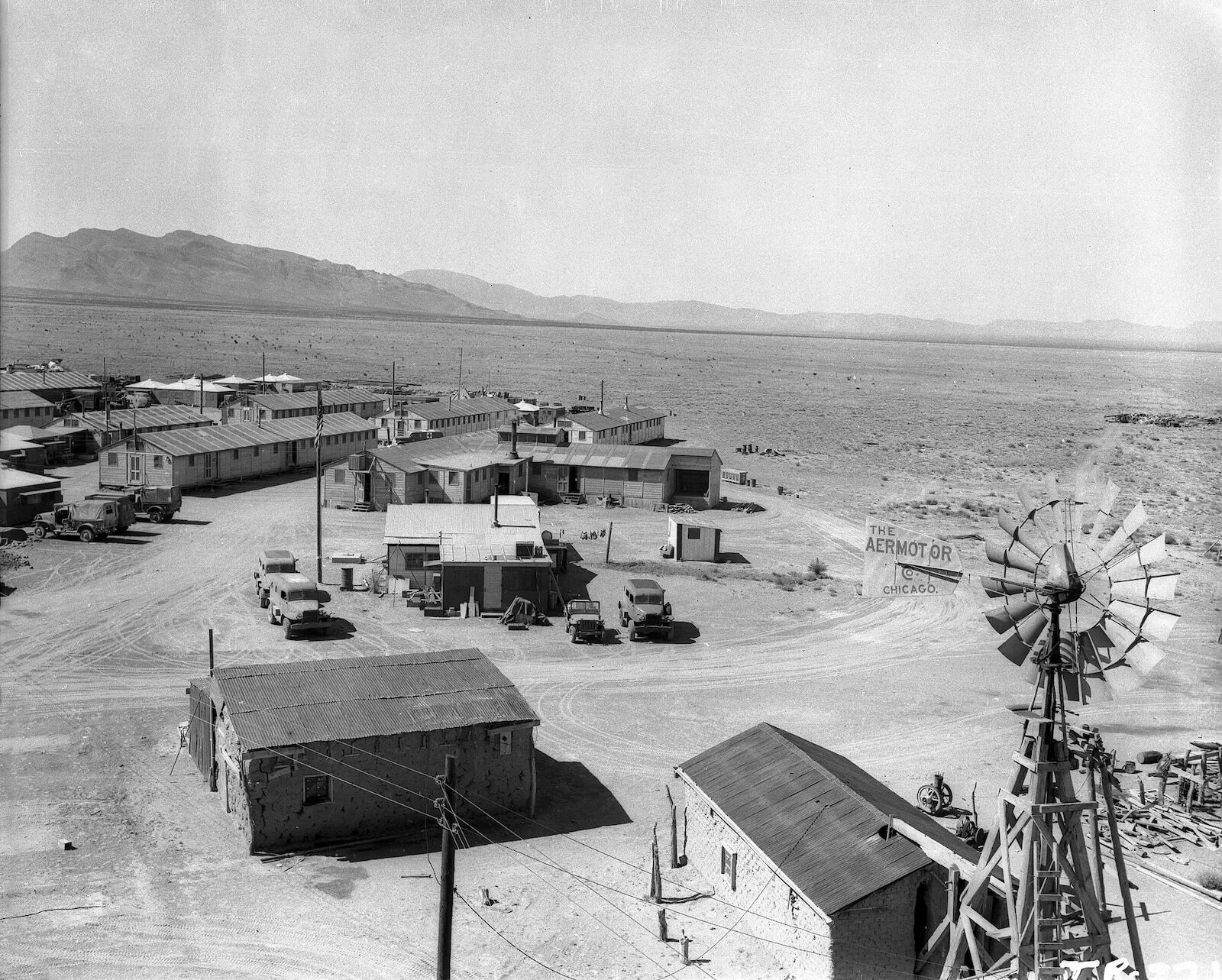
The site that would become Los Alamos lab. Photo: /Los Alamos National Laboratory
In April 1943, the US government established a secret laboratory in the mountains of northern New Mexico, given the bland nickname of “Project Y.” Under Robert Oppenheimer’s direction, scientists were given one task: build an atomic bomb before Nazi Germany could. The work was put to the test on July 16, 1945, with the “Trinity test” — the first detonation of a nuclear device anywhere in the world. Less than a month later, the US dropped bombs built at the laboratory on Hiroshima and Nagasaki, and WWII ended a few days later.
The bombings killed an estimated 130,000-200,000 people, mostly civilians, and the moral weight of that decision remains debated to this day. It’s something the public visitor center’s exhibits address directly, without taking sides.
The lab didn’t close following WWII. It stayed open through the Cold War, produced the hydrogen bomb, and is still active today. Its extreme security means it continues to be the subject of conspiracy theories, from rumors about espionage and missing hard drives containing nuclear secrets to social media conspiracy theories about the deaths and disappearances of scientists with ties to the lab (which spurred a current FBI inquiry). The buildings are still standing behind the fence, mostly unchanged from the 1940s. Getting in on a tour is the closest the average person will ever be able to get.
What visitors will see
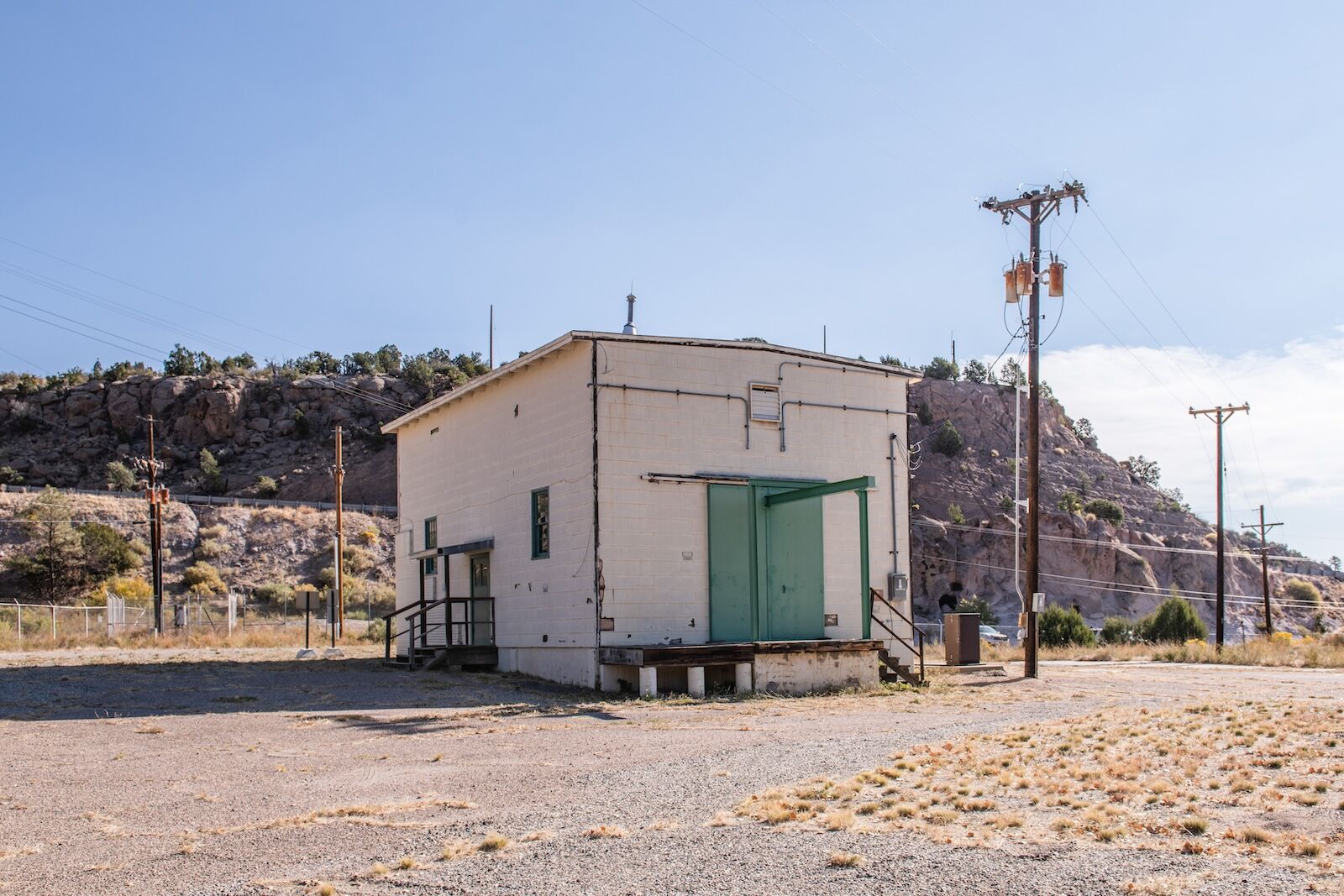
The Slotin Building where a radiation disaster changed the way the world does scientific research. Photo: NPS/Public Domain
Manhattan Project National Historical Park was established in 2015, with Los Alamos as one of three sites, along with Oak Ridge, Tennessee, and Hanford, Washington. Each highlights a different aspect of the bomb’s development. However, the Los Alamos site was the core site. It was where the weapons were actually designed, built, and tested.
Unlike most national park sites, the majority of the park’s historic structures are on restricted land, inaccessible to casual visitors. Behind-the-scenes tours are the only way to see the facility. They take participants to places where Manhattan Project scientists made history, like inside the original Pond Cabin, where physicists discovered that their original “Thin Man” plutonium bomb wouldn’t work. Participants also get to go through the Slotin Building, where scientist Louis Slotin was exposed to so much radiation that he died nine days later. The guides will also speak to what daily life looked like in a city that wasn’t supposed to exist, and what it was like for employees who couldn’t even tell their families where they were.
Seeing the town is open to anyone, and the visitor center offers 90-minute guided walking tours of the original project site, where there’s also a small museum and statue of Oppenheimer. Nearby, the Bradbury Science Museum (named for Oppenheimer successor Norris Bradbury, not science fiction writer Ray Bradbury) has interactive exhibits on nuclear science and the Manhattan Project’s lasting impact.
How to get a spot
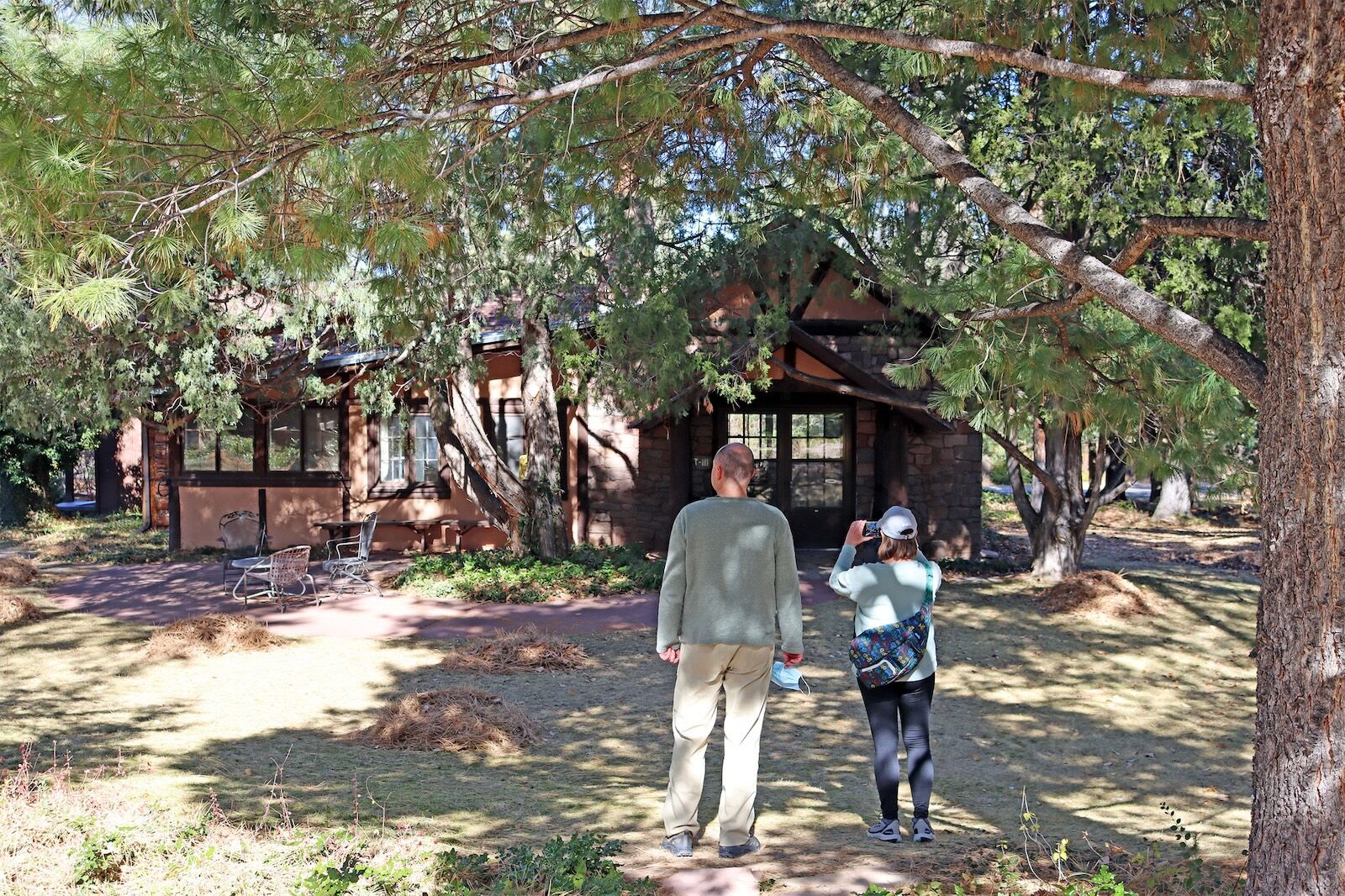
Sites like the house Oppenheimer lived in are available for public viewing on free guided tours, which start at the Los Alamos Visitor Center. Photo: NPS/Public Domain
Tours are offered on select dates just a few times per year, with two tours per day and a maximum of 30 participants each. The tours for the lottery that opens on June 1 will take place on October 13, 14, and 15. That means just 180 people total will get to tour the facility. Tours are usually offered in May and October, but it’s still very hard to get a spot.
The lottery opens on June 1 and closes June 12, with winners notified by June 18. Registration for the free tours is online only, and each person can include one guest. Past entries don’t carry over, so you’ll need to enter every time to have a shot. The facility is an extremely secure area, so anyone who wins will need to provide extensive ID documents at check-in. Unsurprisingly, cell phones and cameras are not allowed.
Getting there
Los Alamos sits about 35 miles northwest of Santa Fe, New Mexico, making it close enough for an afternoon trip. The drive takes less than an hour, winding through undeveloped canyon country. To make a few days out of it, stay in Santa Fe and check out draws like the Georgia O’Keeffe Museum and historic Plaza, not to mention the city’s excellent food scene. Also nearby is Bandelier National Monument, home to thousand-year-old cave dwellings, ruins, and petroglyphs left by the Ancestral Pueblo peoples. 