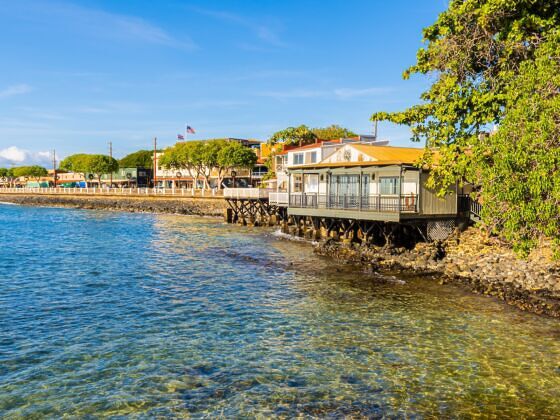
I didn’t know what to expect when I ordered the poke donut at Coco Deck on Lāhainā’s famous Front Street in West Māui, Hawaiʻi. The waitress told me this was one of the restaurant’s most famous appetizers and left it at that — a fried, doughnut-shaped ring of ahi on the bottom, drizzled with a soy glaze and spicy mayo, then topped with fresh ahi, ginger, shaved onion greens, and sesame seeds. I could hear the crunch over the ambient buzz of the packed patio, and that classic fresh poke smell of alliums and sesame mixed with a light fry batter overtook even the sea breeze blowing in from across the street. It was unlike any of the poke — traditional or modern — that I’d been overindulging in that week, or any of the many variations I tried when I stood in as a judge for a poke competition on Kauaʻi years back. It was also one of my favorites.
In Post-Fire West Māui, Restaurants Are at the Heart of a Slow Recovery
Coco Deck seemed almost like a typical restaurant in this bubble: innovative food, cold local beer, a cacophony of different accents heard on all sides. I’d come with my wife, Heather, our newborn Wally, and our toddler Margot, and families from West Māui and tourists alike surrounded us. One street over, the reality of the town’s present situation is a stark contrast.
On August 8, 2023, Lāhainā — a former capital of the Hawaiian Kingdom, key port town, and, later, marquee destination for travelers from around the world — was hit by the deadliest wildfire in the United States in a century. More than 100 people died, and more than 12,000 people were displaced. About 2,200 buildings burned to their foundations or were damaged beyond repair — including the Lahaina Heritage Museum, the old Wharf Cinema Center, and much of Front Street.
More than two years later, the large-scale emergency shelters are closed. Construction crews are quickly building in some areas, though much of the town is left with scarred concrete outlines where homes and businesses once stood. Crowds are sparse, but tourists are slowly trickling in. People pack into the restaurants like Coco Deck and a handful of others that have reopened. These buildings somehow escaped the devastation, as did a tree growing right at the shoreline that filtered the sunset’s light as we ate our dinner.
“It’s unbelievable. I really can’t wrap my head around it,” Ashley Davis, co-owner of Coco Deck and Mala Ocean Tavern, tells me over a video call when I get back. “Our structure is completely wood. It really is a miracle.”
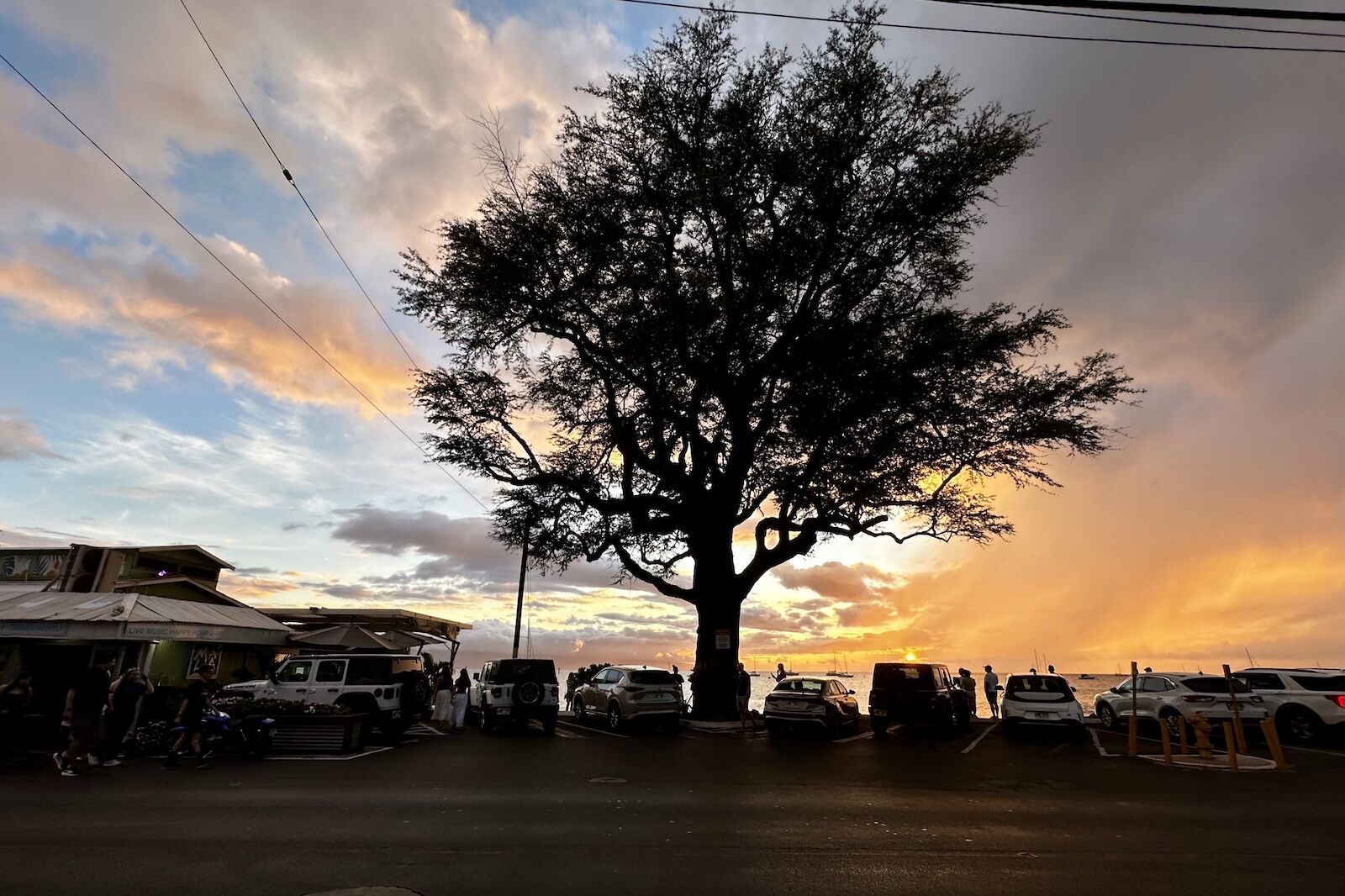
The patio view from Coco Deck at sunset. Photo: Nickolaus Hines
Coco Deck — and Hana Hou Hospitality as a whole, which also includes Mala Ocean Tavern, Down the Hatch, Paradiso Pizza, Breakwall Shave Ice, and Pineapple Robot — has been at the forefront of Lāhainā’s restaurant recovery. Mala was the first Front Street restaurant to reopen, and people used the building that now houses Coco Deck for shelter. More than 100 of Hana Hou Hospitality’s 200 employees lost their homes.
The building previously held Hana Hou Hospitality’s fine-dining restaurant Duckine. Restaurant group leadership recognized that a pricey dinner spot didn’t make sense for a town in recovery. The team didn’t know if the city would let them open, with damaged infrastructure and air-quality monitors stationed right outside, but there was a clear need for a place the community could gather as people took stock of what was lost and what could be saved.
“We wanted a place for people to come and where they could bring their kids,” says Davis, for whom Lāhainā’s losses were just as personal as any other resident. “Every single house I ever lived in Lāhainā burned down,” she says. “Every single thing in Lāhainā that we made a memory that was special is gone.”
After restoring the building, Hana Hou Hospitality opened Coco Deck in September 2024. Lāhainā is still rebuilding. Construction is uneven, with some familiar businesses returning and some new businesses taking their place. But through it all, the town’s renowned hospitality endures.
Today, Māui officials are encouraging travelers to return and support the locals rebuilding their lives. And that extends to more than just the locations directly impacted by the fires.
Food and hospitality: Two constants in West Māui’s recovery
As devastating as the fire itself was, what followed didn’t help. West Māui’s economy was, and is, largely supported by tourism — close to half of the GDP by some figures. Travelers were asked to postpone their trips in the aftermath of the fires. Survivors needed what limited resources there were, and hotels and resorts pivoted to housing their workers, people involved in rescue efforts, and the wider community.
Now, those resources are being directed toward tourism again. Visitor numbers have been mixed the past two years, with fewer people overall, but data reflects encouraging spending by those who do come.
The impact on the number of tourists was much broader than Lāhainā. “All of Māui was affected. The Big Island was affected. O‘ahu was affected,” says Davis, who also expresses her hope that tourism returns. “That’s our only industry,” she says. “I know some of the local community would prefer they didn’t, but unfortunately, that’s where it’s at now.”
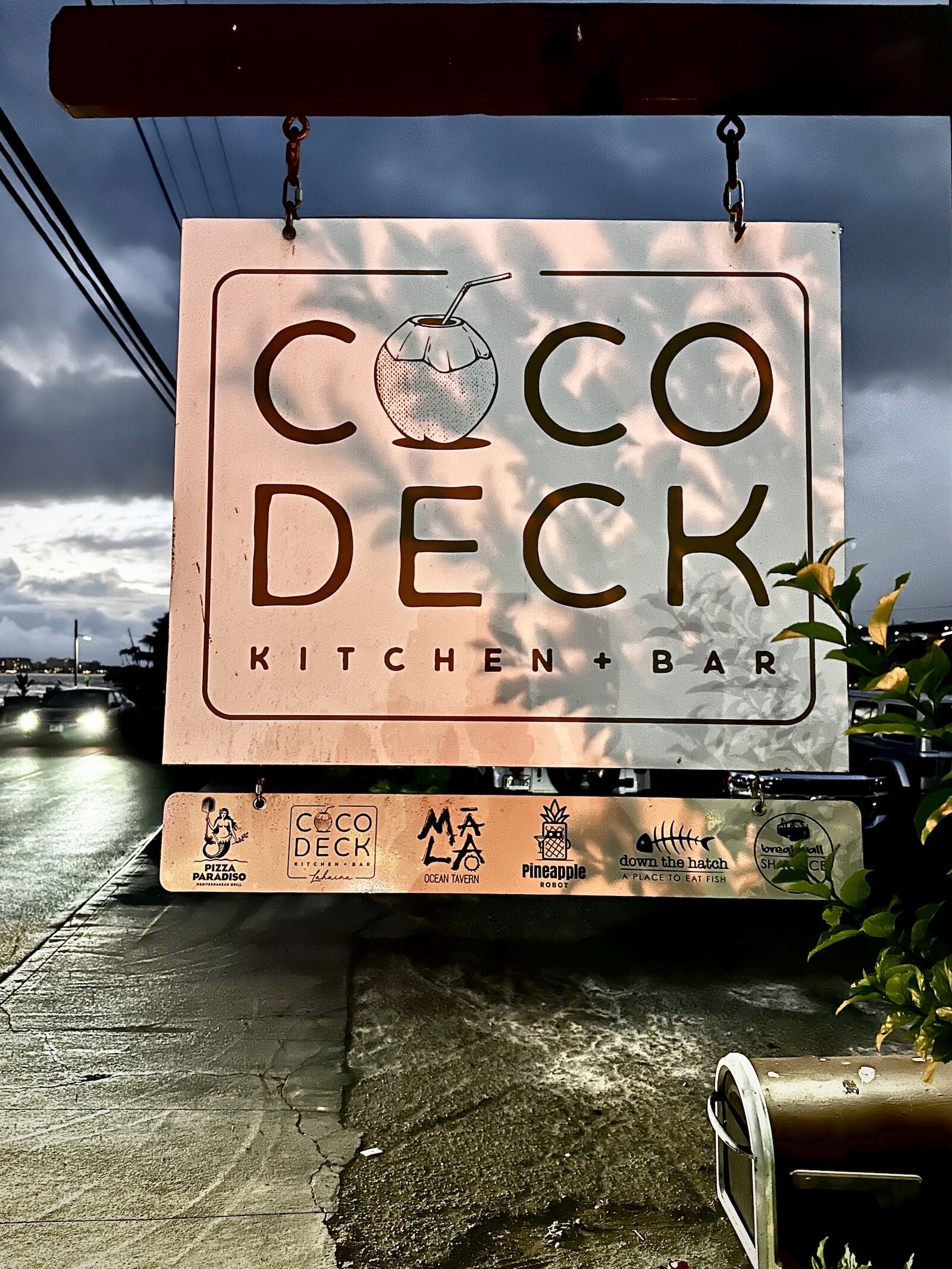
Photo: Nickolaus Hines
Restaurants aren’t solely for tourists, but an outsized number of guests come from elsewhere in a destination like Māui. When the planes stopped bringing people onto the island, that revenue stopped with it until it was safe for travelers to return.
Places like Merriman’s Kapalua, about 20 miles up the coast from Lāhainā, are carrying forward the legacy that made Māui famous around the world. The restaurant group helped bring food centered on local Hawaiian ingredients to the forefront when it opened in 1988.
Today, Merriman’s looks just as it did before the fires. While parts of Lāhainā are unrecognizable, other corners of West Māui still have that timeless quality that return visitors will recognize. The damage to the community isn’t on the surface level here in the same way as the epicenter of the damage, and the island’s culinary identity remains consistent through the chefs, restaurateurs, and workers who never left.
“It’s important to be an upstanding member of the community,” chef and restaurateur Peter Merriman says. “No more or less than any other member of the community. It’s part of our core ethos: Do The Right Thing. And never forget, It’s Nice to Be Nice.”
My family sat down at Merriman’s one night for a sunset dinner. Between the musician and open windows letting the sea breeze in, it was one of the few places I didn’t hear a steady stream of guests asking the staff about the fire. A table of couples on a golf trip across from us talked about ordering the same plates they always get on their annual trips here. Another nearby family had put their kids in front of screens, parents clearly reveling in a spare moment to enjoy their meal and drinks.
Merriman’s is a rare restaurant that’s family-friendly while still focusing on elevated cuisine. A makai (ocean-inspired) special with the daily catch, harissa-spiced scallops and clams, and macadamia-crusted fish filled our table in short order. Wine poured, Margot devoured everything in front of her, and Wally slept to the sound of the guitar next to him. Our waiter balanced conversations about the fishing conditions that morning with asides about how he’s fared as a transplant who came from Southern California decades ago and stayed through the the pandemic and then the fire.
The scars from the impact of both life-changing events weren’t hidden or glossed over, but neither was the attention to detail that sets Merriman’s locations apart.
“Our philosophy of local first, organic when possible, and always the highest quality has remained the same since we first opened,” Merriman says. “Now, there are far more locally produced items in Hawaiʻi than there were in 1988. This gives us the opportunity to experiment with different dishes and expand our culinary offerings to our customers.”
Over the decades of Merriman’s across the islands, visitors have remained consistent in wanting to experience local food. What’s changed is a hopeful sign for where West Māui is now and will be in the future: people are “more interested in being involved in community projects that benefit the island,” Merriman says.
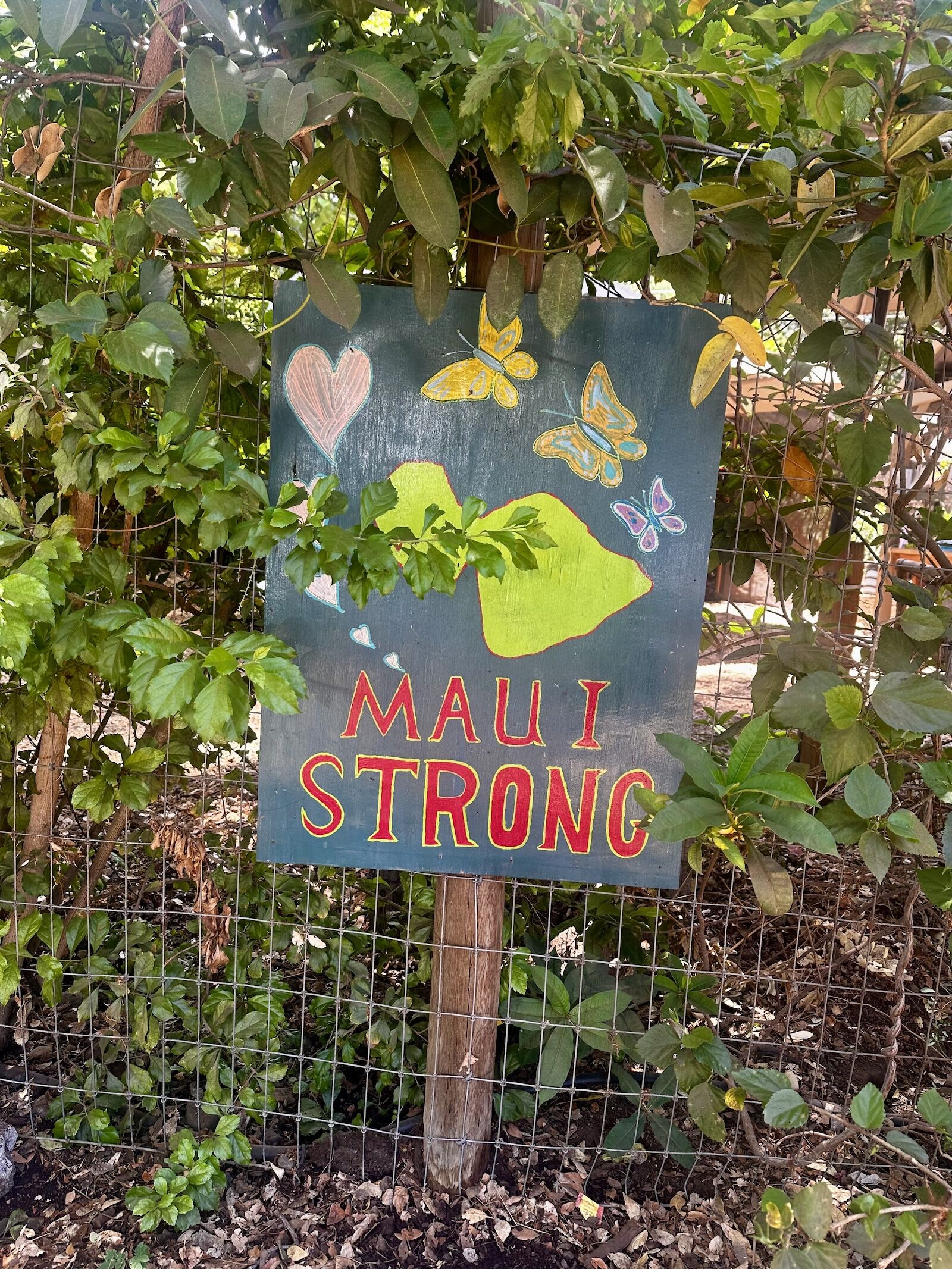
One of the many Maui Strong signs across West Maui, this one in front of the Maui Butterfly Farm. Photo: Nickolaus Hines
Before 2023, Lāhainā, and the West Māui coast more broadly, defined the island’s cuisine as a whole. The town’s compact grid was a dense mix of restaurants from street-food-style to fine dining — all enjoyed on a sea-sprayed stretch. Travelers came to Lāhainā expecting that mix: a plate of fresh ahi caught hours earlier, greens from Māui’s Kula region and upcountry produce on the side, cocktails with lilikoi (passion fruit) and local rum, and aloha-driven service.
There was a touch of that everywhere we ate over the course of a week — and with that, locals trying to reach some semblance of a new normal while fielding questions from visitors about the devastation. A food truck park next to Aston Kaʻanapali Shores, where we were staying, was packed night after night with people eating plates inspired by the various diasporas that call Māui home. At Aloha Mixed Plate, construction to replace the old cannery building across the street hammered on while we ate traditional dishes on the patio before walking down to the shore to see the turtles floating a few feet away.
Tourist draws in the past still had few people in the summer of 2025. Maui Ocean Center, the island’s only public aquarium, wasn’t empty but was far from full during prime lunch hour as we ate our mixed plate and more poke before learning about the animals that call the surrounding waters home. Sealife, touch tanks, and cultural exhibits are the main attraction, and the on-site restaurant’s food really didn’t have to be as good as it is. I was surprised by how many empty tables there were.
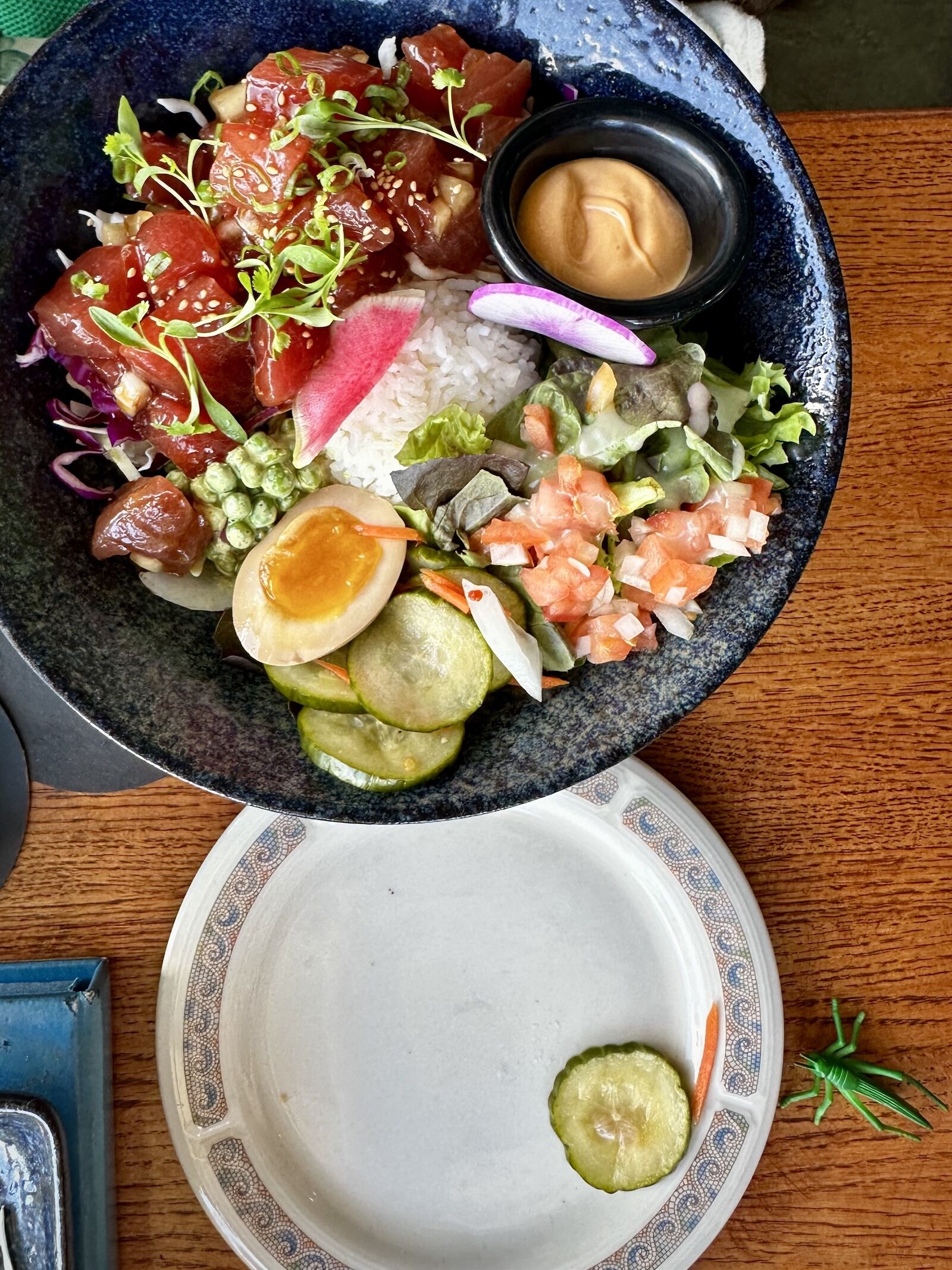
Poke at the restaurant at Maui Ocean Center. Photo: Nickolaus Hines
It was impossible to miss the upstart, do-it-yourself ethos of recovery, too. Driving down the Honoapiilani Highway, we pulled off on a whim at the sight of a scattering of food trucks next to the Maui Butterfly Farm. We ordered pizza at Margarita’s (Margot insisted on Hawaiian) as a slow but steady stream of tourists picked over fruit at Olowalu General Store on the other side of the parking spots.
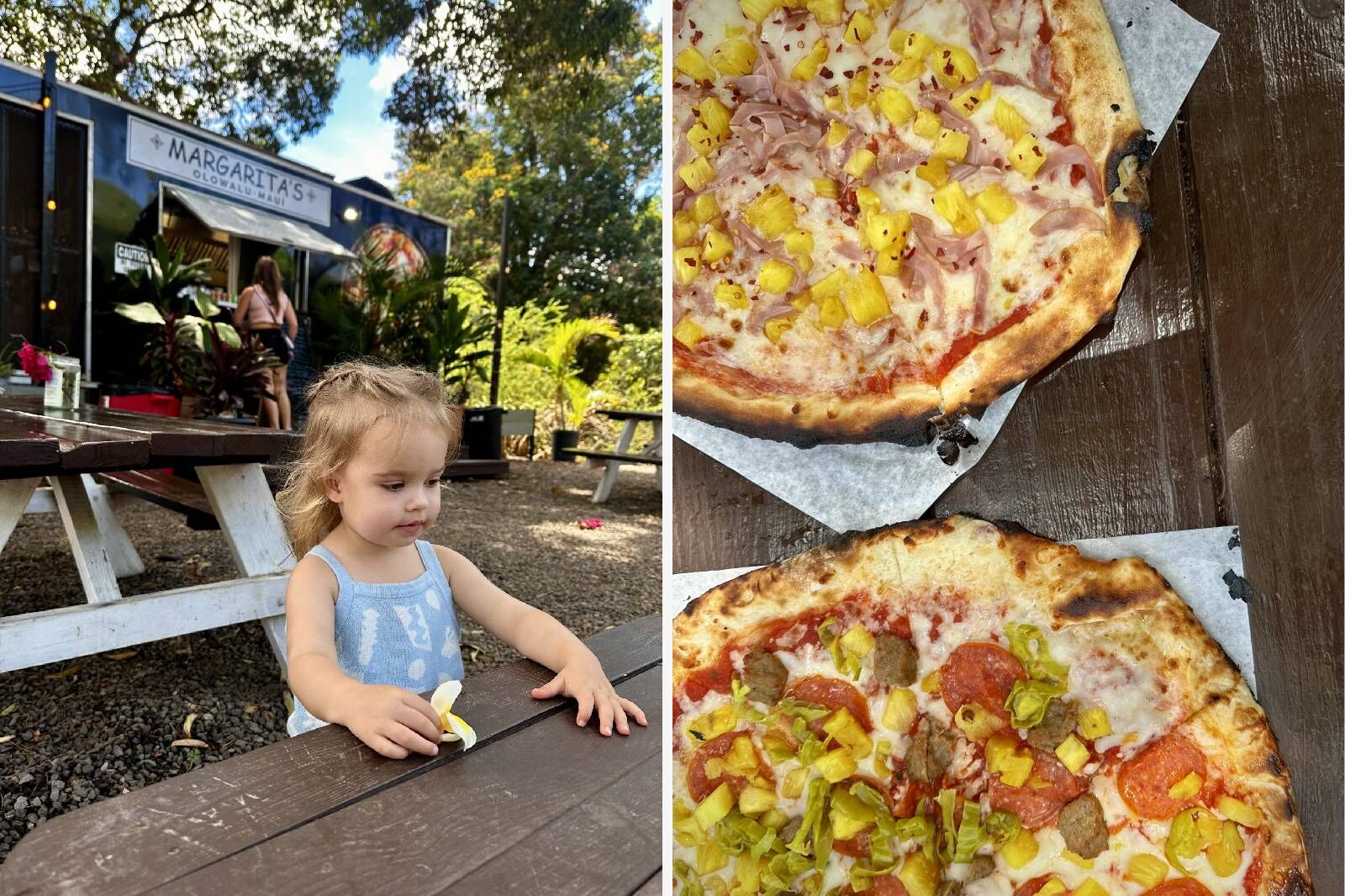
Margarita’s pizza off Olowalu Village Road, Lahaina. Photo: Nickolaus Hines
Roosters, chickens, and chicks still in their baby feathers hopped up on the tables next to us. Teens in towels talked about the morning’s waves with the food truck team from Eastern Europe as they stretched and tossed dough. It was the best pizza I’d had in years: dough with a crackly exterior and soft interior; the perfect balance of toppings, cheese, and sauce; bites delivering a distinct sense of place that gave local context to a globally loved food.
What travelers can learn through Māui’s food scene before visiting
There’s always a question of when the right time is to return to a popular tourist destination after a disaster. Truthfully, there’s no right answer.
What is clear is that visiting the right way — respecting the struggle people have gone through, tipping generously, understanding there may be lapses as people find a way to rebuild — is a key way to help. Food is a natural entry point for many. Up and down West Māui, people in the industry are building on what’s left, staying true to tradition, and in some cases creating something new entirely.
“I would encourage people to come to Lāhainā just to honor it, you know, just to give your love and your aloha,” Davis says, encouraging support for a “community that’s still trying to survive” while people are working multiple jobs, facing rent increases, and struggling to find housing after the fires.
Support doesn’t mean inquiring about the hardest part of many people’s lives. At another of Hana Hou Hospitality’s restaurants, a notice asked guests to refrain from asking employees about the fires.
“Imagine coming back to work and, even if somebody’s intentions are good, how would you feel when your house burns down and then someone asks, ‘Did you lose your house? Did you lose your family member?’” Davis says. “Just come order some food and enjoy it. Talk about how beautiful it is and support us.”
In other cases, guests have demanded a discount because the fire took parts of the Māui they thought they were going to visit. That, obviously, is so far out of line it’s hard to imagine.
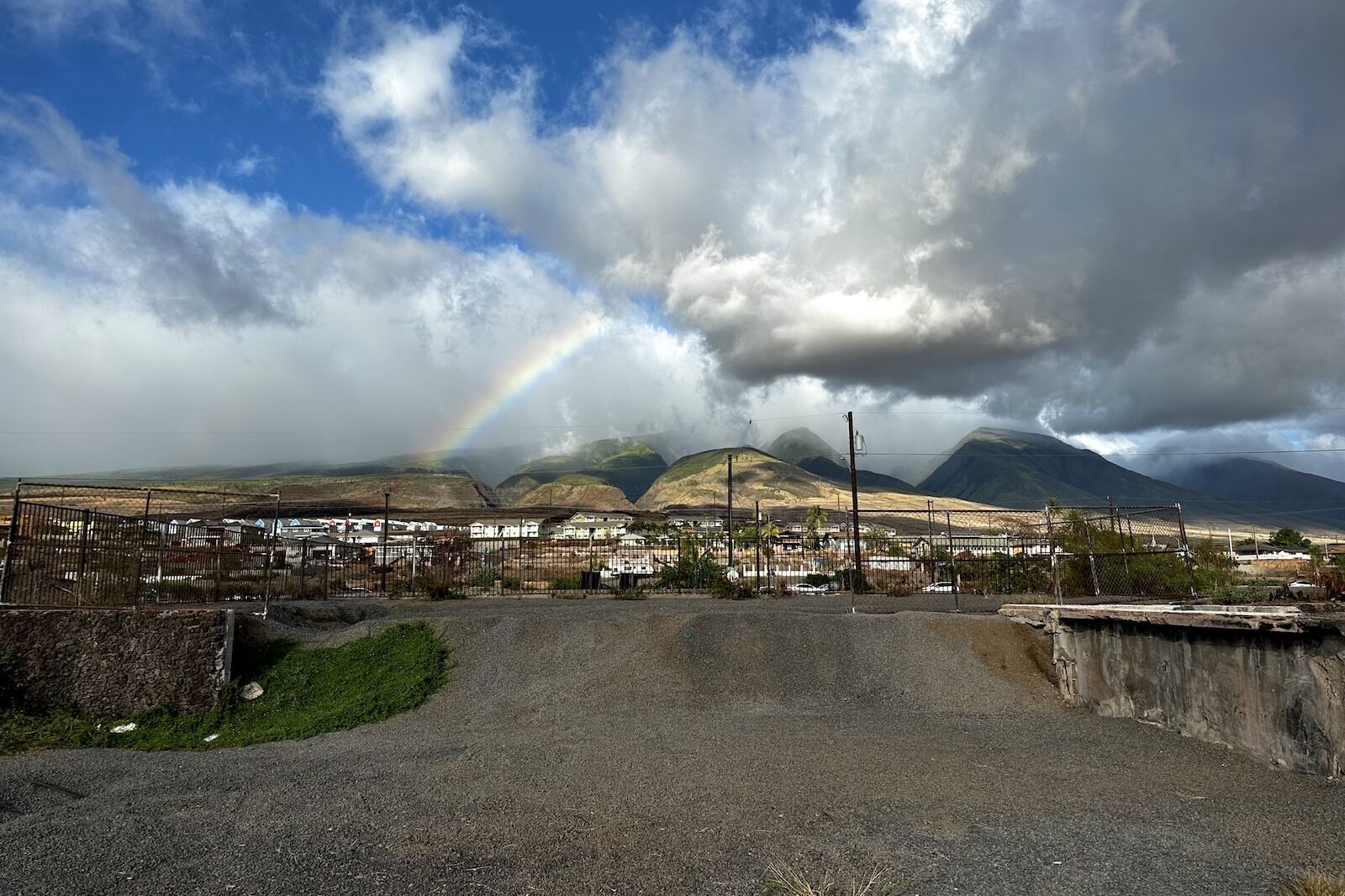
Rainbow behind lots on Front Street still empty after the 2023 fire. Photo: Nickolaus Hines
Hawaiʻi has a word for the approach to take when you come: malama, which loosely translates to “to care for.” West Māui won’t be exactly what it was in past years for the foreseeable future, if ever. But a visit shows an entirely different story that you can see firsthand through food — a story about resilience and strength and tradition and renewal.
“If you go in humbly and politely wherever you go,” Davis says, “you’re going to have that true Hawaiian experience full of the aloha that people think about.”
As my family attempted to finish our last bites of all the food we over-ordered at Coco Deck, the sun finished setting. We waddled out toward our car, Margot already falling asleep in my arms, and turned when we heard footsteps and my name being called behind us. Our waitress handed me a bag with the dessert we’d forgotten — “there’s always room for ice cream!”
And there was, as we pulled into our hotel after a short drive, dessert just barely melted and a pour of local rum from the grocery store across the street to accompany it. A cap to a meal that I’m still thinking about, and talking about, months later. 