I first noticed the absence of sound on a crisp late September morning in Maine’s Baxter State Park. Though people may not know the park by name, it’s famous for being home to Mount Katahdin, the northern terminus of the 2,197-mile-long Appalachian Trail. It was a wholly widespread quiet, save for the occasional loon calling across the glassy lake, the rustle of delicate crimson and amber leaves, and the occasional splash from our canoe that punctuated the stillness.
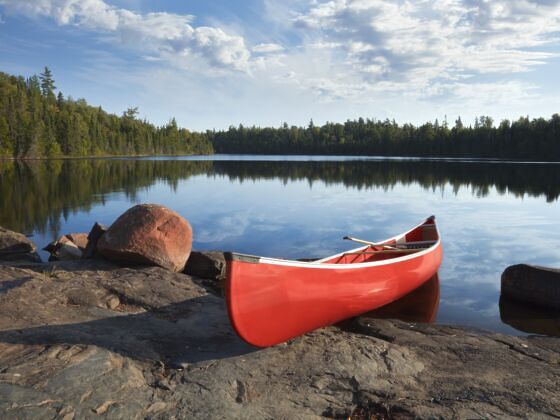
Photo: Dan Thornberg/Shutterstock
6 Changes You'll Notice When You Visit the US's Quietest Places
For three days, we saw maybe three other people, one of whom was a park ranger. There were no planes overhead, no vehicles on the road, and no chatter from nearby campsites. It truly felt like just us and the wilderness, and was startling at first. Though my husband and I are both avid hikers and campers, after a lifetime of background noise, the silence felt almost loud, demanding our attention at all times.
As it turns out, this level of true quiet is rare in the United States. According to the nonprofit Noise Pollution Clearinghouse, only a tiny fraction of the country remains completely free from human-caused sound. Data shows that vehicle noise impacted 20-25 percent of the continental US in 1900. By 2000, that number was 97.4 percent. Meanwhile, the majority of Americans live in areas where background noise averages around 40-50 decibels (for quiet suburban areas) to 50-60 decibels (in urban areas with normal conversation). Sources of that noise include roads, railways, and even air traffic.
Those elusive pockets of serenity include the North Maine Woods, Minnesota’s Boundary Waters, and Glacier National Park and Bob Marshall Wilderness (both in Montana), along with about a dozen wilderness areas, mostly in the American West. Quiet Parks International also identifies quiet public spaces such as parks and trails that offer similar respites. But visiting them requires intentional planning, several days of PTO, and — most importantly — a willingness to completely unplug.
Visiting these places taught me valuable lessons that go well beyond personal reflection, and I came away with practical insights. These are six things travelers can expect when they visit quiet parks to make sure they’re getting the maximum benefit from experiencing genuine silence.
Be ready to fully commit to the silence

Photo: taramara78/Shutterstock
If you’re going to spend time in silence, treat it like any other journey — one you actually show up for. Put your phone away completely rather than checking it every few minutes. Leave headphones, podcasts, and playlists at home, or at least in the car. Skip the movie you downloaded “just in case.” The fewer distractions you bring, the more you’ll be forced observe and be present, and the more you’ll get out of the experience.
Even if you’re traveling with a partner or friends, try minimizing conversation. On trails or the water especially, quiet amplifies the experience while human sound often detracts from it. Silence can feel awkward at first, but studies show it lowers stress levels and promotes new cell growth in the hippocampus region of the brain, responsible for processing and regulating emotions. This is why giving the silence your full attention allows it to deepen into something restorative.
Conversations get real in the absence of distractions
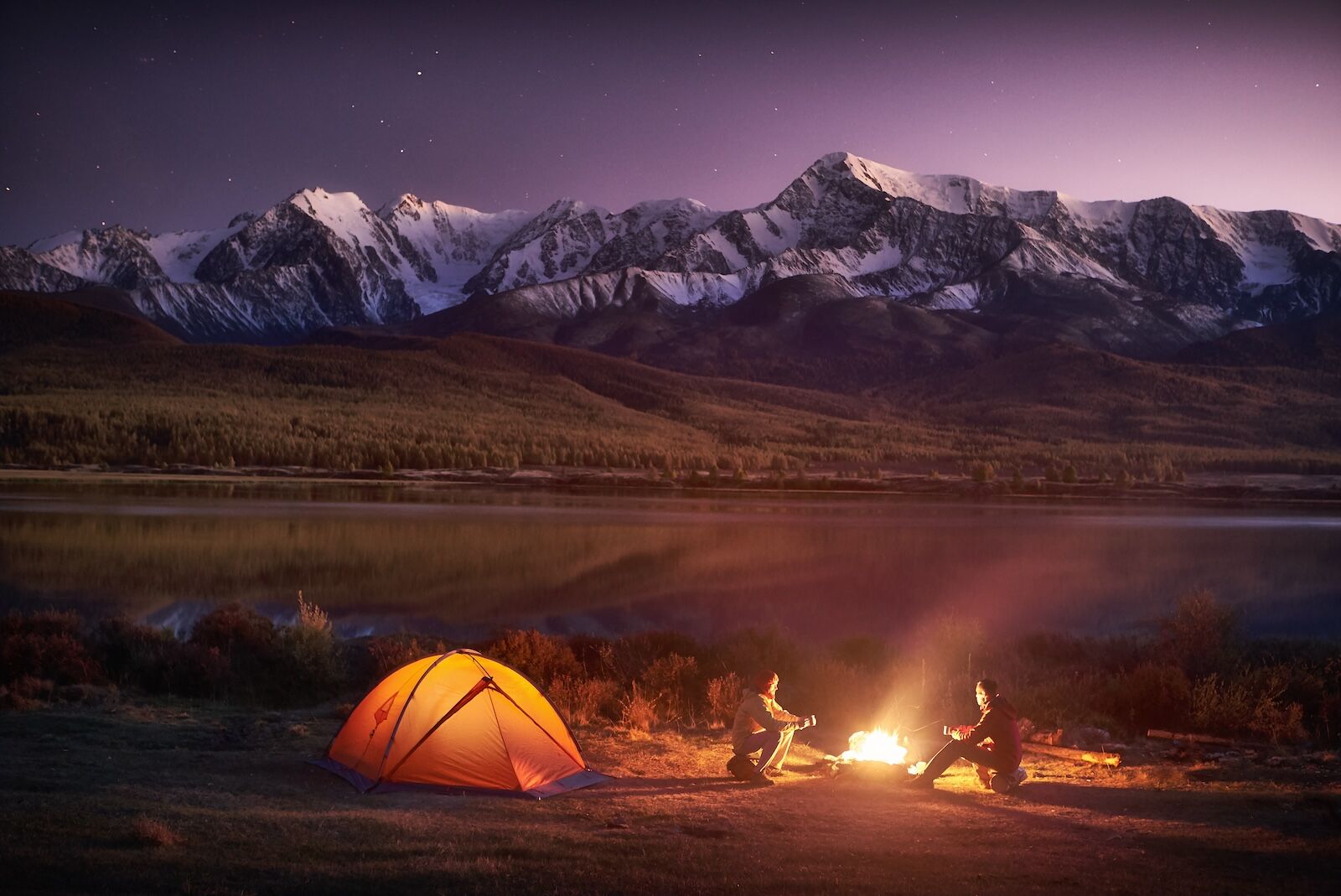
Photo: Stas Tolstnev/Shutterstock
Without noise, both literal and figuratively, the conversations you do have take on new depth. On our first anniversary in Baxter, my husband and I had one of the most serious, intense talks of our lives. Even in lighter moments, we learned new things and uncovered quirks about one another — like my absolute inability to paddle a canoe despite many years of kayaking. Quiet environments naturally shift our focus toward meaningful interaction, and resisting the urge to fill that silence allows these kinds of conversations to happen organically.
The stillness is a great time to reflect on your thoughts
A misty morning in Glacier National Park, Montana. Photo: GC Quarterland/Shutterstock
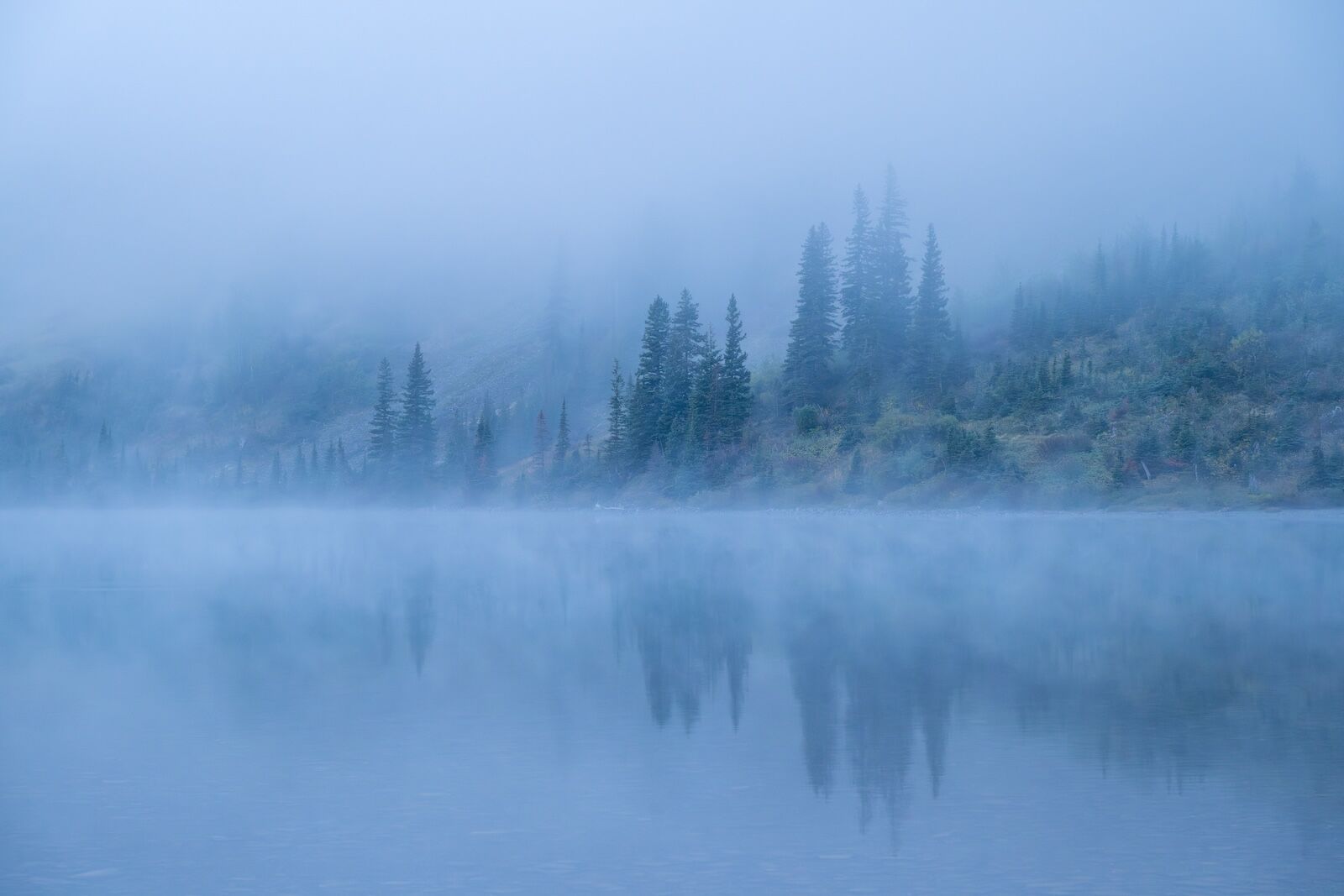
Over many summers in Montana’s quiet wilds, I became more aware of my own thinking in ways I hadn’t previously. Even minor decisions, like which freeze-dried meal to make or whether to take the long trail or the shorter one, became surprisingly engaging. Without the usual background noise or distractions competing for my attention, I found myself noticing thoughts more clearly, even gong so far as to consider whether there were patterns or impulses behind each choice.
Over time, I realized I almost always choose the longer trail when I have a hiking buddy, but the shorter one when solo — perhaps a subconscious safety strategy. It wasn’t overthinking, exactly, but actively reflecting on my thought processes, weighing options deliberately until I reached a clear, confident decision. The stillness created a space where observing my own mind felt effortless, and self-reflection came naturally.
Your outdoor skills will naturally sharpen
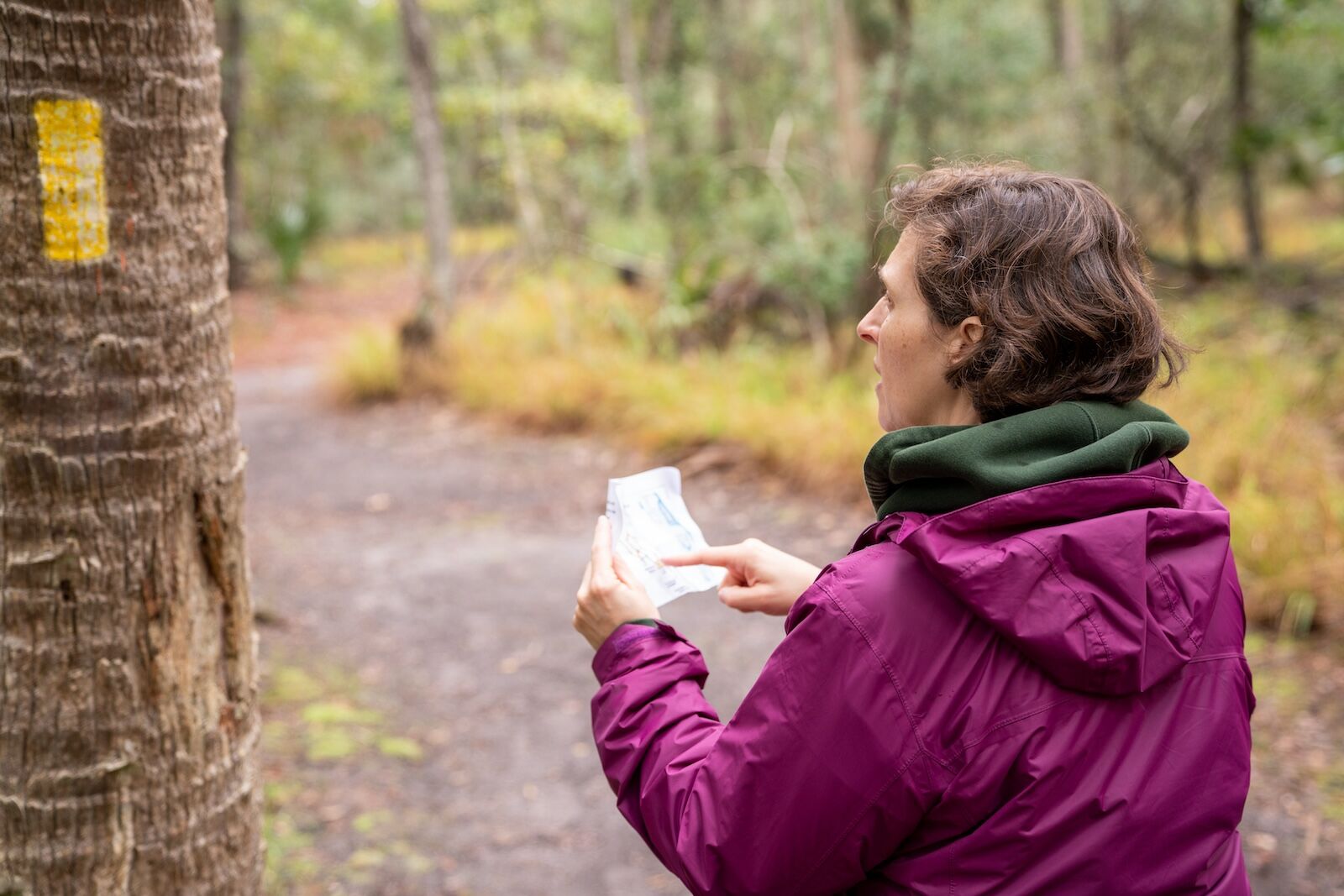
Photo: Kyle Lee/Shutterstock
With distractions removed, practical problem-solving rises to the forefront. Navigating trails, fishing, starting a fire, and basic first-aid without the help of, say, YouTube, all become exercises in focus and patience. The absence of background noise sharpens your attention, and forces you to rely entirely on observation, memory, and careful decision-making. Within hours, and certainly by the end of a weekend, trial and error combined with determination will likely lead to measurable improvement in these skills.
Over time, you also become hyper-aware of minutiae in nature’s symphony that might otherwise pass by unnoticed: animal tracks, wind direction, the current, bird calls, rippling water, the gradient of color in a single wildflower. Moving slowly and being fully present in these quiet parks accelerated my learning and observation without much of a conscious effort, and each new or newly sharpened skill gave me a deeper appreciation of the landscape.
Pack the ‘what if’ items

Photo: Aleksey Matrenin/Shutterstock
I’m normally all for minimalism, but truly quiet places are usually remote and far from any help or conveniences. These are places where running to a store isn’t an option. I learned this the hard way in Baxter. While paddling our canoe (which I’ve since gotten better at, just to set the record straight), I splashed ice-cold water onto my hands, and onto my husband behind me. By the time we got back to camp, I was soaked, freezing, and unable to warm up until the next morning. Even after layering both our base layers, wrapping myself burrito-style in every blanket we had, and cranking our campervan’s heat, I couldn’t move my fingers and felt a bone-deep exhaustion that had me wondering seriously about hypothermia. I’d packed for the expected weather and activities, but hadn’t brought backup clothes, a heavy coat, or even hand warmers. In places this remote, “just in case” gear isn’t extra: it’s essential.
Quiet parks make for epic wildlife viewing
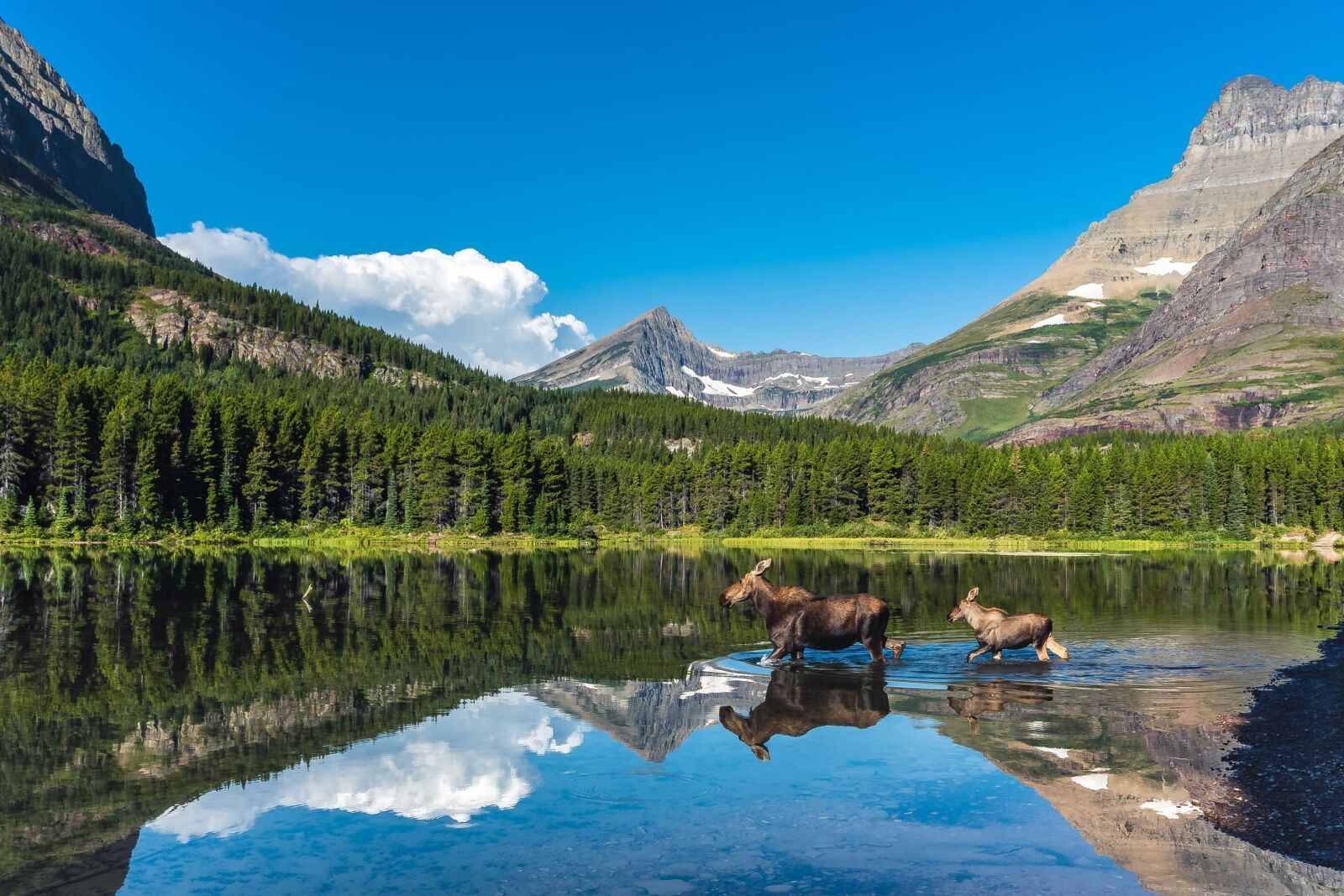
Moose crossing a river in Montana. Photo: acavemancandoit/Shutterstock
Animals act, well, wild when they’re not subjected to regular human interference. Evidence shows that human-generated noise increasingly diminishes animals’ ability to hear approaching predators and detect mating calls. But larger animals aren’t the only wildlife affected. Noise can drive away birds with lower song frequencies, as well as birds of prey, since noise impacts their ability to listen for cues to flee or hunt. By contrast, quiet places free of unnatural auditory interference allow for genuine wildlife observation, providing incredible viewing that’s all but impossible in more trafficked areas.
It should go without saying, though, that it’s still crucial to give wildlife plenty of space and to never approach. A good rule of thumb (pun very much intended): extend your arm and do the “thumbs up” sign. If you can’t cover the animal completely with your thumb, you’re too close. The quieter and farther away you are, the more authentic (and safer) the encounter. 