Twenty-five minutes northwest of Fort Lauderdale, the highway gives way to a sea of sawgrass. This is Sawgrass Recreation Park, an airboat outpost pressed against a Water Conservation Area, one of the diked, leveed remnants of the historic Everglades that still connects into Everglades National Park to the south. Visitors come in hopes of seeing alligators and experiencing one of the country’s most unique ecosystems. The park’s staff hopes they leave with that, along with an understanding of why this area is so important not just as a place to visit, but also as a source of the air we breathe.
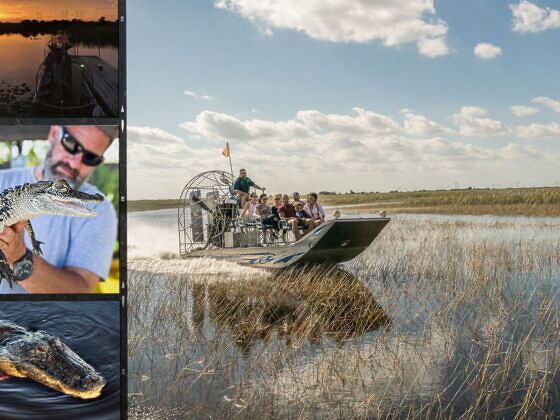
The Everglades Airboat Ride That Could Change How You See Florida
Protecting what’s left of a waterscape that that used to be three million acres wide
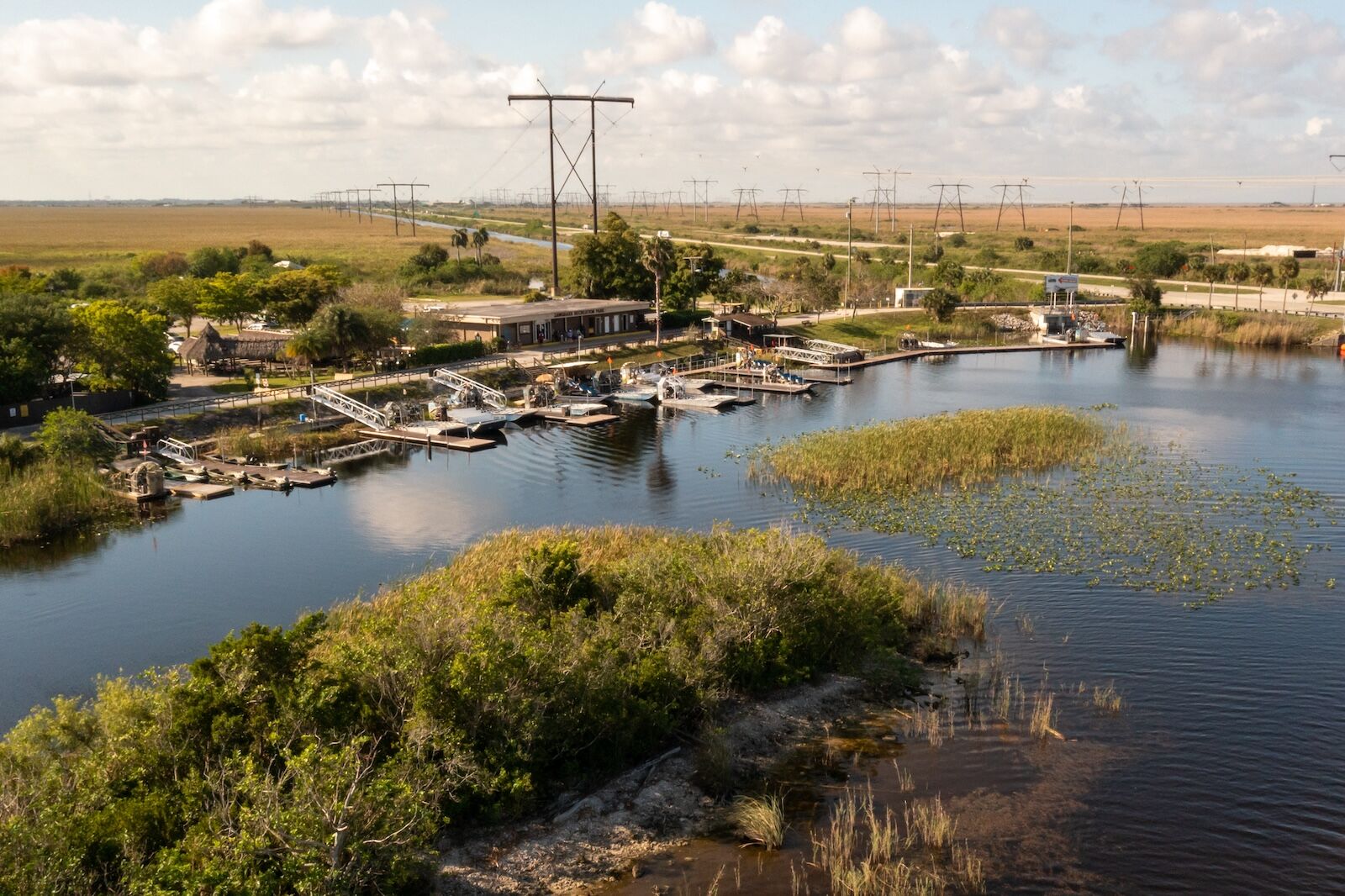
Sawgrass Recreation Park offers visitors the chance to see gators — and help people gain an understanding of why protecting the everglades is important. Photo: Sawgrass Recreation Park
A 2026 study in the Proceedings of the National Academy of Sciences found that the Everglades’ freshwater marshes and coastal mangroves pull roughly 14 million tons of carbon dioxide out of the atmosphere every year, an amount equal to about 10 percent of all the emissions produced by every car and truck on Florida’s roads. Sawgrass and mangrove roots lock carbon into peat soil, and the region’s saturated ground slows the decomposition that would otherwise release that carbon back into the air. Drain the soil, and the equation flips. Oxygen moves into dried-out peat, microbes speed up, and carbon that took decades to store gets released in a fraction of that time.
“What we try to do is not really kill them with huge amounts of facts and information and really overwhelm them,” says Tim Schwartzman, who has spent half his life working at Sawgrass after his now father-in-law purchased the property shortly after 9/11.“For most people it’s kind of in one ear, out the other. But just to kind of give them a little taste of, here’s what you’re seeing in front of you.”
Schwartzman, who’s earned the moniker “Gator Tim” among Sawgrass staff and just about everyone who knows him, has learned that a captive audience on an airboat is not the same as an engaged one.
“For me it’s more just hoping that when they leave they got a little twinge of, hey, I’m more curious,” “I want to go and find that information. I want to learn more about that. And kind of sparking that behavior, hopefully spreads further to not just even my backyard in the Everglades, but their own when they go back home.”
The area that encompasses the Everglades consists of a sheet of water 60 miles wide, moving south from Lake Okeechobee at a walking pace, filtering through sawgrass marsh and wet prairie before reaching Florida Bay. At its historic extent, the system covered somewhere close to 3 million acres. Less than half of that remains intact today, carved apart by a century of canals, levees, and pumping stations built to drain land originally for sugar and citrus, and more recently for suburban subdivisions.
Sawgrass Recreation Park sits inside what is left of it. The Water Conservation Areas around the park are functioning fragments of that original flow, holding and releasing water that eventually reaches the national park downstream.
Teaching people to stop hating what scares them
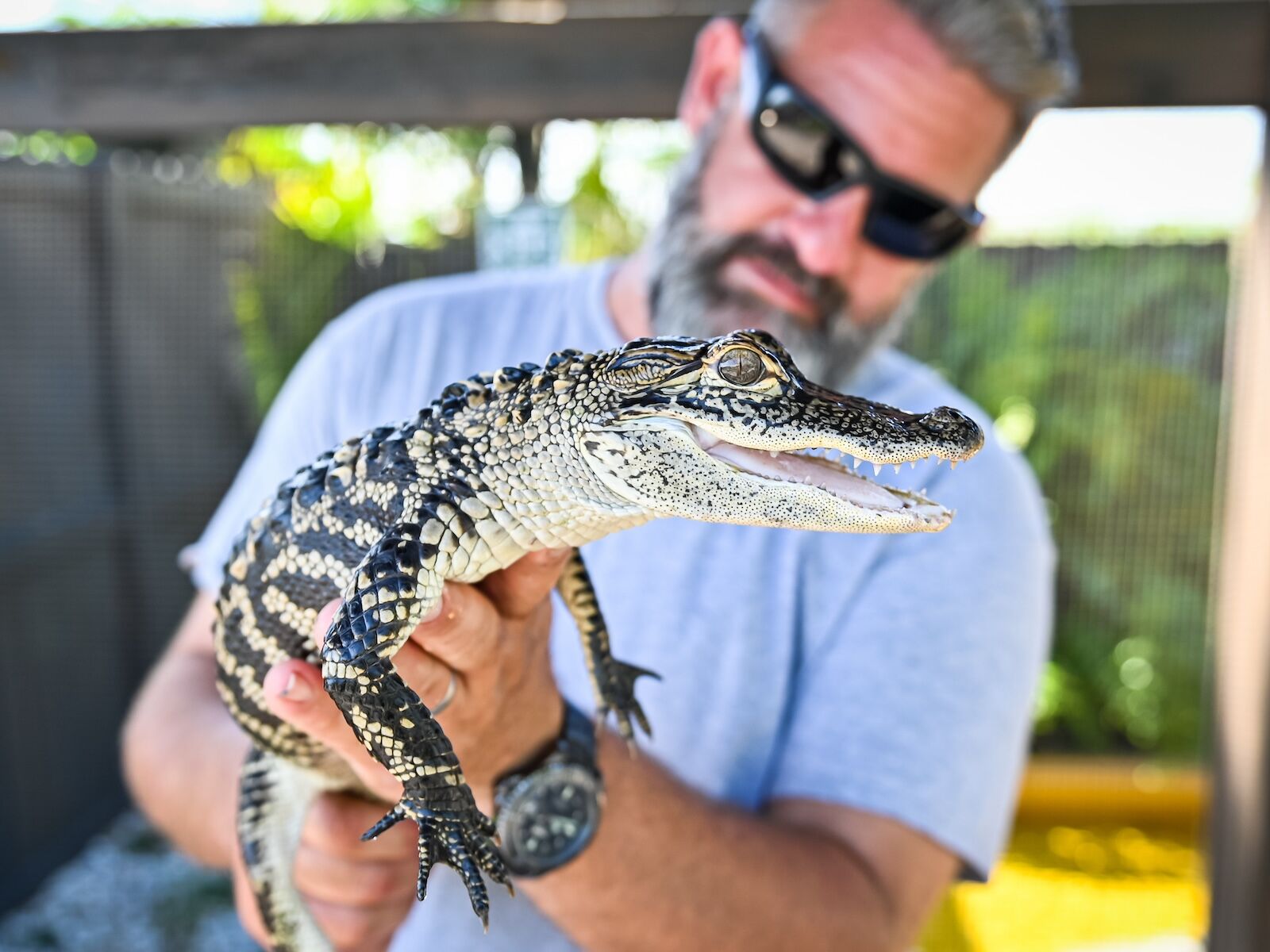
Tim Schwartzman earned the moniker “Gator Tim” because of moments like these. Photo: Sawgrass Recreation Park
Schwartzman’s second target is harder to measure than carbon: reputation. Alligators, snakes, and the rest of the Everglades’ less cuddly residents carry a public image problem that predates any of them by generations, and Schwartzman treats undoing it as part of the job. While he notes that most long-time residents of south Florida understand why it’s a good thing to have a gator in the lake up the street from home, it’s getting travelers and newer residents up to speed that remains a challenge. Visiting ecotourism spots like Sawgrass Recreation Park, Schwartzman believes, is slowly chipping away at that mission.
“I hope people walk away and respect the wildlife that live near them,” he says. “That’s a big problem — the eradication of animals that we see as pests or nuisance. Protecting those kinds of wildlife and animals also helps protect the balance of everything that’s in those ecosystems.”
With alligators specifically, he leans into the boring truth. “I always try to kind of portray them as they’re just surviving,” he said. “Anything they’re doing, their decisions in life aren’t based on politics or any kind of biases. They’re not bad. They’re not good. They’re just living.”
This is of critical importance in a system under pressure from species that did not evolve there at all. Iguanas have become a fixture of South Florida canals and lawns in recent years, part of a longer list of invasive species that also includes Burmese pythons chief among them. These invasive species now compete with native wildlife for food and territory.
Leaving the Everglades with not with a mission statement, but with an understanding
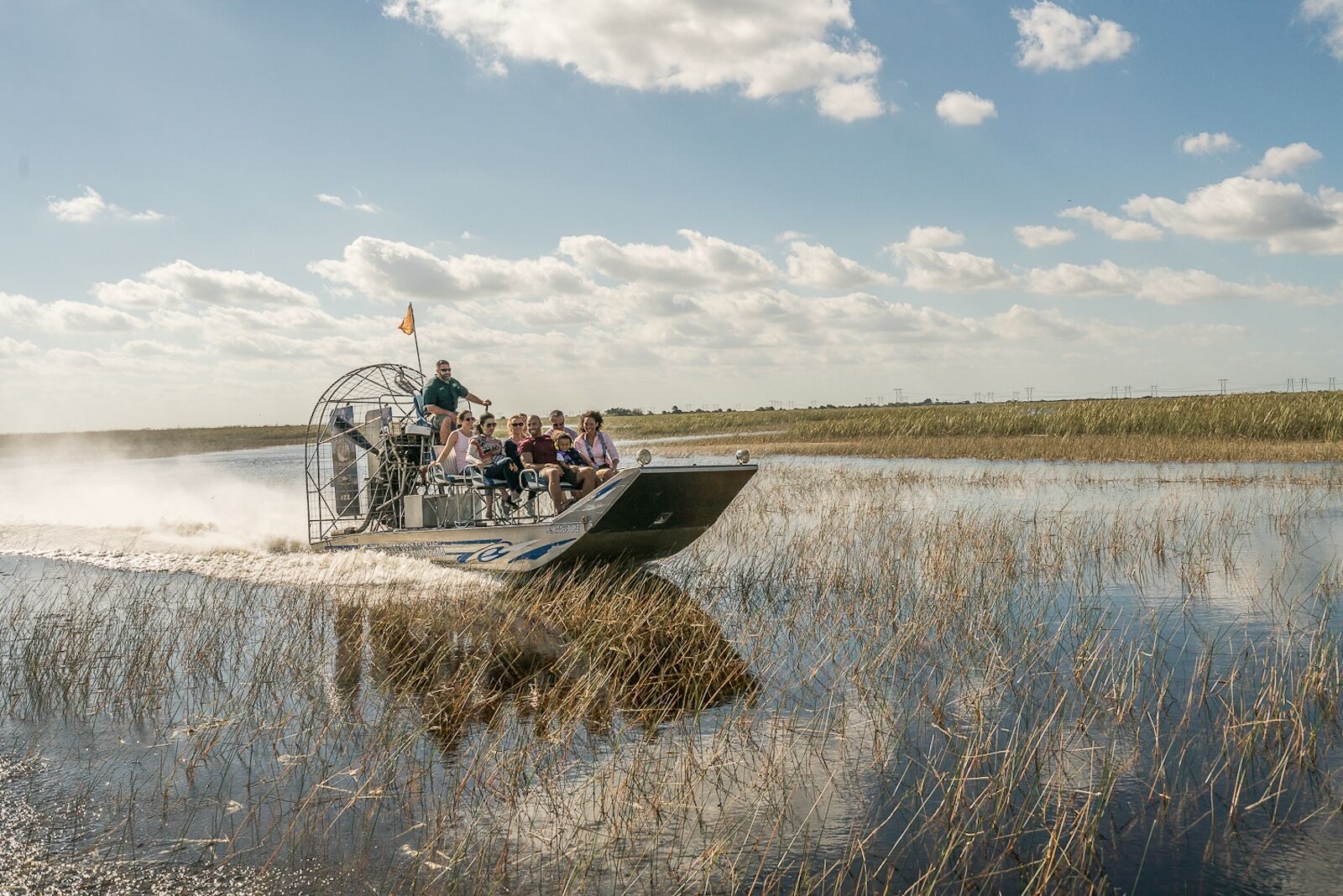
Airboats operate in water that is, at points, only about one inch deep. Photo: Sawgrass Recreation Park
Schwartzman’s advice to travelers who want to go deeper than an airboat ride is simple: leave the boat.
“I hope people don’t just come and see the airboat and do a 40-minute little check, that’s just scratching the surface,” he says. “I hope they go on a hike out in the wilderness and get up in the knee-deep water and go find some frogs, and go amongst the cypress, and then go down to the mangroves and the saltwater environment.”
He’s seen an increase in engagement since the Covid-19 pandemic drove more people out into nature simply because they had nothing else to do.
“It’s a very diverse, multi-faceted place,” he said. “It’s not just grass and water. In one spot it is, and a mile over here it’s a completely different ecosystem.”
Sawgrass has backed that pitch with more than talk, supporting SAFER (Supporters of Anglers and Everglades Restoration) and contributing to phosphorus monitoring research that has tracked water quality in the region since 1993. For travelers, the important part is showing up and spending their money with businesses that support these missions.
“Even the little voices collectively start to add up,” he says, pointing to grassroots groups like the west coast’s Captains for Clean Water. “Anytime we’re in Tallahassee for any kind of business, whether it’s tourism related, eco, we’re always talking to our representatives. We write letters, make phone calls.”
None of it guarantees an outcome. But those visiting South Florida can take a tour at Sawgrass or visit the national park and know that, in addition to the beach time and seafood that so often define a trip to the area, they did their part to keep the region’s natural landscape in-tact.
“Protecting our waterways is for recreational use and for the health of everything around us,” Schwartzman said, “including ourselves.” 