I will never forget the day I became familiar with the “edgie wedgie.” It was St. Patrick’s Day in 2024, and I’d lured my longtime mountain buddy Andy to Powderhorn Mountain Resort near our home in Palisade, Colorado, on the promise of an open bar tab if he helped me with one small task: hold my two-year-old daughter’s left hand while I held her right. The ski season was down to its final few weeks, and I needed to keep the most important commitment I’d made to myself that winter, which was to get Olivia on skis. I’d packed a hula hoop to keep her and I connected along with the famed edgie wedgie to keep her ski tips from french frying when all she needed to do was pizza. For the first shuffle down the bunny slope, I wanted Andy to be there so that Olivia had someone on both sides she could lean onto.
Kids and the Future of Skiing: How Some Resort Operators Get It, and Others Don't
We took three or four bunny hill laps and then headed to the Sunset Grill’s patio outside the day lodge. The endeavor was a success that extended beyond the fact that Olivia will forever be able to say she started skiing at age two: it had cost me almost nothing beyond a couple beers. See, there’s a little secret that those who’ve spent their lives pursuing powder turns are keen to, and that secret is that one should never, for any reason, stroll up to the ticket window at Vail and purchase a single-day lift pass. Especially not if you have kids.
Powderhorn gets that its success depends on skiing being approachable for newcomers. As do a heap of small, local hills around the country. The bigger resorts seem to have forgotten that the sustainability of their business hinges on younger generations taking up the sports that fund it. The future of skiing and snowboarding depends on major operators like Vail Resorts embracing that logic – and all it takes to see why is a trip to a local ski area.
How to keep families on the mountain
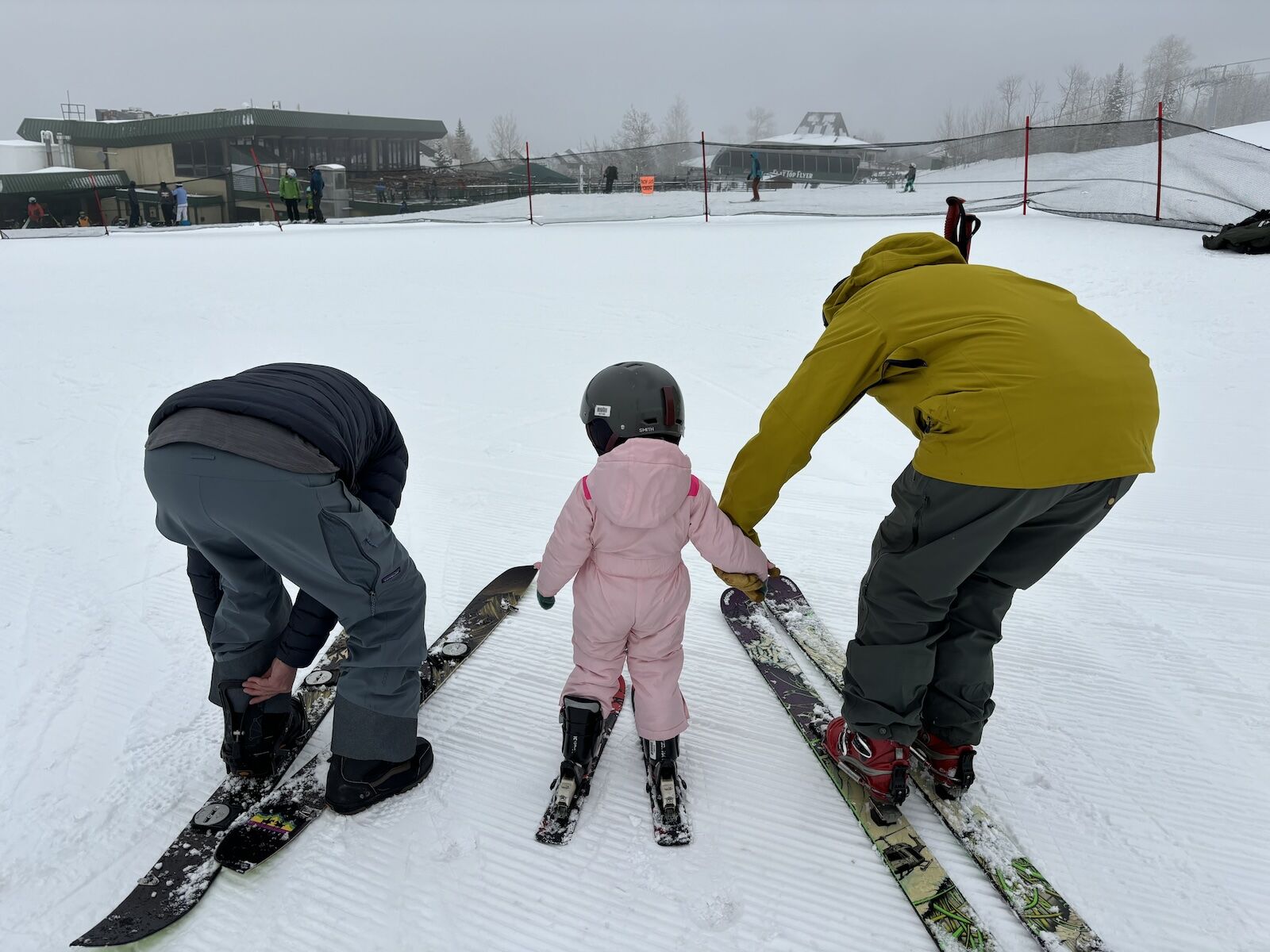
Preparing for her first run. Photo: Tim Wenger
In 2025, Bloomberg reported on family surveys showing that 94 percent of respondents would take their kids skiing “significantly more” if lessons were more affordable. Nearly as many –87 percent – would ski more if onsite childcare were available and within financial reach. For 2026-27, the peak-day adult ticket is expected to reach $392 at Beaver Creek, $374 at Vail, $369 at Park City and $344 at Steamboat, according to pricing compiled by Unofficial Networks. No one is going to pay those prices and consider skiing a regular part of their lives, and that’s the problem, says Christian Knapp, vice president and chief marketing officer at Pacific Group Resorts. The company owns Powderhorn along with Wisp in Maryland, Wintergreen in Virginia, Jay Peak in Vermont and SilverStar and Mount Washington in British Columbia. It’s known for family-friendly resorts with packages that encourage newcomers to try the sport and work to progress their skills.
“This trend of these super luxury destinations, where these $350 or more lift tickets get the headlines, it’s not a good look,” Knapp told Matador, “combined with all the other economic pressure everybody’s under with inflation. I don’t think that trend is good for the industry. It gets the headlines and before people even look into anything else, they’re going to be scared off.”
Powderhorn’s Mission Affordable plan offers a 4-pack of day tickets for $279 through December 1, which works out to $69.75 a day with no blackouts. These are shareable with anyone you hand a card to, meaning a brother and sister can use two in a day. A season pass for kids five and under, or anyone over 75, is $29. Even a full-paying adult spent just $399 for a season pass if they bought it between March 9 and April 6, with a max price under $800. A junior pass for kids ages six to12 went for $239 in the spring and is $454 today.
“Mission Affordable is not lip service,” Knapp said. “We believe that being approachable, being affordable is core to growing the sport.”
Contrast this with what’s happening further east on Interstate 70. Both Vail’s Epic Pass and Alterra Mountain Co’s Ikon Pass raised prices in the second week of October, as they do every year. The Epic is $1,169 for adults 31 and up, $929 for ages 13 to 30 (a new 20 percent discount tier Vail Resorts introduced this season) and $599 for kids five to 12. A full Ikon Pass is $1,529 for adults 23 and up, $1,129 for ages 13 to 22 and $499 for a child, with up to $100 off each child pass when bought alongside an adult’s. The restricted versions, Epic Local and Ikon Base, run $869 and $1,099 for an adult and $455 and $399 for a child.
For two parents and two kids under 13, the full Epic Pass is $3,536 this fall. The full Ikon Pass is $3,856 after the child discount. The same family at Powderhorn’s regular price is $2,486, and if they bought during the spring sale, $1,276.
Further north, at Skeetawk in Alaska, the nonprofit ski area that opened on Hatcher Pass in 2020 with one triple chair and 300 vertical feet about 90 minutes north of Anchorage, a 2026-27 adult pass is $599, a youth pass (six to 12) is $375, a student pass (13 to 17) is $525 and anyone 5 and under skis all season for $5. That family of four pays $1,948, and a walk-up adult day ticket there is $44.
Of course, the megapasses buy dozens of large-scale mountain resorts and they’re built to encourage travel. But kids are the future of skiing, and a family with a six-year-old learning to ski does not need 70 mountains. They need one, close to home, with a bunny hill and a cheap basket of chicken fingers for lunch.
What happens after the lifts close
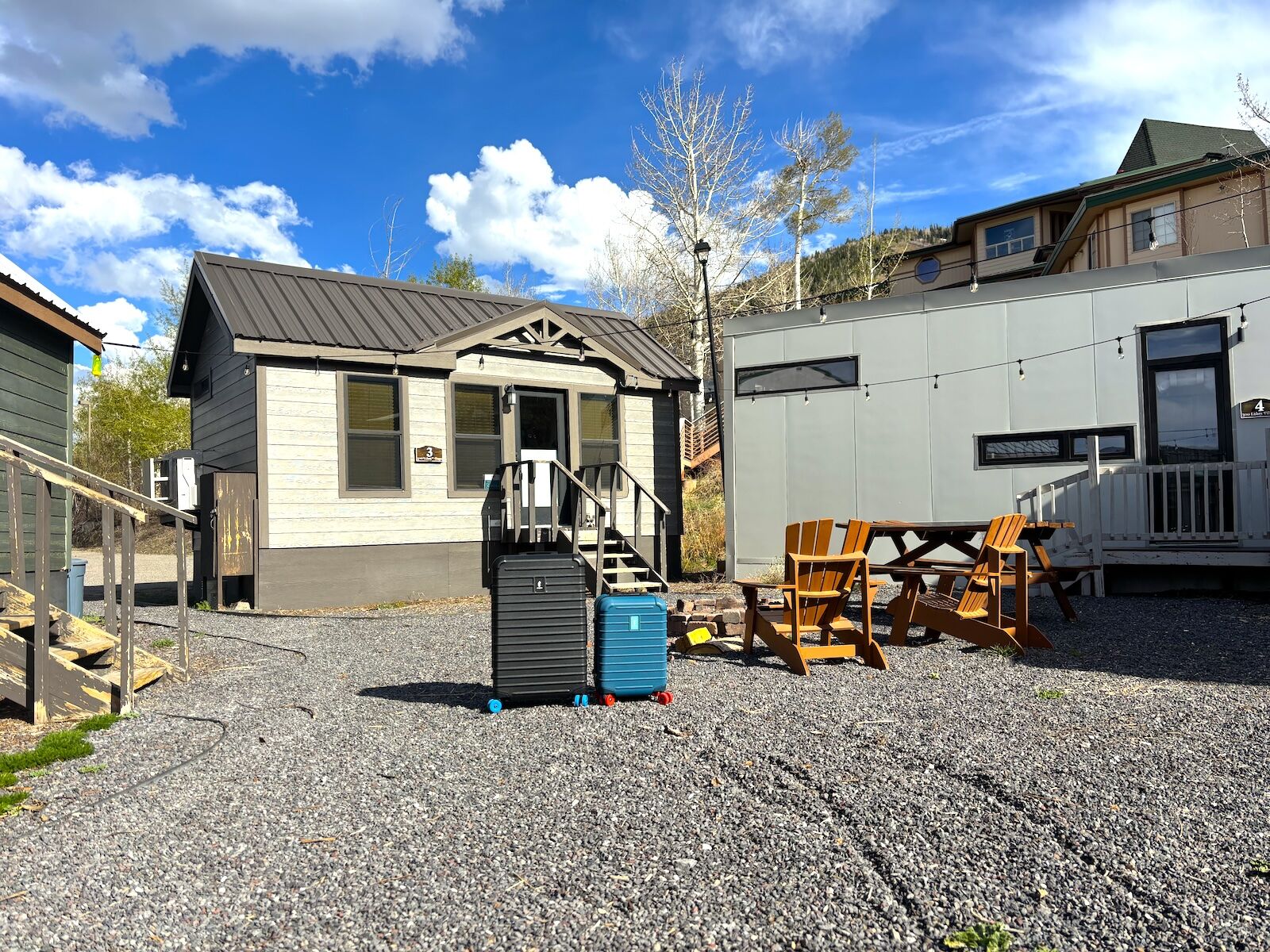
Powderhorn’s tiny home village. Photo: Tim Wenger
Last season I signed Olivia up for Powderhorn’s Powder Sprouts program, a multi-week lesson scheme that pairs each kid with an instructor for an individual one-hour lesson on Saturdays. For under $600, she took four lessons and progressed from the magic carpet to the chairlift. More importantly, she loved her instructor so much that she can’t wait to go back again this winter.
Powderhorn is 30 minutes from my home. But “fun” is the name of the game when getting kids hooked on skiing, so at the end of last season I booked us two nights in the tiny home village at the resort’s base. A traveling family of four can stay within walking distance of the lift for as low as $129 per night. Olivia loved climbing up the ladder to her bed in the loft and was excited to walk her mom over to the ski school to show her where she’d made all those memories over the course of the winter.
I bought her ski setup from the Powderhorn Ski Patrol’s annual ski swap event at the start of the season, dropping about $100 on skis and boots. All total, the total spend on her ski season came out to under $700, including the gear, lessons, and the season pass, for about 10 days on the mountain. This year, it will be less, as her skis will work another season and she won’t need individual lessons.
Turning around skiing’s participation crisis
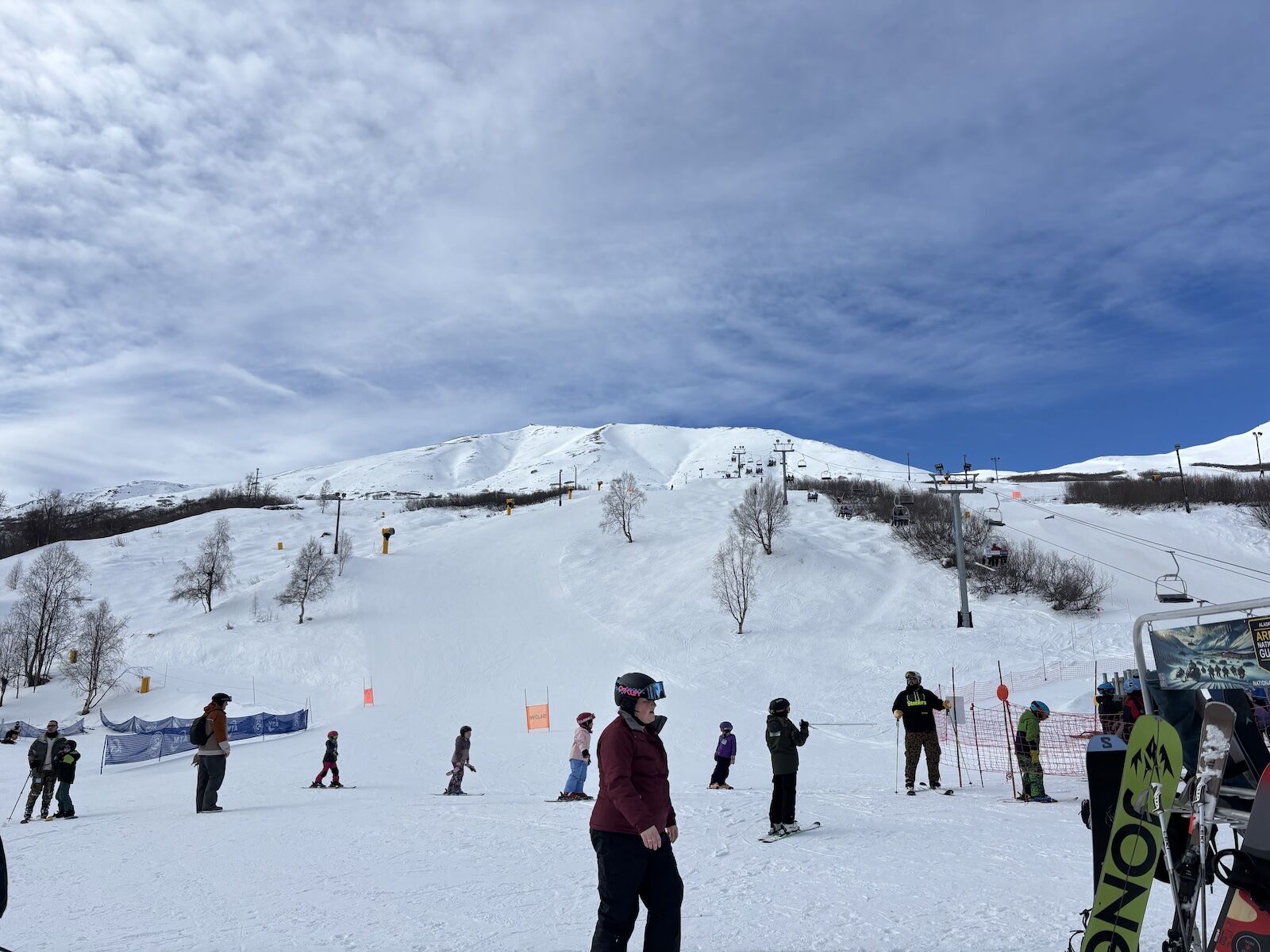
Skeetawk is Alaska’s newest ski area. Photo: Tim Wenger
When I reached Knapp, he was at an industry conference and had just walked out of a session on participation.
“Less than three percent of the population in the United States skied last year, right?” he says. “That’s either a shockingly sad number or it’s a huge opportunity.”
Knapp told me that he believes big operators have the most to gain from raising those numbers, yet they’ve done the least. Vail Resorts’ new 13-to-30 pricing tier is a real discount, and Epic Day Passes bought in advance do bring a Vail day down into the $100 range. But that doesn’t solve lodging or lunch.
“I wish more of the big resorts would do these kinds of free learn to ski and ride programs,” Knapp says. “We would love to see them do it.”
Part of that is self-interest. A kid who learns on a $19 deposit at Powderhorn or a $5 pass at Skeetawk will, with any luck, spend 50 years involved in the sport, visiting both smaller hills and bigger ones.
“It’d be good for everybody if they did,” Knapp says. “And somebody’s got to figure that out at some point. It’s either a big problem or a big opportunity here.” 