Photo: mark gusev, Euan Cherry, Sviluppo/Shutterstock

9 Fascinating Halloween Traditions Around the World

Ireland Scotland Japan Austria Italy Philippines Mexico Mexico Guatemala Holidays Cultural Traditions
by Alex Bresler Sep 8, 2025

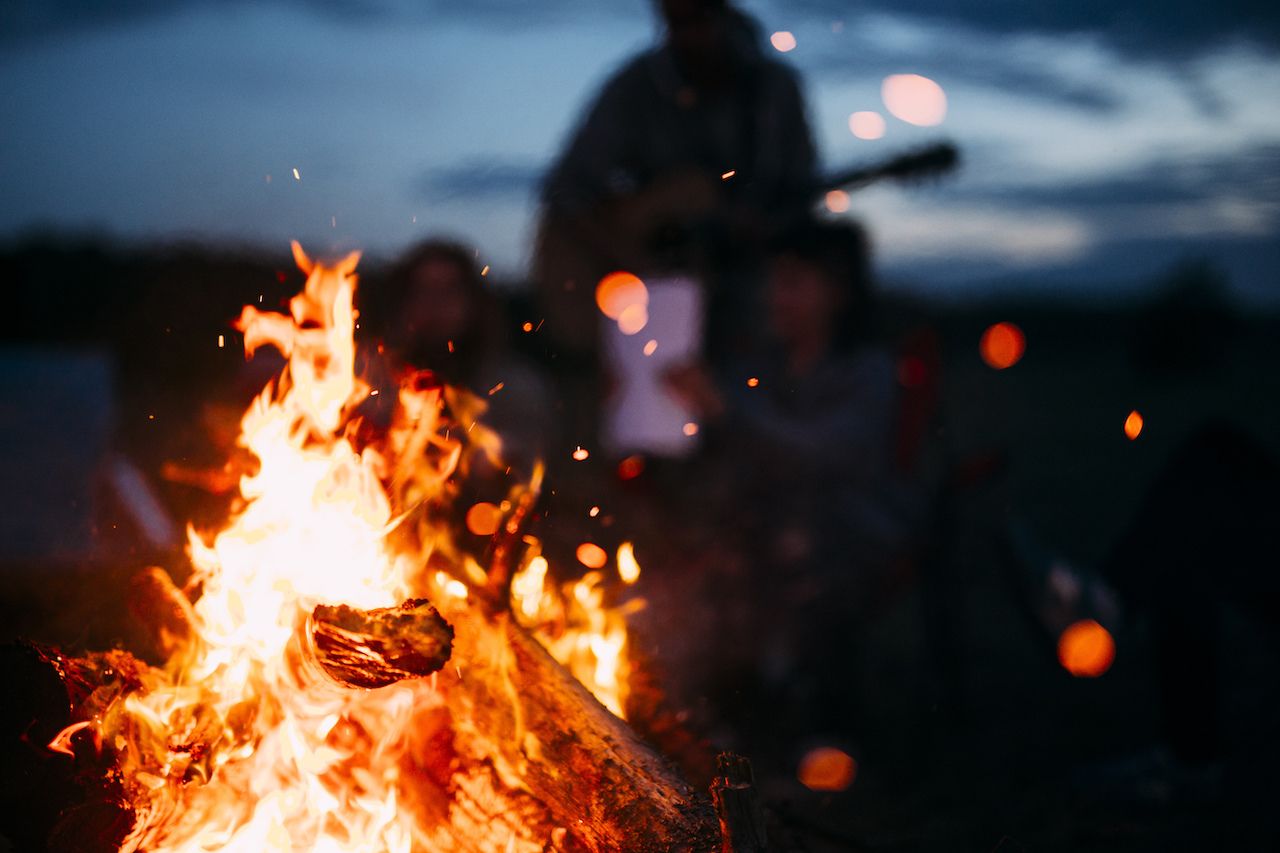
Halloween traditions have roots in a Celtic pagan festival called Samhain, traditionally held between the fall equinox and winter solstice to mark the harvest. It was seen as a time of transition when spirits could rise and roam the earth. To ward them off, Celts lit bonfires and wore fearsome costumes.

In the eighth century, after Pope Gregory III devoted November 1 to honoring saints, Samhain traditions became All Saints’ Day festivities, and the night before was known as All Hallows’ Eve, eventually Halloween. Like St. Patrick’s Day, the holiday took on a new life after Irish immigrants brought it to the US in the 19th century. Today, America’s over-the-top celebration of costumes, candy, and spooks has helped redefine Halloween worldwide.
Some places, like the Celtic nations and the Philippines, have folded old customs into modern Halloween. Others, especially in Latin America, observe the season with different rituals of remembrance. Here’s how Halloween looks around the world.

Ireland

Galway, Ireland

Photo: mark gusev/Shutterstock

Today, Halloween in Ireland looks a lot like it does in the US, albeit on a smaller scale. Pranks like egging are still common, as are games like snap apple in County Kerry, where the fruit dangles from strings instead of bobbing in water. Some present-day customs still echo Samhain. Bonfires are fixtures across the country, and fireworks close out the Banks of the Foyle Carnival in Derry, now considered the largest Halloween festival in Europe, drawing more than 100,000 visitors each year.

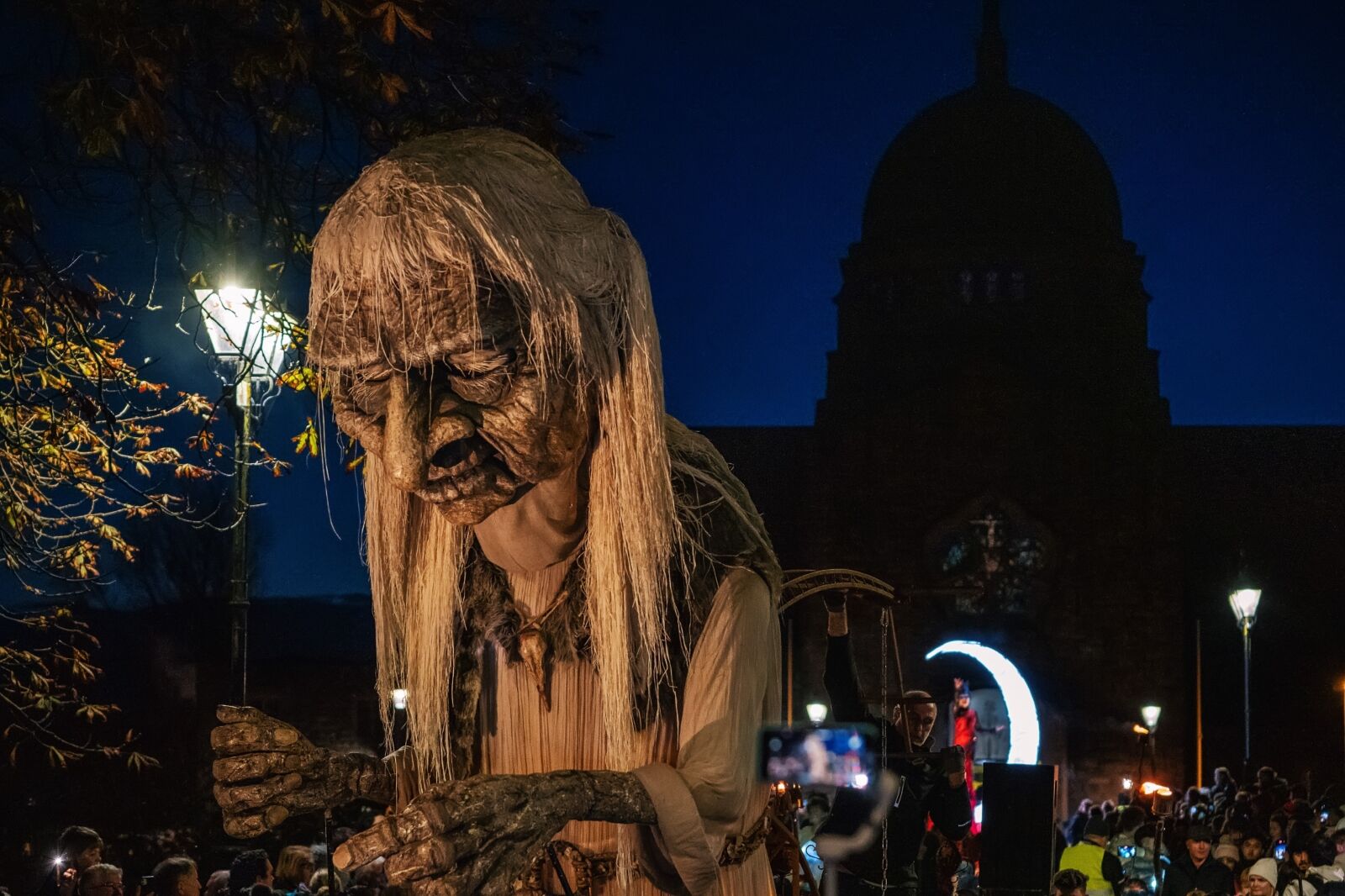
In recent years, Ireland has also reclaimed Halloween with the Púca Festival, which has grown into a signature celebration. Staged in County Meath, it mixes concerts, light shows, storytelling, and food markets with a Samhain procession on the Hill of Ward, tying the modern revelry back to its Celtic roots. In Galway, the Macnas Parade floods the streets with towering puppets and live music, while Dublin marks the season with the Bram Stoker Festival, a gothic mix of theatre, installations, and late-night parties.

Scotland

Celebrating Halloween in Scotland

Photo: Andris Barbans/Shutterstock

Scottish and Irish Halloween traditions share many similarities, but Scotland adds its own unique twists. Children carve neep lanterns — turnips that were traditionally used before pumpkins became popular — and play apple dooking, the Scottish version of bobbing for apples. Another favorite party game involves trying to eat treacle-covered scones hanging from strings, all without using hands.

The hallmark tradition, though, is guising. Children dress in disguise and perform a “party piece” — a song, a rhyme, a joke — before receiving fruit, nuts, or coins. Unlike today’s candy-for-costume swap, guising demands effort and many children practice weeks in advance. It’s this practice that crossed the Atlantic with Scottish and Irish immigrants and evolved into what Americans now know as trick-or-treating.

Some of Scotland’s unique Halloween traditions also revolve around romance, of all things. Nut cracking is a tradition for recently engaged couples, who are meant to throw a nut into a bonfire to see how their marriage will fare: If the nut cracks open quietly, it’ll be a smooth marriage, while if it hisses and pops, it’ll be a rocky union. For singles, there’s also kale pulling, which entails uprooting kale stalks to reveal the height and general figure of your future partner.

Japan

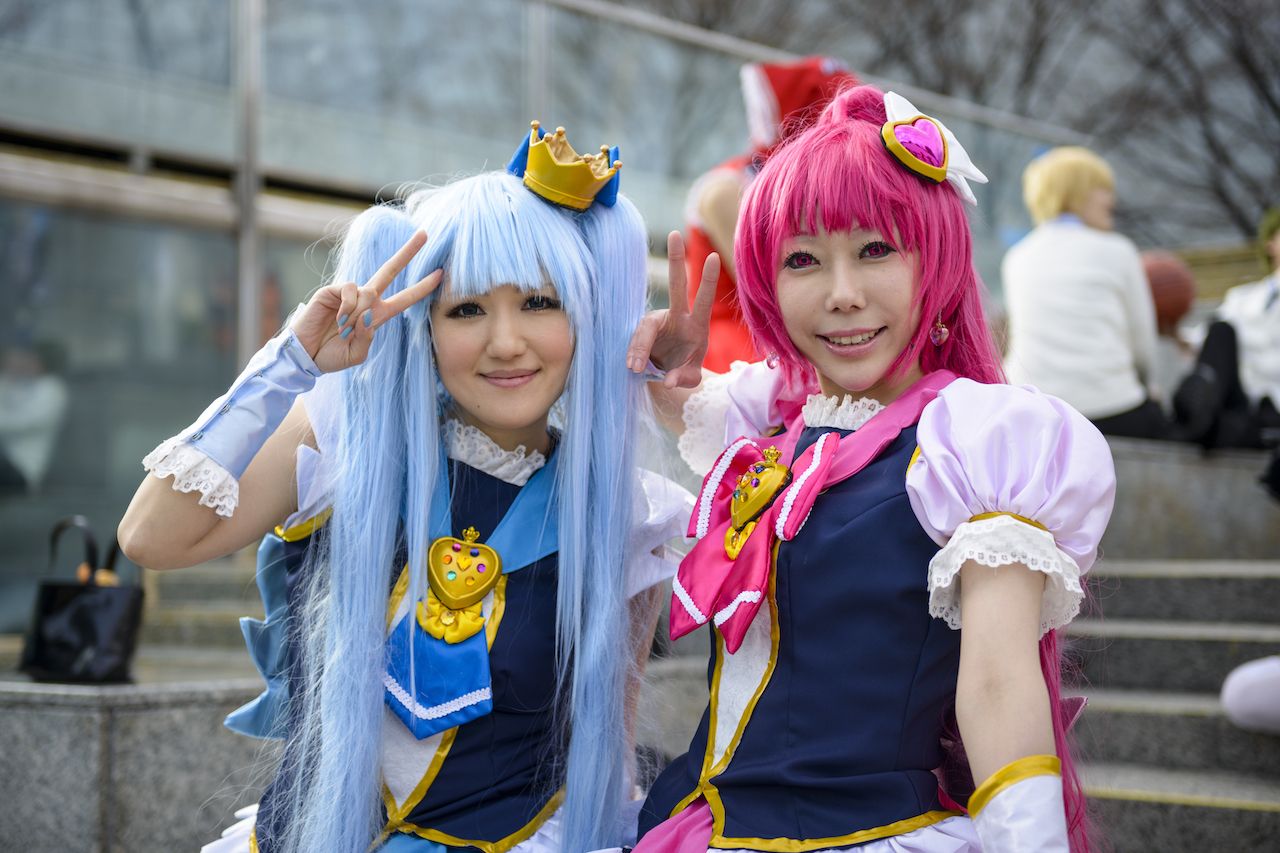
People in Sailor Moon costumes to celebrate Halloween in Japan

Photo: Sean Pavone/Shutterstock

Halloween in Japan is neither about the ghoulish and gruesome nor the promise of candy. It’s not even marketed toward kids. As the Japanese celebrate their dead during the Obon Festival in July or August, October 31 is merely an excuse for adults to cosplay and flood the streets.

Halloween was slow to take hold in Japan, growing in popularity ever since Disneyland Tokyo organized its first spooky event in 1997. Bars and clubs later caught on, hosting theme nights, and small parades started forming. In recent years, the holiday has exploded in cities like Tokyo, Osaka, and Kanagawa. Shibuya Crossing became the country’s most famous Halloween gathering spot, but after crowd trouble in the late 2010s, the city imposed alcohol bans and tighter controls. Even so, thousands still converge in Shibuya each year, while Harajuku retains its reputation as an early hub for Japan’s Halloween culture.

Amusement parks remain the biggest draw. Tokyo Disneyland and DisneySea stage elaborate parades and character events throughout the season, and Universal Studios Japan in Osaka goes all-in with horror attractions, zombie street performances, and seasonal rides. These theme parks set the tone for Halloween in Japan, turning it into one of the country’s largest seasonal celebrations.

Austria

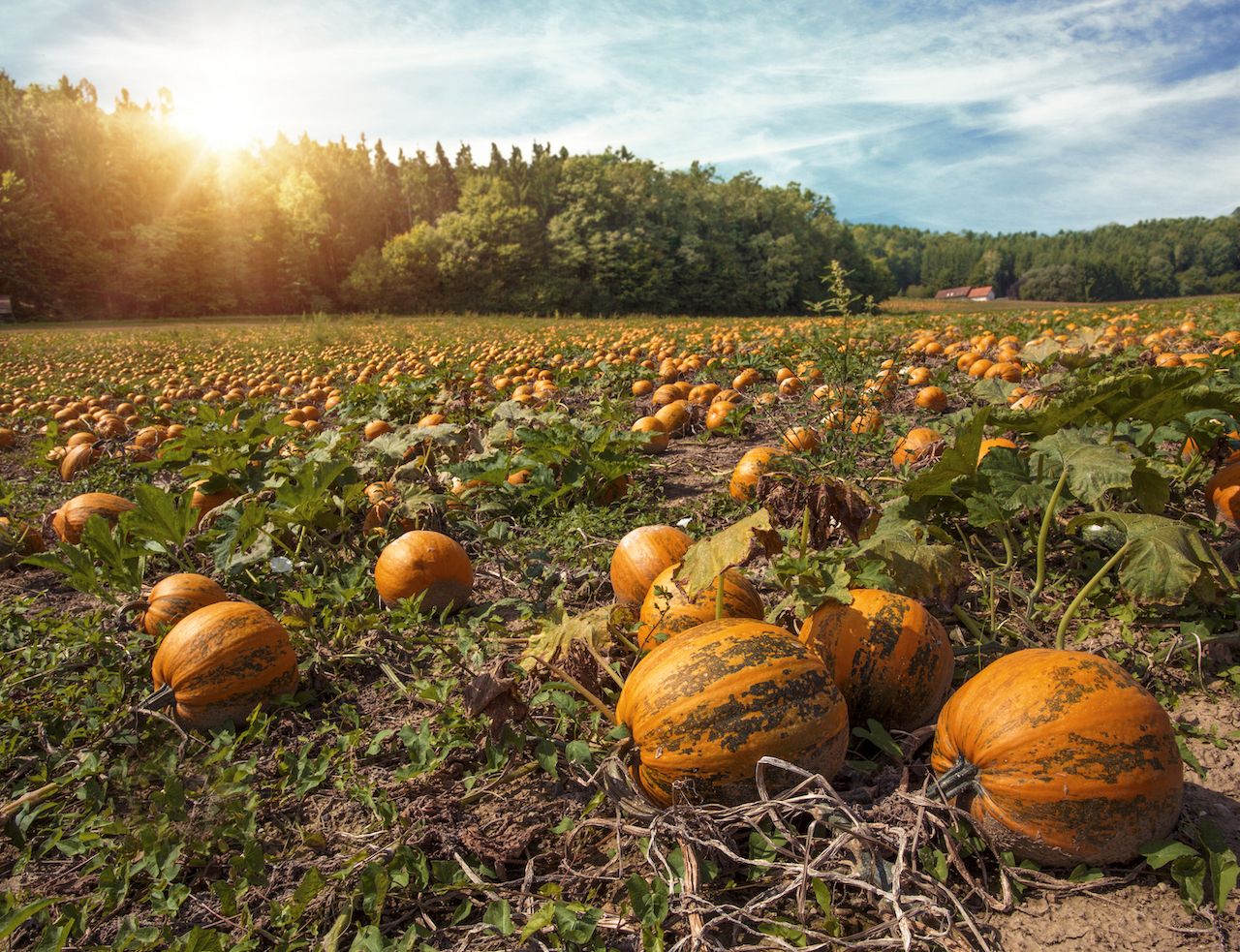
Pumpkin farm in Austria

Photo: Elena Schweitzer/Shutterstock

Austrians celebrate Seelenwoche, or All Souls’ Week, between October 30 and November 8. A relatively sober holiday, it largely revolves around church services. There is one notable Halloween tradition in Austria, however: it’s customary to leave bread, water, and lanterns out on the night of October 31, much like kids do for Santa Claus on Christmas Eve. Halloween night is said to be rife with cosmic energy, and the offerings are intended for wandering souls. Like in the US, Halloween is also a time for pumpkins in Austria, though the focus is on growing, showing, and eating the gourds rather than carving them.

Italy

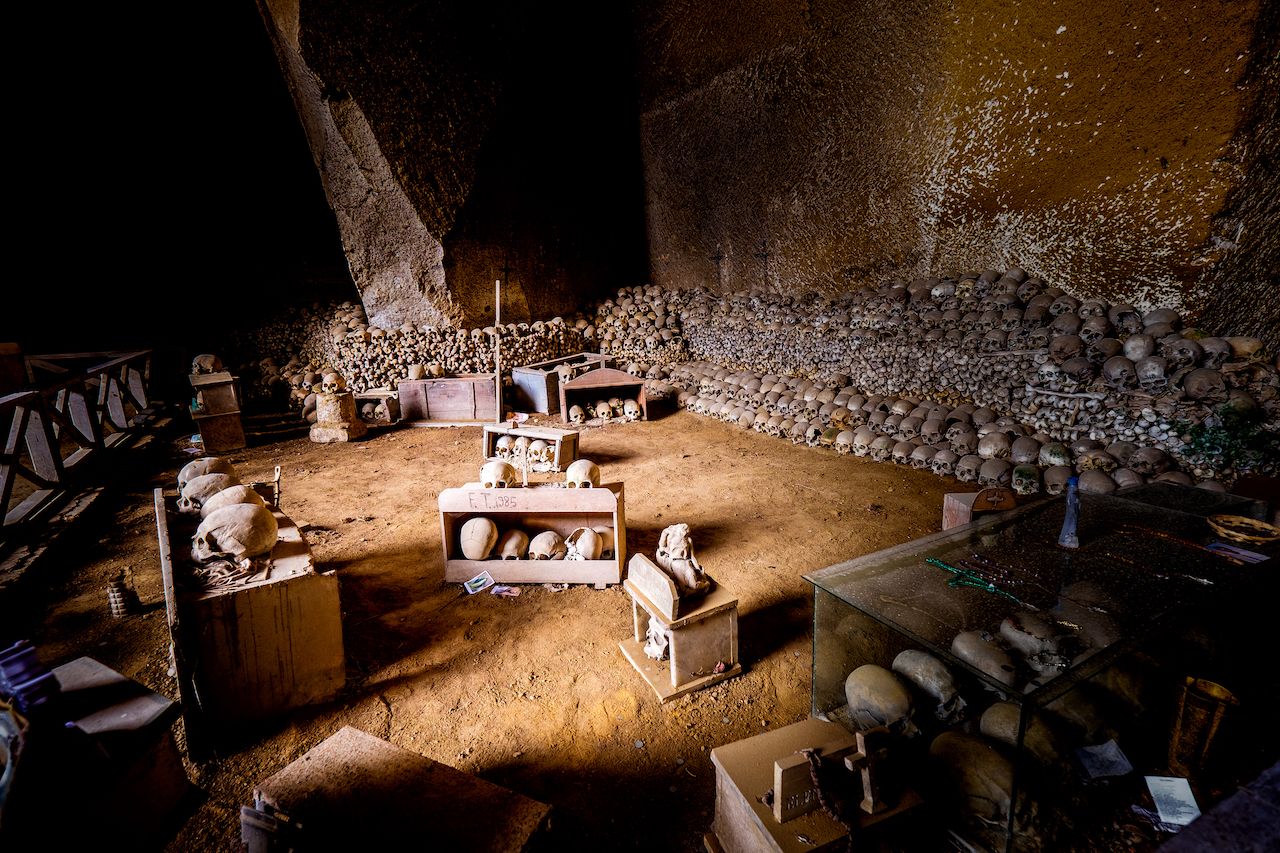
Cimitero delle Fontanelle of Naples

Photo: Massimo Santi/Shutterstock

Halloween in Italy blends Celtic traditions, which ancient Italians witnessed firsthand as the Roman Empire conquered the Celtic nations, and American Halloween. Candy, costumes, and jack-o-lanterns are increasingly popular, as are Halloween parties in bars and restaurants. Trick-or-treating, or dolcetto o scherzetto, is also catching on, though children go from store to store collecting small treats rather than knocking on front doors.

Outdoing haunted houses elsewhere, Italians organize tours of ancient sites like catacombs and castles on Halloween night, as well as flock to amusement parks for terror-themed events. A handful of towns take Halloween particularly seriously, getting decked out in scary decorations and hosting everything from fire spinners and tarot card readers to Miss Strega (Miss Witch) pageants, and jump-scare-filled walks through a Passage of Terror.

The most popular places to celebrate are Corinaldo in the Marche region for the Festa della Streghe, which translates either to Witches’ Feast or Witches Festival; Triora, Liguria, the city that hosted Italy’s last witch trials during the Renaissance; and Borgo a Mozzano, Tuscany, with celebrations largely centered on the Ponte della Maddalena, also known as the Ponte del Diavolo or Devil’s Bridge.

Philippines

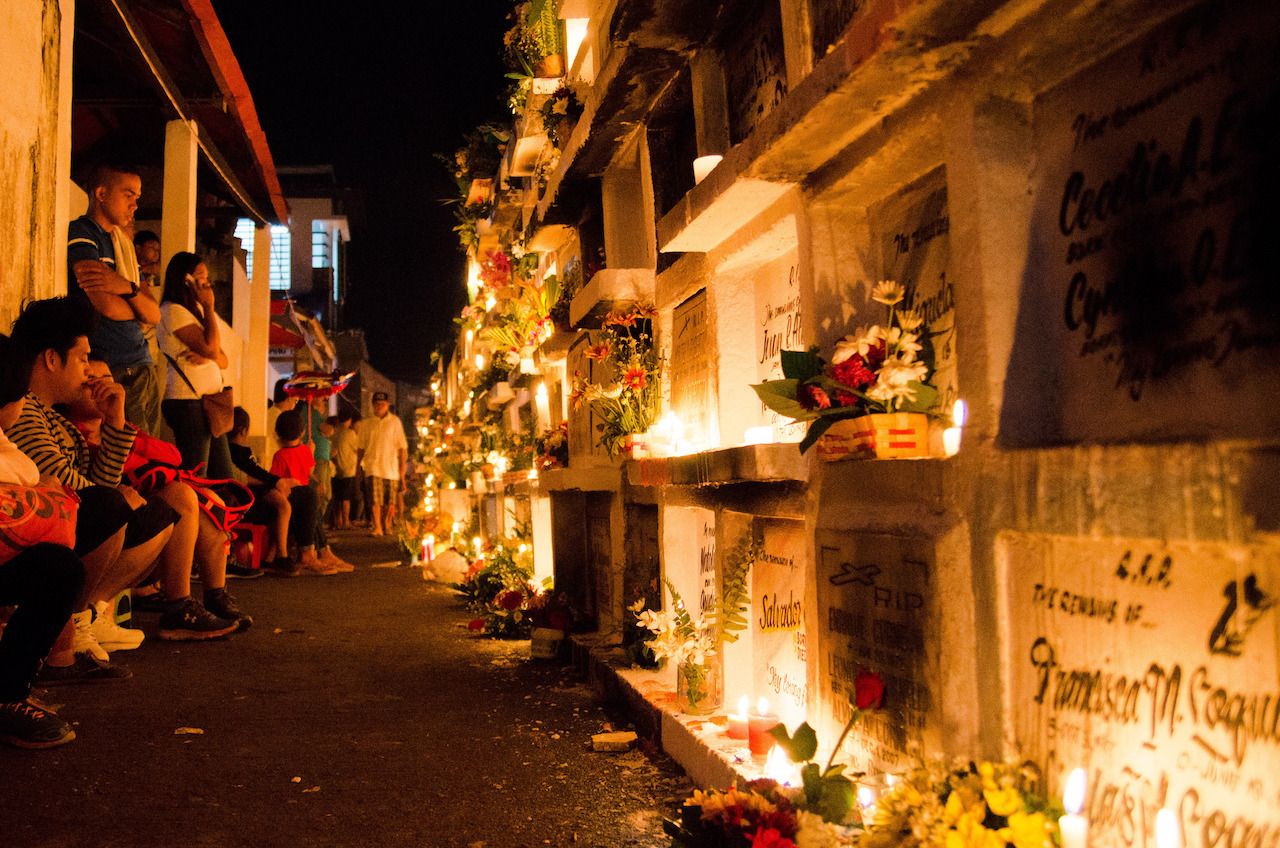
People celebrating all saint's day in the public cemetery

Photo: Rainier Ampongan/Shutterstock

October 31 kicks off the Philippines’ All Saints’ Day festivities, which are more family-oriented than America’s raucous Halloween parties. The entire holiday is meant to honor deceased relatives, with families lighting lanterns and visiting the cemeteries where their loved ones are buried. Many leave food offerings, and some even camp out. That said, you’ll also see parades, parties, and other familiar Halloween traditions in Manila and larger cities.

Smaller towns often host trick-or-treating events for kids, with stores leaving out small treats for them to collect. Slowly, trick-or-treating is replacing the practice of pangangaluluwa where groups of children go around to different houses singing carols about souls for alms, generally money or food, a tradition that’s still practiced in the rural provinces. Most children dress in scary costumes. Though many bars host Halloween parties in the Philippines, it’s a family-centric holiday meant to honor loved ones rather than celebrate ghosts.

Isle of Man

Douglas, Isle of Man

Photo: Henryk Sadura/Shutterstock

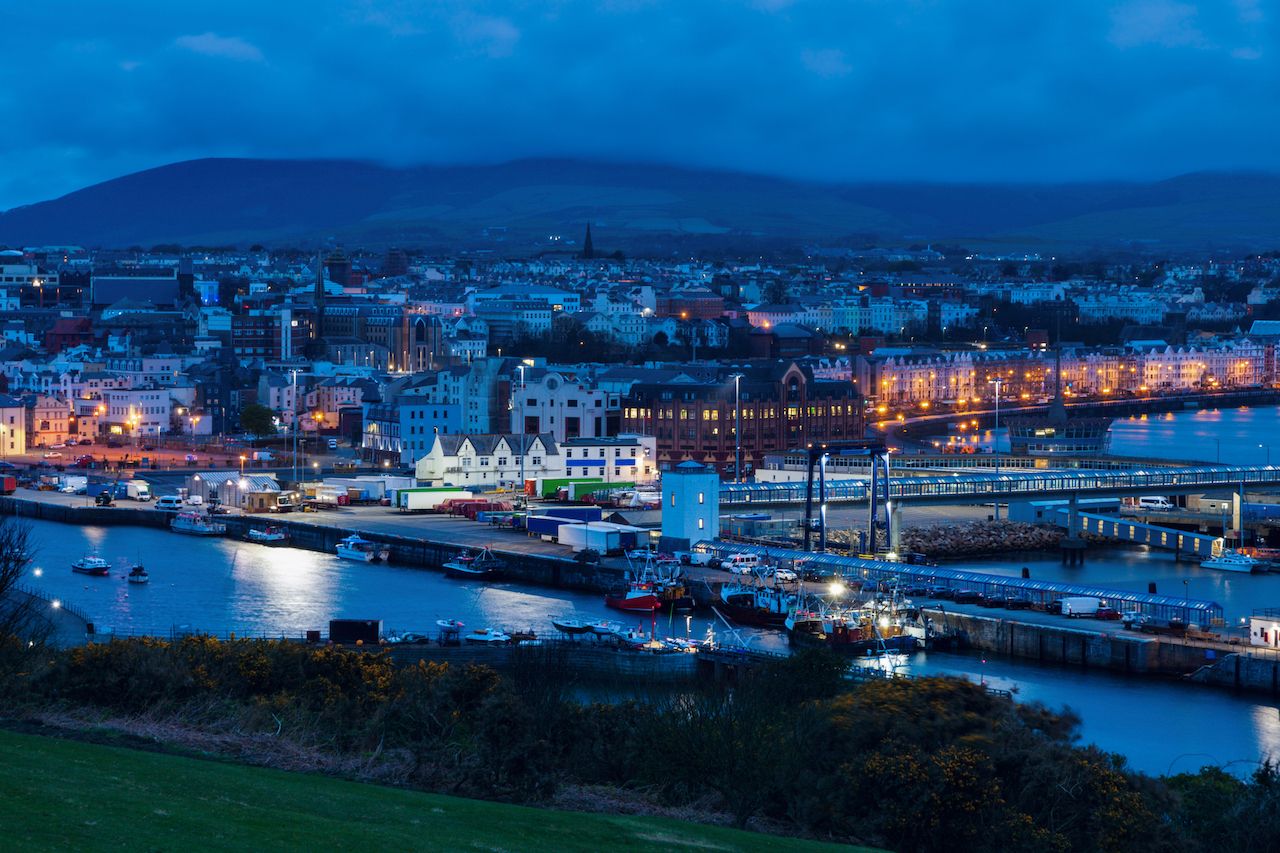
A semi-autonomous British Isle that marches to the beat of its own drum, the Isle of Man hosts its own festival on Halloween night: Hop-tu-Naa. Like Samhain, the holiday began as a way to usher in the harvest and the Celtic New Year. Yet much like in Ireland today, October 31 has been Americanized on the Isle of Man. Still, a Manx Halloween will almost certainly involve activities like carving lanterns out of turnips and going around to different houses while singing old folk songs. Small towns put on festivals across the island that are a little bit Hop-tu-Naa, a little bit Halloween, and a lot of fun.

Mexico

Day of the Dead in Mexico

Photo: Kobby Dagan/Shutterstock

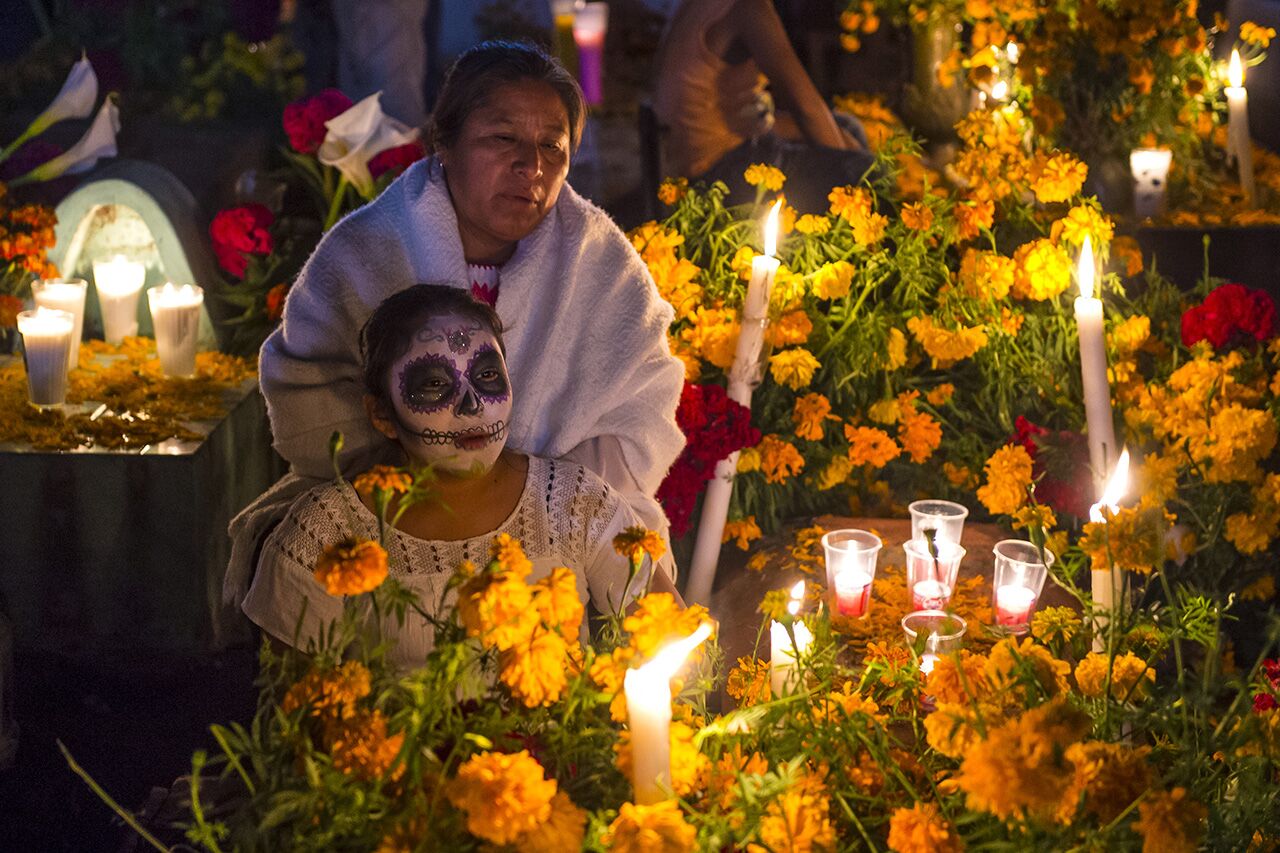
Of all the fall celebrations tied to spirits and the afterlife, Mexico’s Día de los Muertos is by far the best known. Taking place on November 1 and 2, it combines Indigenous Aztec rituals with Catholic All Saints’ and All Souls’ Days. Families build ofrendas, or altars, layering marigolds, sugar skulls, candles, and photos alongside the favorite dishes and drinks of the departed. Public celebrations are elaborate, from Mexico City’s processions and parades to Oaxaca’s vigils filled with music and dance. At the same time, the holiday is deeply personal, centered on homes and cemeteries where families gather to remember and celebrate those they’ve lost.

Guatemala

Sumpango, Guatemala

Photo: Lucy.Brown/Shutterstock

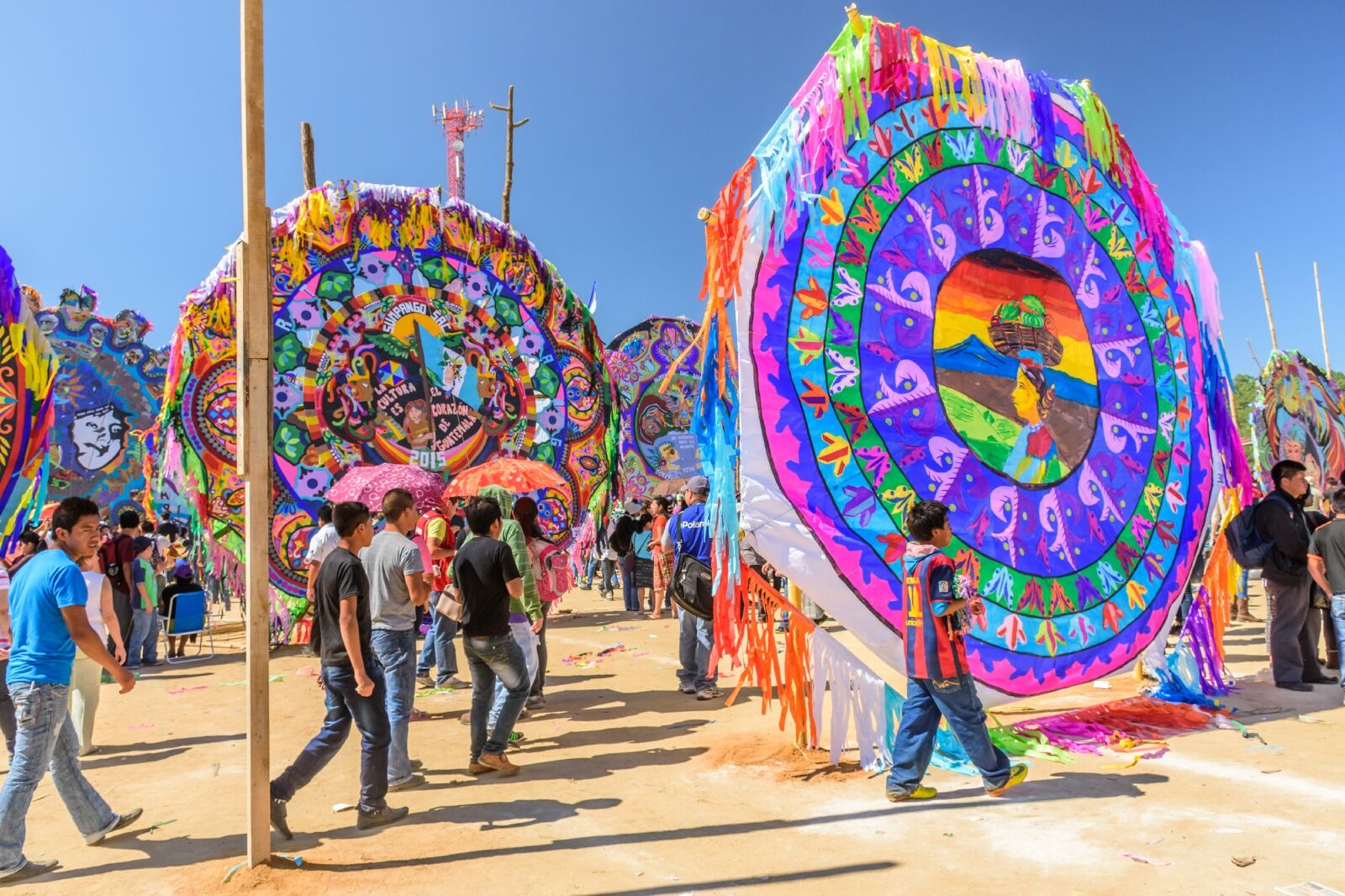
On November 1, the towns of Sumpango and Santiago Sacatepéquez turn their cemeteries into festival grounds. Families gather among the graves to fly massive handmade kites — some stretching nearly 60 feet across — that are believed to carry messages to the spirit world. The day is tied to All Saints’ traditions, but the practice is uniquely Guatemalan, rooted in both Indigenous and Catholic beliefs. The kites are built from paper and bamboo and decorated with bold geometric designs, portraits, or messages that change each year. Flying them is a communal effort, with families picnicking by the graves and entire neighborhoods turning out to watch.

Discover Matador

Save Bookmark

We use cookies for analytics tracking and advertising from our partners.

For more information read our privacy policy.