Around 10 AM on May 20, 2026, the CEO of the world’s most well-known home-rental platform made a surprising announcement. Brian Chesky, who co-founded Airbnb in 2008 from his San Francisco apartment, spoke candidly to a crowd at the company’s California headquarters. “Sometimes, the best option may be a hotel,” he said, especially in regard to business travelers or those visiting a city for just one night.

Photo: Suzie Dundas
Airbnb CEO Brian Chesky: 'Sometimes, a Hotel Is the Better Option.'
But that admission came with a very important emphasis: Airbnb is getting into the hotel game — or at least the boutique hotel game. The ability to book hotels on the platform is just one of many forthcoming features designed to turn Airbnb into a trip-planning multi-tool rather than just a home-booking website, Chesky said during the event.
In 2025, Airbnb launched original experiences, allowing people to find unique tours and in-depth experiences bookable only through Airbnb. “That was successful as a rebrand — the idea that Airbnb is about more than just a home,” he said during a journalist roundtable attended by Matador Network. “Now, we want to add more features for convenience.” Airbnb’s goal, he stated, is to make it easier for people to make travel memories, especially by streamlining the reservation process and freeing up more time for enjoying the destination.
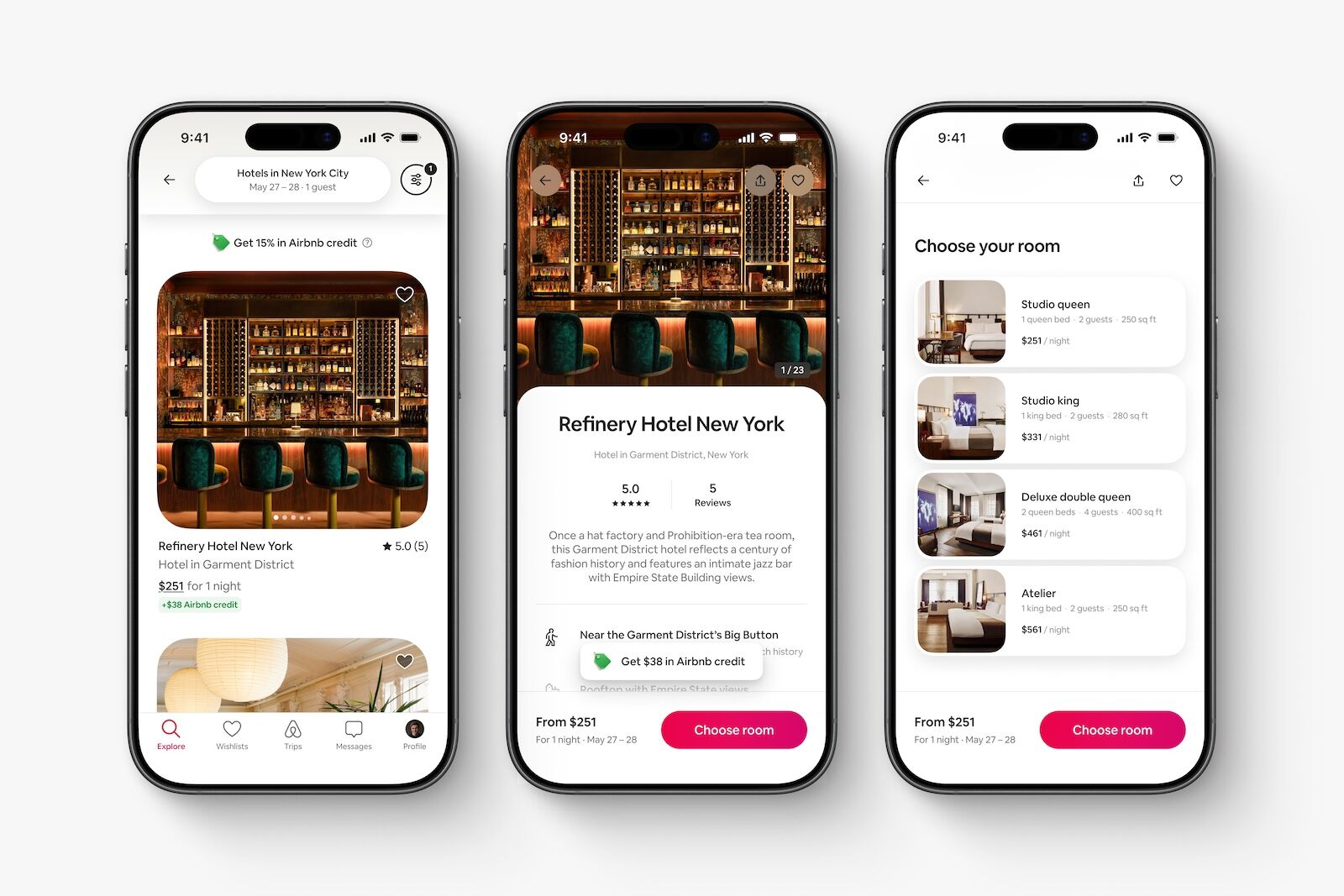
A screenshot of Airbnb’s new boutique hotel booking capabilities. Photo: Airbnb Newsroom
Airbnb is also making a compelling push to convince users to book hotels on the app, adding a price-match guarantee. Until further notice, if travelers find a lower price on a hotel anywhere online, Airbnb will refund the difference in Airbnb credit. Until December 31, 2026, users who book hotels via the app will also get a credit of up to 15 percent back for use on any future Airbnb bookings. Airbnb confirmed to Matador Network that users in more than 20 major cities like New York, Los Angeles, Madrid, Paris, and Singapore will receive a guaranteed 15 percent back, while the percentage may be lower in smaller cities with (presumably) lower room rates.
“I did not want to do this 10 years ago,” Chesky says, of offering hotels on Airbnb. “Our first tagline was ‘forget hotels.'” But he soon realized, he says, that the goal of Airbnb to offer local and authentic experiences wasn’t incompatible with all hotels, but only with the homogeny of chain hotels. “I don’t stay in a lot of hotels, and I guess I was a little ignorant about boutique hotels. I didn’t understand how cool some of them were.”
Hotel booking is currently available in more than 50 cities around the world, with plans to rapidly add more. While it’s not widely publicized, Airbnb also owns Hotel Tonight, a last-minute hotel-booking website, which it acquired in 2019.
Keeping Airbnb relevant in a time of economic uncertainty
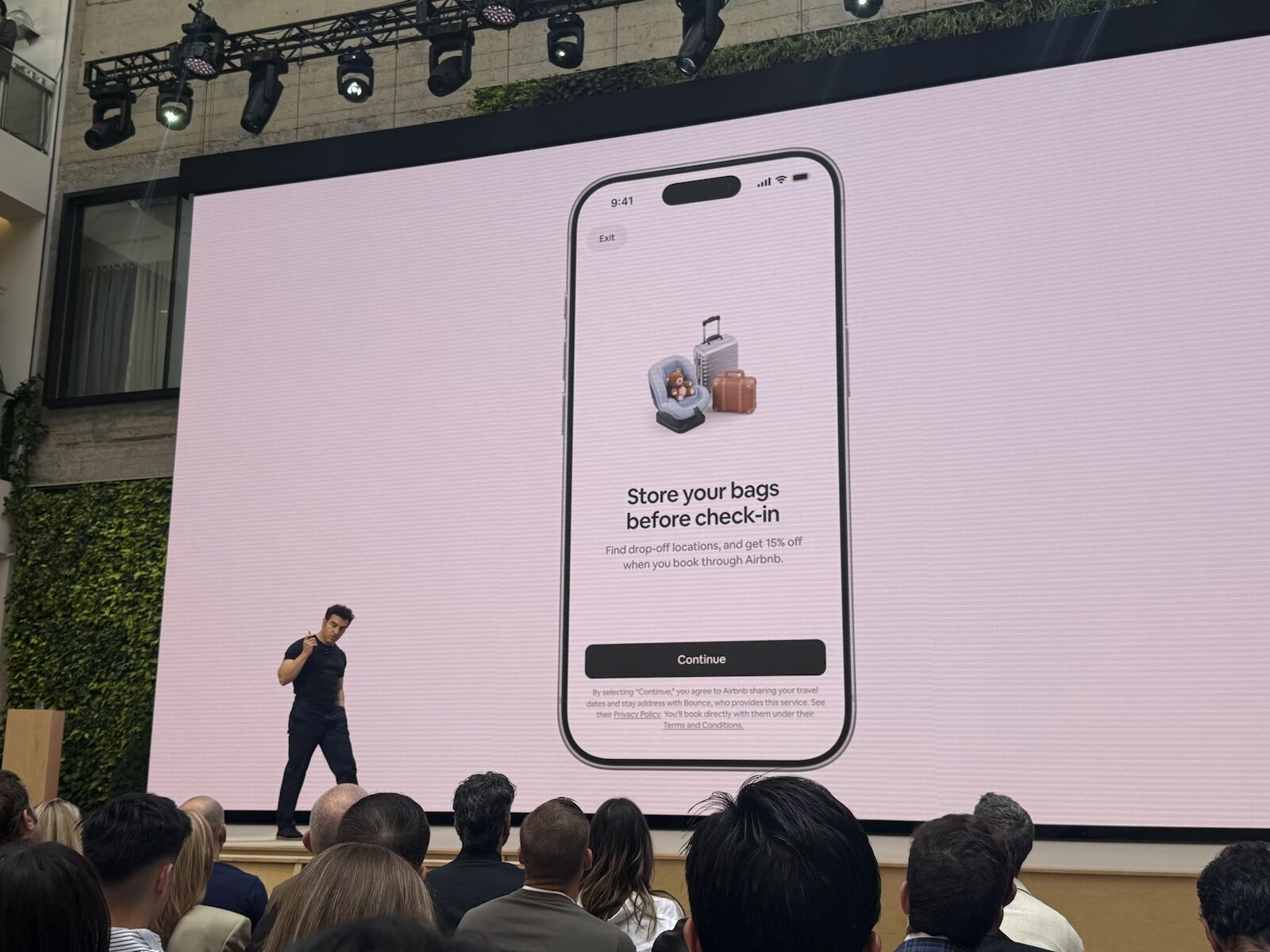
Airbnb CEO Brian Chesky speaking from the Airbnb headquarters in San Francisco. Photo: Suzie Dundas
Chesky stated that his goal with expanding Airbnb is to both make travel planning fun again, and to turn Airbnb into more of a collaborative tool. However, Airbnb is a publicly traded, for-profit company, and the move is almost certainly an attempt to capture a larger market share: specifically, those who prefer hotels to Airbnbs. With features like personalized travel maps that allow users to see where their friends have been and what rentals and experiences they’ve booked, the company is also expanding into social media territory. As 83 percent of travelers under age 40 saying they use social media to plan at least one element of their travels, it’s a decision likely geared toward keeping travelers on Airbnb for inspiration instead of Instagram or TikTok. The more loyal they are to Airbnb, the more likely they are to embrace spending more of their trip budget with Airbnb.
“I’m concerned about it,” Chesky told Matador Network regarding its expansion in a time when travel costs are rising. “I’m very, very concerned about it. I’m concerned about general inflation, the cost of everything. But I think the costs for a lot of these new services are pretty good. And we’re focused a lot on pricing tools to help hosts [be successful].” Hosting homes and experiences also drives income for partners, he says, noting that individual hosts — those who own two properties or fewer — represent the majority of the company’s rental inventory. “We can be part of the solution,” he says. “We can help create a lot of economic opportunity across different sectors of hosting on Airbnb.”
Reducing factors that push people to choose hotels
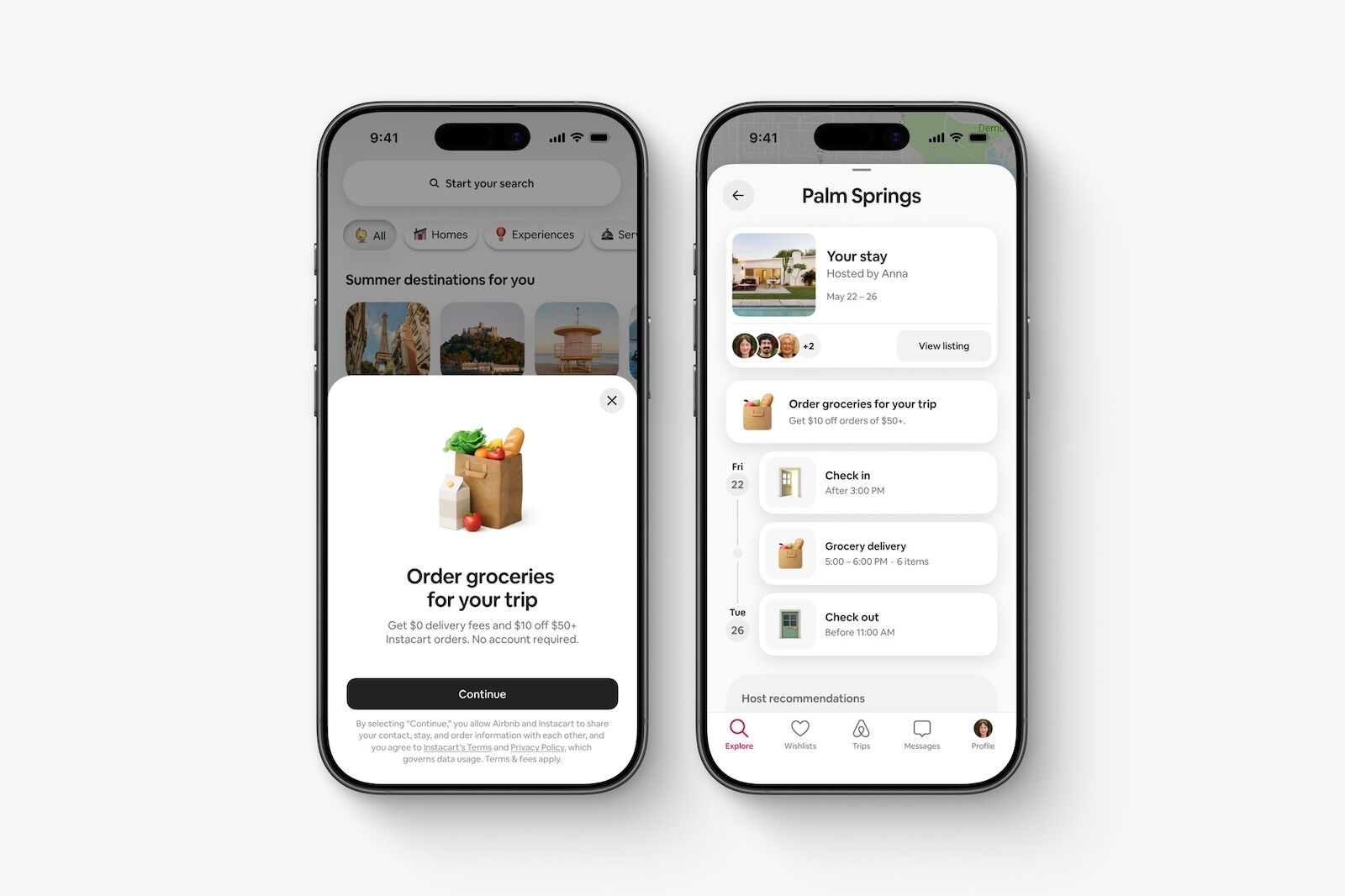
Photo: Airbnb Newsroom
Chesky also confirmed new features on Airbnb designed to make booking a home feel a little more like a hotel, including what he calls “one of our most-requested features:” luggage storage. “We now have about 15,000 luggage drop-offs in cities around the world,” he said, noting that’s roughly equivalent to the number of Starbucks in the United States. Drop-off locations are searchable and bookable on the app, allowing travelers to leave their luggage in a place akin to a hotel storage room, even if their check-in time is hours away.
Another perk of staying in a hotel is having on-site food and beverage amenities, which Airbnb’s new partnership with Instacart is also aiming to address. When booking a home, users can request to have groceries arranged before their arrival. In some cities, the host will be able to receive the delivery and prestock the home for the guest. In destinations where that isn’t yet available, groceries will be delivered once the guest arrives. According to Chesky, the new focus is on “services that make your trip easier.”
Many of the newest Airbnb features are available now, while the remaining features, as well as the expansion of current features to new destinations, will be introduced over the course of summer 2026.
How will it change the traveler experience?

Photo: Airbnb
For the average traveler, the net effect Chesky appears to be working toward is less time toggling between apps and more time actually enjoying the trip and the planning process before the trip. The vision Chesky is selling is an Airbnb that tracks your flight and meets you at the airport, stocks your fridge before you arrive, drives you between destinations, guides you through cities, and even helps you plan where to go. Add-ons like car rentals, grocery delivery, airport pickups, and boutique hotel options in a single platform are pushing Airbnb toward one-stop-shop territory.
The AI tools rolling out later this year could also mean time savings, especially for meticulous travel planners. Rather than opening tabs for dozens of listings and manually researching options, travelers will be able to use a new AI compare tool. They’ll also be able to use natural language to ask whether a place is actually quiet, walkable, or good for families, or convenient to trail systems. Later this year, the company will also roll out the ability to build and host itineraries on the platform. Anyone attending a trip can suggest places they’d like to visit and see them on a map in relation to their rental or hotel, or even add specific tours and activities to a real-time trip dashboard available to guests.
Chesky recently compared Airbnb’s long-term ambition to a travel-focused version of Amazon, which is either an exciting vision or a cautionary tale, depending on your opinion of Amazon. The analogy is spot-on: just as Amazon expanded from books to virtually everything you can buy, Airbnb is positioning itself to take a cut of virtually all the money you spend on a trip. 