Photo: Kelsey Wilking

I Came to North Iceland for the Northern Lights, but Stayed for the Soaks

Wellness Culture Astronomy
by Kelsey Wilking Nov 3, 2026

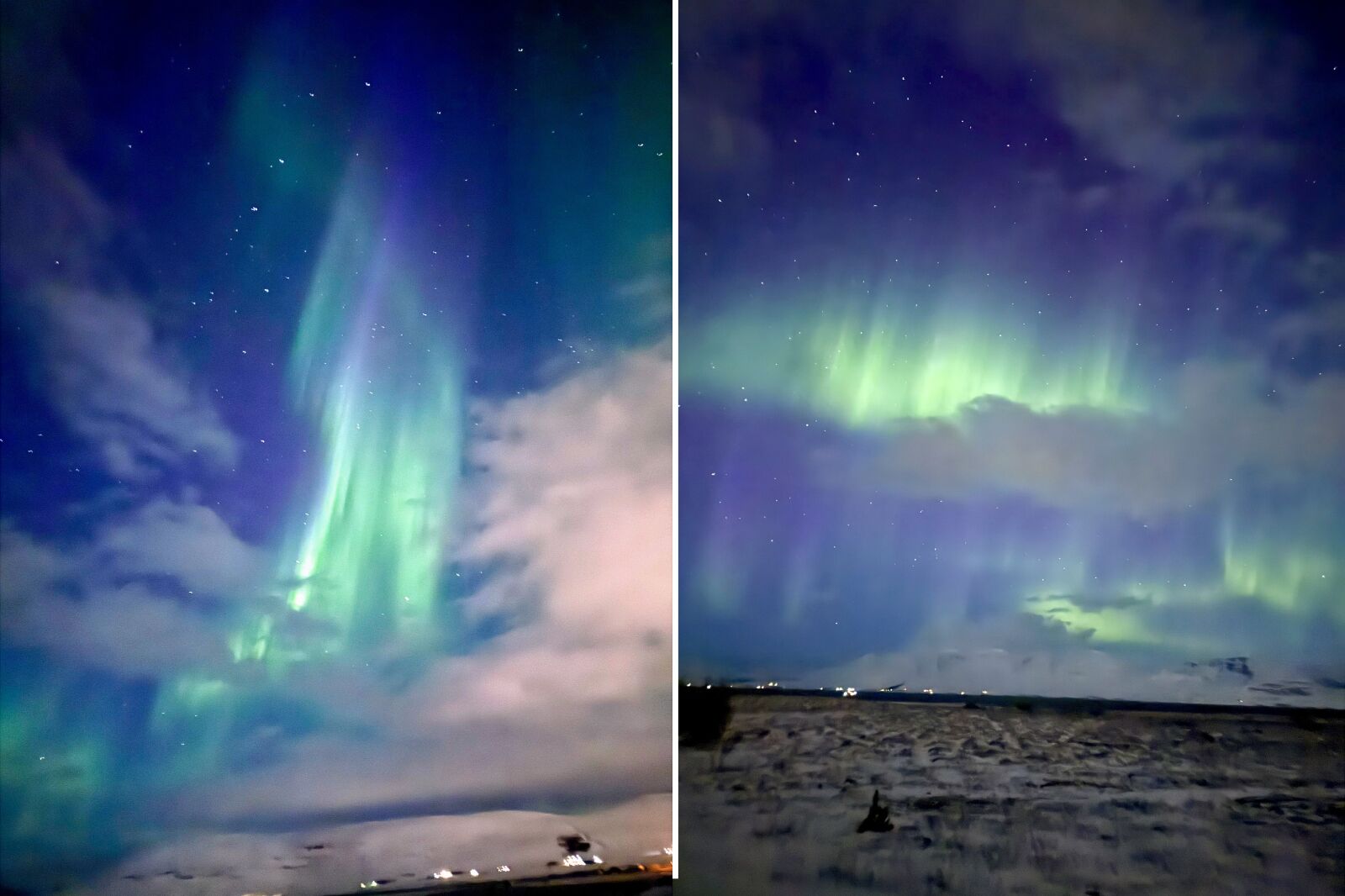
Just past 10 PM, I got a text from my driver for the next few days, whom I’d just met hours earlier at the airport. “The northern lights are out. Do you want to see them?”

It wasn’t even a question.

I quickly got dressed and ran out to his van to chase purple and green lights over Akureyri in North Iceland. Bundled up, I watched the aurora streak across the sky overhead with my phone in hand to take photos. It was my first night in the country, and I’d already seen the famous aurora borealis. My trip, I thought, couldn’t get much better. But it turned out I was wrong.
Where the Golden Circle crowds don’t go

northern lights in Akureyri

Photos: Kelsey Wilking


Most travelers see Reykjavík and spend time driving the Golden Circle, a day-long loop of waterfalls, geysers, and a rift valley east of the capital. I did that exact trip 10 years ago. Returning after a decade, I headed north, where fewer tourists go. I’d been fairly confident I’d experience the northern lights – but what I didn’t count on was falling in love with the bathing culture and the community built around it.

Often, travelers cross Iceland off their lists because they’ve already been to the greater Reykjavík area, which holds around 63 percent of Iceland’s population. But not doing a second trip is a mistake. The north is emptier, with longer distances between towns, and the weather gets far colder. Through all that, or perhaps because of it, locals have forged a deep sense of community around the local bathing pools, especially in winter.

The history of the northern part of Iceland is mostly about getting through winters. Norse settlers arrived from Norway in the 800s, and hunger came fast; barely anything grows in the cold ground. That’s clear from the food that stuck: salted cod, fermented shark, not many wild plants beyond berries. But what made it bearable was the same thing that pulls visitors now: the geothermal hot springs people have bathed in since the earliest residents first found them.

Hot springs hopping in Akureyri

north iceland culture - akureyri

Akureyri is the capital of North Iceland. Photo: Mr. Gylfi/Shutterstock

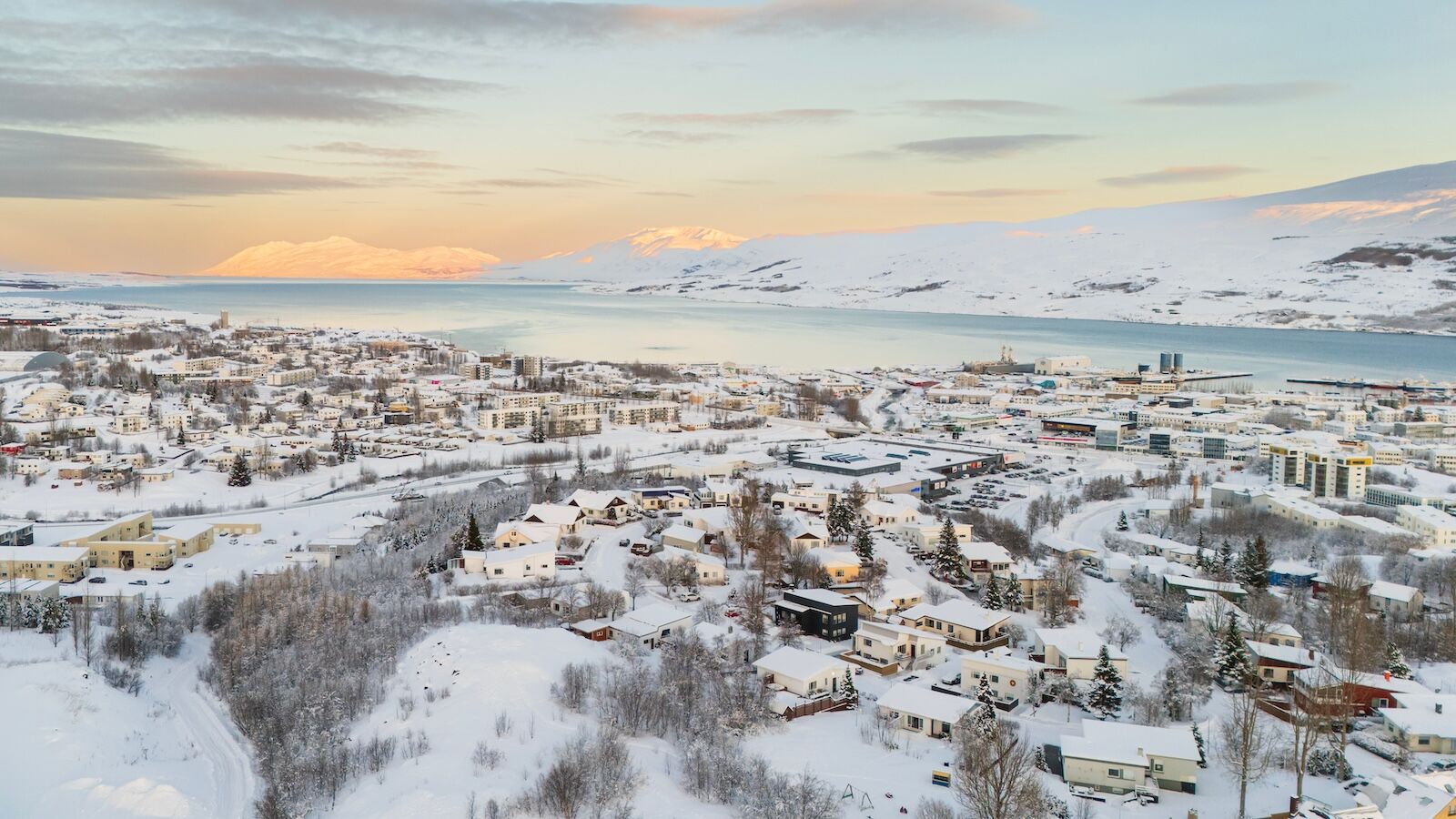
Akureyri sits at the far end of Eyjafjörður, Iceland’s longest fjord. It’s a roughly 45-minute flight from Reykjavík and was an ideal central base camp for the week. Since it’s sheltered in a valley, the climate tends to be milder than most travelers would expect in winter.

It doesn’t take long to realize it’s a small, close-knit town. As I walked around town with a local guide, people he knew kept stopping him on the street to say hi. With around 20,000 people, Akureyri is the largest town outside the Reykjavík area, and it calls itself the “capital of the north.” It has a walkable center, a two-block main street dotted with hotels and restaurants, a handful of charming timber homes that date to the 1700s, and an ice cream shop so popular that locals line up outside it on weekends, even in the middle of winter.

But the ice cream shop isn’t the only place Akureyri locals gather in winter. The bigger draw is the water. In December 2025, UNESCO added Icelandic swimming pool culture to its list of intangible cultural heritage, alongside traditions like Finnish sauna culture. Most people picture the Blue Lagoon, but that’s like seeing Paris and only standing under the Eiffel Tower. Up north, the springs are quieter and, in my mind, better, with sweeping views of fjords and the Arctic Ocean, where it’s not entirely unusual to see whale fins in the distance during a soak.

Every soak starts the same way: naked, in a communal shower with no barriers between the shower heads. Washing thoroughly before getting in is a hygiene rule, not a suggestion. When I rushed through my rinse, not used to that level of public nudity, someone in the shower next to me kindly reminded me to stay in a little longer. I did, and soon noticed everyone from teenagers to grandmothers propped up with one leg on a stool in the shower to scrub every crease. Swimsuits go back on for the mixed-gender pools; nudity is more common at remote springs.

iceland bathing culture - forest lagoon

Forest Lagoon. Photo: Kelsey Wilking

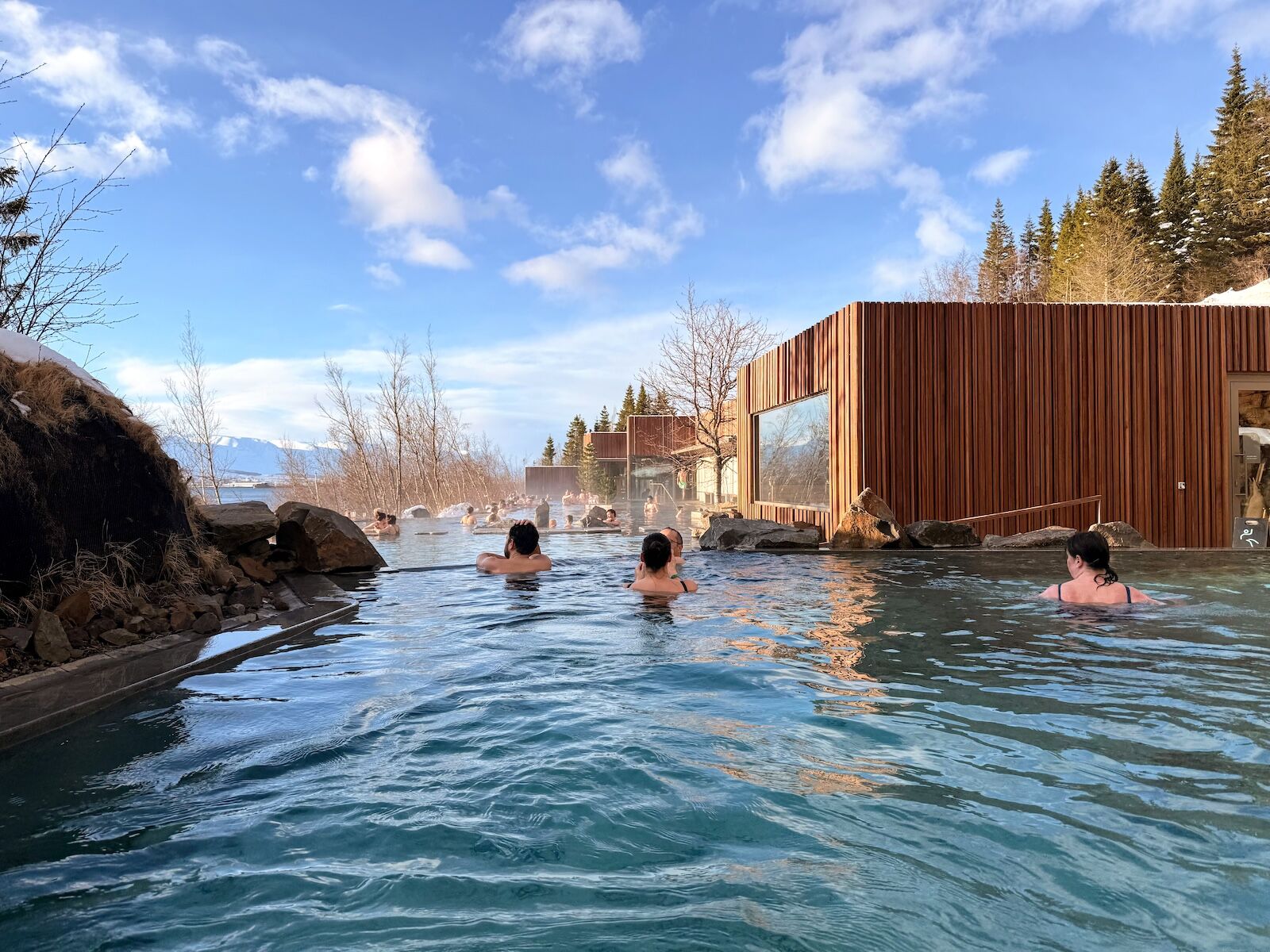
I started with the Forest Lagoon, on the opposite side of the fjord from Akureyri. After the mandatory naked shower, I stepped into a wide, steaming pool, evergreens bowing under snow on both sides and the fjord opening out below. The sprawling complex has saunas with floor-to-ceiling windows, a cold plunge to test one’s fortitude, and a swim-up bar. I stayed until my cheeks went red.

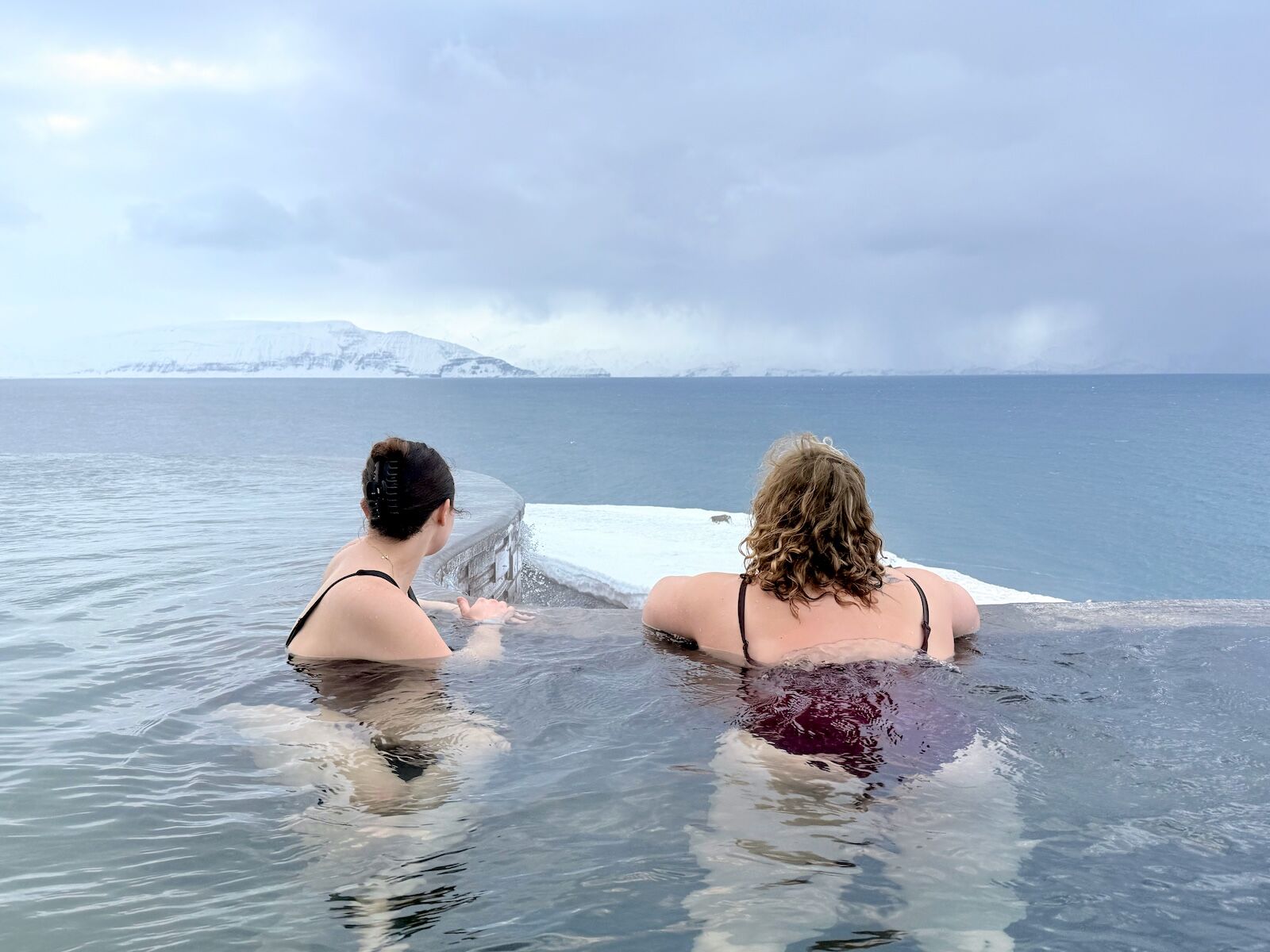
My next soaking hotspot (pun intended) was GeoSea, about an hour from Akureyri. The infinity pools come in a range of temperatures and overlook Skjálfandi Bay, where humpback and minke whales are known to surface, especially in summer. Sitting in the hot water with a cold Icelandic beer in the snow was hard to beat. I got why the Vikings liked it.

iceland bathing culture - GeoSea

Photo: Kelsey Wilking

But it was the pools more popular with locals that helped me understand the culture. One night I skipped the tourist lagoon for the local place: a heated, YMCA-style pool where it seemed like the whole town had turned up. Parents brought children in for a quick soak before putting on pajamas and heading home, while groups of teenagers laughed and gossiped. It even had four waterslides; snow landed on my eyelashes in line while a local kid advised me that the red one was the best.

After my trip, I reached out to the country’s tourism team to learn if my experience was the norm – and it was, according to Karen Möller Sívertsen, a public relations coordinator at Business Iceland. “Iceland’s public swimming pools play an important role in fostering a sense of equality, informal connection, and social cohesion,” she told me, “bringing together people of all ages and backgrounds in a shared space.” In other words, it’s more than a soak: it’s the local watering hole and a place where locals go to feel a sense of community. I felt a little bit of that too, even as a tourist.

Akureyri beyond the springs

iceland bathing culture - horse and snowmobiling

Photos: Kelsey Wilking

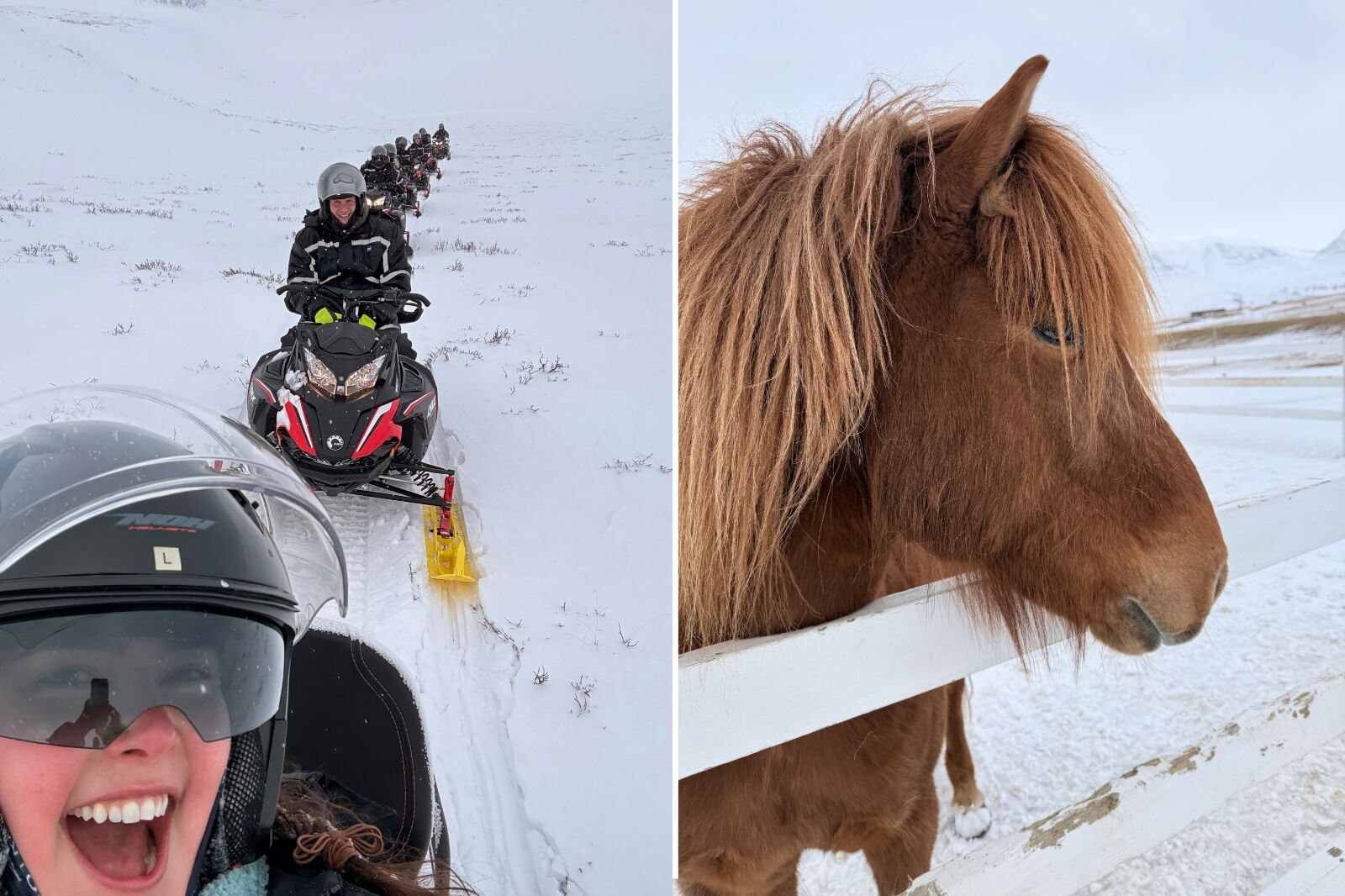
Akureyri made an easy base for exploring the rest of the north between soaks. I snowmobiled across Lake Mývatn, stopped at a partly frozen Goðafoss (the “waterfall of the gods”), and rode Icelandic horses, complete with windswept manes and thick winter coats, to Reykjafoss waterfall in Skagafjörður.

Knowing the region’s reputation, my expectations for the food were low, but I was happily proven wrong. Months later, I’m still thinking about the chocolate mousse at Áskaffi, a café in a Skagafjörður community hall, in a room where the town also holds weddings and concerts. Owner Auður Herdís sent me on my way with a rhubarb cake packed to go, made from her grandmother’s recipe.

I loved that even the restaurants make use of the region’s warm-water traditions. At Vogafjós Farm Resort, I ate freshly made rye bread baked underground, slow-cooked for about a day by geothermal heat, which makes it incredibly dense and a bit sweet.

Back home in Nashville, I missed the nightly soaks, the town pool most of all. I’d gotten spoiled by warm, muscle-relieving water after long days outdoors, and somewhere along the way I’d stopped rushing through the naked showers. Iceland’s Golden Circle will always be there, paved, open, and packed year-round. But it was the north where I saw the bathing culture as part of daily life instead of a tourist attraction. Next time, I’d skip the lagoon one night, find the local pool, and get in line for the red slide — the best one, as all locals know.

Discover Matador

Save Bookmark

We use cookies for analytics tracking and advertising from our partners.

For more information read our privacy policy.