Photo: Tourism & Events NT/ Safari Global/ Guluyambi Cultural Cruise

‘Crocodile Dundee’ Brought Me to Northern Australia. Aboriginal Guides Helped Me Understand It.

Outdoor Movies Culture
by Riley Chervinski Oct 26, 2026

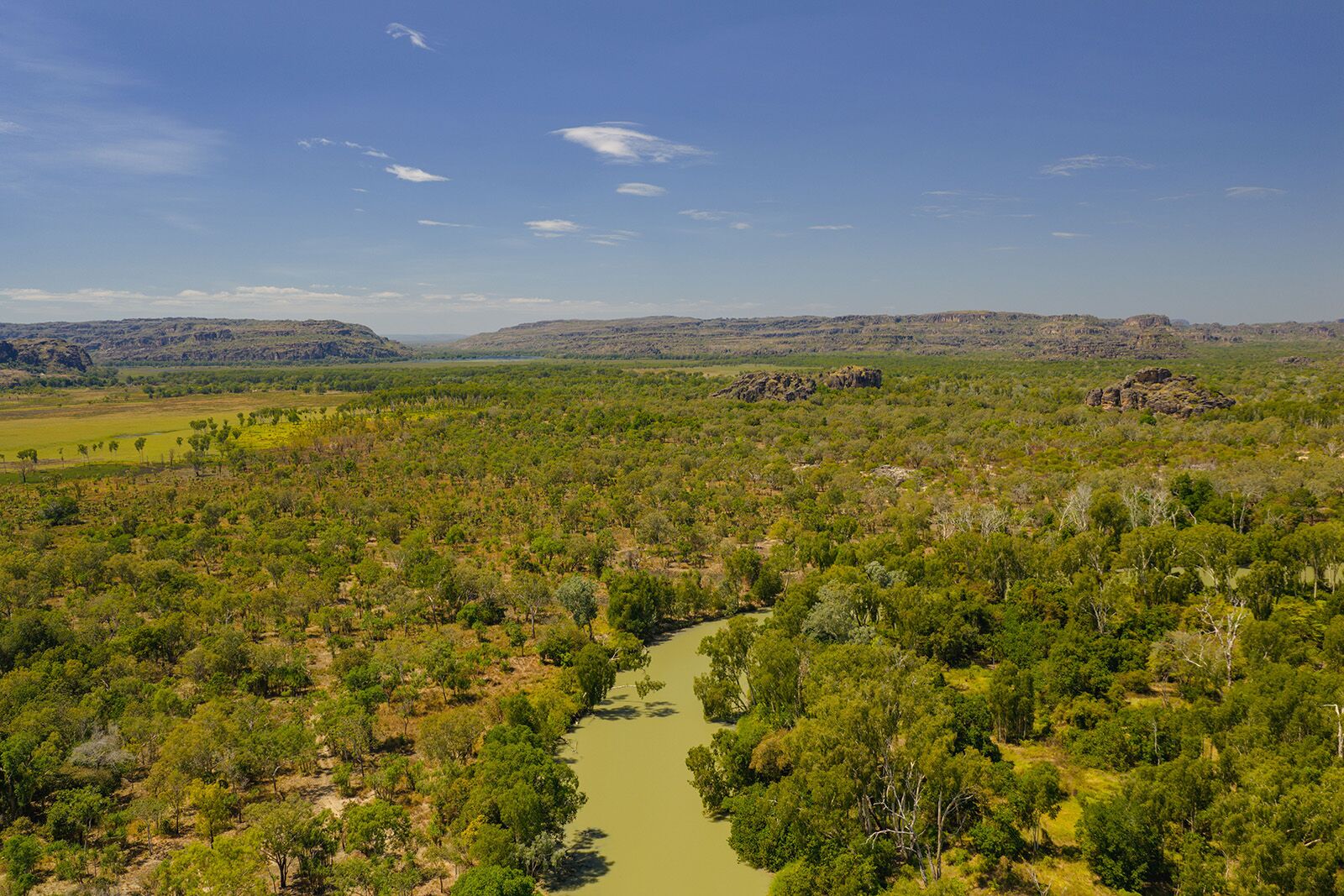
At Anbangbang Billabong, a wetland in Kakadu National Park, our group was trying to find a specific tree from Crocodile Dundee.

It appears in the scene where Mick Dundee switches from shaving with a razor to his large knife to impress American journalist Sue Charlton. The sandstone behind it was easily recognizable, but identifying a tree 40 years after filming was taking a little more effort.
It was a good thing, then, that we were there with our guide, Mandy Muir, whose uncle was among the Aboriginal people consulted on the film. She has spent 38 years working with the park, including protecting its rock art and guiding visitors through places connected to her mother’s people.

I traveled to Australia’s Northern Territory for the film’s 40th anniversary as a guest of Tourism and Events NT, with an itinerary covering many of the filming locations in Kakadu National Park and some time to explore Darwin, the territory’s capital. We visited sandstone lookouts, ancient rock art galleries, and freshwater swimming holes, and saw enough crocodiles to make me grateful for our guides and the bright yellow warning signs around the park.

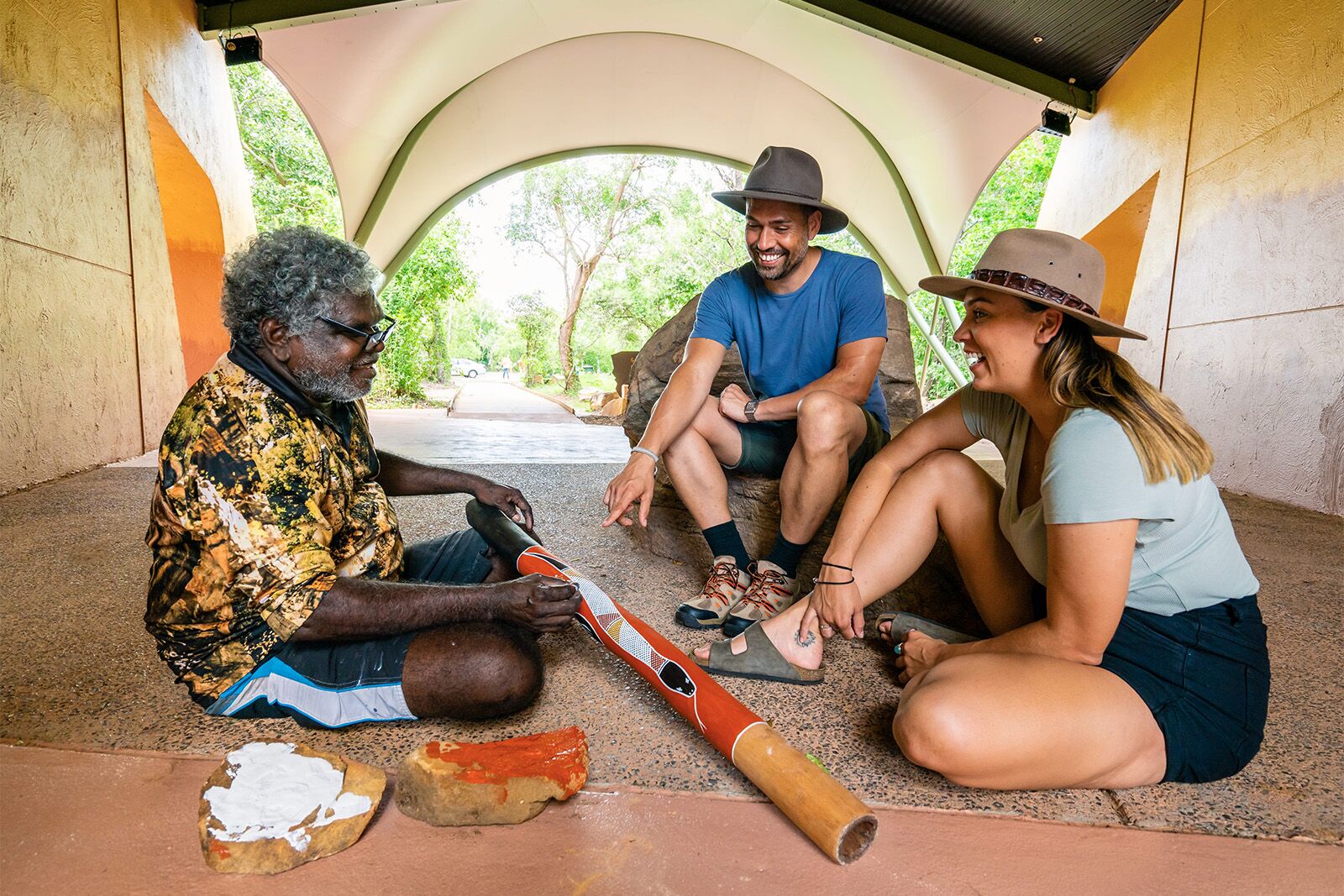
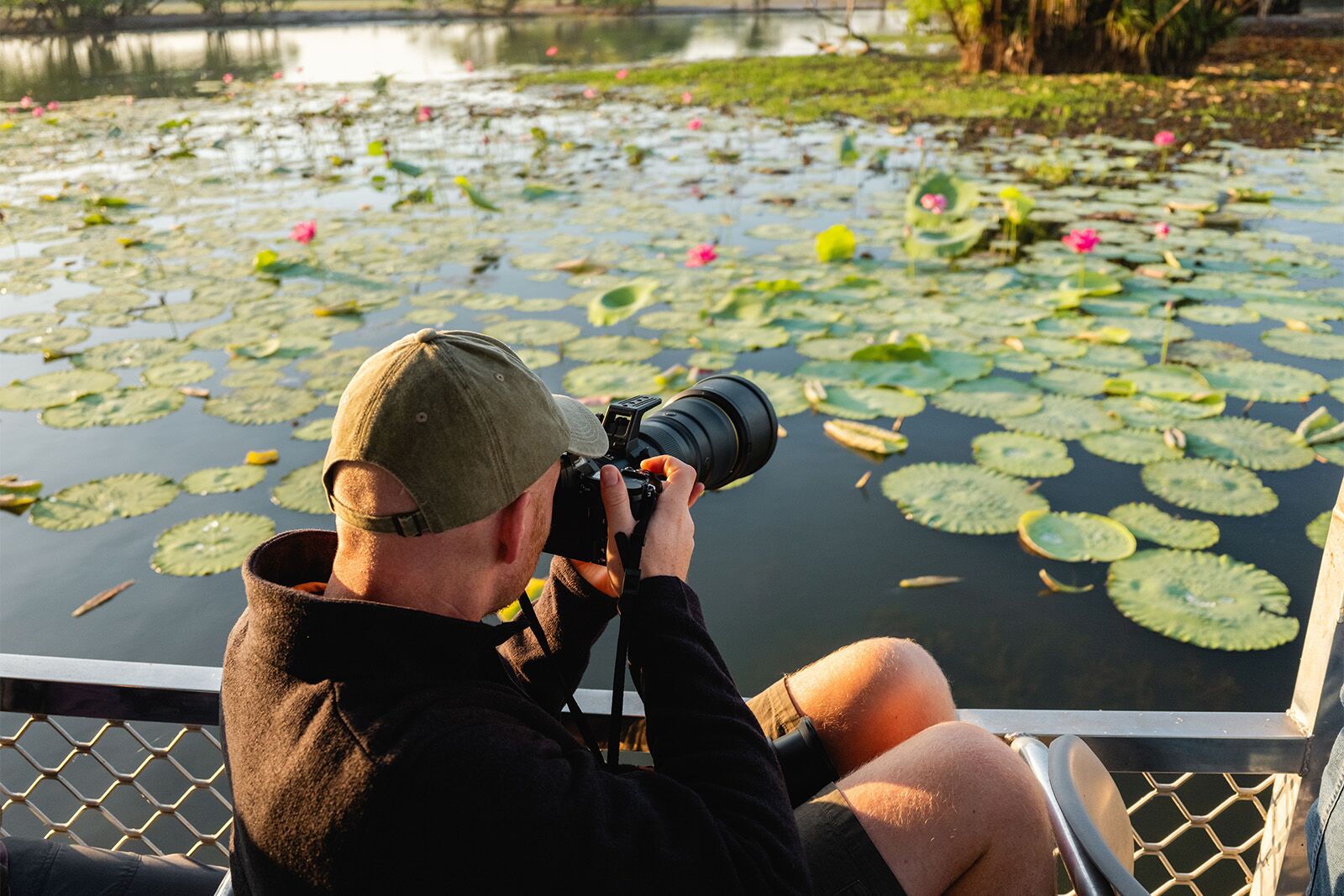
Muir explained the hard work involved in protecting the paintings we had come to see, while Natasha Nadji shared many of the stories that she learned growing up on Country (the term Aboriginal Australians use for their ancestral lands). On a sunset cruise, Dennis Miller added his own childhood memories to the wildlife we were photographing. Their stories helped me understand the places we visited and the lives connected to them.

Crocodile Dundee’s connection to Kakadu

crocodile dundee filming locations

Photo: Tourism & Events NT/ Safari Global/ Guluyambi Cultural Cruise

Released in 1986, Crocodile Dundee became a global box-office hit and is still the highest-grossing Australian film of all time. Some of its most memorable scenes introduced international audiences to Kakadu, including those filmed at Ubirr (a rock art site), Burrungkuy (a sandstone outcrop), and Gunlom (a waterfall and plunge pool). The 1988 sequel returned to the region, filming around the sandstone formations along the Bardedjilidji walk.

Our guides made it clear how many of these filming locations were connected to their own families. Natasha Nadji, a Traditional Owner who grew up in Jabiru and Cannon Hill Outstation, told us her grandfather, Bill Neidjie, helped scout locations and acted as a go-between for the filmmakers and local Aboriginal families, helping explain the production and advocating for their involvement.

The film’s portrayal of Aboriginal people has drawn criticism over the years, but for Nadji’s family, watching it means seeing familiar people and places onscreen, and they’re happy whenever it comes on television. She describes it as “a love story for Country, and a love story for a woman.”

I also spoke with Delvene Delaney, whose late husband John Cornell co-created and produced Crocodile Dundee. Delaney accompanied him during the first film’s production and worked on the sequel. She remembered filming in places so remote that the crew had to build roads to reach them. The production wanted audiences to see a part of Australia they knew little about.

When I asked what she learned from the Aboriginal people she met during filming, Delaney recalled her young daughter spending time with actor Ernie Dingo during the production of the sequel. Between filming, he would carry her on his shoulders through the bush, showing her where the crocodiles slept and where to look for snakes.

“It really opened us up to being a part of Australia. Like, don’t be afraid to go into the bush, because we’re all its inhabitants,” she said.

Exploring Ubirr’s rock art with an Aboriginal guide

crocodile dundee filming locations

Photo: Tourism & Events NT/Tourism Australia

Nadji led us through Ubirr’s rock art galleries, where the paintings depict fish, turtles, kangaroos, and ancestral beings. She explained the stories she’d learned from her family, including one story involving Mimih spirits, which Nadji described as slender beings who live in cracks in the rocks. They’re so thin, she explained, that they avoid coming out on windy days for fear of breaking in half. In the story she shared, a Mimih spirit brought down a rock and painted a kangaroo, which introduced the clans to the crosshatching painting technique.

At the Rainbow Serpent site, Nadji explained a more personal connection. In the story she shared, the serpent swallowed a clan after being disturbed by a crying child. Nadji identifies herself as a descendant of the clan in the story, and she grew up learning to respect the serpent’s presence on Country.

That teaching came up even when she went hunting with her father. Nadji remembered being an extremely talkative child, much to his frustration, and he was always telling her to “be quiet; how are we gonna catch anything?”

“He wasn’t just worried about scaring the animals away,” she told us. He was also reminding her to respect the Rainbow Serpent and avoid causing trouble in places where the spirit might be present.

Kakadu has been home to Aboriginal people for more than 65,000 years. Bininj is the term used for Aboriginal people in the park’s north, Mungguy in its south. Country includes land, water, animals, cultural knowledge, and the relationships and responsibilities connecting people to them.

“You can appreciate the way the Eiffel Tower was built. But it’s not as old as this art,” Nadji said, which had our group thinking about how much attention we give famous landmarks elsewhere.

After visiting the galleries, we climbed to Ubirr’s lookout over the Nadab floodplain. This is where Mick Dundee stands with Sue and gestures across the country he calls his backyard. We then continued to Bardedjilidji, where a walking trail passes sandstone pillars, small caves, and a natural tunnel. It was one of my favorite walks of the trip and looked almost otherworldly.

Allow time for both the paintings and the lookout at Ubirr. The lookout is an obvious draw, but give the galleries time, too. Walking with an Aboriginal guide helped me understand far more than I would have on my own, so check available cultural tours and the park’s current guided-activity program before visiting.

Learning about caring for Country at Burrungkuy

crocodile dundee filming locations

Photo: Tourism & Events NT

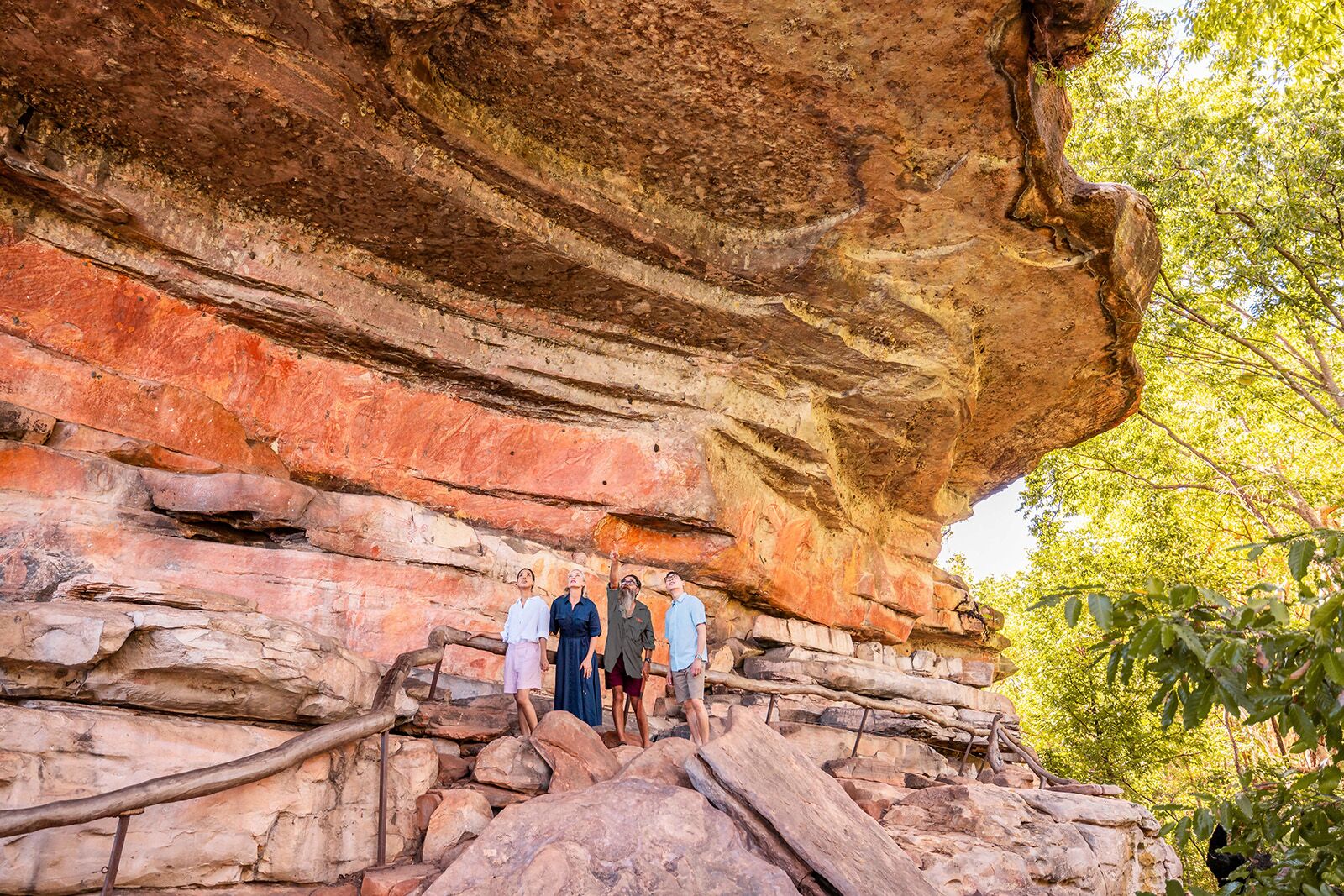
At Burrungkuy, also known as Nourlangie, Mandy Muir guided us through rock shelters and the Anbangbang gallery. She explained paintings of Namarrkon, the Lightning Man, and stories connected to kinship and family relationships.

She also described the practical work of conserving the art. One of her early park jobs involved protecting paintings, including using silicone drip lines to divert heavy rainwater away from rock faces during monsoon season. She spoke about hotter weather and its effects on the rock. I’d spent the morning admiring the paintings, and now I was learning how much work goes into protecting them.

Muir has connections to the Murumburr people of Kakadu and the Wardaman people of the Katherine region. She and her mother, Jessie Alderson, established Kakadu Billabong Safari Camp, creating another way to share their knowledge with visitors.

Later, at Warradjan Aboriginal Cultural Centre, I read a quotation attributed to Muir: “The most important thing in the Aboriginal way of life is culture. When I look at a lot of other Aboriginal people who don’t have culture, I feel sad for them because without culture, you don’t really feel that you have a place of belonging. We have our culture. Our land is our life.”

The center is about three-quarters of a mile from Cooinda Lodge, one of the places I stayed. Its exhibits cover kinship, food, personal histories, and life in Kakadu. Allow about an hour to walk through, check for activities like weaving and painting clapping sticks during your stay, and follow the strict photography restrictions inside.

For another view of this part of the park, visit nearby Nawurlandja lookout. The short, steep climb overlooks Anbangbang Billabong, Burrungkuy, and the Arnhem Land escarpment. Save the climb for a cooler part of the day, and bring water and sun protection. Short walks still feel like a workout in Kakadu’s heat.

Taking a sunset cruise on Yellow Water

crocodile dundee filming locations

Photo: Tourism & Events NT/@Ben.Savage

The Yellow Water cruise was one of my favorite activities in Kakadu. From our covered sightseeing boat, we saw plumed whistling-ducks and black-necked storks, saltwater crocodiles, and roaming buffalo. The buffalo aren’t native to Australia and were introduced to the Northern Territory in the 19th century to supply remote settlements with meat. Today, they’re a feral species the park manages, but seeing them roam the wetlands alongside the birds and crocodiles made the cruise feel like a wildlife safari.

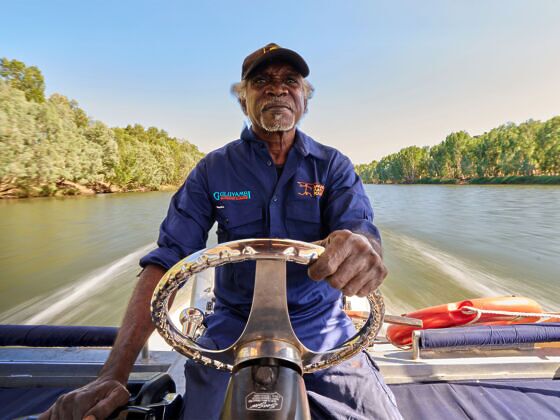
Our guide, Dennis Miller, has nearly 30 years of tourism experience and lives on an outstation near the Jim Jim Creek system. His father is from New Zealand, and his mother is Aboriginal Australian. As we traveled through the billabong, also known as Ngurrungurrudjba, he shared stories about learning from his family and the animals they were allowed to hunt.

A few of those stories had the whole boat laughing. Pointing out trees he called itching trees, Miller explained one way adults dealt with children who were misbehaving.

“Sometimes us kids would be naughty, and when they would try to teach us a lesson, they would tell us to go play in the trees over there… the next day we would be itching everywhere.”

Our boat was busy during our September visit, so it’s a good idea to book ahead, especially for a sunset departure. Transfers run from Cooinda Lodge to the nearby dock, so the cruise is easy to include if you stay there.

Visiting Gunlom Falls’ upper pools

crocodile dundee filming locations

Photo: Tourism & Events NT/Safari Global

We joined a Kakadu Adventure Tour from Cooinda to Gunlom Falls, where Mick catches a barramundi, cooks over a campfire, and swims with Sue in the original film. Along the way, our guide explained more about the park’s landscape, pointing out river and billabong water levels and the termite mounds beside the road. We also stopped to see groups of wild buffalo and horses. The final stretch of road was a rough dirt track and bumpy enough to make me glad someone else was driving.

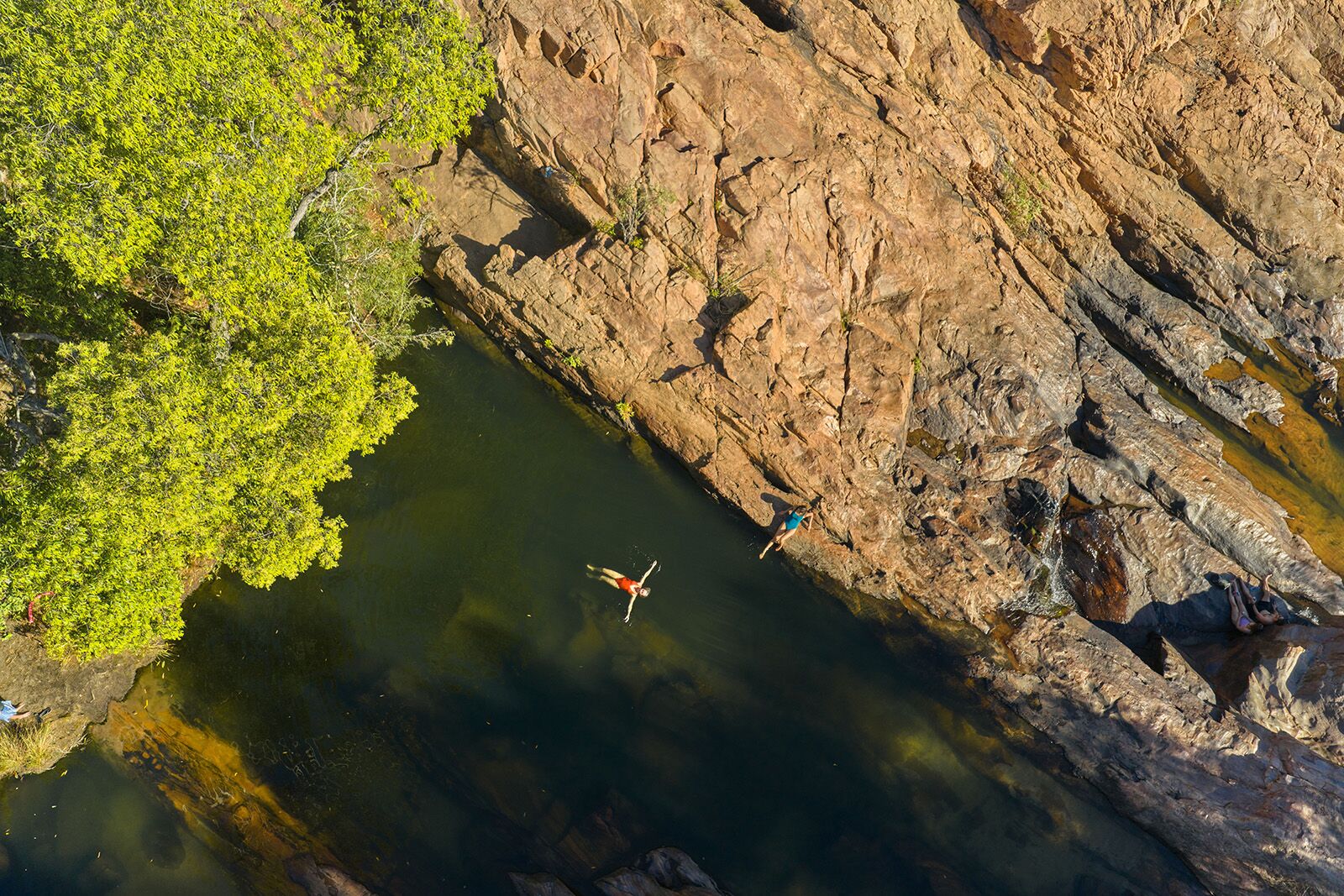
At Gunlom Falls, steps lead up the escarpment to a series of upper rock pools overlooking southern Kakadu. We took a few breaks along the way to make the climb more manageable, although the entire route takes only 15 to 20 minutes. We spent the afternoon swimming between three pools.

Kakadu Adventure Tours runs to Gunlom from May to September, conditions permitting. Gunlom is Jawoyn Country, so read the welcome signs explaining the area’s cultural significance and stay on the marked tracks. Bring water, sturdy shoes, sun protection, and swimming gear if current conditions permit swimming.

Check the park’s access report before setting out. As of October 2026, Gunlom Road requires a high-clearance four-wheel-drive vehicle, and access and swimming are prohibited in the lower plunge pool.

Touring Darwin before or after Kakadu

crocodile dundee filming locations

Photo: Tourism & Events NT/Elena Caldaci

Darwin is a useful starting point for Kakadu and deserves some time before or after the park. I spent much of my time wandering past downtown’s colorful murals. According to Darwin Street Art Festival organizers, the city has one public mural for every 950 residents (compared with Melbourne’s one for every 1,500). I also walked the Esplanade through Bicentennial Park along Darwin Harbour and visited the weekend markets.

Rapid Creek Market is best known for its selection of produce and food stalls, and it’s also where I stumbled into KingKing, an Aboriginal-owned label founded by Gurindji/Waanyi sisters Tarisse and Sarrita King. Their artwork appears on clothing, jewelry, accessories, and homewares, with patterns inspired by Country and family memories. From their current line, Lands recalls road trips to Adelaide through pinks, reds, purples, and dusty golds, while Shifting Sands draws on the changing patterns of Australia’s sandhills. It’s a lovely place to shop for something with a story behind it.

Nightcliff Market had plenty of food, fresh juices, jewelry, clothing, and secondhand books. At Mindil Beach Sunset Market, families and friends gathered on the sand to watch the sunset. When the sun disappeared, everyone clapped.

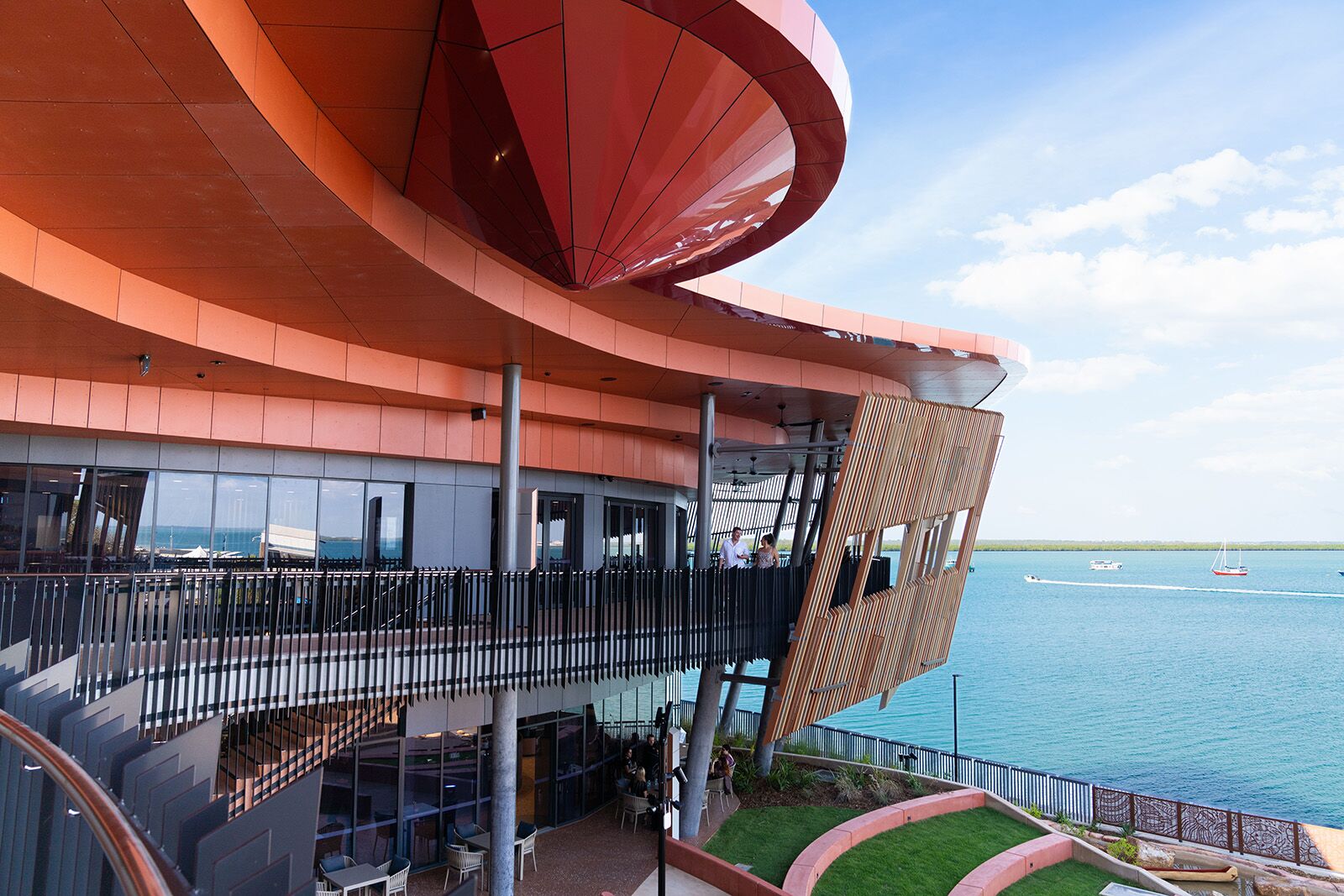
The Larrakia Cultural Centre at the Waterfront opened to the public in September 2026 and introduces the culture and histories of Darwin’s Traditional Owners. Its displays focus on Larrakia families and cultural belongings, with photographs, personal histories, and objects such as spears, canoes, and jewelry, including dingo-hair necklaces.

During our visit, parts of the exhibition were still being added to, but the building itself is worth a look. Its design evokes a bird in flight, a Larrakia ancestral being, beside the sacred site of Stokes Hill. Guided experiences and workshops are available, and the restaurant, now open, serves food made with native ingredients with views across the harbor.

Forty years ago, the filmmakers of Crocodile Dundee needed people like Bill Neidjie to find the Northern Territory’s most special places and learn whose Country they were entering. As a visitor following their route, I found myself relying on people like Neidjie, too. A guide’s story gave me a reason to spend more time at a painting, look at a tree differently, or understand why a place needed protection.

Crocodile Dundee still gives people a reason to visit Kakadu, but the people who live here give you reasons to take your time. I arrived looking for a particular tree from a movie. It was Muir who made me want to stay and hear about the Country around it.

Where to stay in Kakadu

crocodile dundee filming locations

Photo: Tourism & Events NT

Kakadu covers a lot of ground, so splitting your stay between Jabiru and Cooinda helps keep the driving manageable. We stayed at both, using each as a base for nearby activities.

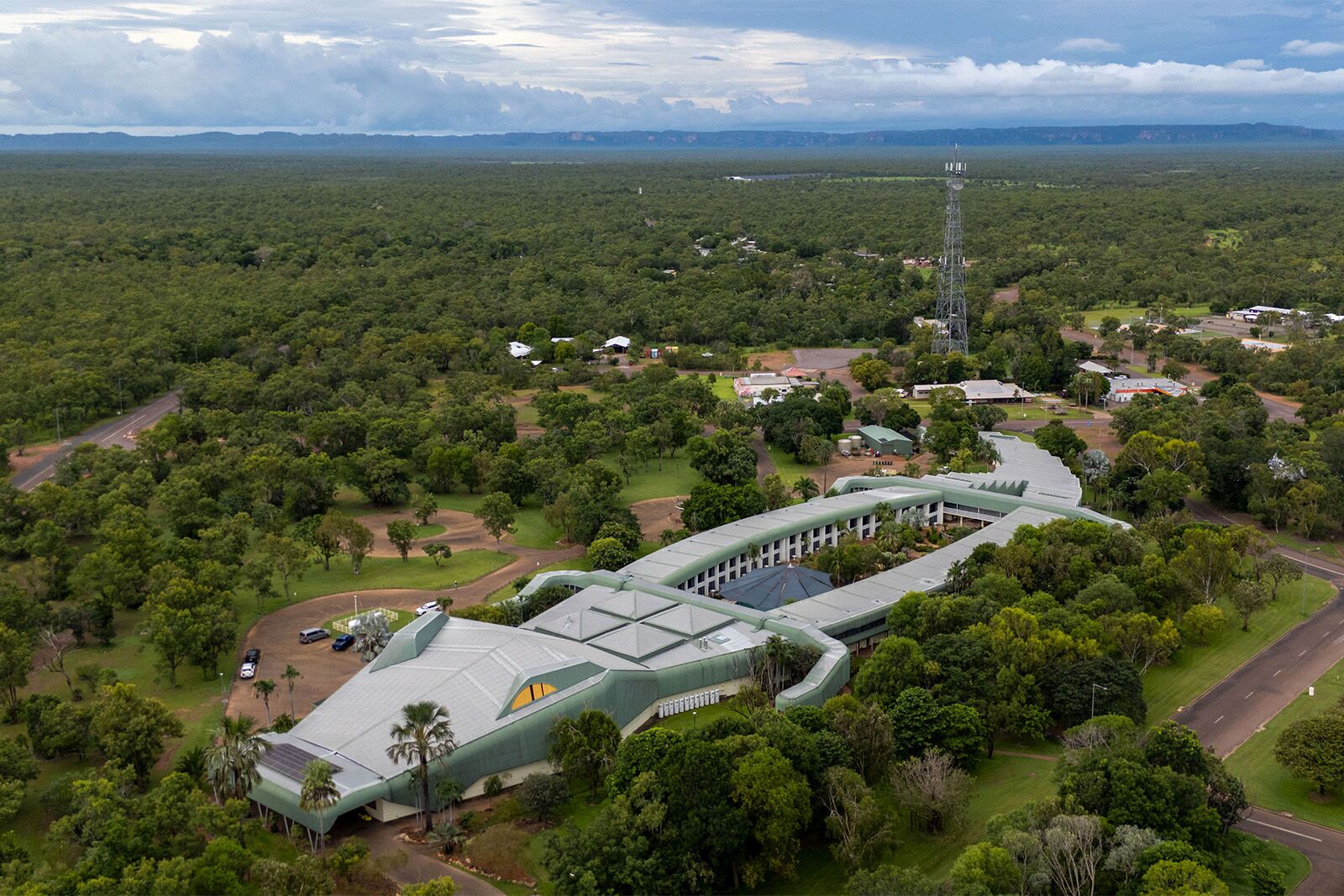
In Jabiru, I stayed at the Kakadu Crocodile Hotel, which takes its name seriously. The building is shaped like a crocodile, with a spacious midcentury lobby and a pool tucked into its courtyard. Indigenous art fills the public spaces, giving you plenty to look at between excursions, and it’s a useful base for Ubirr, Bardedjilidji, and Burrungkuy, with excellent meals using local ingredients at Manjmukmuk Restaurant. Its bush-tucker-inspired menu includes wild-caught Northern Territory barramundi, bush-spiced kangaroo, and crocodile spring rolls.

At Cooinda Lodge, the Outback Retreats offer the appeal of sleeping in a safari tent with a few comforts I appreciated after a hot day outside: air conditioning, a mini fridge stocked with water and milk for coffee, a private bathroom, and a spacious deck. The property also has lodge rooms, villas, and camping options, along with two pools and dining at Mimi’s Restaurant and Barra Bar. Cooinda is part of Kakadu Tourism, which also operates Yellow Water Cruises and Kakadu Adventure Tours. With both departing from the lodge, it’s an easy base for organizing your days.

Discover Matador

Save Bookmark

We use cookies for analytics tracking and advertising from our partners.

For more information read our privacy policy.