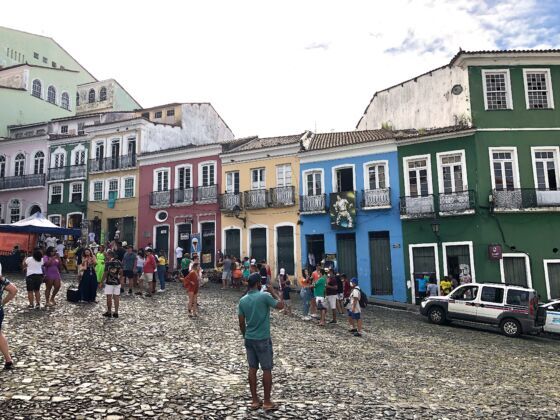
Largo do Pelourinho. UNESCO listed Salvador’s historic center in 1985. Photo: Carlos Omar Gardinet

Everyone Lands in Salvador a Tourist, but Not Everyone Feels Like One

Brazil Culture Cultural Traditions Black Travel
by Carlos Omar Gardinet Oct 19, 2026

The first thing I noticed about Salvador was a face. Then another. And another.

I was surrounded by Black Brazilians going about the ordinary choreography of a city while walking through Pelourinho, Salvador’s historic center, on a trip in 2025. Vendors arranged stalls, women talked beneath brightly painted balconies, musicians carried instruments through the plaza. I didn’t speak Portuguese, yet something about the people around me felt recognizable. I had traveled nearly 4,000 miles from Miami, but for the first time on a trip abroad, it didn’t feel like I had arrived somewhere foreign.
Salvador is the capital of Bahia, on a peninsula over the Baía de Todos os Santos. It was Brazil’s first capital and stayed that way from 1549 to 1763. The influences that shape the city — Portuguese colonial architecture, African diasporic culture, contemporary Brazilian life — collide most visibly in Pelourinho, with its pastel facades and steep cobblestone streets.

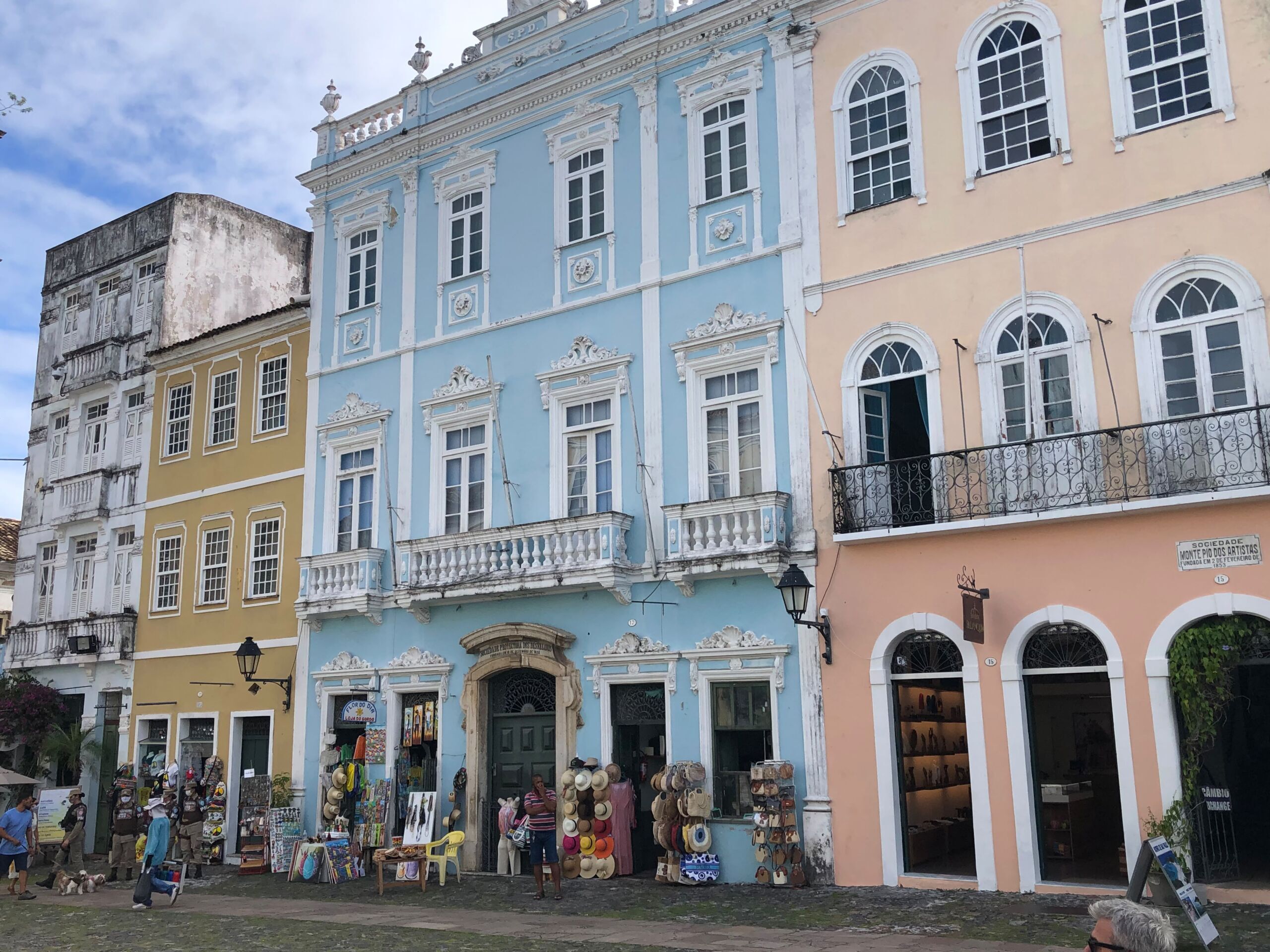
Free Black men founded the Sociedade Protetora dos Desvalidos in 1832. It still operates from the blue building.

Free Black men founded the Sociedade Protetora dos Desvalidos in 1832. It still operates from the blue building. Photo: Carlos Omar Gardinet

I went in February for music, food, and history. I wasn’t looking for myself in the trip. That came on its own, one place leading to the next and one face leading to another, long before I thought to go looking.

Tekka Candeias was my introduction to Salvador beyond its portraits. A friend arranged for Tekka to pick me up from the airport, and she became something closer to a cultural compass than a driver. Tekka has practiced the Afro-Brazilian martial art capoeira for more than 30 years, works as a community organizer, and practices Candomblé, the Afro-Brazilian religion with roots in West African Yoruba spirituality. More importantly, she seemed to know everyone. We couldn’t walk half a block before someone called her name. Moving through Salvador with her was like watching someone navigate the city by a map invisible to tourists.

Tekka Candeias guides travelers through Salvador and seems to know everyone.

Tekka Candeias guides travelers through Salvador and seems to know everyone. Photo: Carlos Omar Gardinet

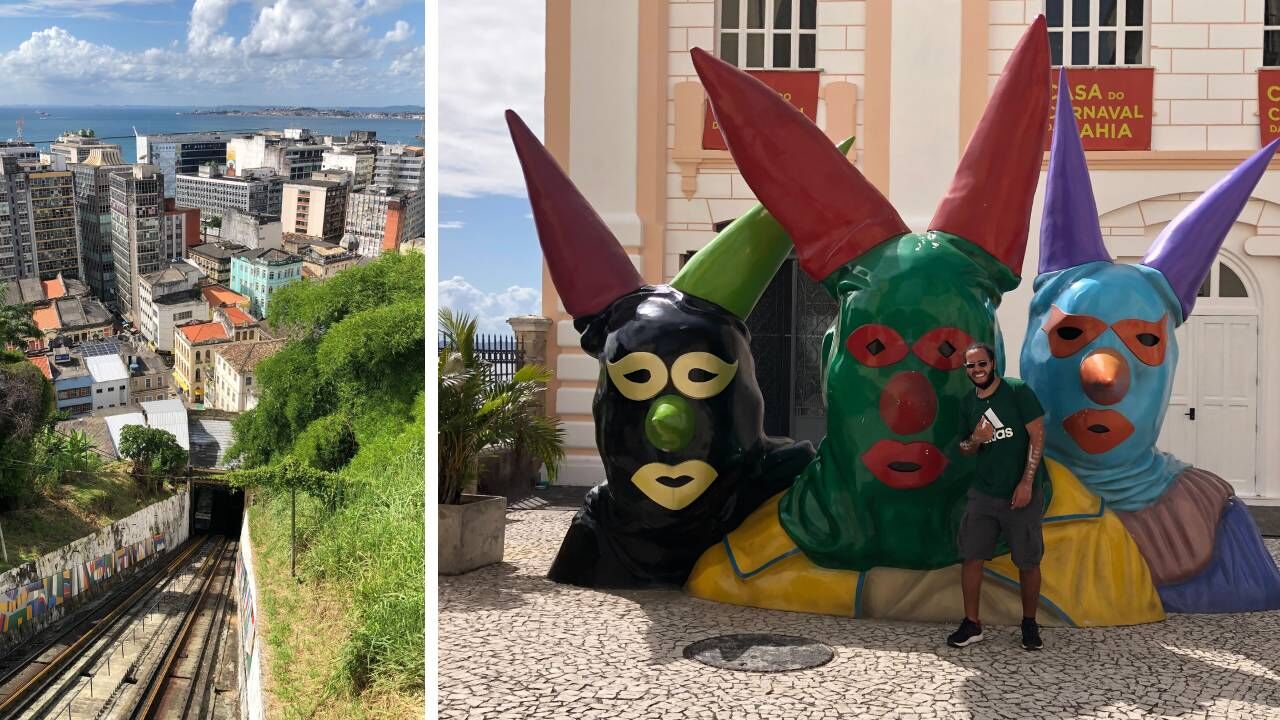
We rode the Plano Inclinado Gonçalves, a bright cable-driven funicular that climbs from the Lower City to the Upper City in a couple of minutes. The little cars seemed to disappear almost vertically into the hillside. When we reached the top, we emerged directly behind the Cathedral Basilica, steps from the historic district, with Casa do Carnaval da Bahia at its doorstep.

Left, the Plano Inclinado Gonçalves drops from Praça Ramos de Queirós to Comércio in about two minutes. Right, the author at Casa do Carnaval da Bahia at the top. Photos: Carlos Omar Gardinet

From there we walked into Pelourinho, where centuries of history feel compressed into a few blocks. The neighborhood takes its name from the pelourinho, or pillory, where enslaved people were publicly punished during Brazil’s colonial era. Salvador was a major port in the transatlantic slave trade. The first large slave market in the Americas opened here in 1558, with enslaved Africans brought to labor primarily on sugar plantations. The city’s modern story is a mix of European churches and colonial architecture within a city culturally shaped by Africans and their descendants. Baroque Catholicism side by side with Candomblé.

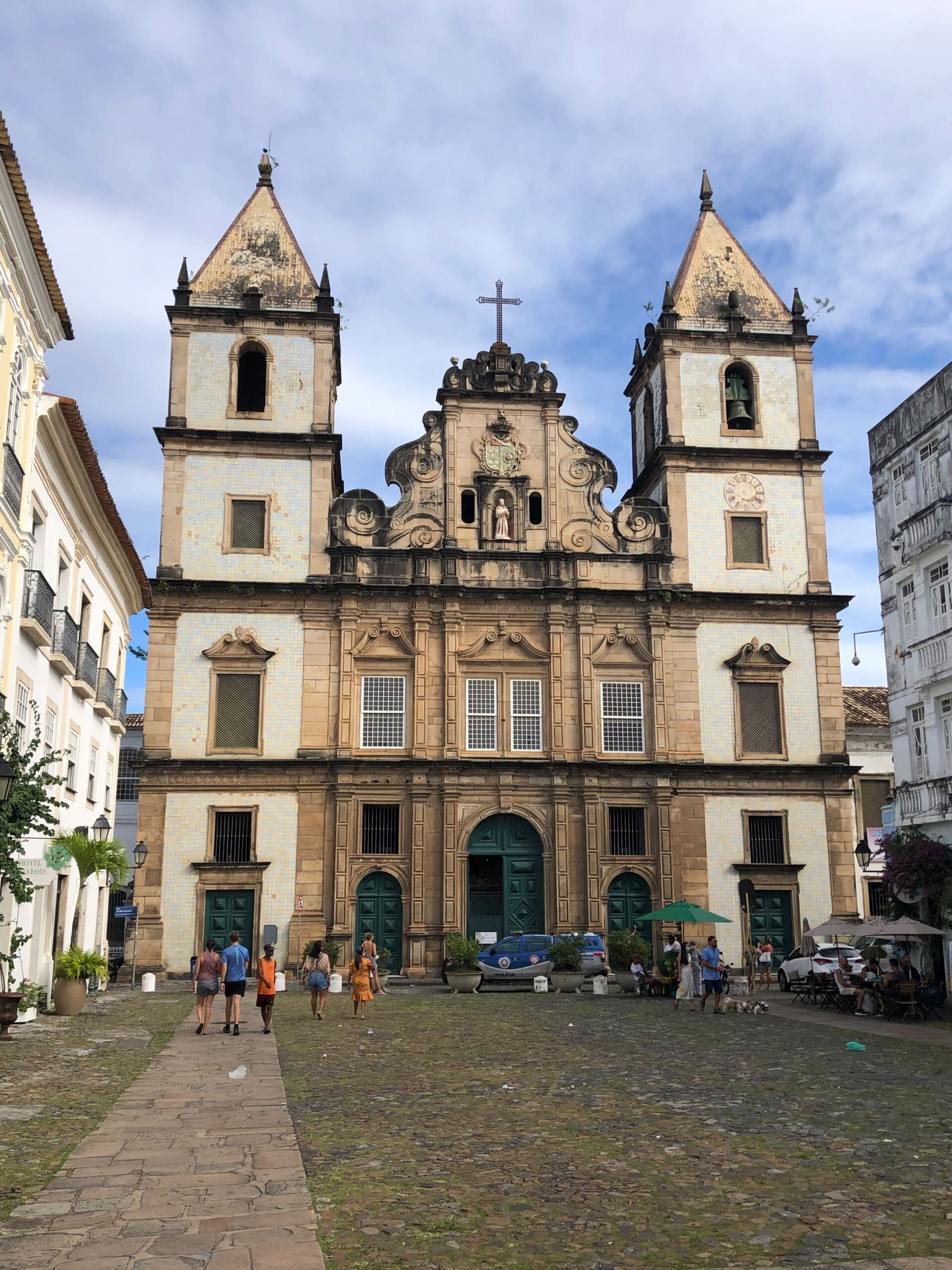
Builders finished São Francisco in the 18th century and gilded most of the interior.

Builders finished São Francisco in the 18th century and gilded most of the interior. Photo: Carlos Omar Gardinet

I felt those layers inside the Museu Afro-Brasileiro, moving slowly through a hushed room past display cases of ritual masks and photographs. In a different way, I also felt it when I stumbled onto a town square where a group of capoeiristas was practicing in a roda, the circle practicioners form for two players to “spar” in the middle. They waved me in. I joined, hesitantly swinging clumsy circles while everyone else moved like water around me (flexibility has never been something my body possessed). Still, something in my body kept time with theirs, like it already knew the rhythm.

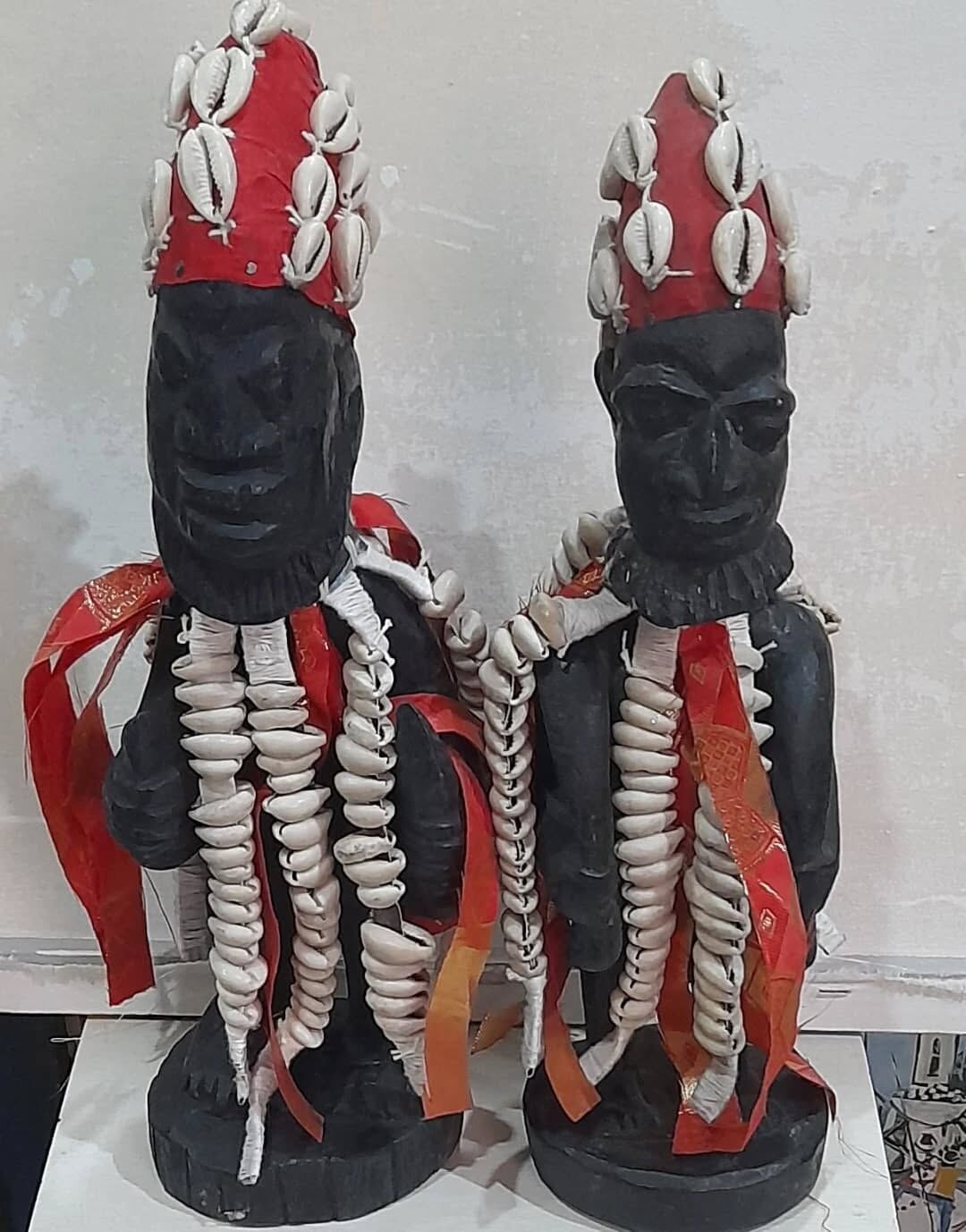
I felt it most intimately in the home of a babalawo, which is an Ifá priest. Ifá is a spirituality related to Candomblé but distinct from it, and Tekka brought me there for a spiritual reading. The house was filled with African art, and the air smelled like palm oil and honey. He cast a chain strung with shells onto the mat between us and read the pattern it fell in. Getting a spiritual reading can be unsettling. It’s the fear of the unknown — of working with entities and energies that Western-imposed philosophies and religions had spent generations teaching people like me to distrust, or to forget we’d ever had access to. Then the babalawo said something about my life that no one could have possibly known, and I felt the hair on the back of my neck rise. My body, my life, had become an open book to a stranger. Somehow that also came with a sense of relief that I felt recognized.

A babalawo reads Ifá by casting a shell chain and interpreting how it falls.

A babalawo reads Ifá by casting a shell chain and interpreting how it falls. Photo: Carlos Omar Gardinet

Still a little unsteady afterward, I let Tekka hand me an acarajé — a black-eyed peas and onion fritter fried in dendê oil that’s split open and stuffed with vatapá stew, dried shrimp, and a bright vinaigrette. The oil hit first, thick and unmistakable, before the crunch gave way to something soft and briny underneath.

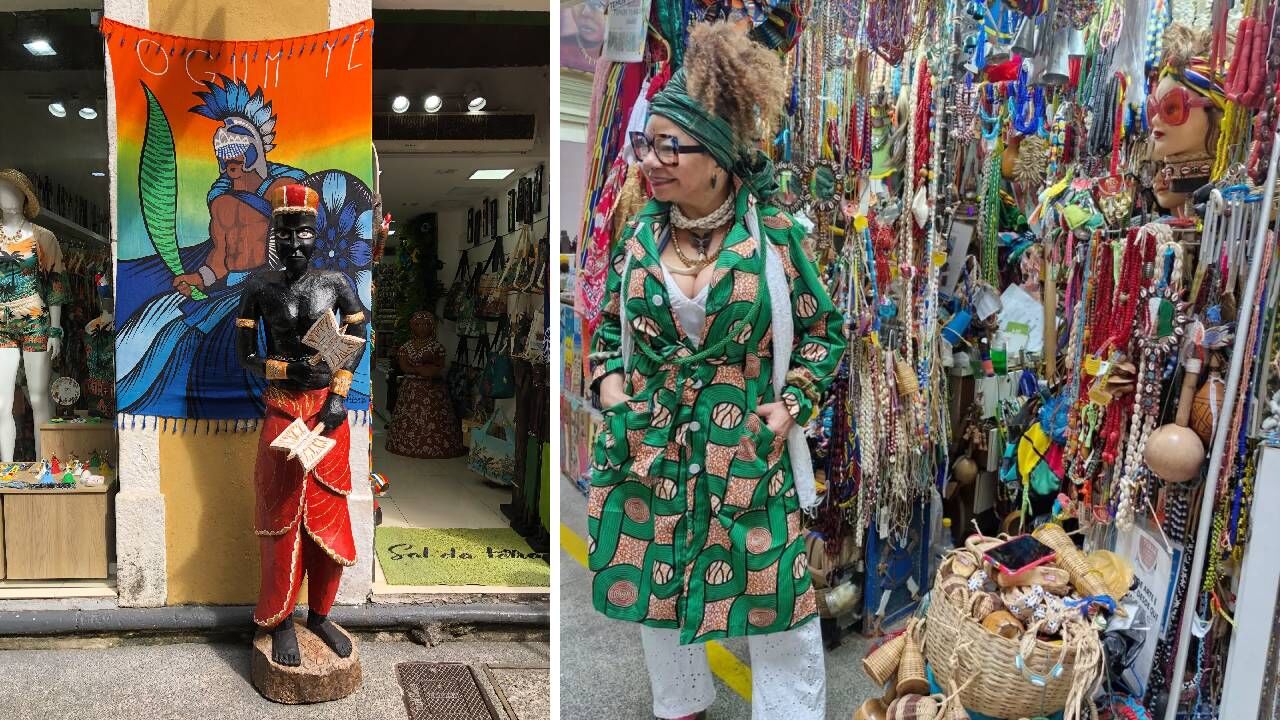
Left, Ogum, orixá of iron and war, on a banner outside a Pelourinho shop. Right, cowrie shells, once used as currency, are now sold as jewelry. Photos: Carlos Omar Gardinet

Tekka took me to a market surrounded by religious botanicas, where people who follow Candomblé come for herbs, leaves, and roots for remedies and spiritual work. The aromas of crushed greenery and damp earth hung around around the stalls; plants were handled with the deliberateness of someone filling a prescription, except the shelves here were filled with leaves, bark, and roots. Candomblé weaves nature into its orixás, or spirits: Iemanjá to the ocean, Xangô to thunder, Iansã to wind and storms, Ossain to the sacred power of leaves.

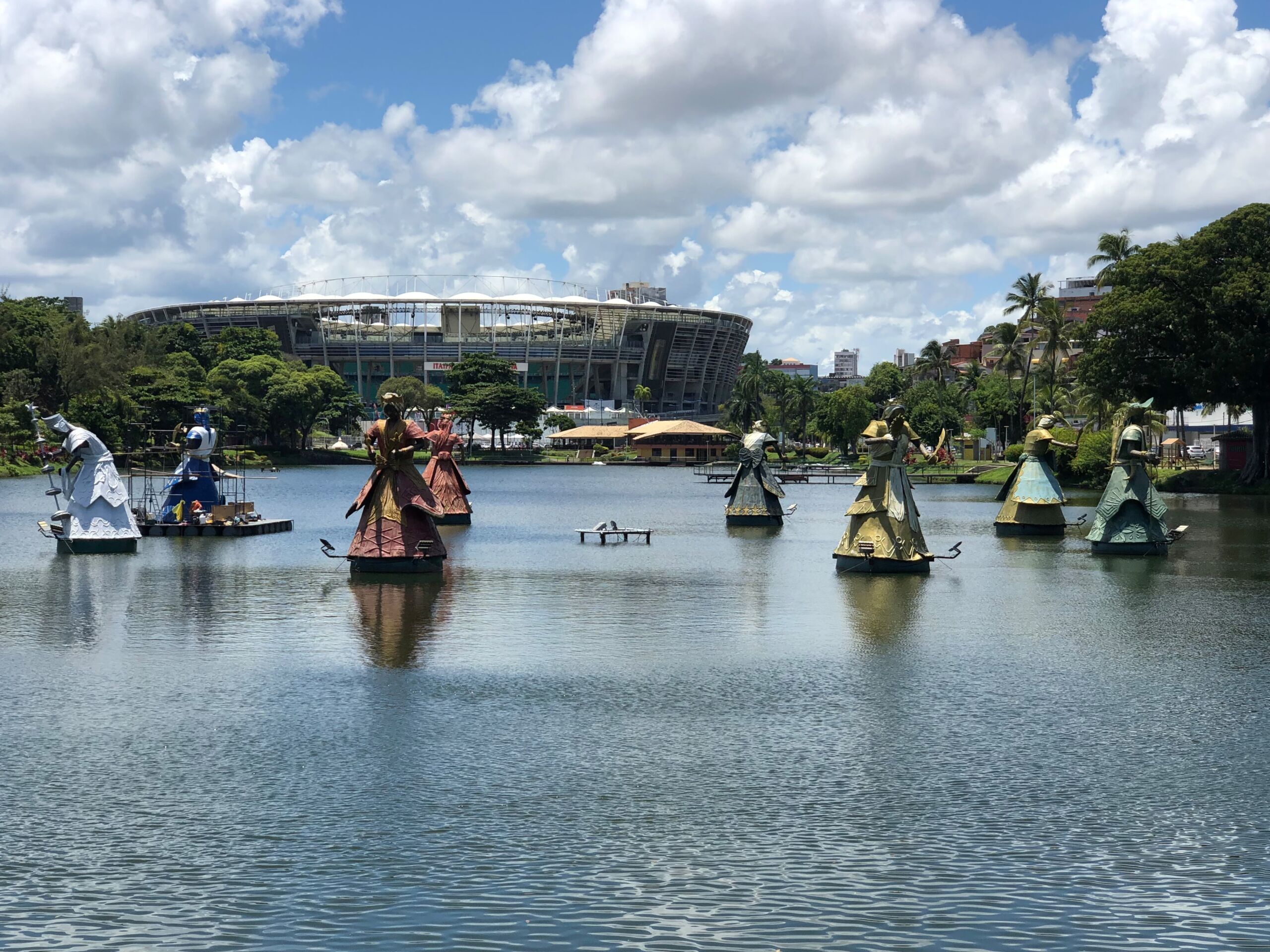
Dique do Tororó is as much a shrine as it is a park. Eight towering statues rise directly out of the lagoon, sculpted by Tatti Moreno and installed in 1998, each one a different orixá of the Candomblé pantheon — Oxalá, Ogum, Iemanjá, Iansã, Oxóssi, Xangô, Oxum, Nanã. It’s a postcard spot and a sacred one at once; Candomblé followers still come to the water’s edge to leave offerings. Standing near it, looking out at the sculptures, Tekka didn’t dress it up. “Evangelicals have tried before to get the statues removed,” she said. Small churches dot the streets around the lagoon, easy to miss beside the statues, representing theCatholicism inherited from Portuguese colonialism.

Tatti Moreno sculpted the eight orixás in the lagoon in 1998. Four more line the banks.

Tatti Moreno sculpted the eight orixás in the lagoon in 1998. Four more line the banks. Photo: Carlos Omar Gardinet

I climbed the spiraling staircase at Farol da Barra and came out to a sweeping view of the Atlantic. Pierre Verger, a French ethnographer who settled in Salvador in 1946 and was later initiated as a babalawo, spent decades photographing Afro-Brazilian religious life, and his work still hangs in galleries around the city. The subjects are caught mid-practice, inside traditions their ancestors carried across the ocean. On the outside of buildings, murals of Black figures and Afro-Brazilian life turn ordinary facades into canvases.

The days kept building toward Carnival, and by then I’d started to understand the city through sound as much as architecture. In Pelourinho I went to a party for Olodum, the Afro-Brazilian drum ensemble that is the defining sound of Bahian Carnival. Olodum was founded here in 1979 and takes its name from Yoruba Olodumare, the supreme God — a fitting name for a group that became one of the most recognizable expressions of Afro-Brazilian identity in the world.

By the end of the trip, I’d stopped seeing Salvador as a collection of landmarks and started seeing what connected them. Diaspora leaves you fragments, not the full story: a rhythm, a recipe, a physical resemblance, an instinctive response to music.

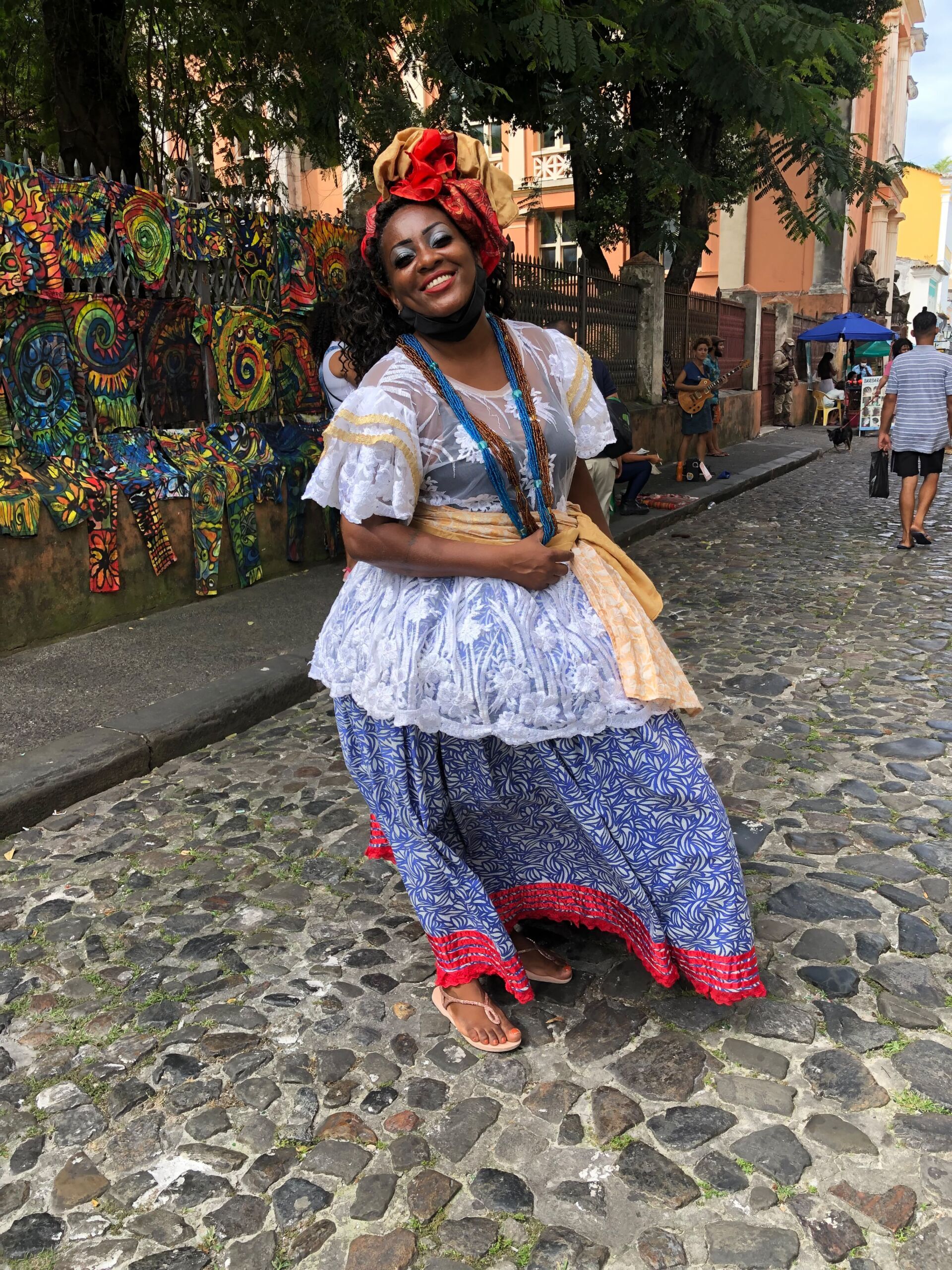
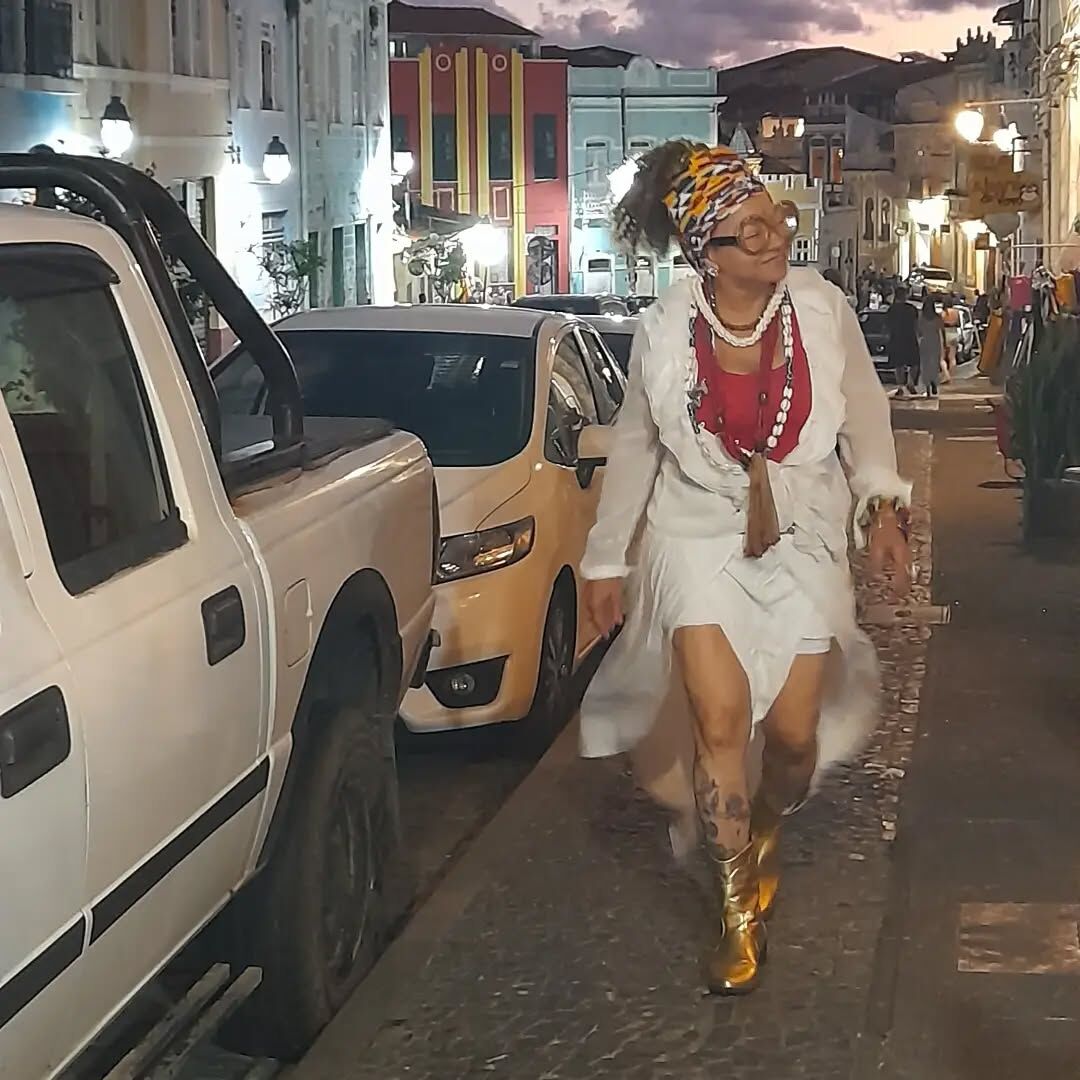
Women in Bahia have worn this lace and these layered skirts since the 19th century.

Women in Bahia have worn this lace and these layered skirts since the 19th century. Photo: Carlos Omar Gardinet

I arrived without Portuguese, without knowing Tekka, without any expectation that Brazil would feel like home. Instead, I found a city where the past isn’t sealed inside glass buildings or history books. It moves through the drums of Pelourinho, stands in the orixás at Dique do Tororó, and travels with people like Tekka through the streets.

I came to Salvador expecting to encounter something new. Instead, I encountered something I already knew without knowing that I knew it.

Discover Matador

Save Bookmark

We use cookies for analytics tracking and advertising from our partners.

For more information read our privacy policy.