Photos: Sharael Kolberg

A 115-Year-Old Swiss Tradition Gave Me a New Perspective on Adventure

Ski and Snow Adventure Travel
by Sharael Kolberg Nov 20, 2026

Standing on a snow-covered slope in Switzerland, I joined locals enthusiastically cheering “hopp, hopp, hopp” (Swiss German for “go”) as racers careened downhill on velogemels — wooden, brakeless bikes with sled-like runners instead of wheels. Whizzing past, one by one, competitors feebly attempted to control their speed by digging their heels into the frozen ground.

I had originally come to the Swiss Alps for the world-class skiing, but when I heard about the velogemels, I was eager to try one. As an adventure seeker, I’ll try almost any contraption that gets me down a mountain, and this one sounded stranger than most.
Cheering from the sidelines

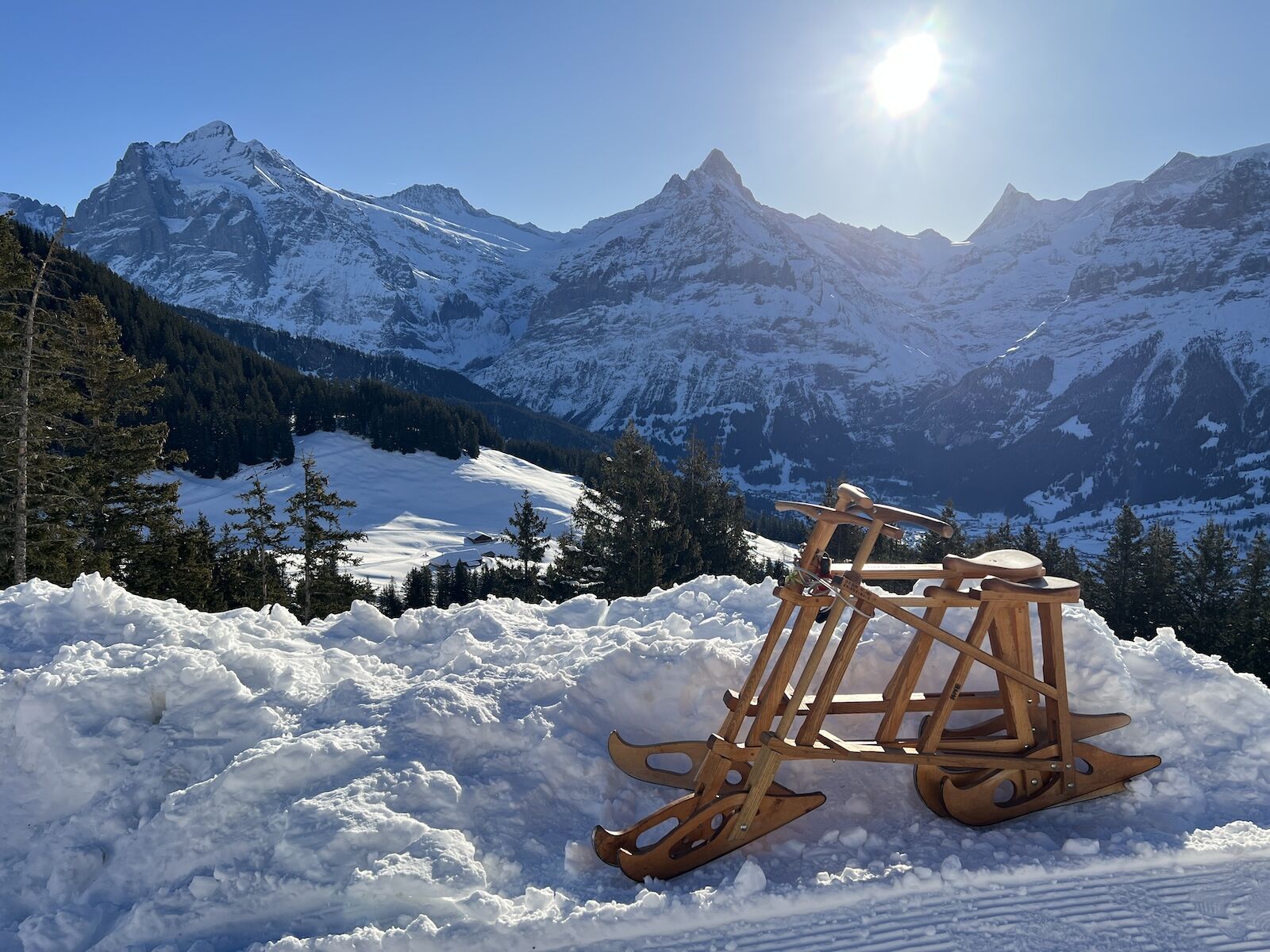
swiss velogemel - single bike

A Swiss velogemel, ready to ride. Photo: Sharael Kolberg

Every February since 1996, racers have competed in the Velogemel World Championship, celebrating a 115-year-old Alpine tradition that relies on remarkably rudimentary equipment in a landscape now dominated by technologically advanced ski and snowboard gear. The word “velo” translates to bicycle. “Gemel” means sledge or sled.

“Velogemel racing is a niche sport, but it is very popular in Grindelwald and an important part of the local winter tradition,” says race course manager Ernst Kaufmann. “Over the years, it has developed from a practical means of transport into a recreational activity and a competitive sport.”

I’d planned to watch, but when I learned anyone could enter, I signed up on the spot. Watching felt like being a tourist. Racing felt like belonging, or at least a shortcut to it. The event is open to anyone age six and older. At the race site on Bussalp, a mountainside sledding area overlooking Grindelwald, I enthusiastically grabbed my bib. I wore my number proudly as I, along with nearly 130 other competitors, pushed our velogemels up the 1.2-mile slope, part of the roughly nine-mile-long Big Pintenfritz sledge trail — the longest of its kind in the world. Having never ridden one of these awkward snow-bike hybrids, I was both excited and a bit apprehensive given the steepness of the course.

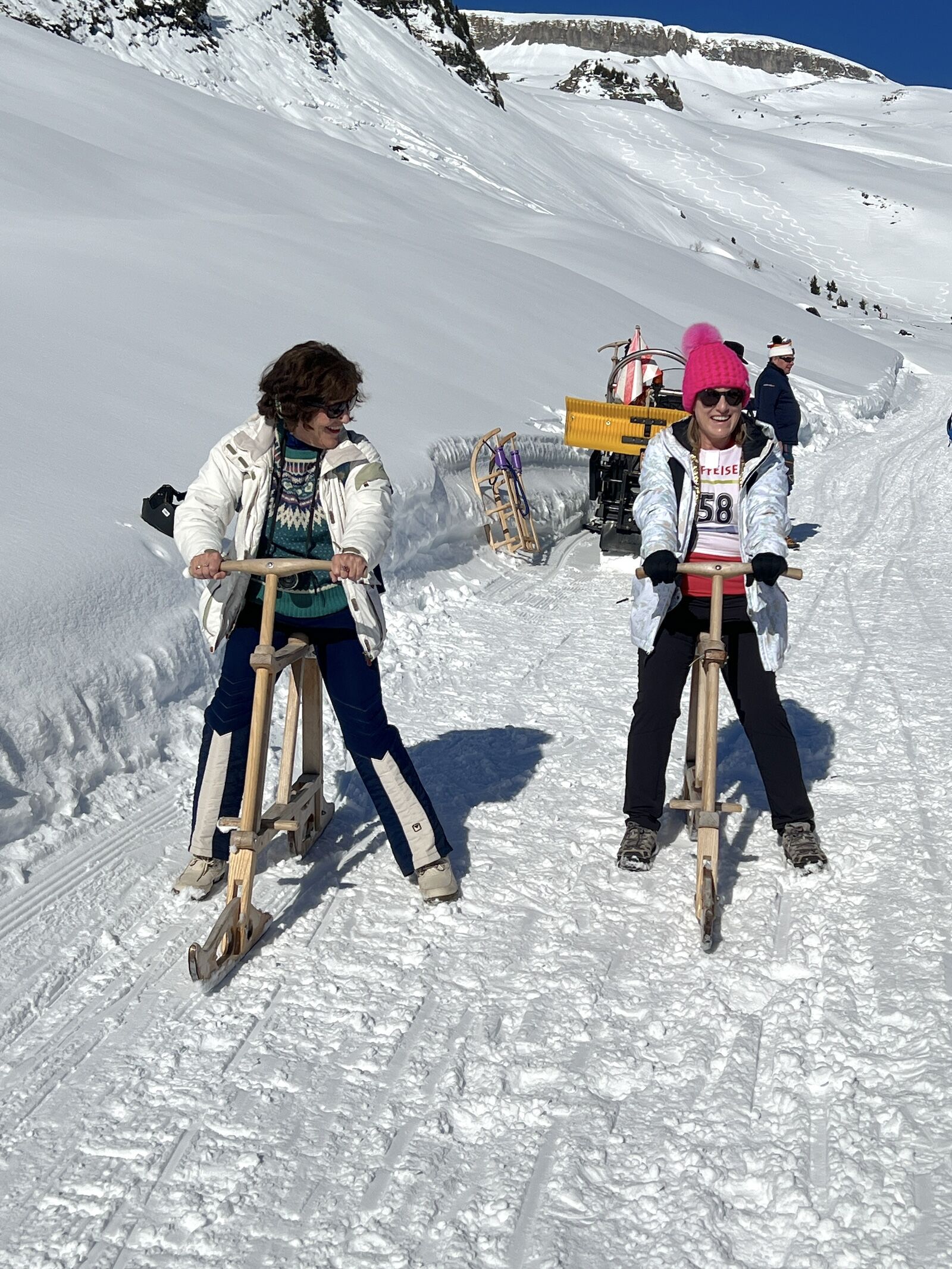
swiss velogemel - writer on a bike

The writer trying her skills on a velogemel. Photo: Sharael Kolberg

“The World Championship helps keep the tradition alive and attracts both locals and visitors,” says Kaufmann. “Today, most people ride a velogemel for fun, while the annual race gives them the opportunity to compete and celebrate this unique part of Grindelwald’s culture.”

Not quite halfway up, I came to a tight turn and lost my nerve as I watched riders wipe out, one after another, into the surrounding deep snow. They were disqualified for veering off course as their handlebars wobbled and their feet dragged while unsuccessfully trying to navigate the tight course. Although everyone walked away uninjured, most laughing as they brushed the snow off, it gave me pause. A couple of years earlier, I broke my tibial plateau on the ski slopes. My knee wasn’t hurting, but I could still feel exactly where the break had been. I watched the line of racers shrink as I got closer to the start, but eventually decided, for once, to let my more cautious inner voice win.

Although I was disappointed not to compete, I realized that the experience was about more than racing. I struck up a conversation with the girlfriend of the previous year’s world champion and his mother, who, at 64, had been the oldest competitor in the race two years earlier. I also met Patrick, who was celebrating his 60th birthday with a weeklong visit to Grindelwald with a friend from Bern. They had heard about the championship and decided to check it out for the first time. By the final heats, I was cheering as enthusiastically as lifelong locals, and nobody around me cared that I’d walked down instead of riding. I’d wanted a bib to prove I belonged there. But all it took was standing in the snow and shouting for strangers for me to feel wholly connected with the tradition.

Built as a woodcarver’s workaround

swiss velogemel - tandem

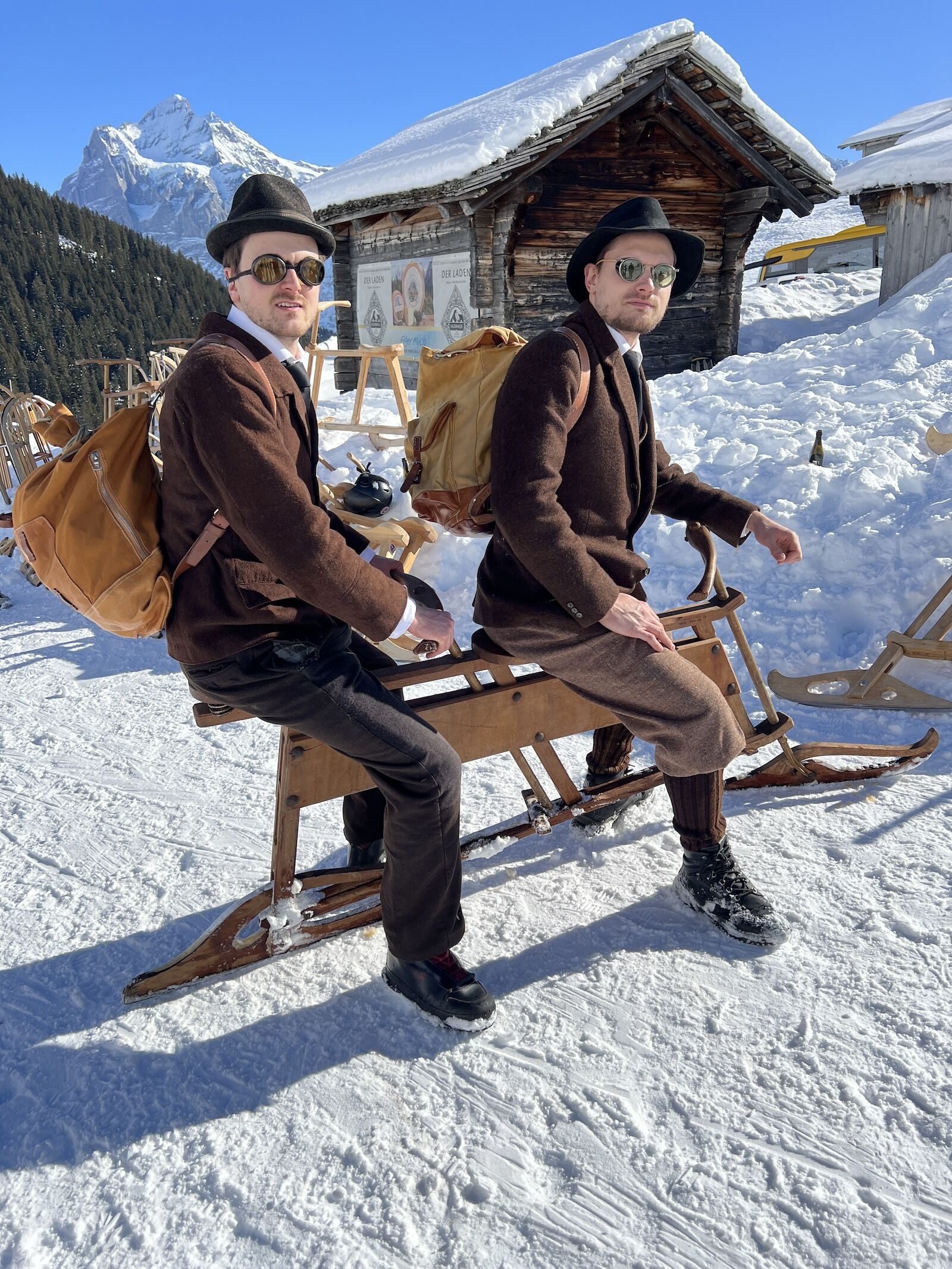
Michael Hofmann and Daniel Hofmann on an early velogemel. Photo: Sharael Kolberg

Two participants who caught my attention were brothers Michael Hofmann and Daniel Hofmann, competing on a tandem velogemel while dressed in outfits from the early 1900s. They had convinced the Grindelwald Museum to let them borrow the historic clothing, which they managed to squeeze into, as well as the velogemel itself, both of which are normally on display at the museum. The brothers were the first to race a double velogemel, believed to be the only one left in the world. Legend has it that only two were made, but no one knows the whereabouts of the other one. I was struck by the brothers’ enthusiasm and pride in sharing their town’s history, as well as the museum’s willingness to let the historical artifacts come to life on the racecourse.

“We wanted to be authentic,” said Michael Hofmann. “Why keep it in the museum when people can see it in action?”

Inspired by the brothers, I later visited the museum, where I learned that the velogemel was invented in 1911 by Christian Bühlmann, a master woodcarver and sawmill owner from Grindelwald. He suffered from disabilities caused by polio and created the velogemel to get around the village more easily. I’d spent the morning thinking of the velogemel as something you had to be brave enough to ride, but Bühlmann built it because walking on snow wasn’t safe for him. Standing in front of his original, I thought about my knee, and the slope I’d walked back down, and felt a little less like I’d failed.

swiss velogemel - grindelwald village

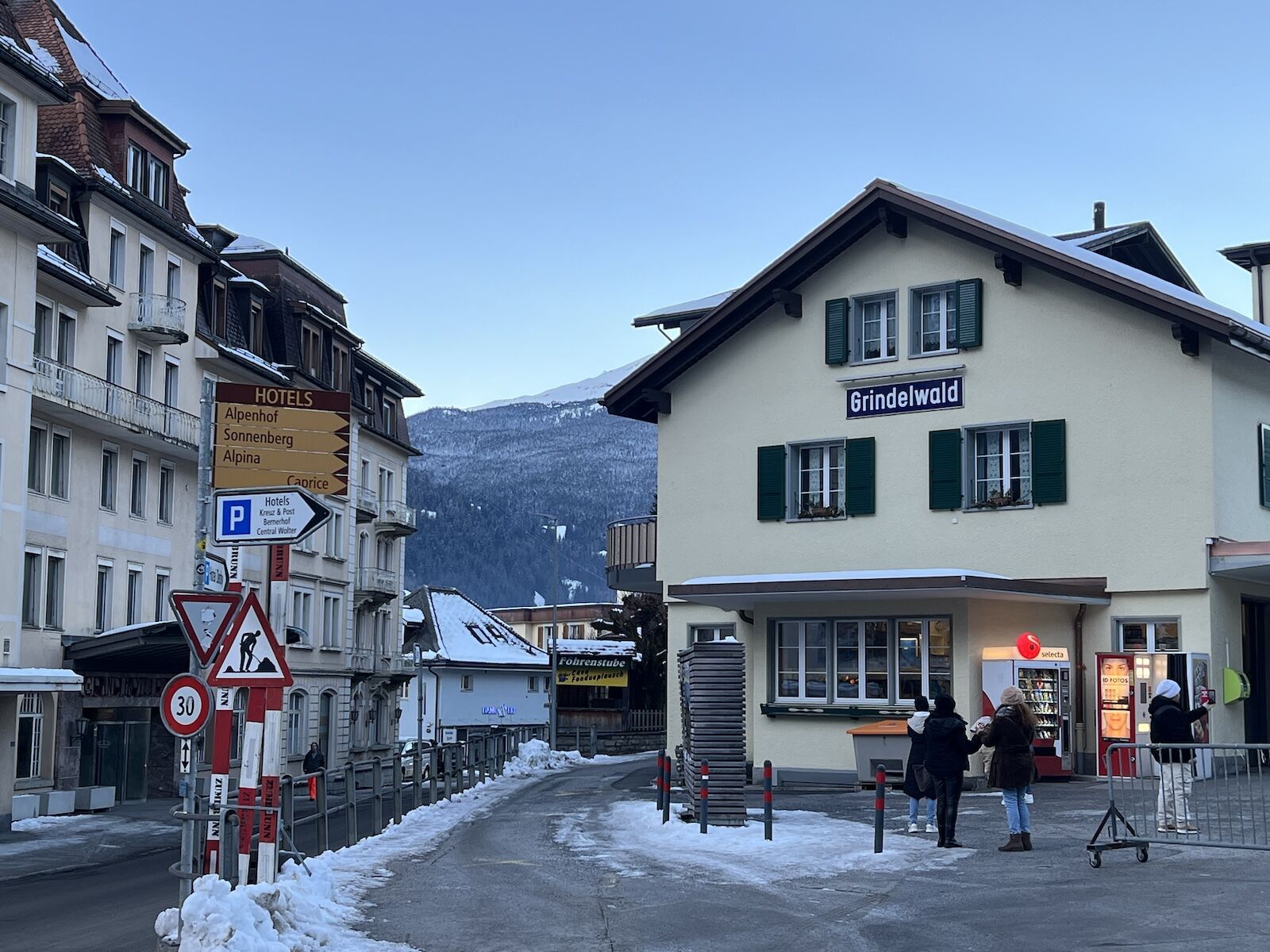
The village of Grindelwald, Switzerland. Photo: Sharael Kolberg

These sleds are still handcrafted in Grindelwald the same way they were more than 100 years ago: using ash wood for the frame and maple wood for the handlebars and seat, with metal runners that glide over snow and ice. Shortly after Bühlmann developed the velogemel, mail carriers and doctors began using it to quickly move through town in the years before plowing the streets was common practice. Nowhere else adopted it, and the tradition stayed Grindelwald’s alone.

Joëlle Bleuer, 27, one of the winners of the 2026 Velogemel World Championship, has been riding a velogemel since she was nine years old as an alternative to a sled.

“I use the velogemel very often outside of races,” says Bleuer. “I regularly ride it with family and friends on weekends. For me, velogemel riding is a hobby that I really enjoy sharing with others.”

The race is the one day a year Grindelwald brings out the velogemels to compete. The rest of the winter, people like Bleuer ride them with family and friends on weekends, the way doctors and mail carriers once rode them through snowed-in streets.

Just one more rider on the hill

velogemels on the back of a bus

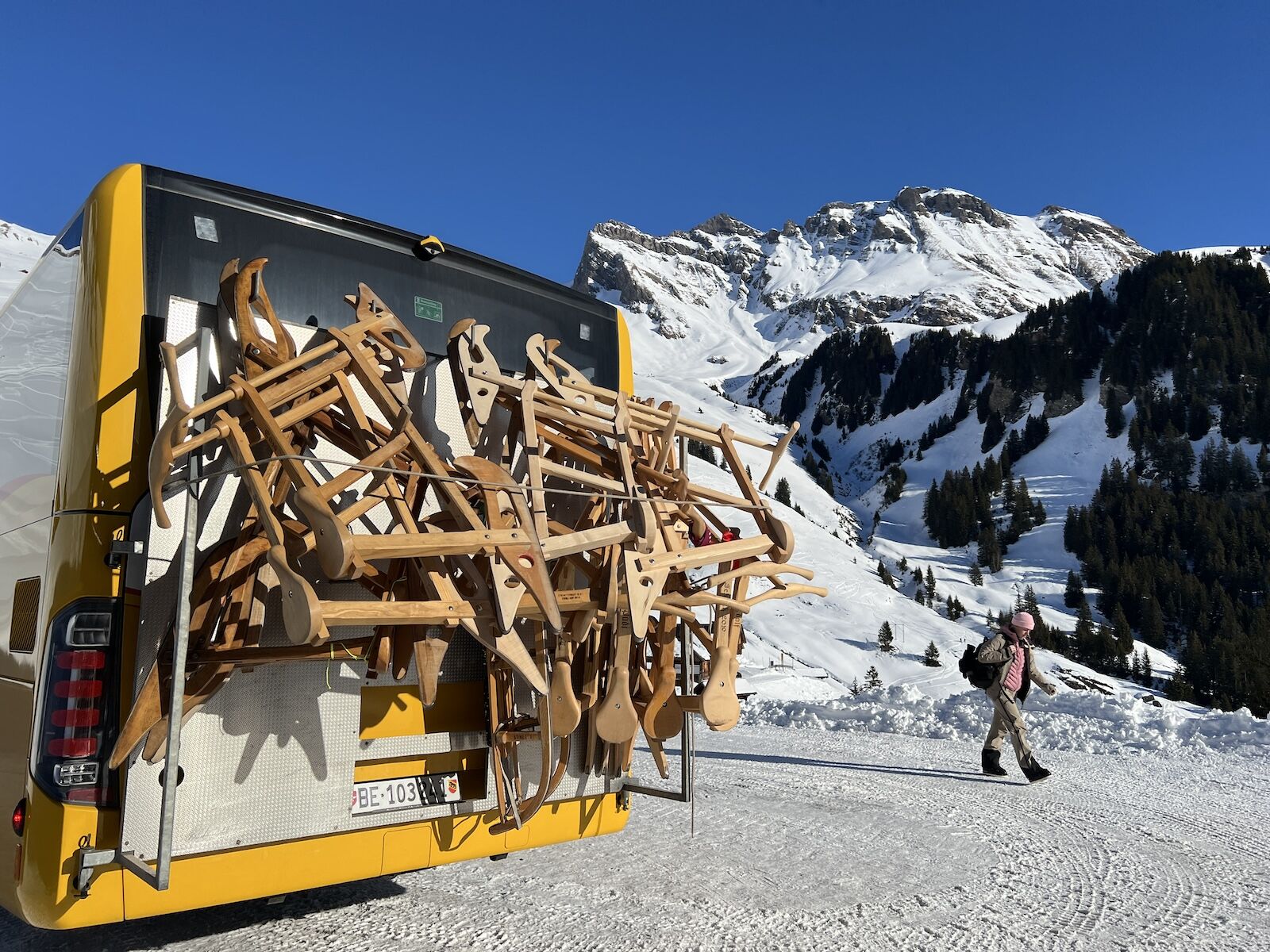
Velogemels on the back of a bus after the race, heading back to the village. Photo: Sharael Kolberg

Today, the Jungfrau Ski Region, encompassing three ski areas, allows velogemels on its 31 miles of sledging trails. Rentals are available in sports stores on the mountain, at the Grindelwald railway station, and in the village at shops such as INTERSPORT. Families use them to get around the village, too.

Although I had given up on competing in the championship, I still wanted my ride. After the wooden trophies were handed out, I took my velogemel to a trail of gentle rolling hills with no hairpins. On the first turn, I dug my heels in the way the racers had that morning, and it slowed me down about as little as it had them. A few turns later, I’d stopped braking entirely. I let out a “whoop” of excitement while awkwardly balancing on the contraption that has been captivating riders for more than a century. And by the bottom, I wasn’t the visitor who’d backed out of the race. I was just one more person on a velogemel, cruising down the slopes of Grindelwald.

Discover Matador

Save Bookmark

We use cookies for analytics tracking and advertising from our partners.

For more information read our privacy policy.