Excitedly, I picked a chestnut-colored mushroom from the ground and hurried to show our guide. Minutes earlier, he’d told us the island of Ruissalo, Finland, where we were foraging, was a treasure trove of mushrooms. “Once your eyes are used to it, you will start to see them everywhere,” he advised. I’d been the first of our small group to spot a mushroom, and waited patiently for him to praise my keen eyesight while he examined my find.
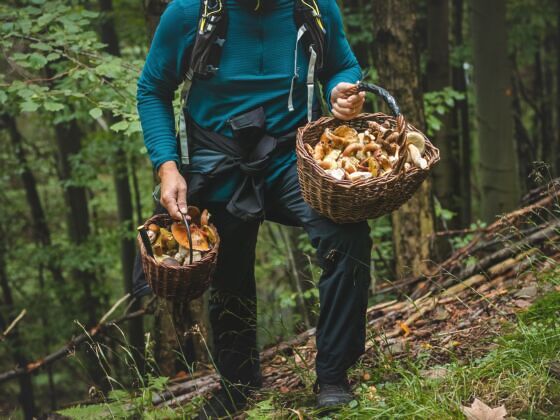
Photo: Vaclav Sonnek/Shutterstock
The Forests of Southwest Finland Hide One of Europe’s Richest Food Cultures
“False morel,” he said, tossing it over his shoulder like salt to ward off bad luck. “Poisonous.”
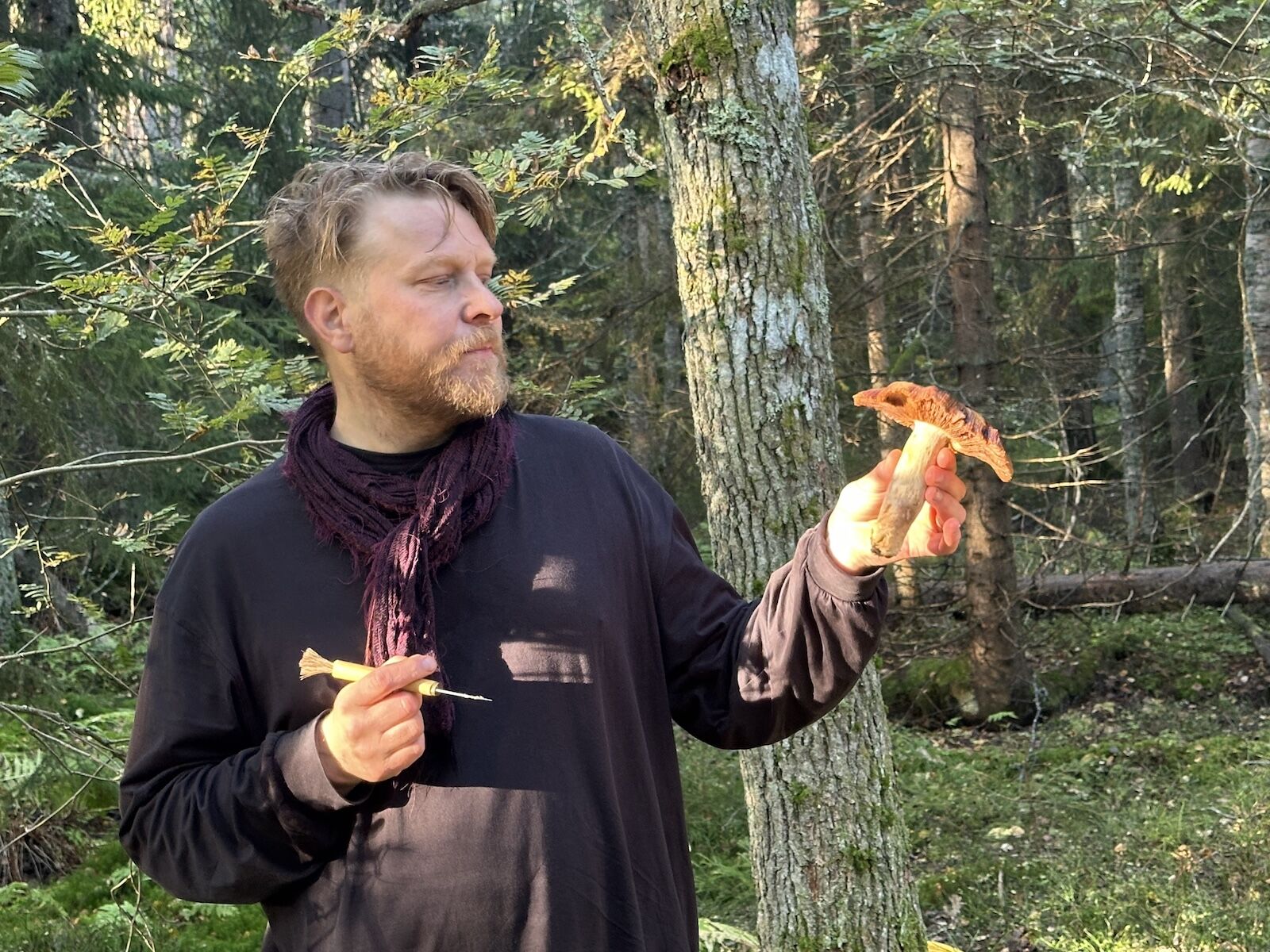
Forager and chef Sami Tallberg. Photo: Eben Diskin
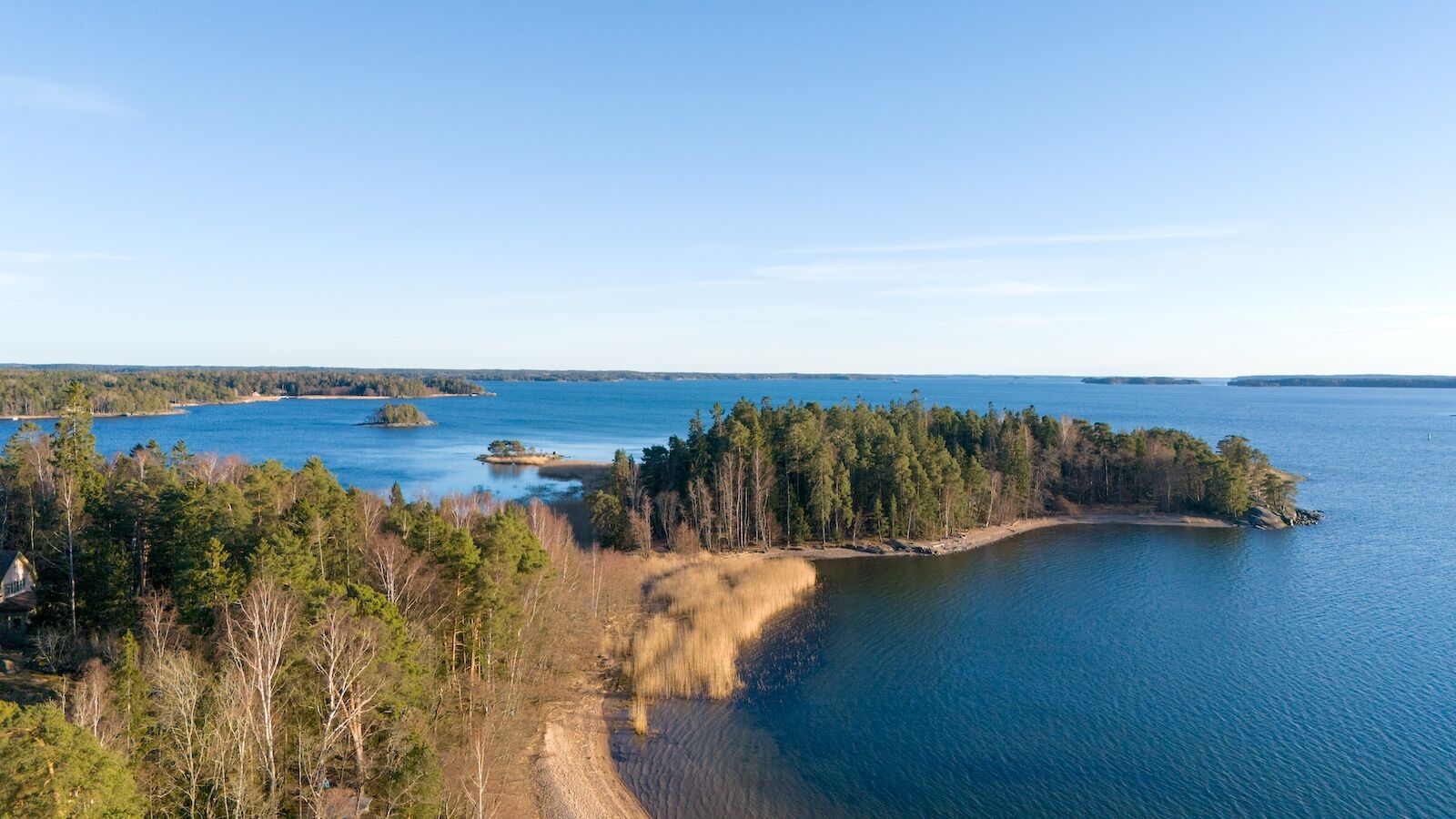
Despite my failings, hunting for mushrooms was more fun than I expected. The island of Ruissalo is just 15 minutes from Turku, the capital of Southwest Finland, but feels completely removed from civilization. After walking from the road for just five minutes, we were surrounded by an old-growth oak forest, milky white carpets of lilies unfurling in every direction, and – of course – mushrooms, which came into focus as my eyes adjusted to the dew-specked moss and flowers.
“Ruissalo is one of Finland’s most important concentrations of noble broadleaf forests,” our guide, Sami Tallberg, told us. “The maritime microclimate moderates temperature extremes, which yields a longer growing season, fewer early frosts, and higher and more stable humidity.”
“Ruissalo is, in fact, an ecological archive,” he said with excitement.
A sandy beach and forest on Ruissalo, Finland. Photo: fudzii/Shutterstock
The lush environment was part of what I enjoyed about mushroom hunting, closely followed by Tallberg’s overflowing enthusiasm. Hunting mushrooms with Sami Tallberg is what I imagine it would have been like to have batting practice with Joe DiMaggio. Tallberg, an award-winning chef and foraging pioneer, offers foraging courses designed for beginners, teaching participants how to identify, gather, and cook with wild edible mushrooms. He currently lives in a cottage in Ruissalo.
Watching him move between tree trunks and mossy mounds, plucking mushrooms from the ground and collecting the best ones in a small wicker basket, he seemed more like a creature of the forest than an educator and chef.
Later, we gathered at Tallberg’s cottage, where he turned the mushrooms we had gathered into delicious svamptoast: wild mushrooms on toast, with butter and onions.
While spending time with Tallberg, I learned not only that mushrooms are key within Turku’s culinary scene, but also play an important role in Southwest Finland’s culture and history.
Southwest Finland’s climate is ideal for mushrooms
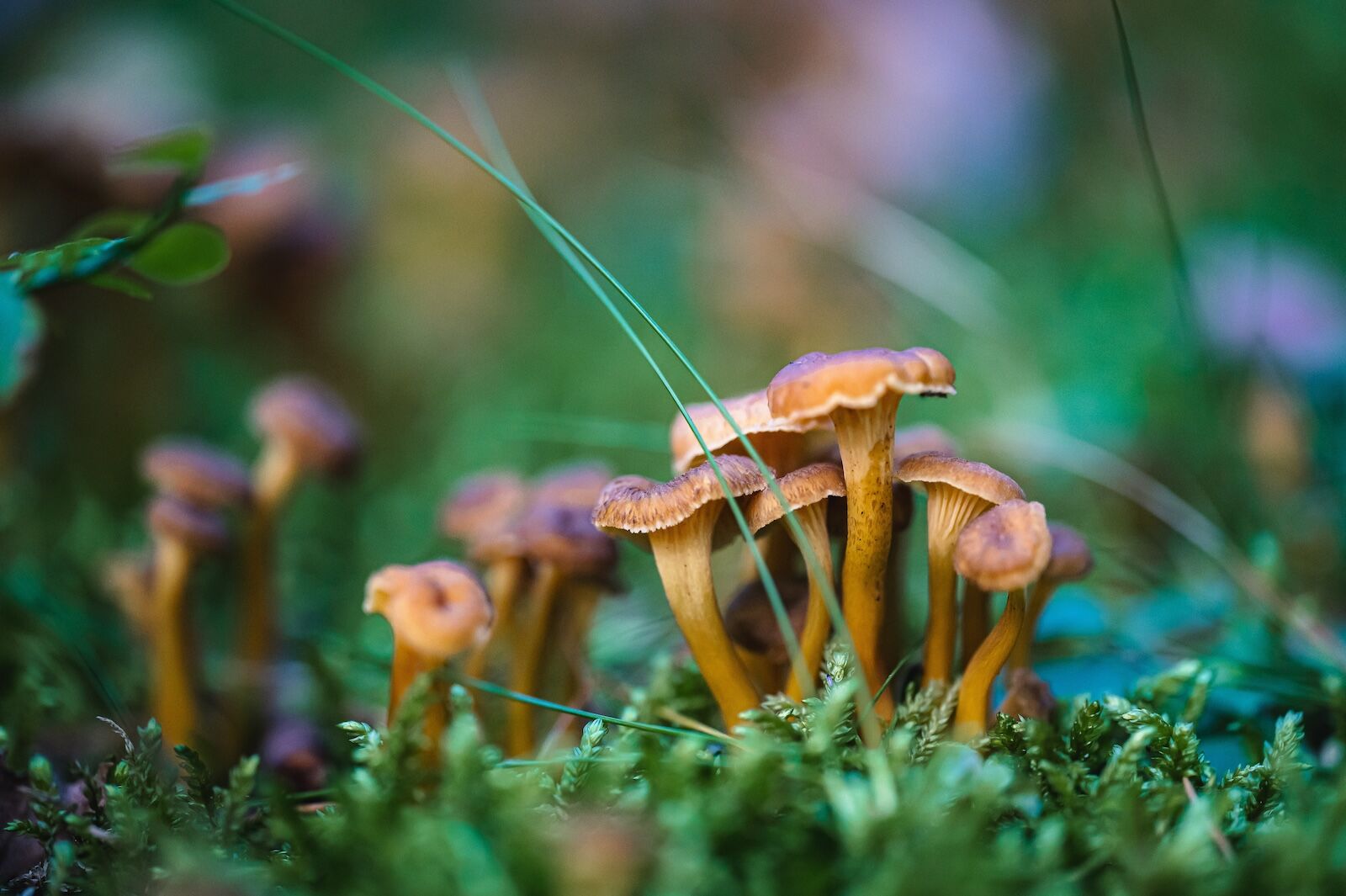
Winter chanterelles (also called yellowfoot) mushrooms in the forest near Turku, Finland. Photo: spvcecreative/Shutterstock
It turns out that Southwest Finland is uniquely suited to being Finland’s mushroom capital.
“For its wide range of ingredients – wild and farmed – you might call it the Provence of Finland,” Tallberg said, comparing it to France’s most well-known agricultural region.
Once I learned how to spot them, it was easy to find mushrooms every few steps. Ruissalo, and the region as a whole, is a veritable smorgasbord of fungi.
Turku’s location between two different types of forests gives it a wide range of mushroom variety, Päivi Lehtonen, a local mushroom expert and lecturer, shared with me. Different trees form relationships with different kinds of fungi, I learned, so more tree diversity equals more fungal diversity. “We have the benefits of deciduous forests (oak and hazel trees), as well as boreal forests (spruce, fir, and pine trees),” Lehtonen says. “It’s like the whole of Finland packed in one tiny corner. There are so many types of ecosystems here that it gives us so many more choices to forage.”
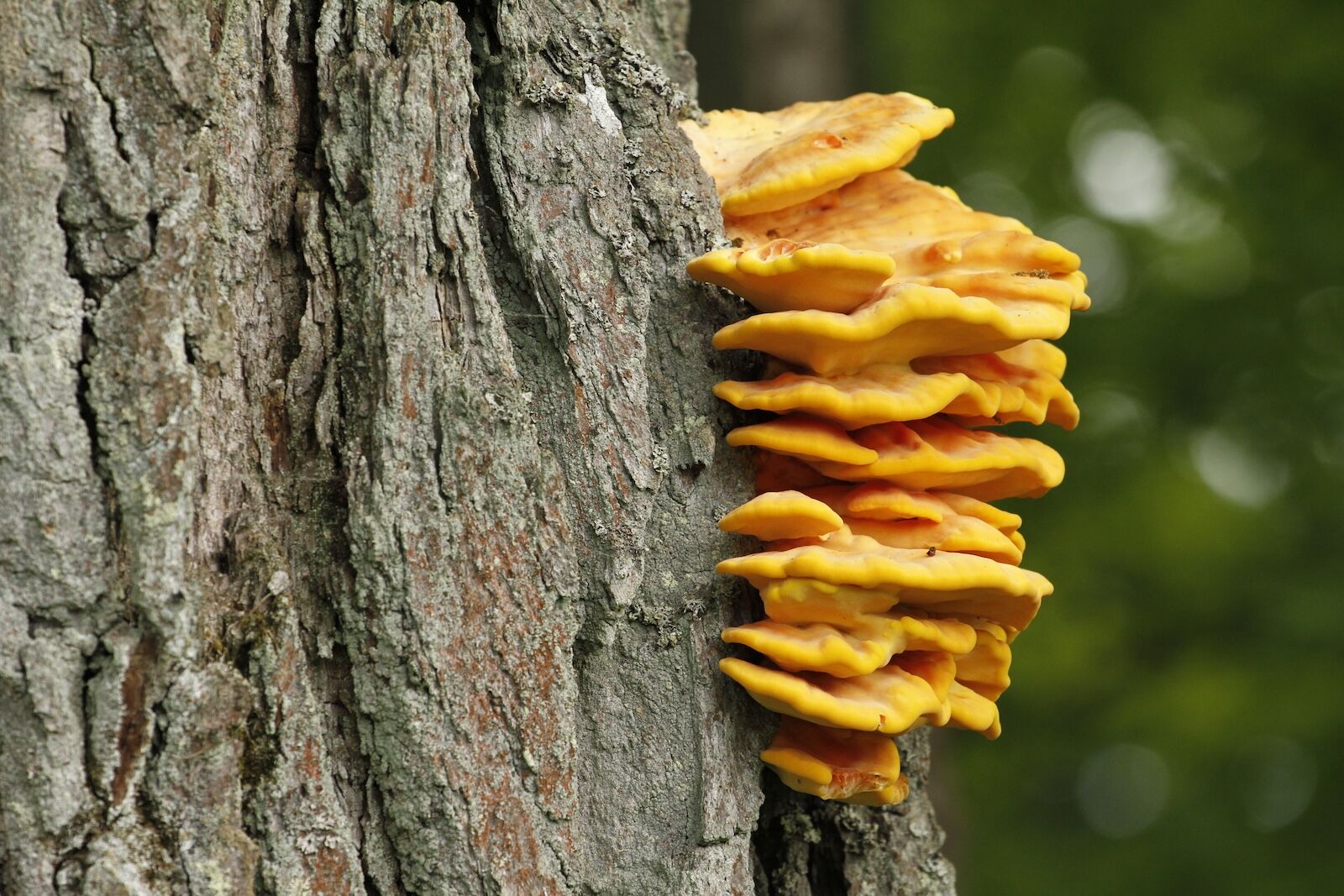
Laetiporus sulphureus, or chicken of the woods, in Turku, Finland. Photo: Jukka Palm/Shutterstock
She explained that the area’s temperature and soil allow certain mushrooms to thrive here that are rare or absent elsewhere in Finland. Species like Laetiporus sulphureus (“chicken of the woods”) and Craterellus cornucopioides (“black trumpet”) are far more abundant in the Turku region than elsewhere in the country because they depend on the oak and beech trees that are concentrated in forests in this part of Southwest Finland. The region also has Lactifluus volemus (“weeping milk cap,”) with a taste comparable to lobster or shellfish. It’s found nowhere else in Finland. All three are popular with local chefs.
Though mushroom foraging is an age-old practice, Southwest Finland developed its own distinct mushroom tradition that traces back to old Roman traditions carried into the country through France and Sweden, generally favoring chanterelles and boletus species. That western tradition is distinct from Eastern Finland’s mushrooming traditions, spread through the rest of the country by Karelian evacuees who resettled throughout Finland when their homelands were conquered by the Soviet Union. The Finnish government reinforced both traditions by making laws to encourage foraging during food shortages in the 1860s and later during World War I and II.
This led to an enthusiasm for mushrooms and foraging that persists to this day.
Mushroom culture in Turku
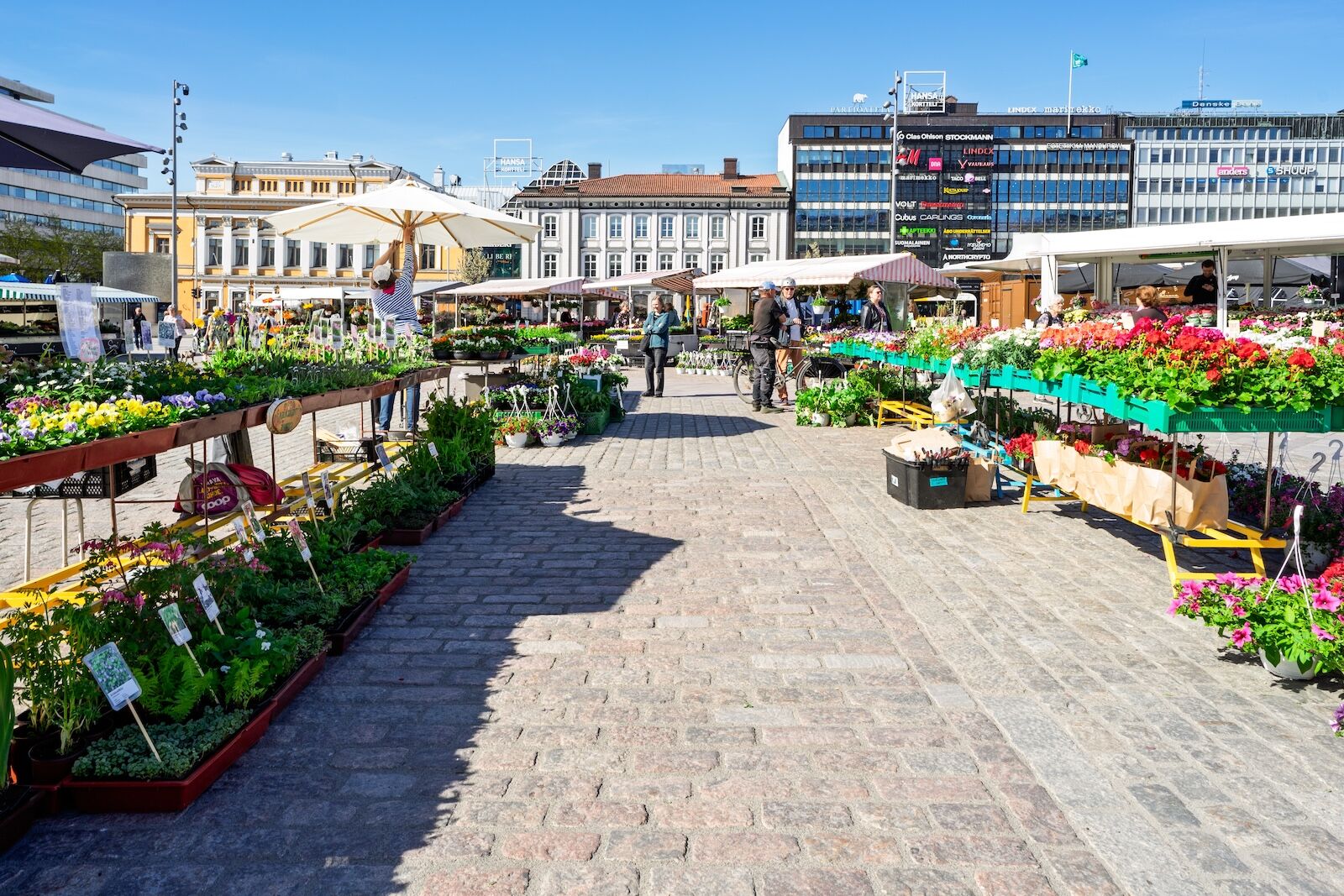
Vendors at Turku’s Market Square. Photo: Finmiki/Shutterstock
In Turku, that enthusiasm permeates the city’s culinary scene and educational sphere.
“The hunter-gatherer and foraging culture have not really died out here, like in many other cities in Finland,” Tallberg said. “It’s actually unique that in such a modern, urban, and lively city, the foraging culture is so active.”
Turku’s Åbo Akademi University has amassed tens of thousands of fungi specimens from the region in its collections. Tuorla Vocational College, just southwest of Turku, offers a forager training course taught by Lehtonen. It’s probably not surprising that a region with a “treasure trove of mushrooms” has such strong academic interest in fungi.
That culture extends to the city’s dining scene, where Turku’s reputation as Finland’s culinary capital overlaps with its markedly rich local supply of wild fungi. With so many award-winning restaurants, it’s not a hard claim to prove. Smör, a Nordic-style restaurant in the heart of Turku, uses mushrooms in its renowned tasting menu, offering a traditional oyster, mushroom, and ginger plate. Kaskis, a restaurant with one Michelin star, is known for its braised veal cheek with wild mushrooms. “The most popular fungi here are chanterelles, yellowfoot, and northern milkcap,” says Maarit Piitulainen, Chair of the Turku Mushroom Society.
It’s worth noting that menus at both restaurants change regularly to incorporate seasonal ingredients, so if you want to catch the most mushroom-heavy dishes, make sure to visit between August and October, when mushroom availability is at its peak.
That’s good news for those who don’t want to venture to Sami Tallberg’s remote forest cottage to enjoy freshly-prepared local mushrooms. Visitors can find freshly foraged mushrooms from vendors at the outdoor food market in Turku’s Market Square, open Monday through Saturday. According to Tallberg, “this is a true farmer’s market, where growers and foragers sell top notch ingredients. It’s a true rarity in Finland, and [with] outstanding value for money.”
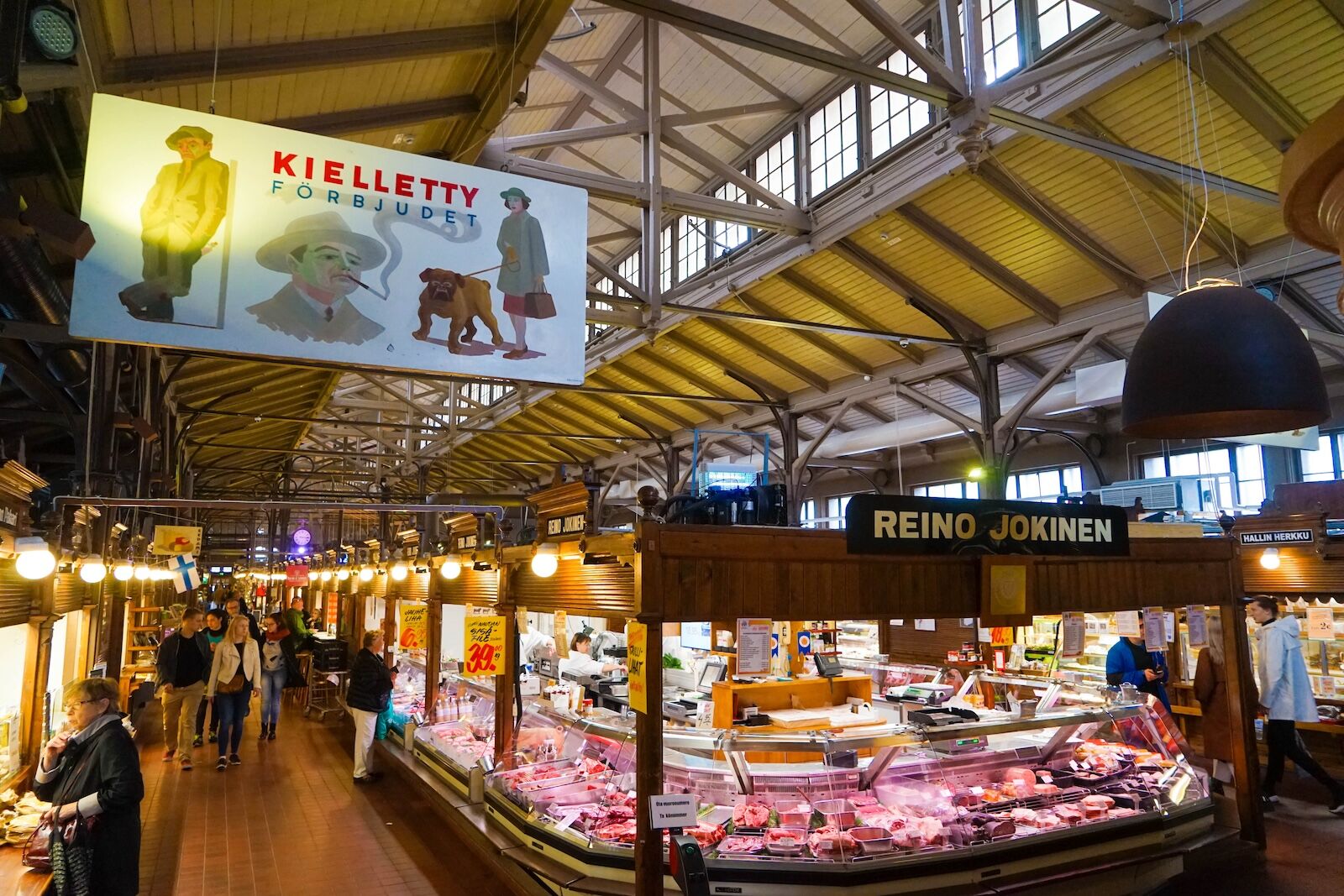
Photo: Inspired By Maps/Shutterstock
There’s also the Turku Market Hall, an indoor food market opened in the late 19th century. It hosts everything from traditional meat and fish counters to cheese shops, cafes, and bakeries with the most dangerously tempting bread you’ve ever smelled. Naturally, it also has produce stalls stocked with freshly foraged mushrooms.
If you feel like straying from the city (or visiting Tallberg at his cottage) and find yourself in Ruissalo, make sure to stop at Eatery Alex, surrounded by trees but just steps from the water. I can’t prove it scientifically, but I’m pretty sure food just tastes better when you’re eating it surrounded by the nature in which it originated. Occasionally, it offers multi-course foraging dinners hosted by Lehtonen. “I love how they combine local mushrooms with a different ethnic heritage,” she says. “They are new, fresh tastes, and bring out our mushrooms in surprising and delicious ways.”
The most rewarding part, however, is bringing your newfound mushroom knowledge home, and testing your foraging chops in your local park. Be warned, though — once you’ve wandered the lush lily-covered forests of Southwest Finland, that local park may feel like the equivalent of a false morel.
How to plan your trip

Photo: Yury24/Shutterstock
If you’re flying to Finland internationally, chances are you’ll be arriving via Helsinki Airport. From the country’s capital, it’s just a two-hour ride on a high-speed train to reach Turku. Once you’re in the city, you’ll realize pretty much everything in Turku is reachable by a 20-minute walk.
Scandic Hamburger Börs is next to the Turku Market Square, and just a few minutes’ walk from Turku’s best restaurants, medieval Turku Cathedral, and the Aura River, which slices through the heart of the city. The hotel is in an Art Nouveau-style building constructed in 1894 and modernized in the 1970s. Now, guests get the best of both worlds: an iconic and historic facade, but ultra-modern comfort, including a rooftop bar with sweeping city views. 