I don’t consider myself an outdoorsman, but I do consider myself an outsideman. There’s a difference. The outdoorsman treats a trail as a problem to be solved: elevation gained, miles logged, passing the descending hiker who tells you you’re almost there like you’re running the Boston Marathon and have a deadline to meet. The outsideman, on the other hand, just wants to be outside. He would like to see the coastline and relax under blue skies. He is not in a hurry. That’s me, and I’ve always shied away from strenuous hiking tours, preferring to enjoy the scenery at a more leisurely pace.
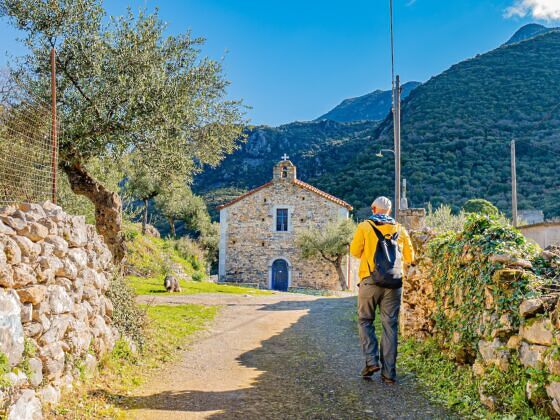
Photo: Martina Strihova/Shutterstock
The Case for Seeing a Country at Two Miles an Hour
For most of the last decade, the travel industry built its outdoor products for the outdoorsman. But it’s increasingly building them for the second, and I got interested in why while doing something I’d never considered before: walking across a chunk of Japan.
Last fall I spent seven days on Walk Japan’s Izu Geo Trail, going inn to inn on foot across the Izu Peninsula, southwest of Tokyo. I signed up mostly because it sounded manageable. I came home wondering how I’d been writing about travel for almost a decade without noticing that multi-day walking tours were a category at all — one with waiting lists, repeat customers, and people on my own trip who were already booking their next one. Either I’d been asleep, or something had shifted while I wasn’t looking.
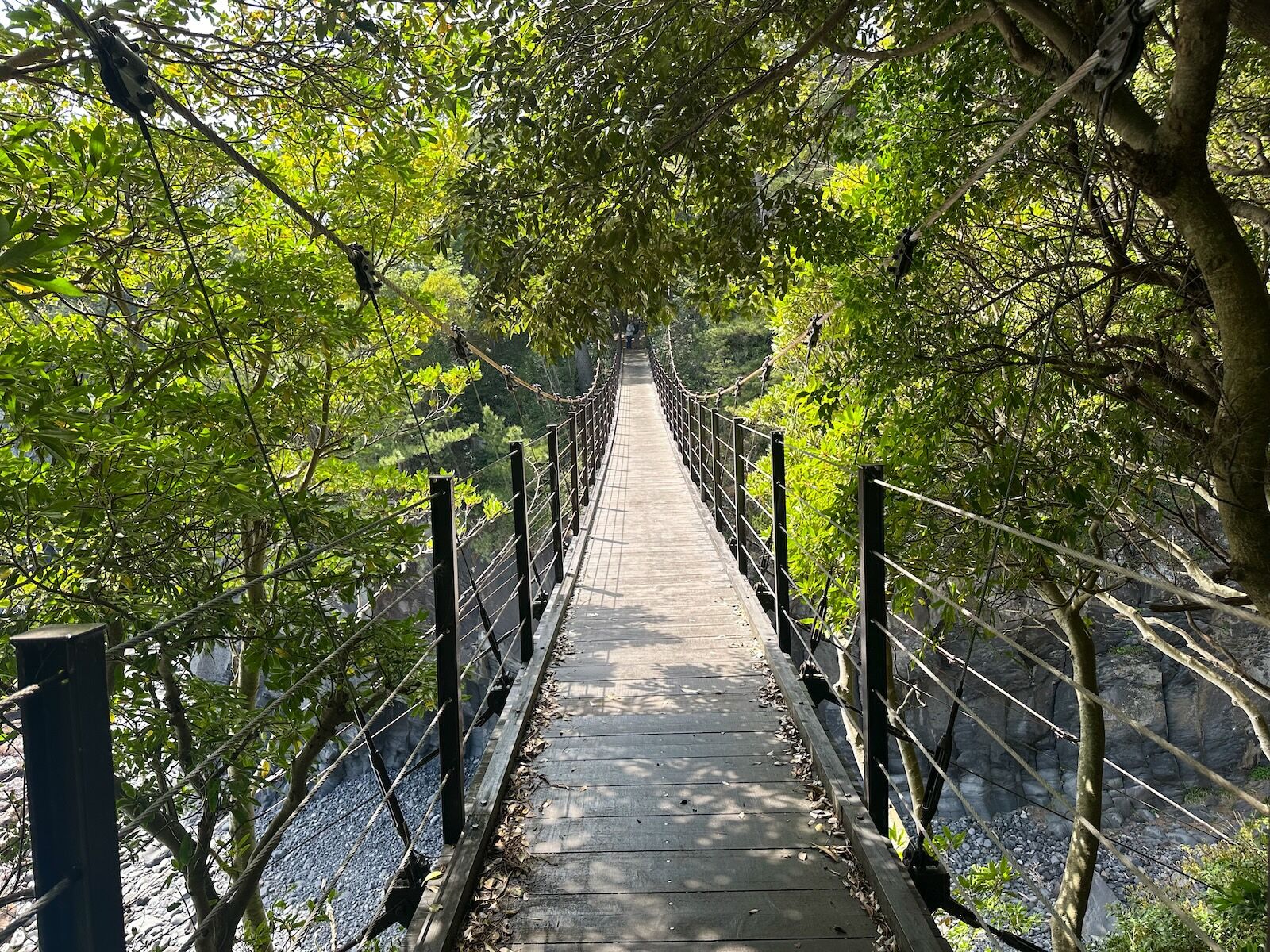
Photo: Eben Diskin
It’s the second one, and the clearest evidence is what has happened to walking.
The Adventure Travel Trade Association’s (ATTA) 2026 industry report found that walking, hiking, and trekking was the most in-demand activity globally (it doesn’t separate them by category). Culinary and gastronomy experiences climbed to second. Cycling with electric bikes, cultural experiences, and wellness filled out the top five.
The order is the story. The five most requested activities in adventure travel are, in order, walking, eating, cycling with a motor doing part of the work, looking at culture, and taking care of yourself. Not mountaineering. Not whitewater. Nothing that requires a harness, a permit, or a body that can still absorb a hard landing. Four of the five are things a reasonably fit 70-year-old can do without training for them. And the other one is eating.
Walking tours, in particular, are benefiting from this broader shift. Travel search data analyzed by UK-based digital agency Adido found that searches for walking trips in the UK and Europe rose 24 percent in 2025 compared with 2024.
This style of travel may sound almost comically simple — it’s literally just walking from one place to another — but it’s clearly become front-of-mind for a huge portion of the travel market.
Why walking got so popular
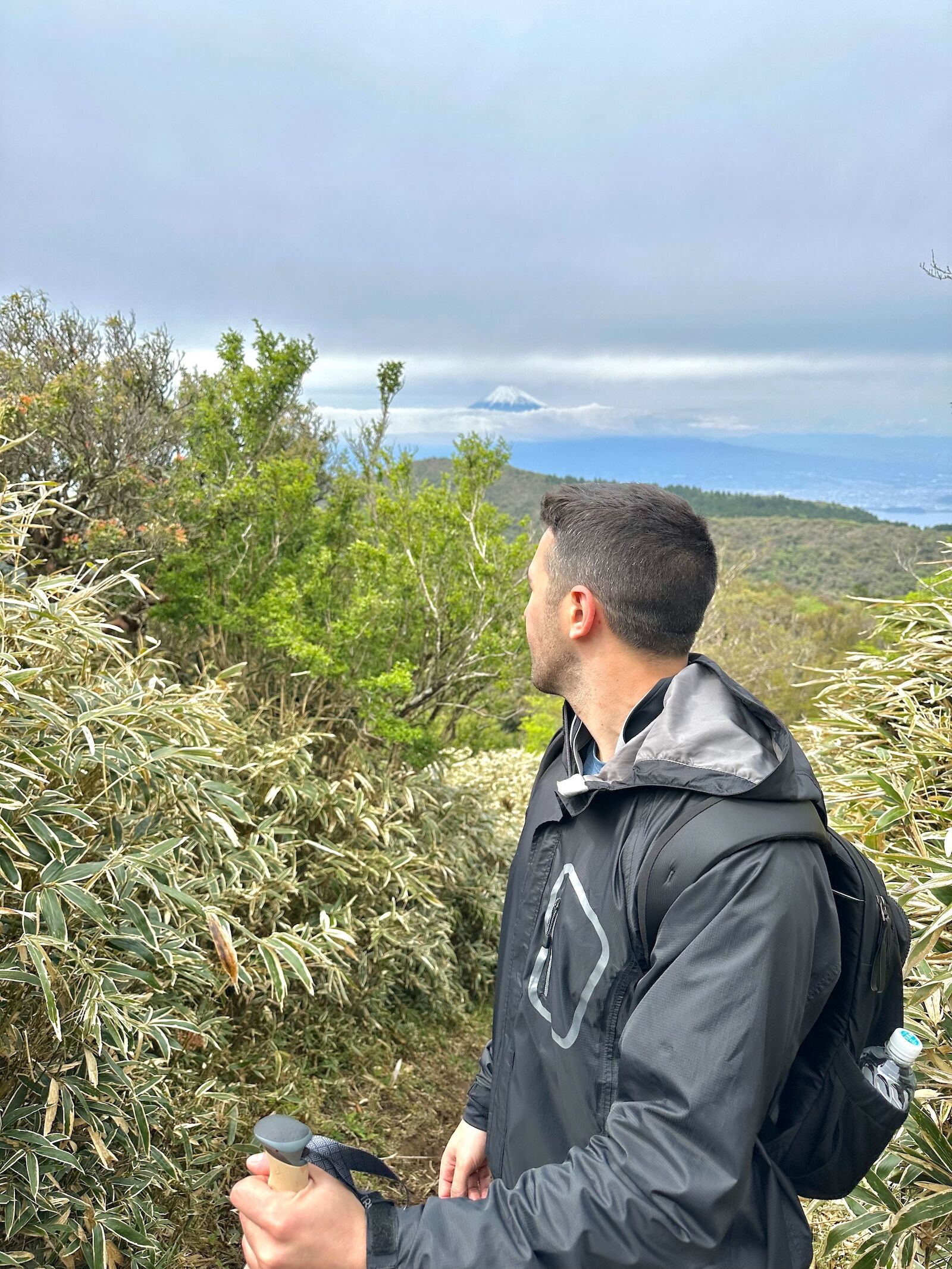
The author on his walking tour in Japan. Photo: Eben Diskin
ATTA’s market sizing research, produced with EF Adventures and CBI and based on a survey of roughly 5,000 travelers across 13 countries, puts the global outbound adventure travel market at $1.16 trillion in 2024, up from $966 billion in 2023 and $683 billion in 2017. The share of travelers ATTA classifies as adventure-first rose from 30 to 40 percent, and 67 percent of all international travelers now fall into what the association calls “Open to Adventure.” ATTA characterizes that as someone “seeking meaningful connections with nature, culture, and place,” rather than simply pursuing adrenaline-fueled activities or physically demanding treks.
That last number is noteworthy. A category that includes two-thirds of everyone traveling internationally is not a category defined by extreme risk or physical fitness. It’s one that can accommodate many different levels of fitness.
The domestic participation data points in the same direction. According to the Outdoor Industry Association’s 2026 Hiking Report, 63.4 million Americans identified as hikers – double the number from 2012. In 2025, outdoor participation hit a record 183.2 million Americans (59 percent of the population over age 6), but the frequency of outings declined. In other words, more people are going outside, and each of them is going less often. That means growth is coming from casual participants, not committed ones.
For walking-tour operators, this trend is showing up in bookings.
“In 2025, we welcomed around 20 percent more travelers on our walking tours than in 2023,” says Jasper Verlaan, head of sales at Macs Adventure. “We believe this reflects a broader shift toward slower, more immersive travel experiences.”
Of course, the appeal of a walking tour is about more than just an easy way to get outside. Walking tours combine several things travelers increasingly say they want from a trip: local food, cultural encounters, and a meaningful connection to natural surroundings.
That combination was visible among my fellow walkers in the Izu Peninsula. One woman I chatted with was already planning her next trip while on this trip, and two others had just finished walking tours in Canada and Europe. They all said their enthusiasm wasn’t necessarily for walking itself, but for the access and opportunities it offered within a destination.
How Japan embraces the walking lifestyle
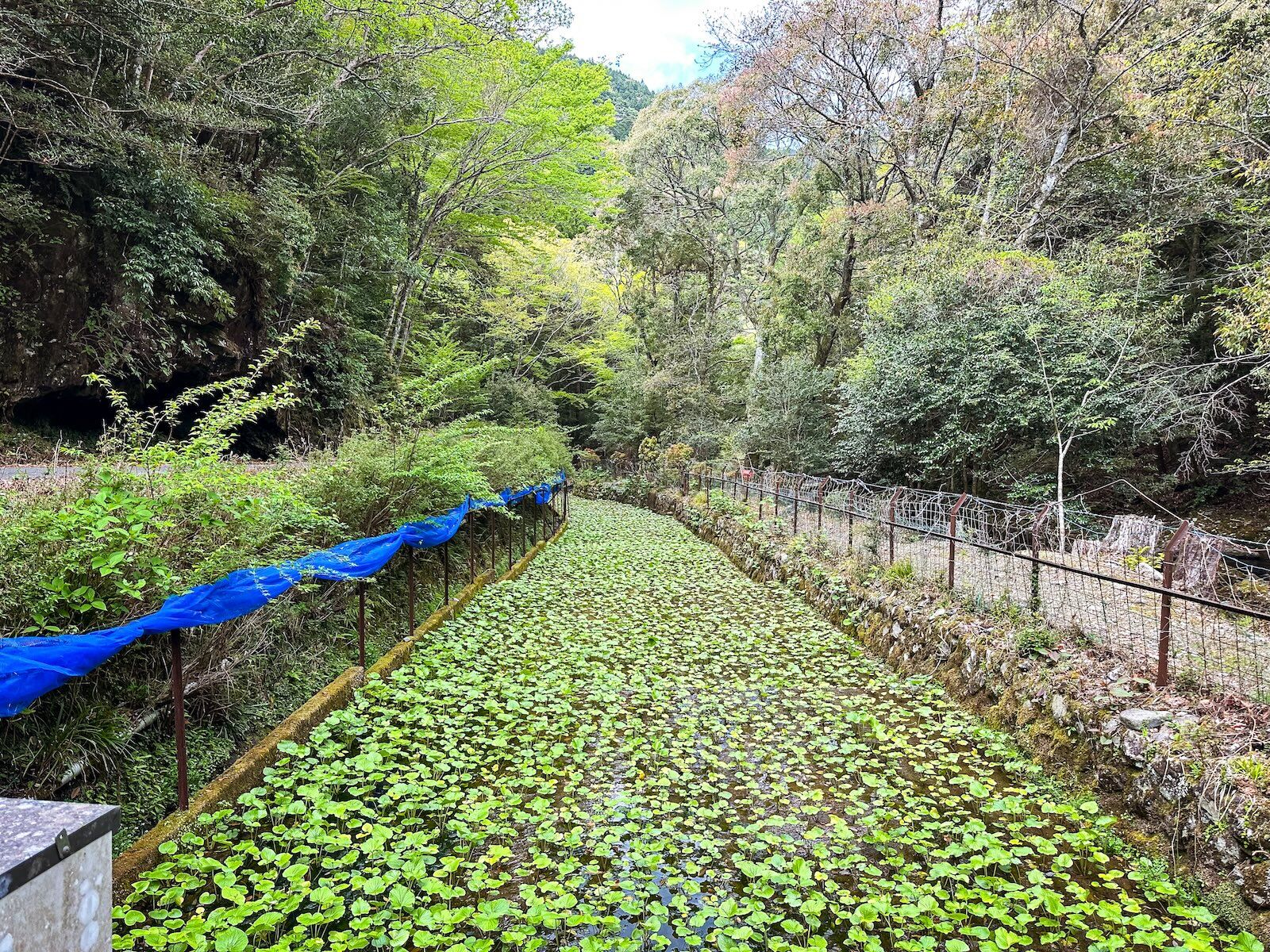
Passing wasabi farms. Photo: Eben Diskin
I got a version of that access on the second morning of my Walk Japan trip, walking out of Yugashima on a trail that ran alongside a stream. I was on the Izu Peninsula, one of the most geologically unique areas in the world. A former island and site of significant tectonic activity, the peninsula is defined by its dramatic coastline, forested mountains, and geothermal hot springs. Small fishing towns like Shimoda dot the coastline, while cozy traditional villages like Shuzenji mark the interior. Many towns have natural onsens that still play a role in daily life.
That day, the wasabi farms started appearing, terraced into ledges wherever the geology allowed for it. Occasionally, tiny blue sawagani crabs came out of the wet rocks and moved sideways across the path. Later that day, I sat at Shokeidaru Falls for nearly an hour and never reached for my phone.
There is no version of that day that happens from a bus tour. It also happens in a part of Japan that most visitors will never see. Japan recorded 42.68 million international visitors in 2025, up 15.8 percent over the previous year’s record, with inbound spending hitting ¥9.45 trillion, or about $63 billion. The first quarter of 2026 topped 10 million arrivals, the first time the January-to-March window has cleared that mark. But the pressure Japan is under isn’t about how many visitors it has, but where they go. Visitors generally pile into the same handful of districts in Kyoto and Tokyo and around Mount Fuji, while enormous parts of the country see almost no one.
The government has been explicit about wanting to change that. Its March 2026 “The New Tourism Nation Promotion Basic Plan” cited the balance between visitor growth and resident quality of life as a policy priority. It also raised the national departure tax from ¥1,000 to ¥3,000.

Walking tours mean stopping in small restaurants you wouldn’t visit on a bus tour. Photo: Eben Diskin
A person who does a weeklong inn-to-inn walk is exactly the kind of tourist the country needs and is working to cultivate. It moves travelers into rural areas, spreads their money across a dozen small family-run businesses instead of one hotel, and does it over a full week. Our trip walked fto different towns each day, starting in Atami and ending in Mishima. Each night, there was time for rest and reflection in the hotel onsen.
At the Tago fishing port, we ate soba noodles at Yamasu, where everyone seemed to know each other. At one of our countryside ryokans, our guide, Masaki Iwami, grilled fresh mackerel on skewers over a fire. They were two small businesses that would never appear on a one-day or mass-market bus tour.
The pace changes your trip
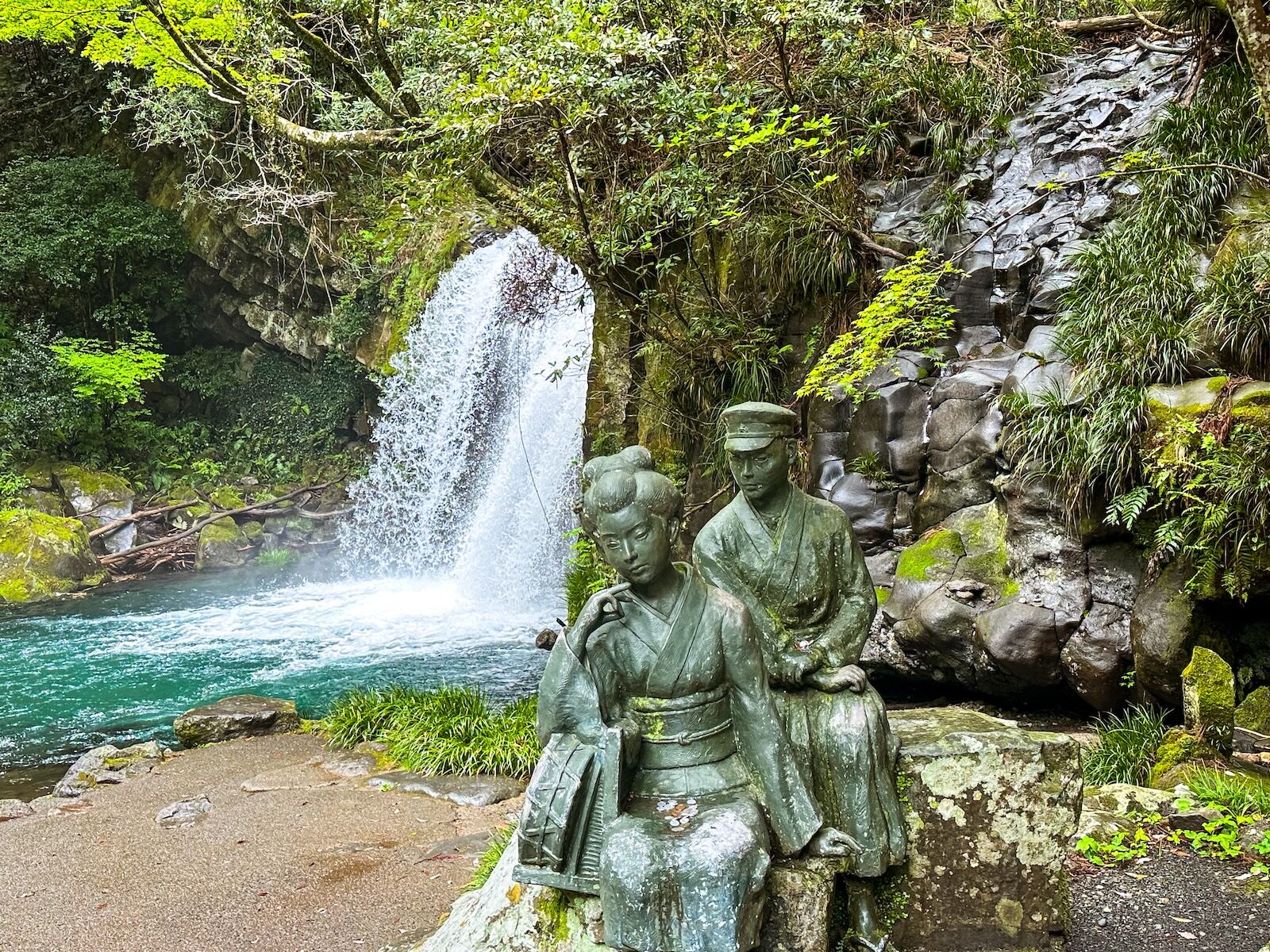
The author found peaceful moments and places while traveling on foot. Photo: Eben Diskin
The obvious argument for walking tours is accessibility. There’s no specialized gear, no training, and anyone who can walk a few miles can come. But what that overlooks is how the pace changes your trip.
Every morning, I took great pleasure in tracing our route on the trail map, and we covered eight miles on our longest day across undulating terrain. While that may seem like a lot for some travelers, the walking was broken up by picnic lunches, photo stops, and random locations where Iwami just wanted to stop and share something with us. At some point, I started hanging back with some of the walkers who seemed to be on a slower pace, and the trip changed. I began to notice small details I don’t doubt I would have missed at a faster clip.
From the forested Amagi Highlands to our hotel in Yugashima; from the Kawazu Seven Waterfalls to the fishing village of Shimoda; from the Bali-esque coastal landscape of Suruga Bay to the cliffs of Dogashima — I saw it all not by pushing my body to the limit, but by controlling my own speed. Rushing through any of it would have cheapened the experience of being there.
Iwami connected this to something older than the trend data. “Walking trips are consistent with the Japanese concept of slower, more deliberate experiences,” he says. “It’s related to Shinto. We believe that spirits stay in each natural creature. So taking our time to feel nature is something related to the base of Japanese people.”
These details are precisely what walking tours make room for. The appeal is not that walking somehow transforms an ordinary destination into an extraordinary one, but that walking gives those small details enough time to register.
The last hill, but not my last walk
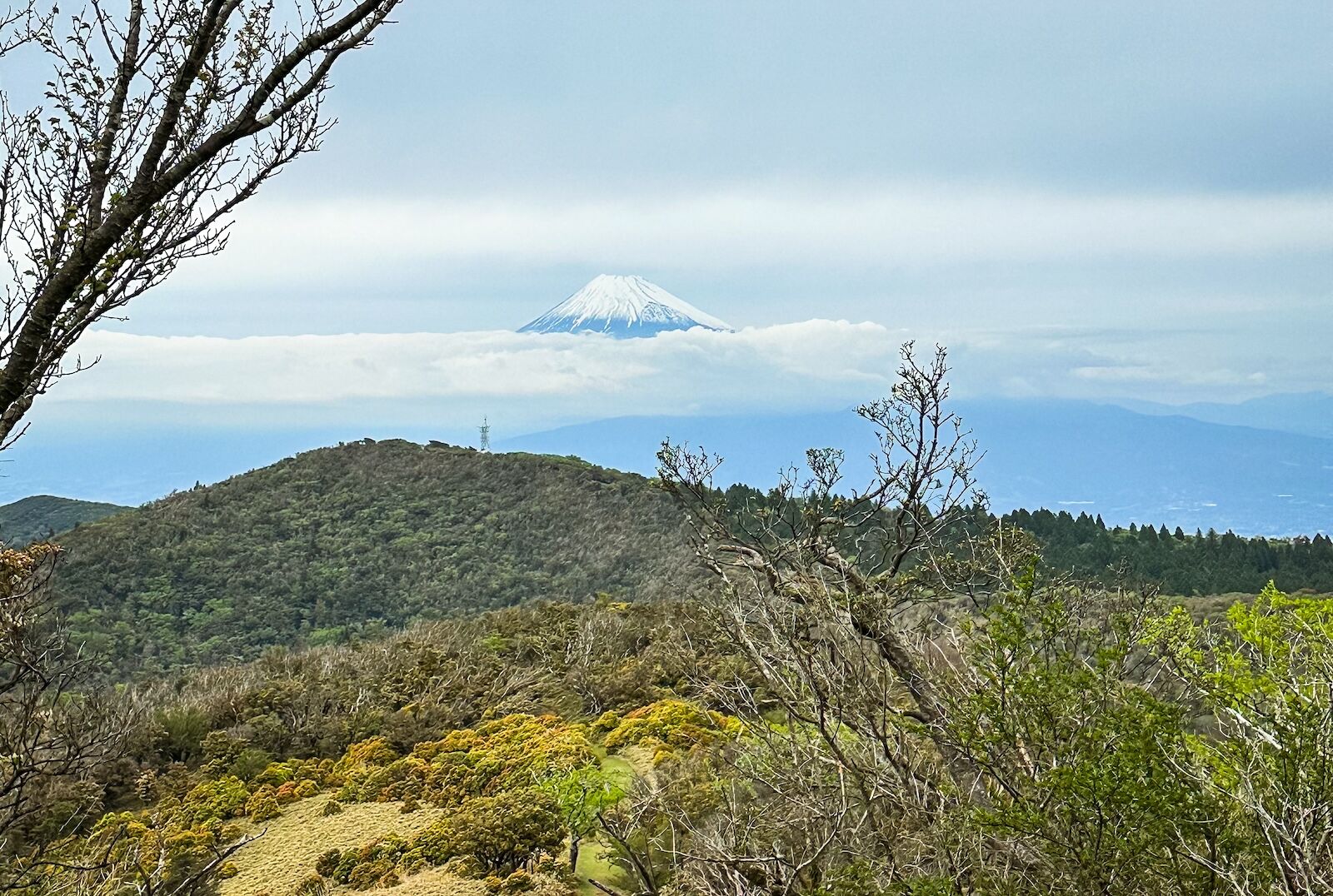
The author’s view of Mount Fuji on his last day. Photo: Eben Diskin
If walking the Izu Peninsula felt like a pilgrimage, Mount Fuji was our Santiago de Compostela. On our final day we climbed Mount Daruma, an extinct volcano and the highest vantage point in the area. The payoff was sweeping views of Japan’s most recognizable mountain.
It also isn’t what I remember most about the trip. Instead, it’s everything between the major attractions — the villages, the food, the forests, and the long stretches where I spent hours simply looking around. It felt like I actually saw the destination, instead of just passing through it.
And for an outsideman like me, that’s plenty. 