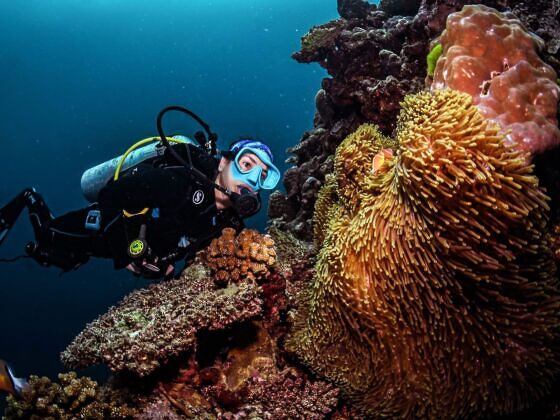
Me, hanging out with my best friend (a coral reef). Photo: Suzie Dundas

On World Oceans Day, You Can Do More Than Skip the Plastic Straws.

Wildlife Sustainability Beaches and Islands
by Suzie Dundas Jun 8, 2026

I hate that keeping the ocean healthy has become a political issue in the US. Though we may disagree on how to do it, I think most people would agree that keeping Earth — you know, the place we all live — healthy and clean is rather important.

About 70 percent of Earth’s service is covered in water, and even if you’ve never seen the ocean, it gets a lot of credit for keeping you alive. Marine plankton produce, by some estimates, roughly half of the oxygen on Earth, by taking in carbon dioxide and sunlight and releasing oxygen as a byproduct. The ocean also absorbs a huge portion of the carbon dioxide we emit and soaks up most of the excess heat from global warming. In fact, that buffering is the only reason the climate hasn’t already shifted far more violently than it has.
This article first appeared on Matador Network’s behind-the-scenes Substack newsletter, where our editorial team shares the inside dirt on being professional travelers.


Subscribe to Matador Network’s
Free Insider Travel Substack


Politics aside, I can’t imagine too many people who would say they don’t care about minor things — you know, like being able to breathe.

Highlighting how essential oceans are to our shared survival is one of the reasons World Oceans Day (June 8) was first proposed in 1992 (by Canadians!) So I’m going to go ahead and say what needs to be said: we need to be doing more to protect the oceans. Will some people read this and immediately assume I’m a liberal nut because I don’t want to destroy the place I live? Probably. But staying silent on important issues makes you part of the problem.

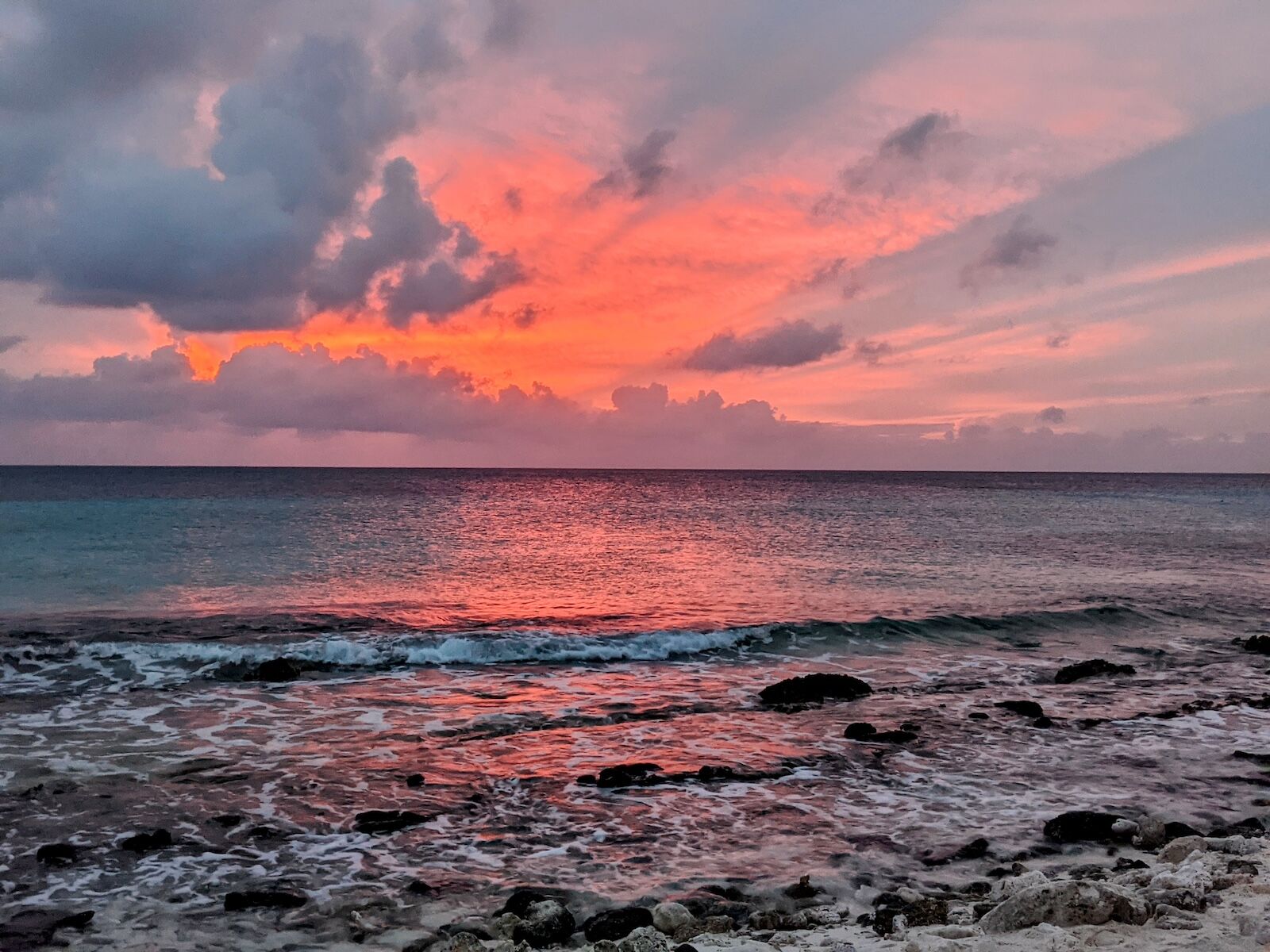
world oceans day- sunset in bonaire

The ocean: pretty great. Photo: Suzie Dundas

We all know traveling greatly impacts your carbon footprint, and that increased coastal tourism specifically leads to everything from coral bleaching to increased boat-mammal strikes to erosion to ocean pollution. Fortunately, there are some easy things you can do while traveling to help keep the wet side of our planet happy and healthy — but you’ll have to commit to way more than skipping the plastic straws.

1. Skip sunscreen, wear SPF clothing: A rash guard or UV/sun-protective shirt covers the skin you’d otherwise be coating in sunscreen, so you need less product of any kind, which beats even the best reef-safe lotion. I have a ton of clothing from Free Fly Apparel, but every outdoor brand worth its weight makes UVA and UVB protective clothing these days.

2. Use reef-safe everything: By now, hopefully you know that the chemicals in non-reef-safe sunscreens are incredibly damaging to the oceans. But it’s not just sunscreen. Chemicals in everything from skin lotion to shampoo can find their way into the oceans. When you’re on a beach vacay, try to use reef-safe everything. Stream2Sea is known in the outdoor community for making good products in this vein, but you’ll find lots of brands starting to move in this direction.

3. Research before you order seafood: What lands on your plate is tied directly to overfishing, one of the heaviest strains on the ocean, which makes this one of the few food choices where a single traveler genuinely counts. (And no, farmed seafood is not better). When you do eat fish, steer clear of species that are overfished or caught with destructive methods. While the well-known Seafood Watch is no longer an active app, you can still research what species are and aren’t threatened wherever you are, and don’t order species deemed questionable.

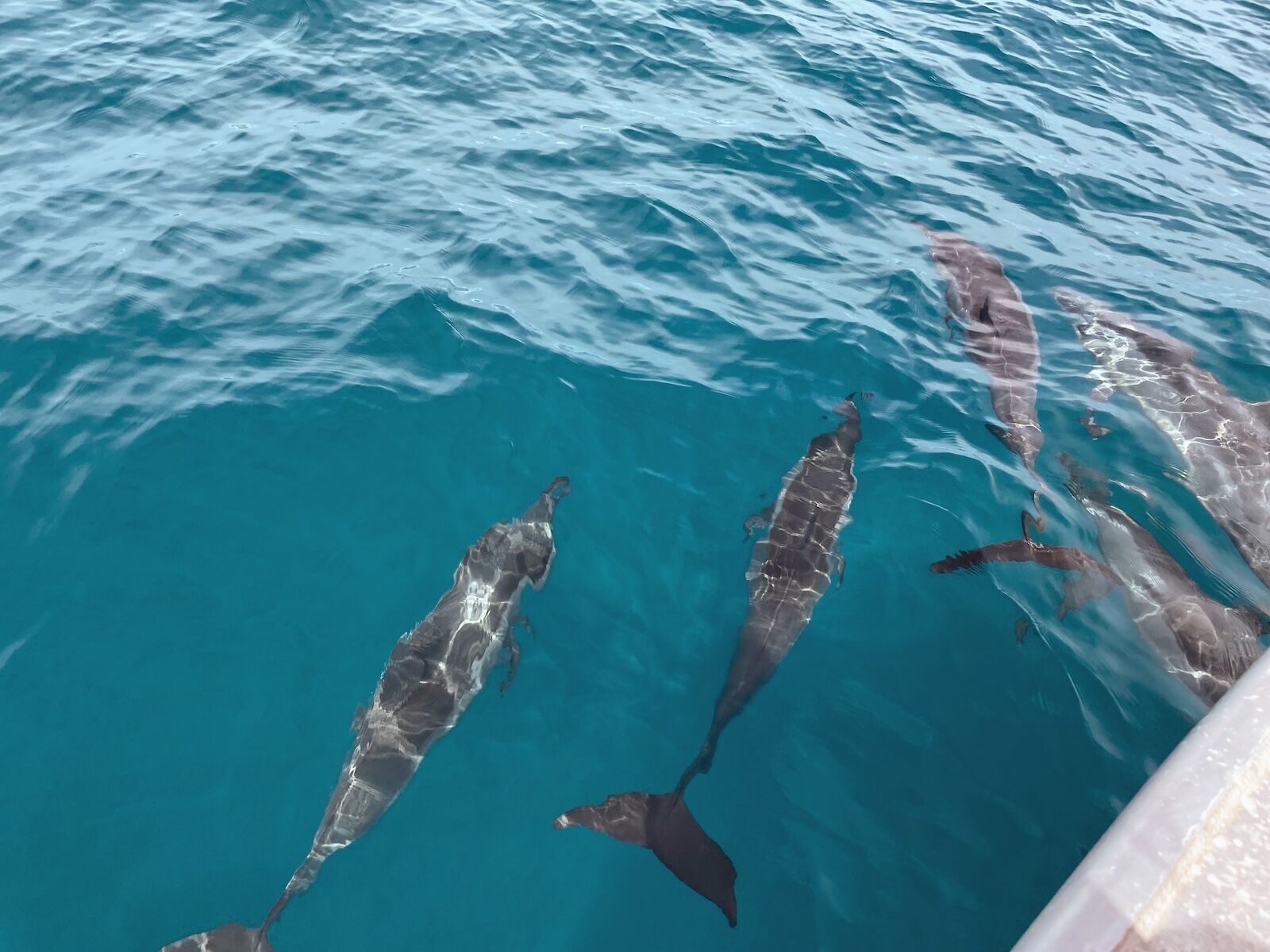
world oceans day - dolphins by boat

The best kind of escort you can get on the open ocean. Photo: Suzie Dundas

4. Better yet, go fully vegetarian when you travel: That takes the seafood question off the table entirely and chips away at the carbon side of your travel at the same time. Food is a real slice of your footprint: a heavy meat-eater’s diet runs nearly double the emissions of a vegetarian one, so eating meat-free for a week or two can save on the order of 50 to 60 kilograms of CO2e. This helps cancel out the increased footprint you’ll have from activities like flying, boat tours, and hailing Ubers. (Eliminating or reducing meat full time does an even better job).

5. Skip the captive-dolphin stuff: Swim-with-dolphins pools and marine-mammal “encounters” exist because tourists pay for them, and that money drives capturing and confining the animals. Question any claims that these activities are sustainable or supporting ocean health; it’s probably greenwashing (bluewashing?) Choosing to snorkel in the wild versus standing in a fenced-in area with dolphins is making a statement with your wallet.

6. Vet your dive and boat operators harder: A good operator ties up to a mooring buoy instead of dropping an anchor, and doesn’t tie up at all at a site if there are already too many boats there. Ask about their sustainability policies before you book, as the more an operator hears guests bring it up, the more they’ll care about it. If they can’t immediately provide that information, find another operator.

7. Don’t swim after animals underwater:But I’m not touching it.” Good. That would be a massive mistake. But the same rules for animal encounters on land apply in the sea: if you do something that makes a wild animal change its behavior, you’re too close. If you swim toward a turtle and it goes the other way, you’re too close. If you try to get close to a nurse shark and it scoots off under a rock, you’re too close. I also love these animals and generally lose my shit underwater every time I see an octopus — but I know it’s their home, and I don’t want to cause them more stress than they’re already experiencing.

8. Put your money where your mouth is. I know this isn’t true for everyone, but if you can afford a $2,500 long weekend in Cozumel, you can probably afford to make a $35 donation to a nonprofit working to defend the underwater world. Websites like CharityNavigator and Give.org can help you find transparent, accountable nonprofits that would be thrilled for any dollar or euro you can spare. I’ve been a supporter of the Marine Education and Research Society (shoutout to Kelp Creature, my sponsored whale) for several years and have come to really enjoy my quarterly updates about how my favorite whales are doing.

Props to all readers who made it this far and are already helping to protect our amazing little dot in the cosmos.


Subscribe to Matador Network’s
Free Insider Travel Substack

Discover Matador

Save Bookmark

We use cookies for analytics tracking and advertising from our partners.

For more information read our privacy policy.