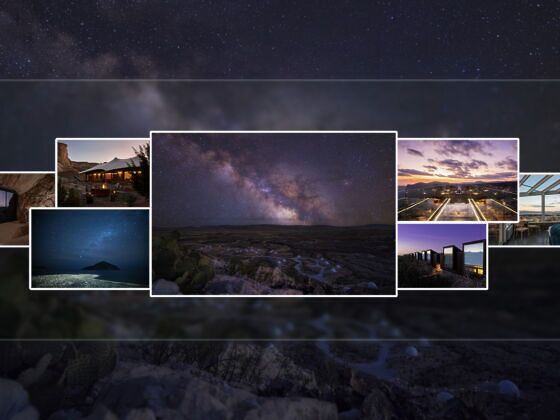
More than a third of humanity can no longer see the Milky Way at night, and in North America the figure is closer to 80 percent, meaning most Americans have never actually seen the galaxy they live in, because the artificial light from cities has made it effectively invisible.
That loss happened gradually enough that most people never noticed. Street lighting, office buildings, and highways have collectively grown bright enough to wash out a sky that humans navigated by, farmed by, and told stories about for the entire history of the species. The are increasingly far from anywhere most people live.
Some hotels have gone looking for those places on purpose. The best of them have observatories, resident astronomers, and rooms with retractable ceilings or floor-to-ceiling glass facing the night sky. These are the most luxurious stargazing resorts in the world.
All products and listings featured on Matador Network are independently selected by our writers and editors. Matador Network may receive compensation if you make a purchase through these links.
Camping under the stars in Utah, Camp Sarika by Amangiri
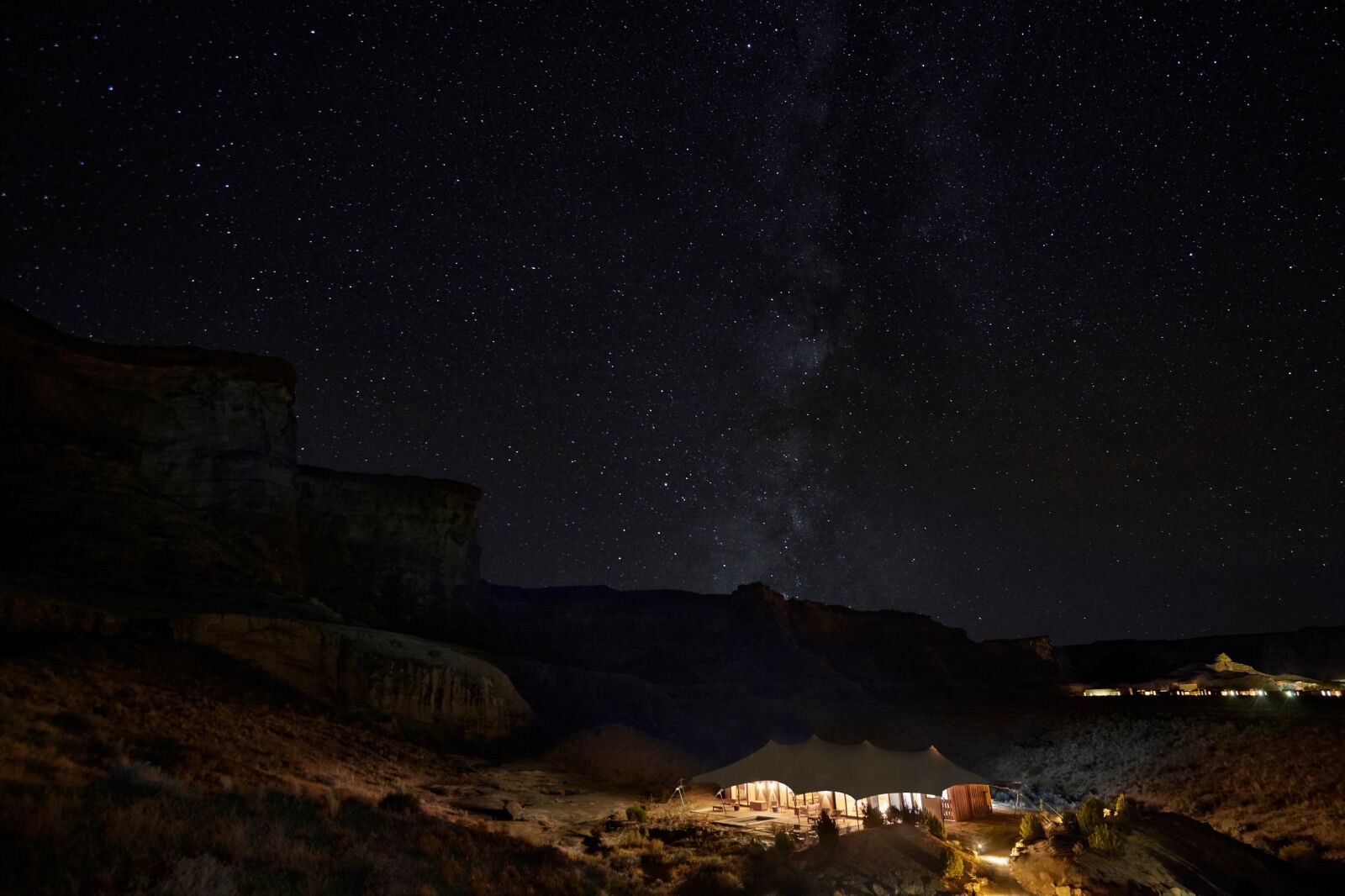
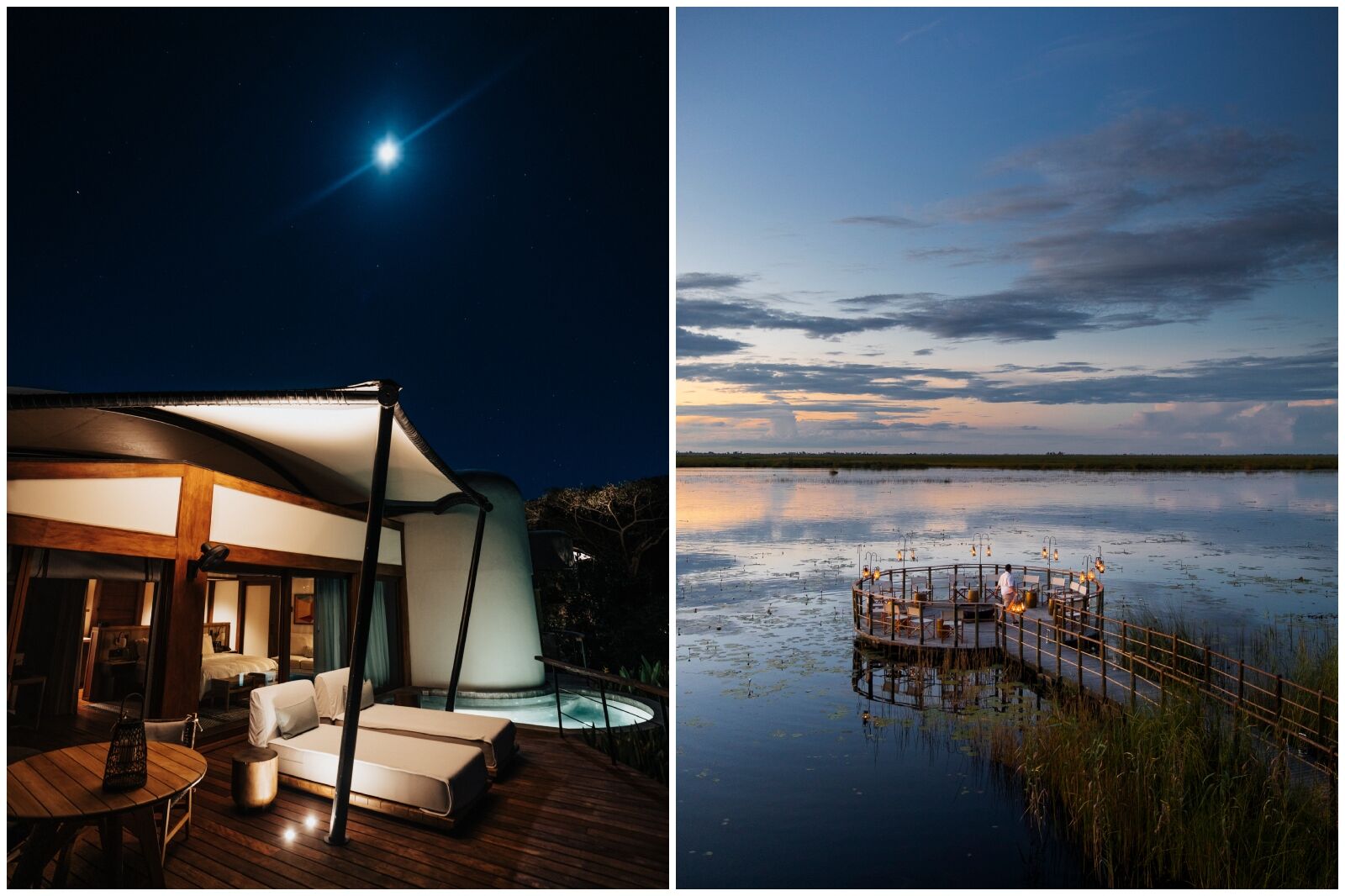
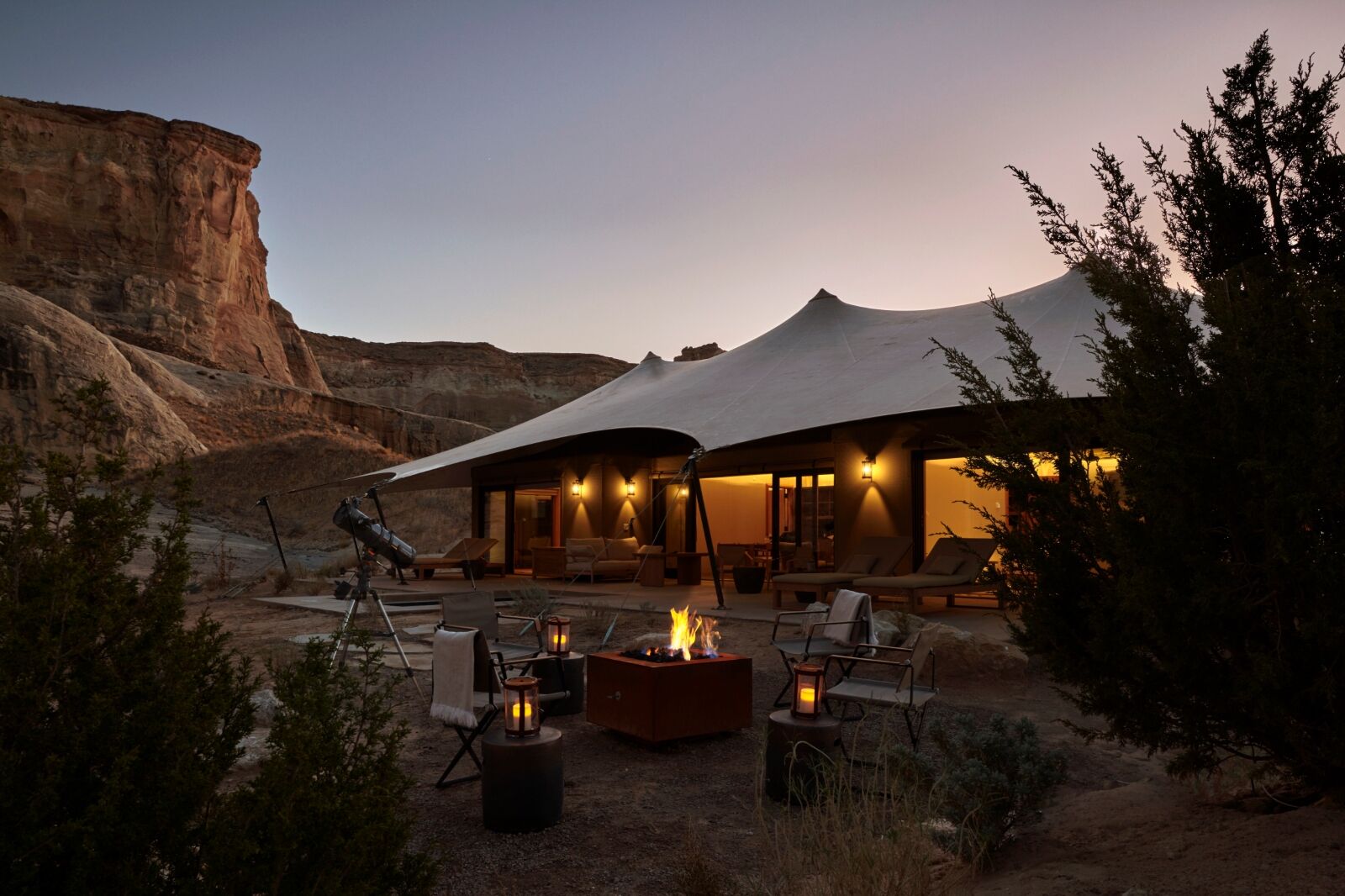
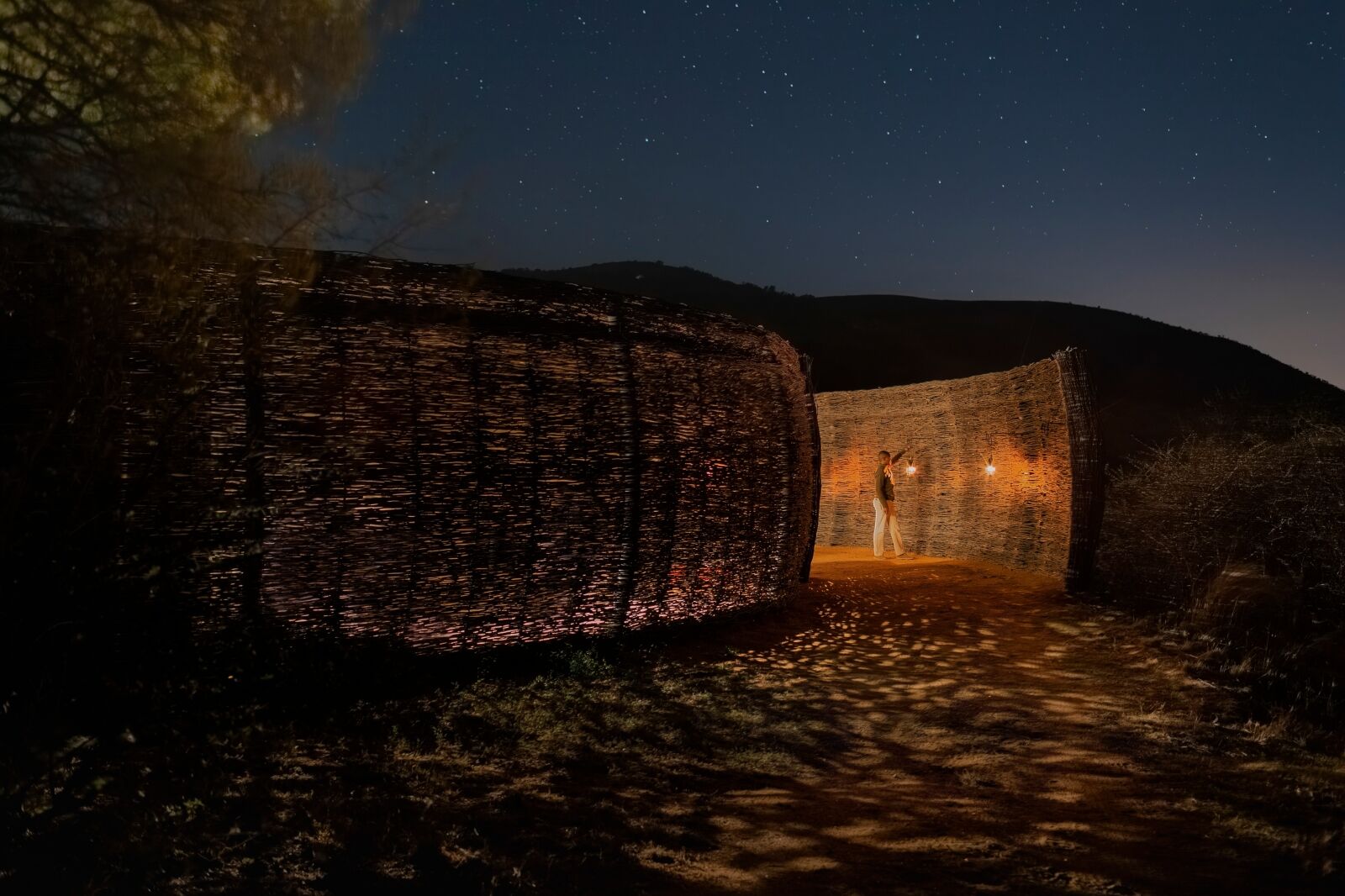
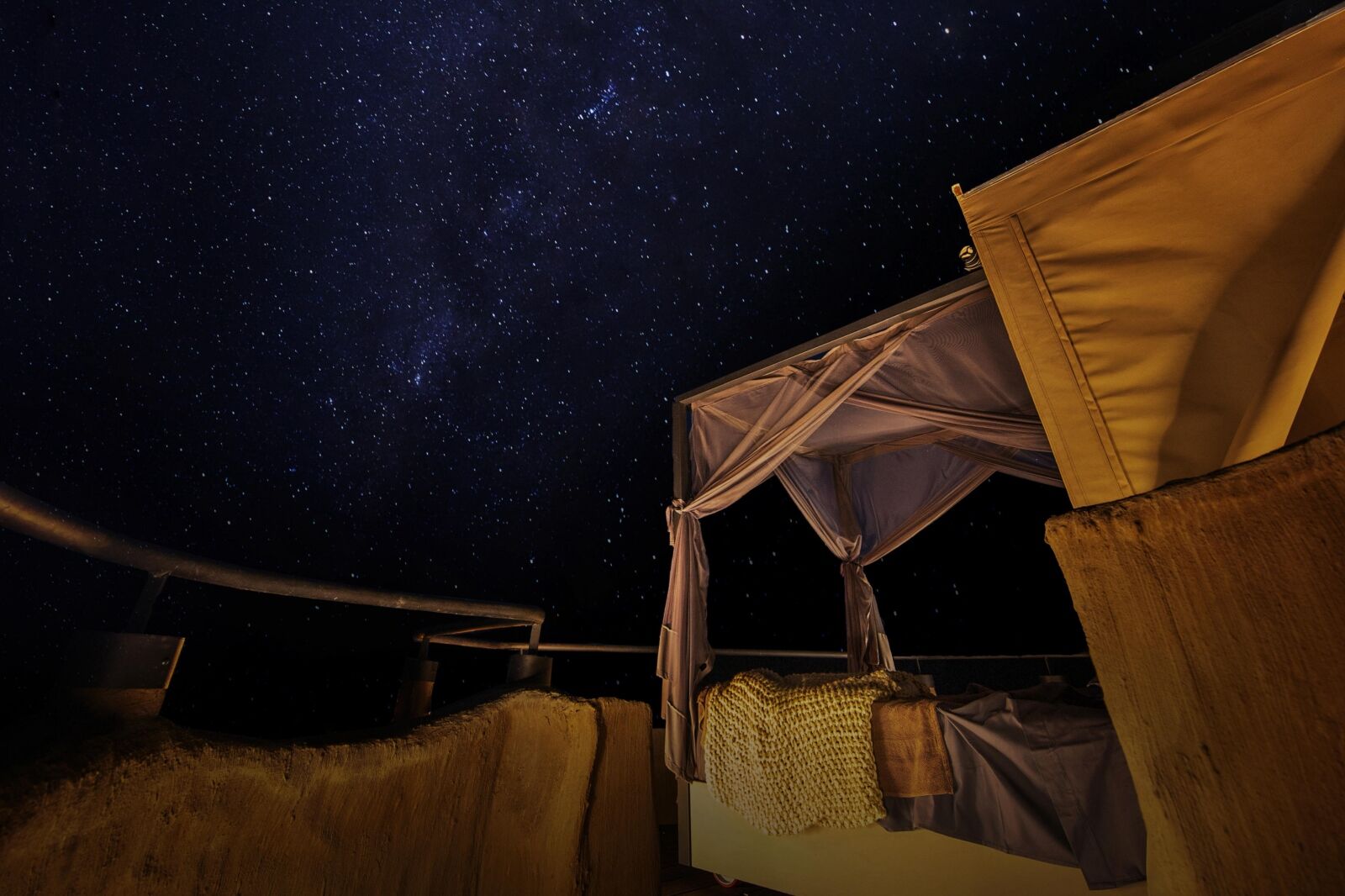
Southern Utah’s Colorado Plateau is far enough from any city that the Milky Way is clear without a telescope most nights of the year — and the rock formations around Amangiri, carved from 165-million-year-old sandstone, make it one of the more surreal places on Earth to watch it appear. The main resort’s 34 suites are built into the landscape using blackened steel, white stone, and polished glass. Camp Sarika is five minutes away across 900 acres of canyon wilderness. It’s a more stripped-back version of the same experience with 10 canvas-topped pavilions, each with a pool, fire pit, and telescope on the terrace. On select evenings, a local astronomer leads stargazing sessions using an Orion telescope, and the camp also offers guided slot canyon tours with a Navajo Nation guide who covers the same landscape from a very different angle.
Dark Sky Reserve in Namibia, andBeyond Sossusvlei Desert Lodge
The NamibRand Nature Reserve in southern Namibia is one of Africa’s largest private nature reserves and holds the continent’s only Gold Tier designation — the highest rating the International Dark Sky Association awards, and one of only a handful at that level anywhere on Earth. The nearest town is more than 80 miles away, and the sky here has been measured among the darkest anywhere on the planet. The andBeyond Sossusvlei Desert Lodge sits on the edge of that reserve, 10 stone and glass suites along the curve of an escarpment, each with a veranda, pool, fireplace, and a retractable skylight above the bed. Weather permitting, a visiting astronomer leads sessions at the lodge’s on-site observatory, equipped with a Celestron CPC 1100 GPS telescope, taking guests through the constellations, the Milky Way, and whatever planets are visible that night from one of the best vantage points on Earth for seeing all of it.
Astral explorations in Chile’s Atacama, Tierra Atacama Hotel and Spa
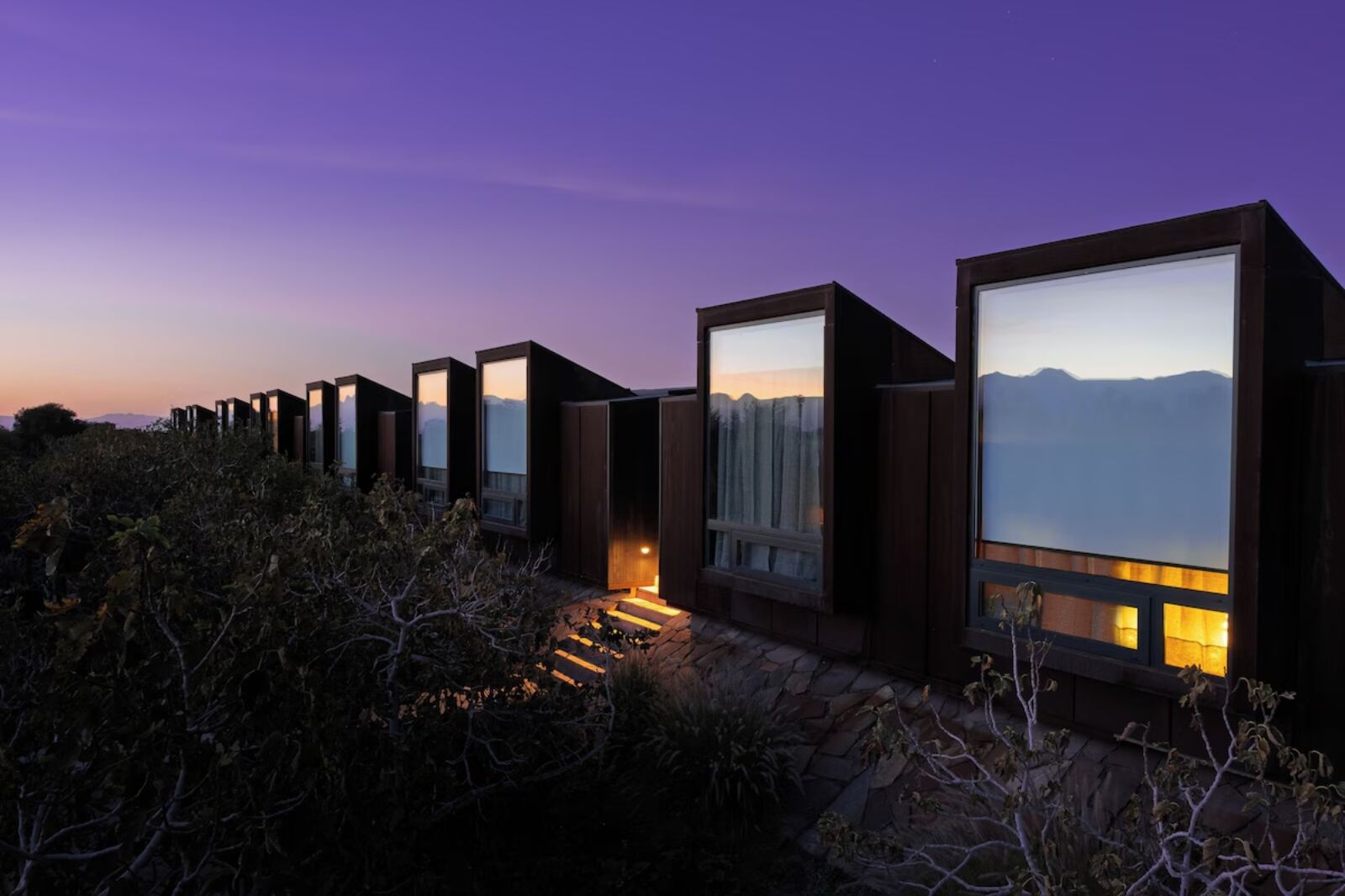
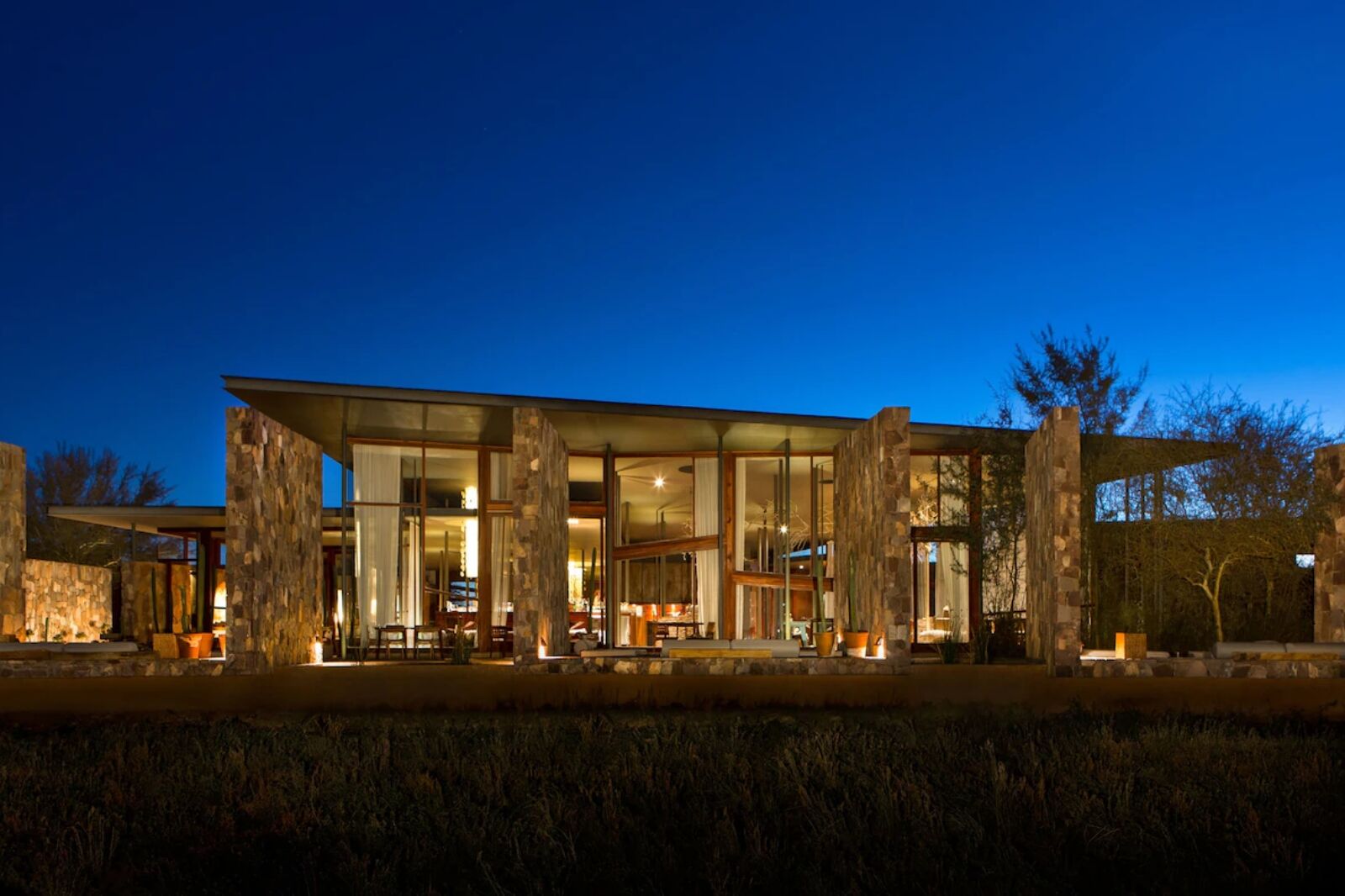
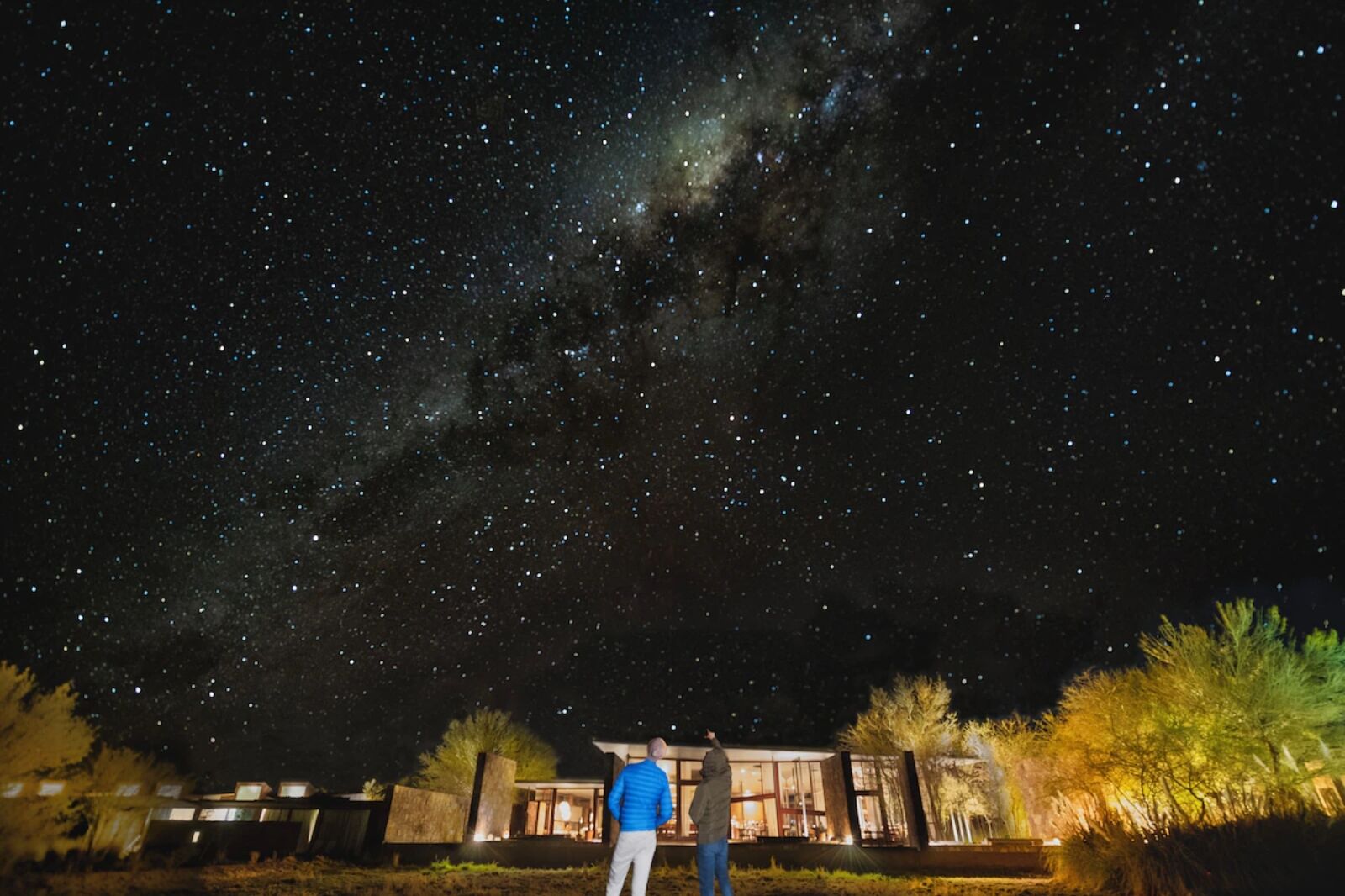
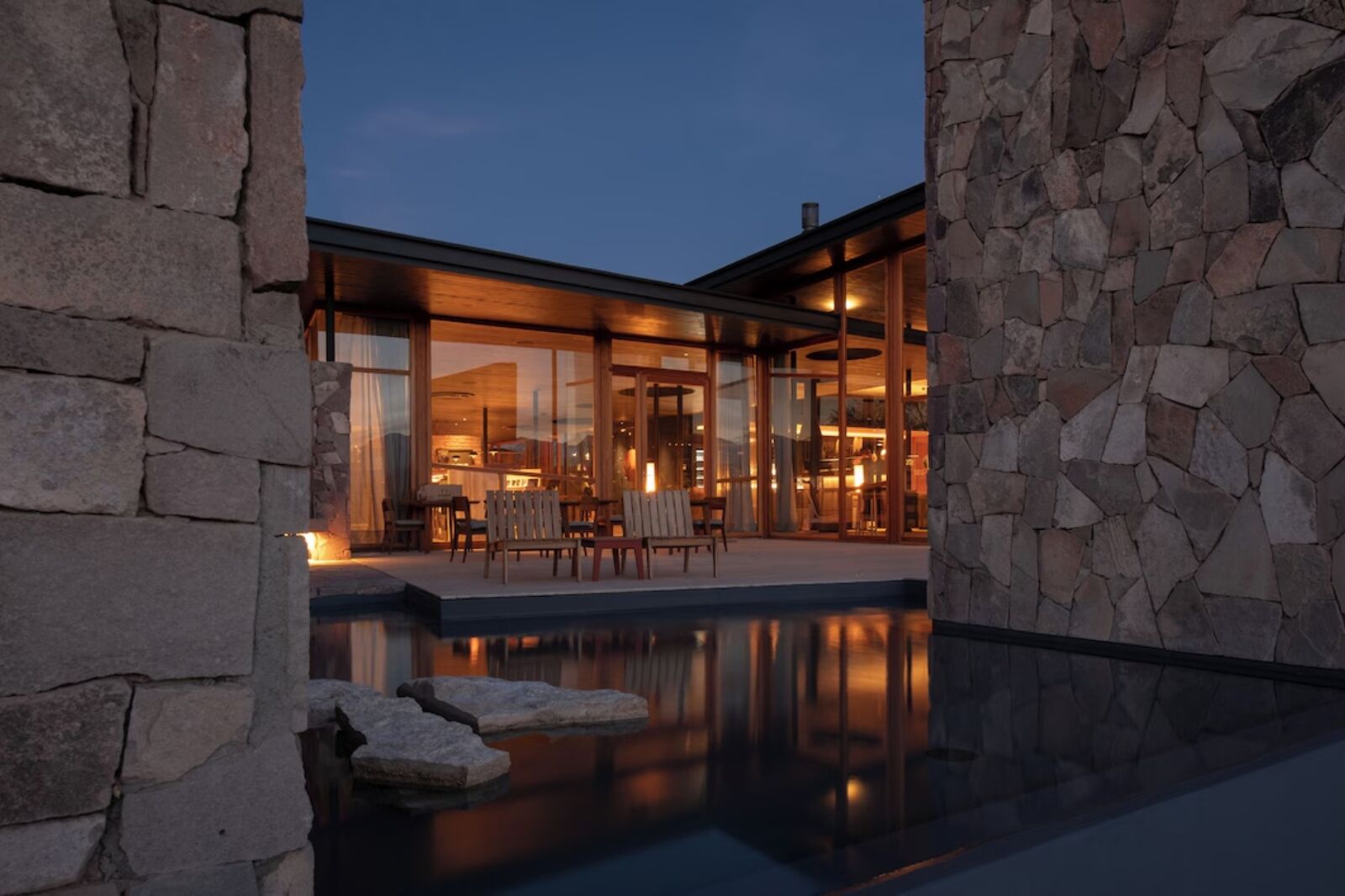
The Atacama Desert in northern Chile is the driest non-polar desert on Earth, and at nearly 8,000 feet above sea level, the air is so dry and the skies so consistently clear that several of the world’s major observatories are located within a few hours’ drive. Tierra Atacama is perched on the edge of San Pedro de Atacama, the small adobe village that serves as the gateway to the desert, with all 28 rooms facing the 19,409-foot Licancabur volcano — a peak sacred to the Indigenous Lican Antay people, who have lived in this desert for centuries. The hotel completed a $20 million renovation in 2025, and the new suites have pergolas on their terraces that open fully to the sky at night. After dark, guides lead nightly stargazing sessions in the hotel’s gardens starting at 9:00 PM, covering both Western astronomy and Andean cosmology.
Arctic skies in Sweden, The 7th Room TreeHotel
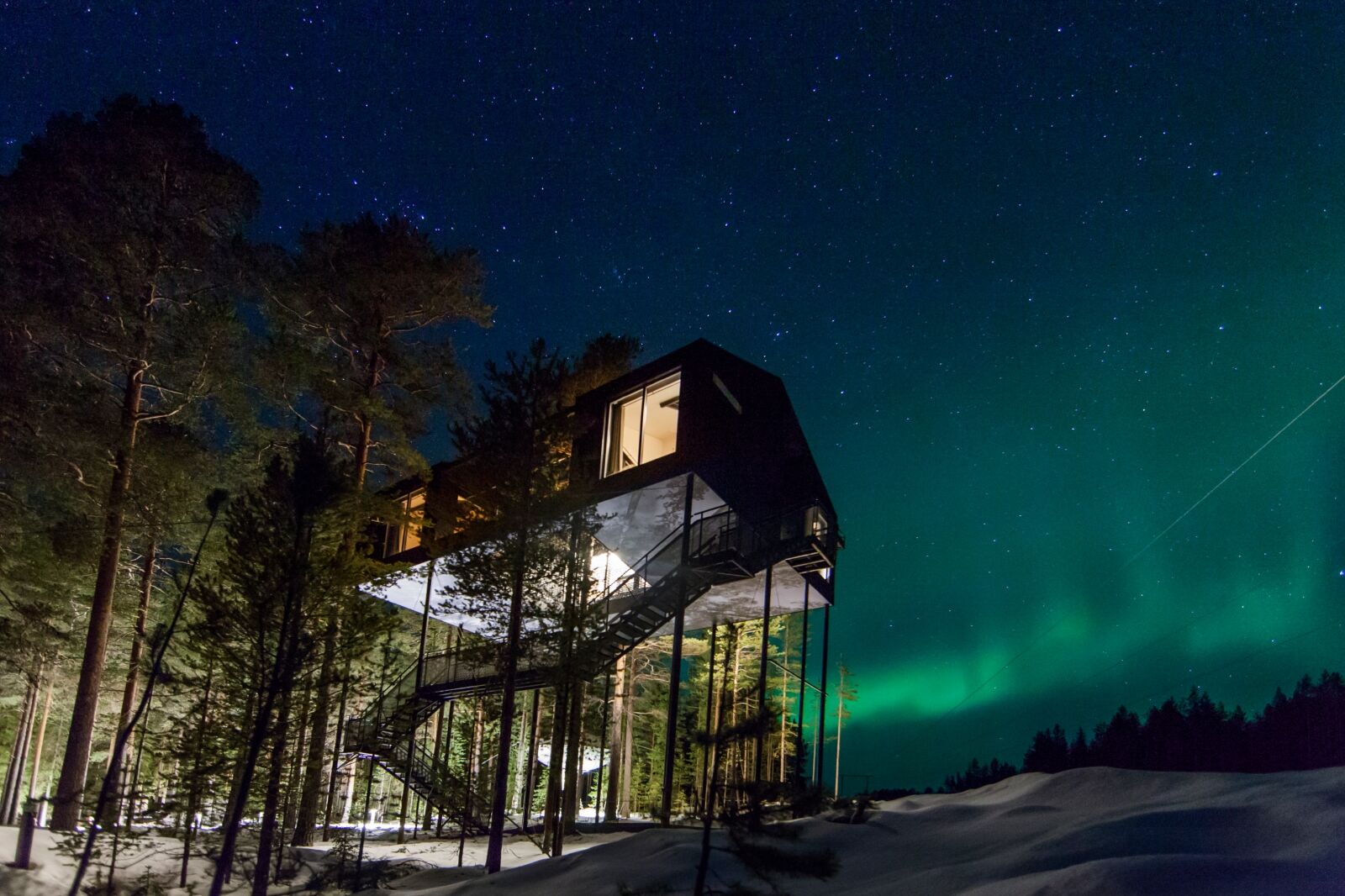
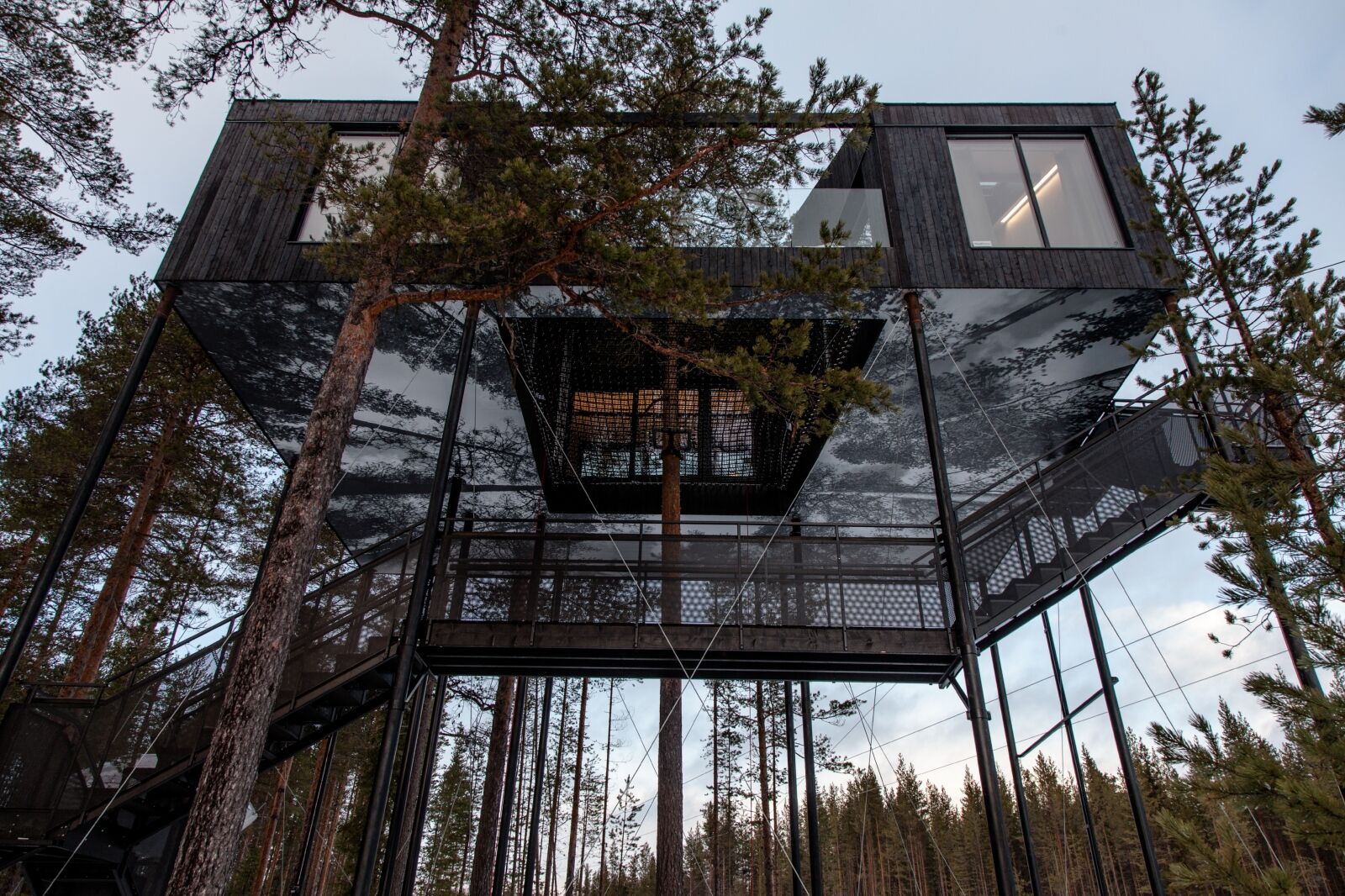
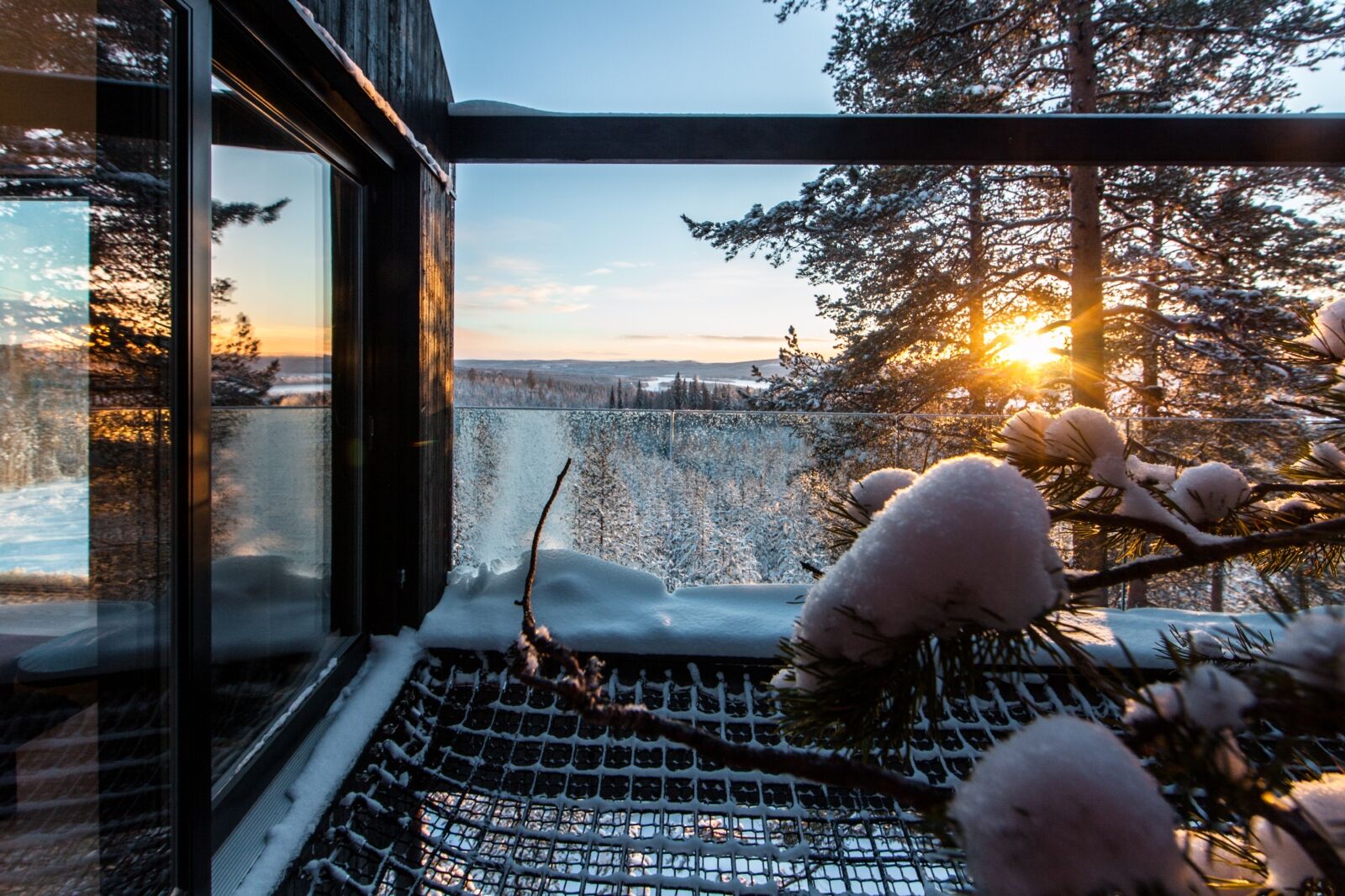
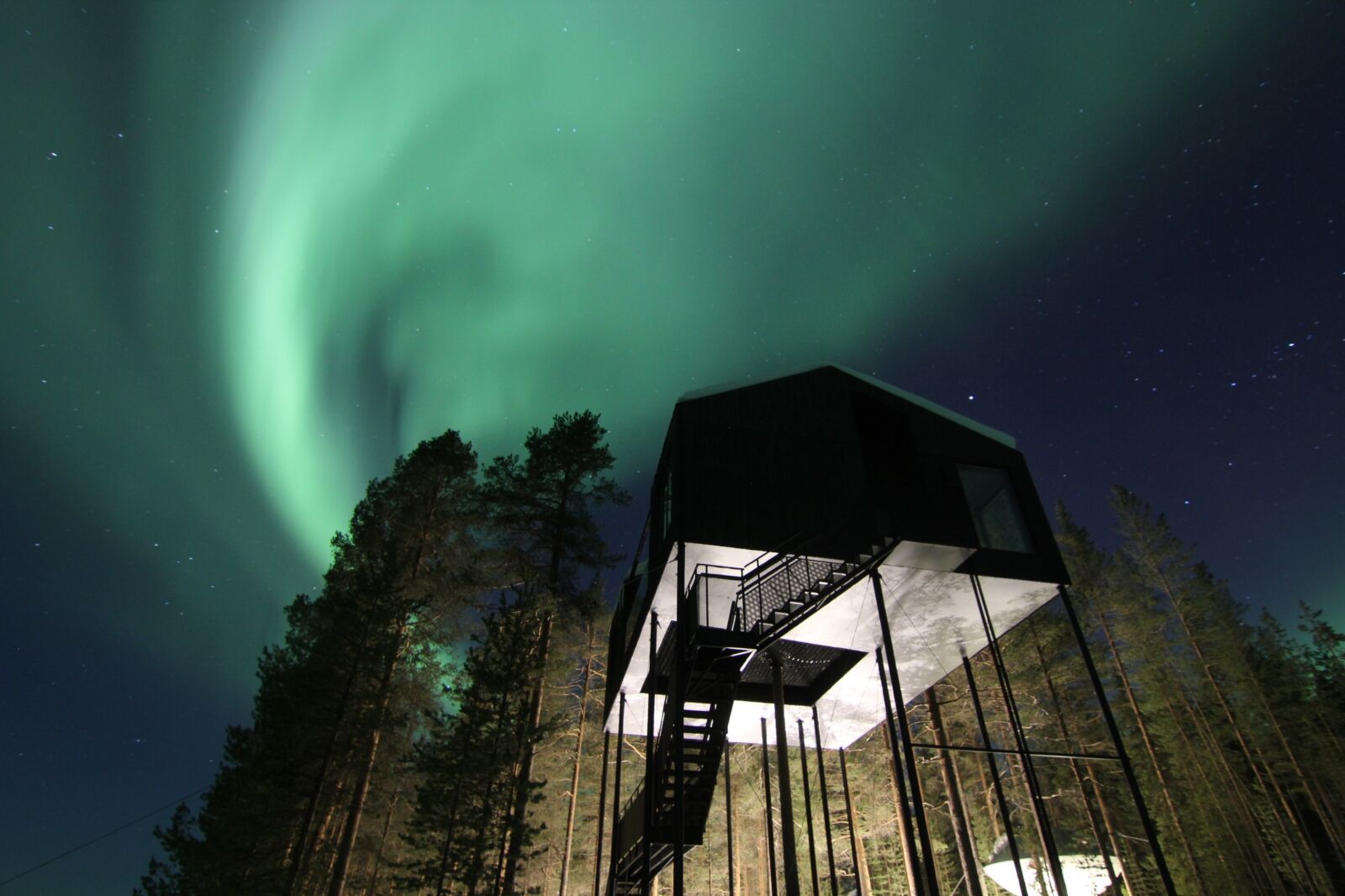
The 7th Room hovers 33 feet up in the pine forest outside Harads, a small village in Swedish Lapland about 30 miles south of the Arctic Circle, designed by the Norwegian architecture firm Snøhetta. The two bedrooms sit on opposite sides of the cabin, each with skylights above the beds and sliding glass doors opening onto a double-layered net terrace with a live pine growing up through the middle of it. From there you have a clear view of the Lule River and, from late August through April, a reasonable chance of seeing the aurora borealis ripple across the sky above the treeline. The heart of the cabin is the Northern Light lounge which has a pellet stove, a mid-century Norwegian Scandia Chair, and a floor-to-ceiling window facing north, where the aurora is most likely to appear.
Wine tasting and star spotting in Portugal, L’AND Vineyards Resort
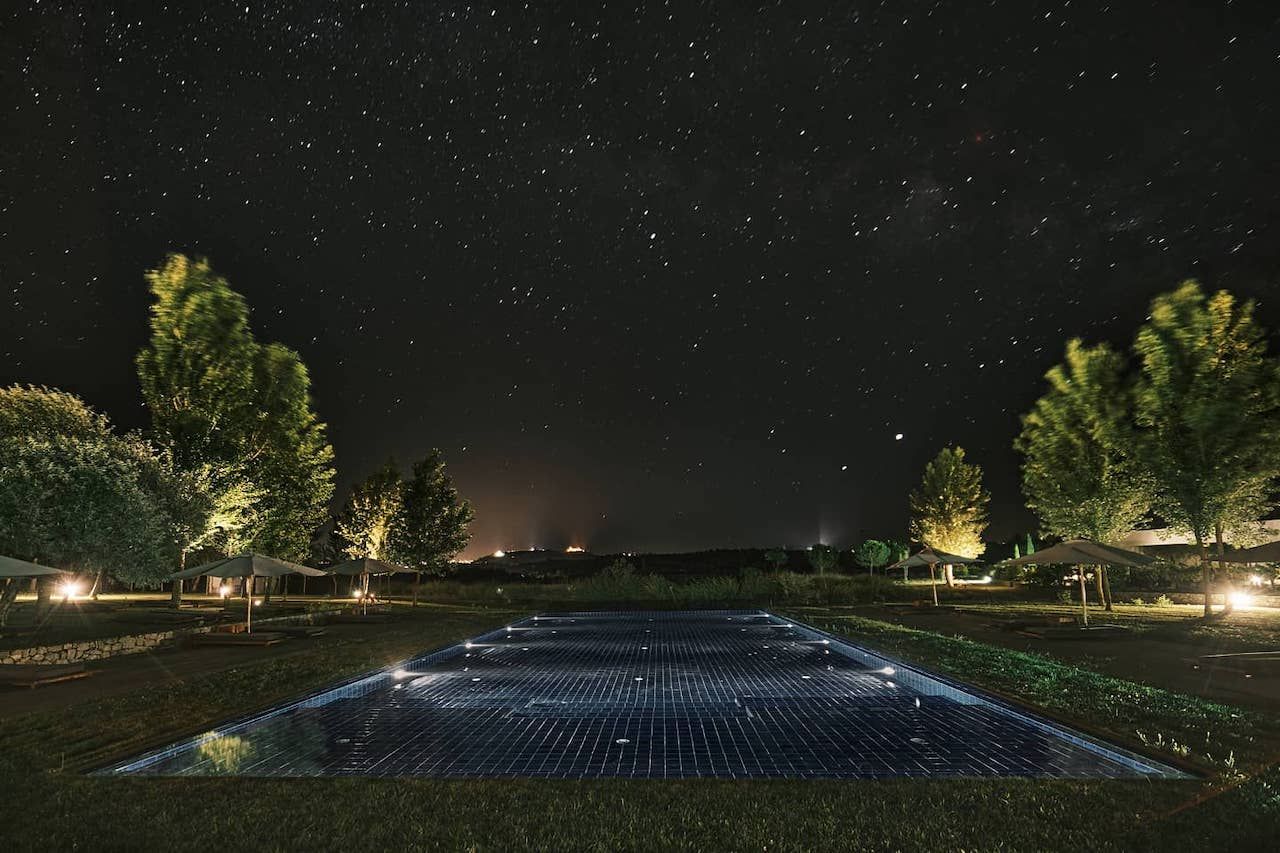
Photo: L’AND Vineyards
An hour from Lisbon, the Alentejo is a rolling landscape of cork oak, olive groves, and almost no one — which is why the area around Lake Alqueva became the world’s first UNESCO-backed Starlight Tourism Destination, a certification that recognizes both the quality of the night sky and the local commitment to keeping it that way. L’AND Vineyards is in the middle of it, a resort designed by Brazilian architect Márcio Kogan among 15 acres of vines, with medieval castle ruins visible on the ridge above. The art collection includes works by Michael Biberstein, whose paintings take the sky itself as subject matter. During the day there’s a Vinotherapy Spa and wine tastings from the estate’s own production. In the Sky Suites, press a button and the ceiling above your bed slides open, leaving you flat on your back under the Alentejo stars, with a swimming pool and fireplace on the terrace just outside.
Northern lights in Iceland, Hotel Rangá
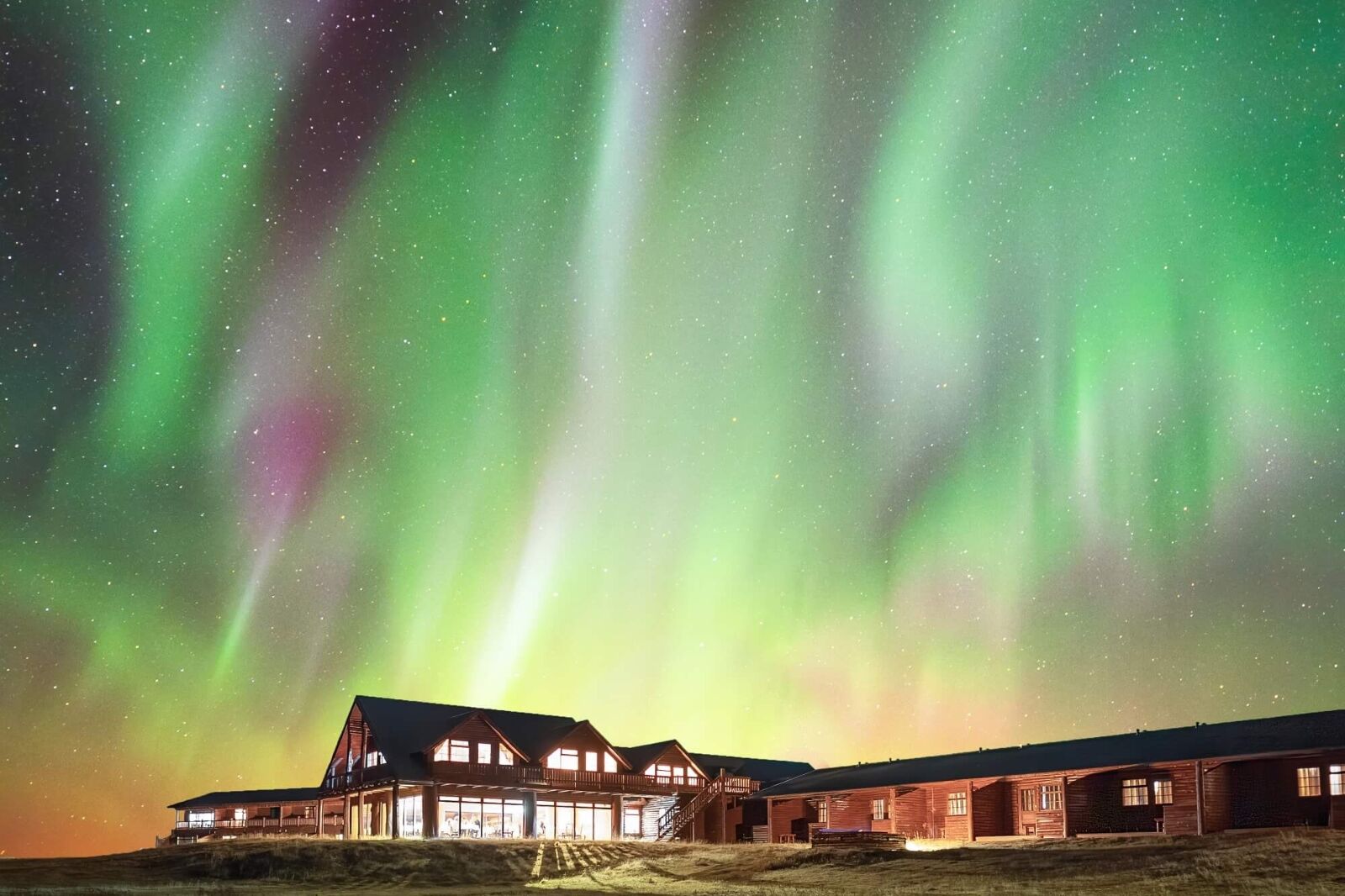
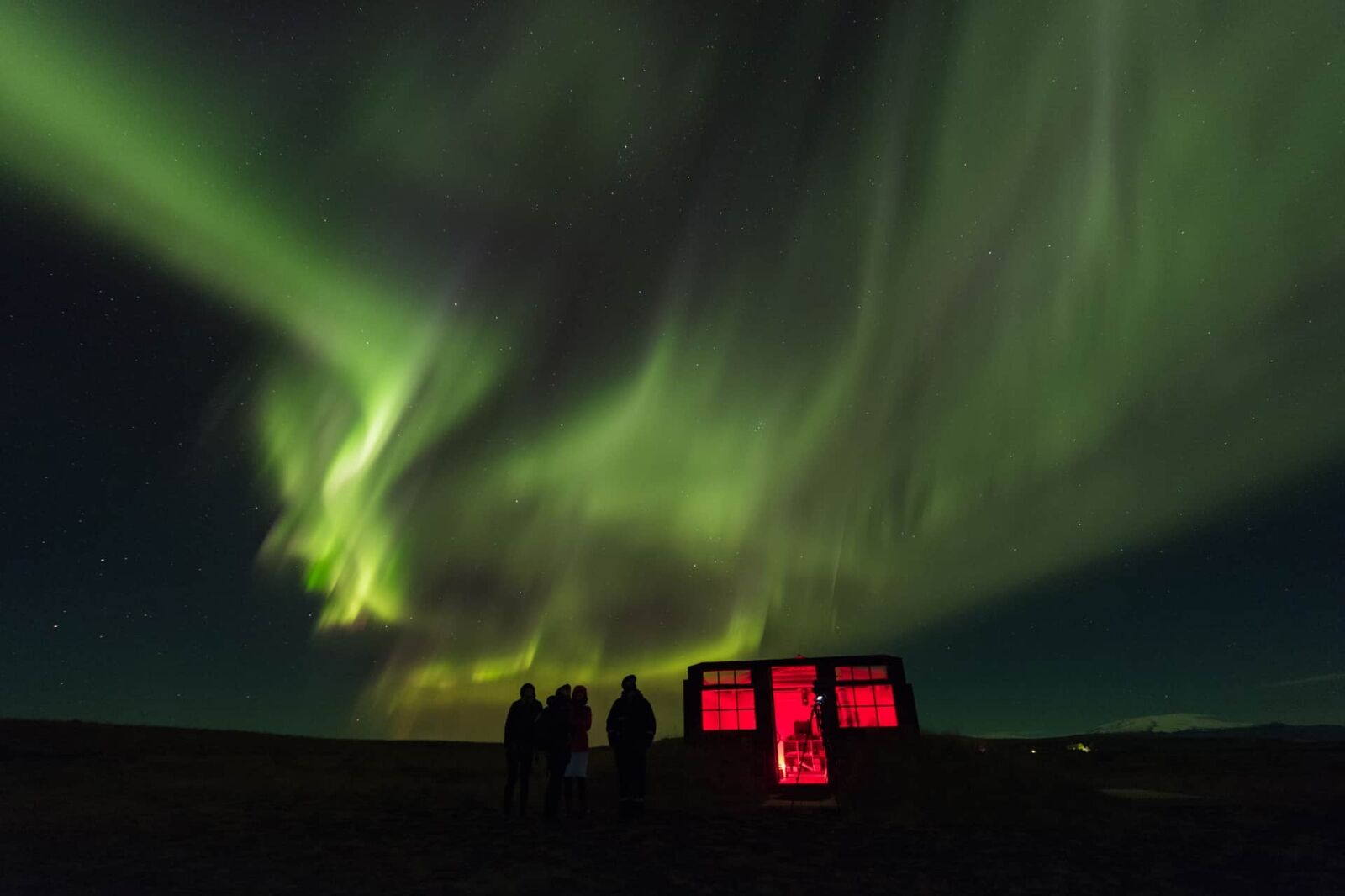
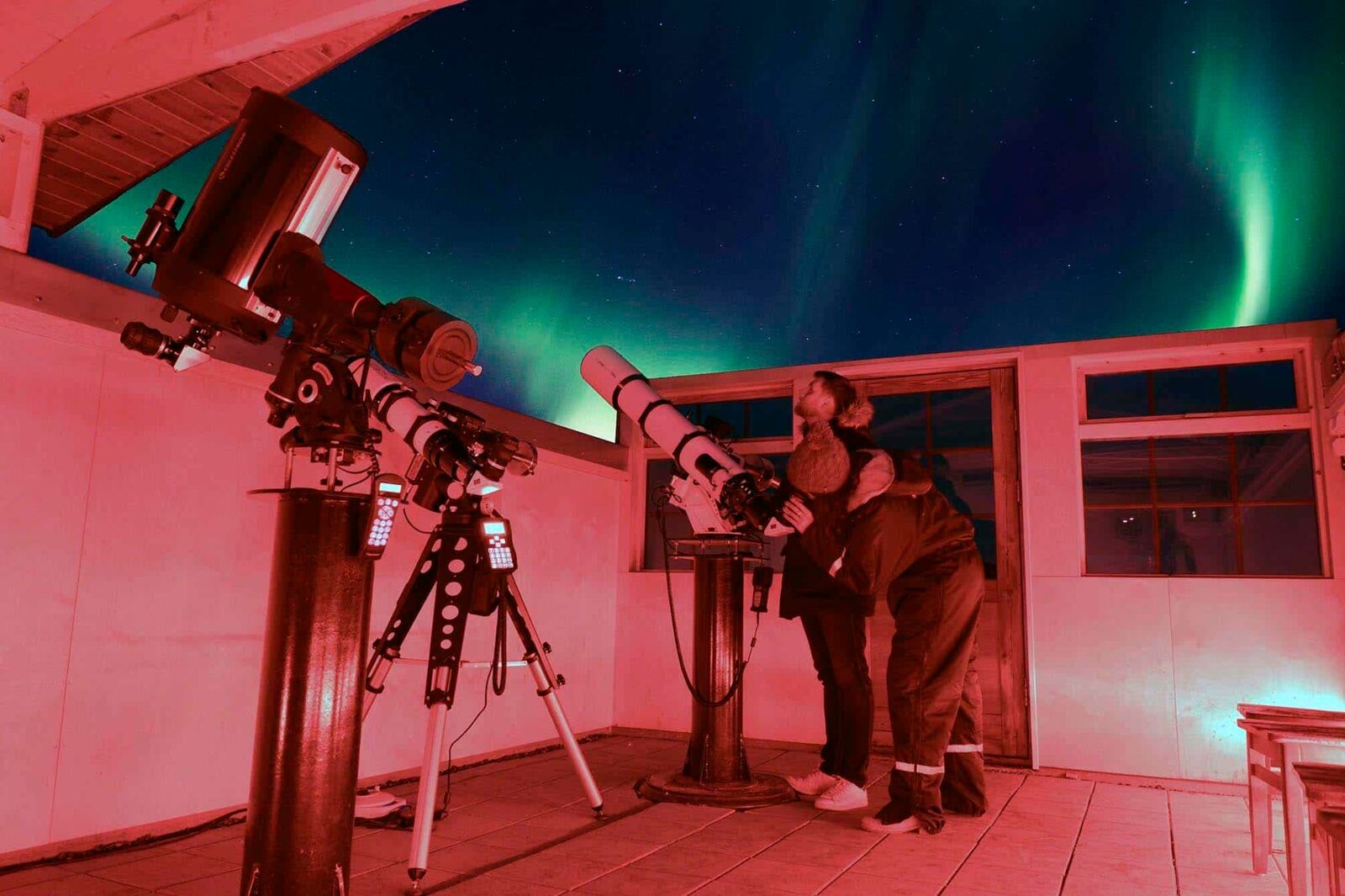
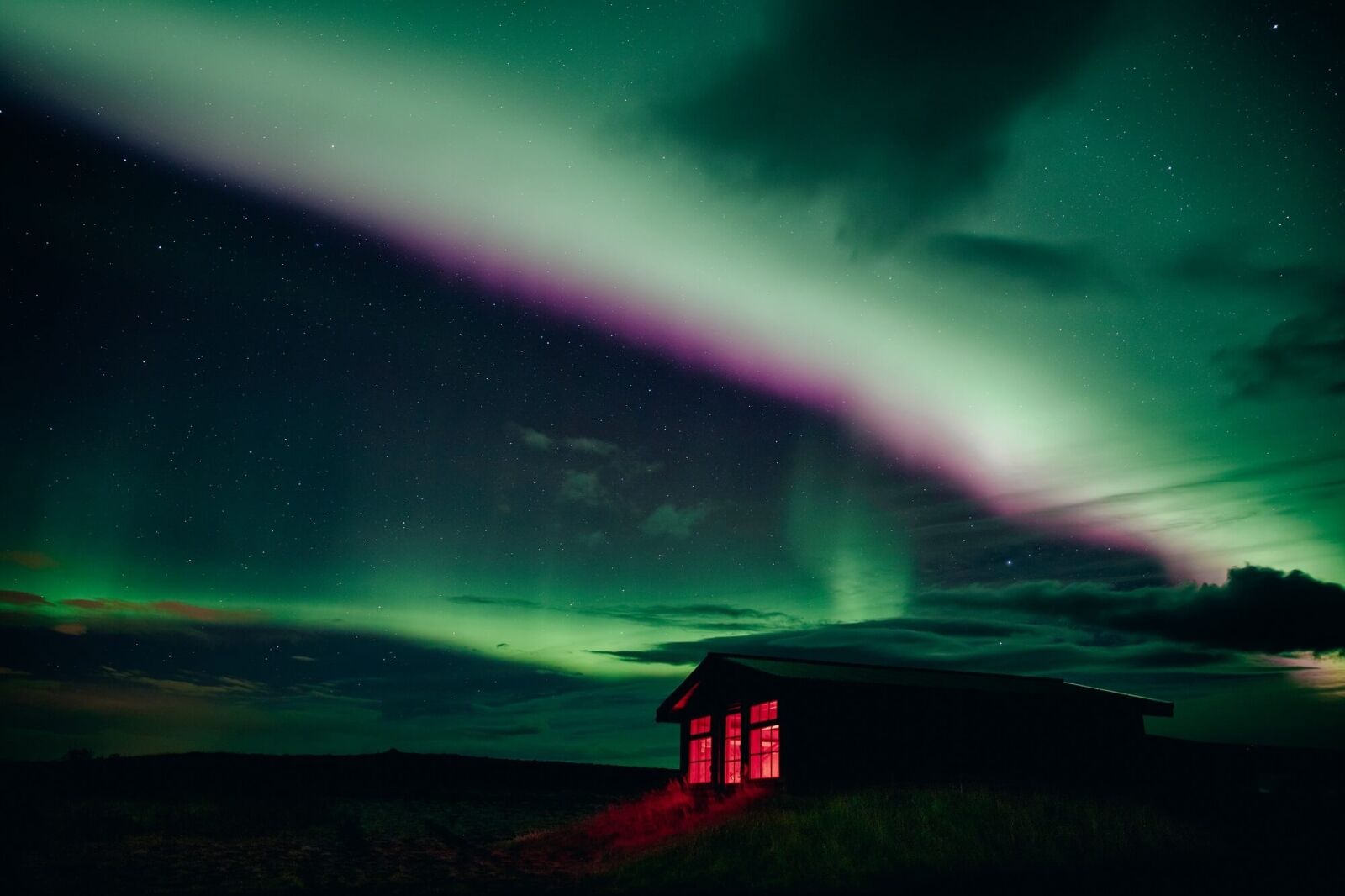
About 90 minutes east of Reykjavík, on the banks of the Rangá salmon river, Hotel Rangá has the only public observatory in Iceland offering guided tours of the night sky. It opened in 2014 and sits about 150 meters from the main building. On clear nights from September through April, a resident astronomer leads sessions using two high-powered telescopes — a 14-inch Celestron Edge HD Schmidt-Cassegrain reflector and a TEC 160ED APO refractor — both computer-controlled and capable of revealing Saturn’s rings, the Orion Nebula, and the Andromeda galaxy. Sessions are weather-dependent; staff confirm by 5:00 PM whether conditions will hold. Back at the hotel, geothermal hot tubs face the open plains, and if the aurora appears overnight, the front desk calls your room.
Dark sky reserve in New Zealand, SkyScape
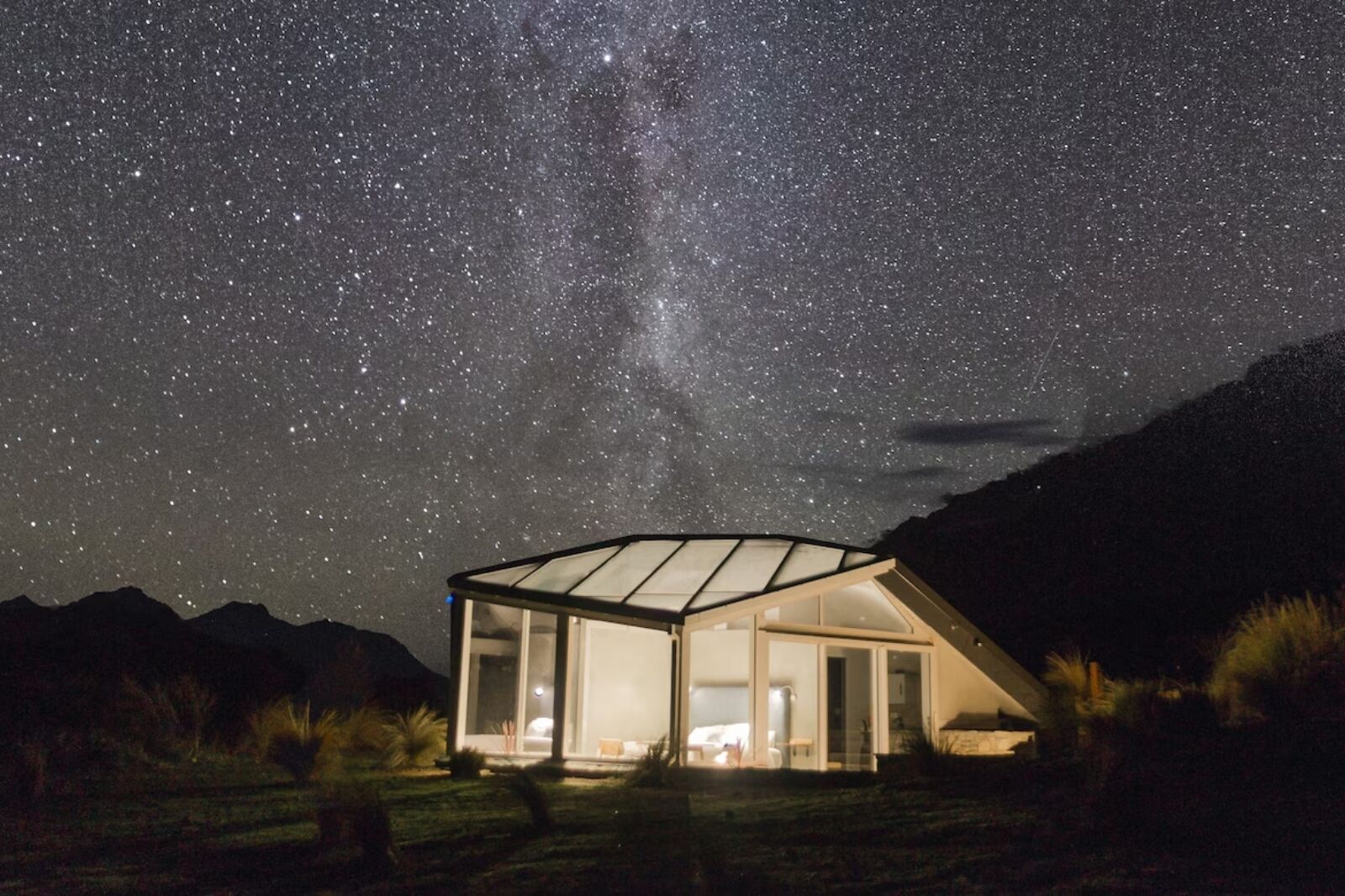
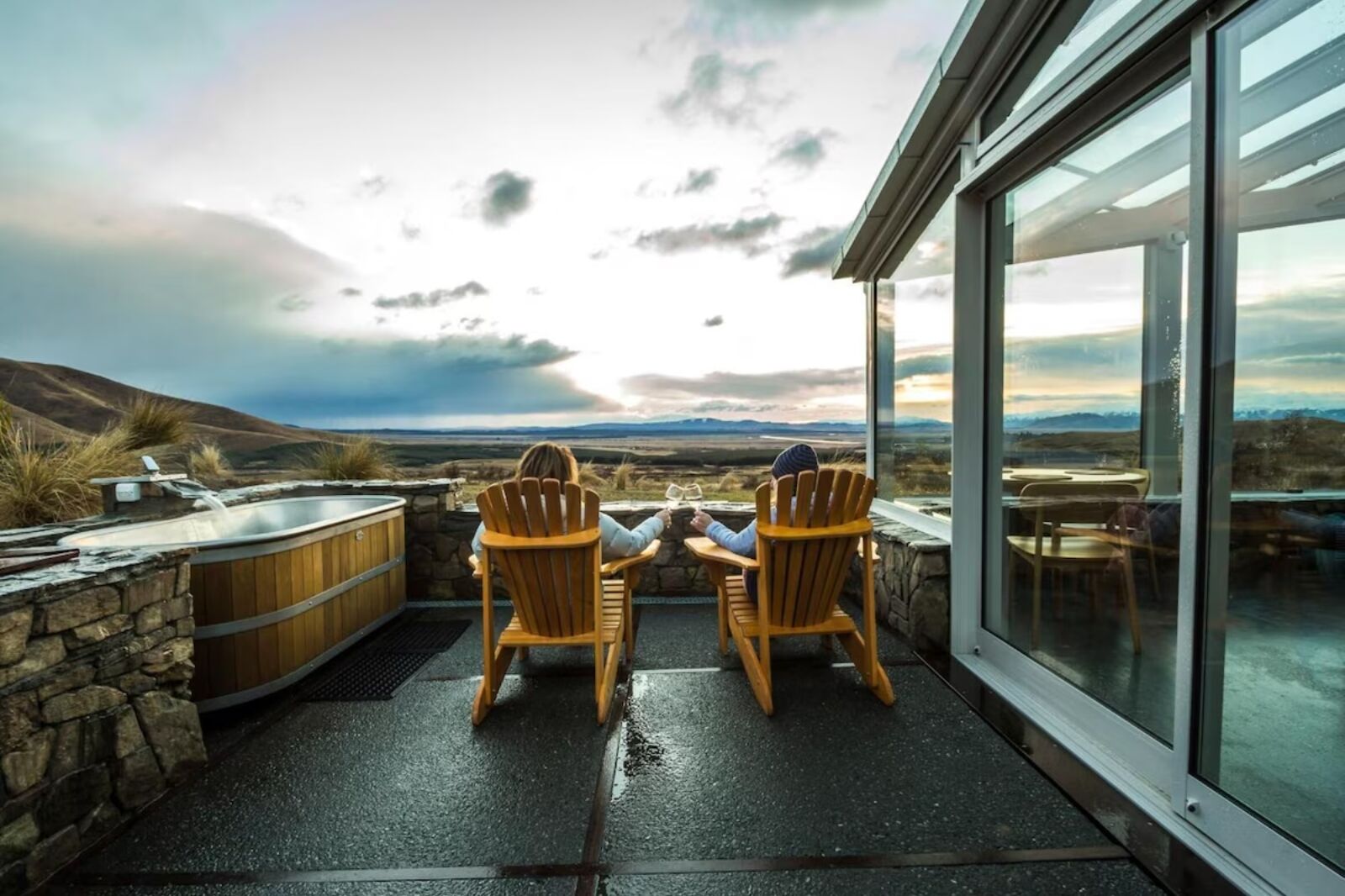
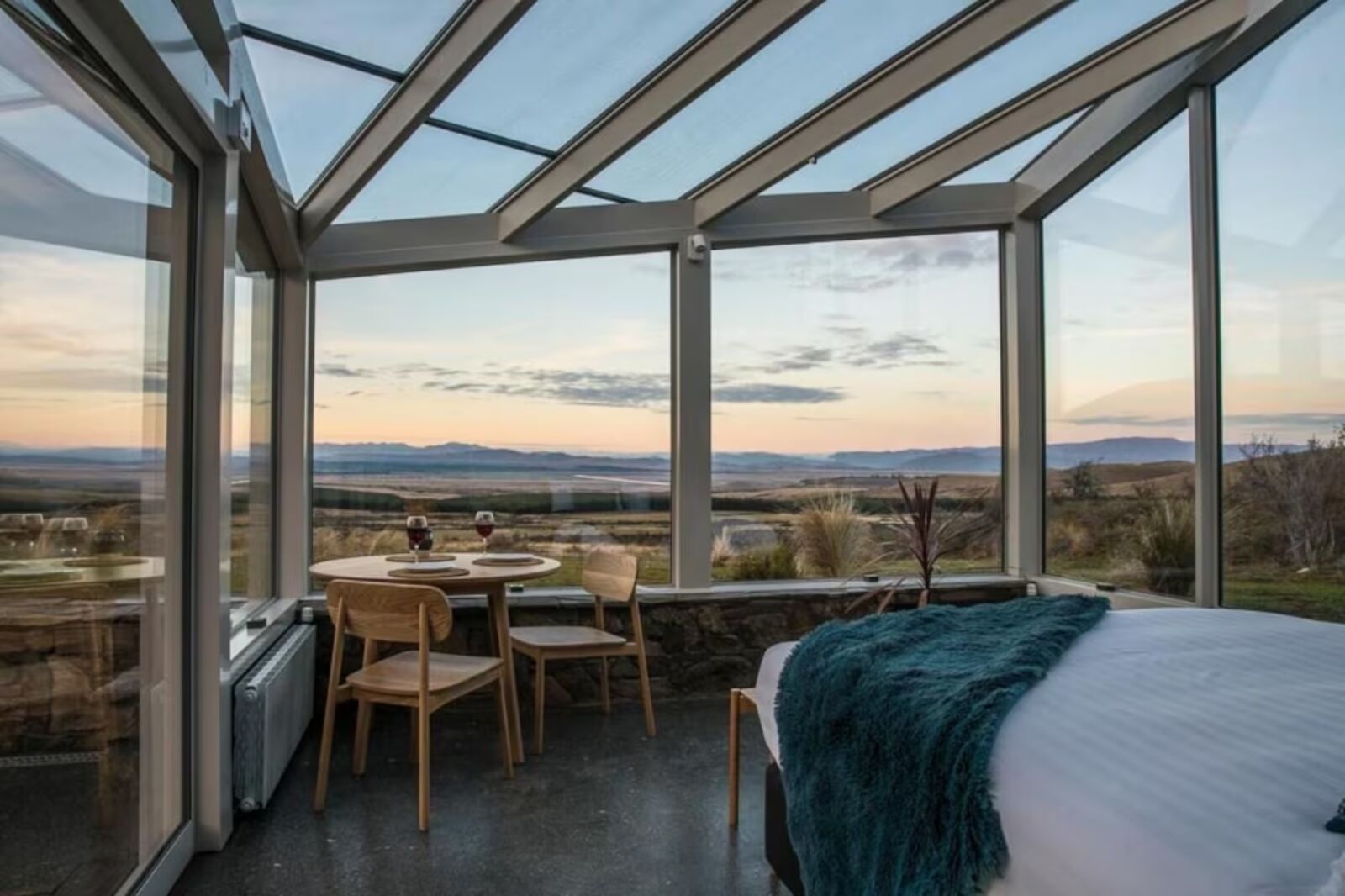
The Mackenzie Basin is a vast high-country grassland in the center of New Zealand’s South Island, ringed by the Southern Alps and three turquoise glacier lakes, about three hours from Christchurch. The sky here stays clear roughly 70 percent of nights which is why the entire basin was designated the Aoraki Mackenzie International Dark Sky Reserve, the world’s largest dark sky reserve and the first to earn gold tier status. SkyScape is located inside it, three glass-roof cabins on a 6,000-acre working sheep and cattle farm seven miles from the small town of Twizel, below the Ben Ohau Range. The cabins are dug into the hillside so the only thing above you is sky, and the bedroom is almost entirely glass — you fall asleep watching the Milky Way move overhead and wake up to the Southern Alps turning pink at sunrise.
Canyon stargazing in Oman, Anantara Al Jabal Al Akhdar
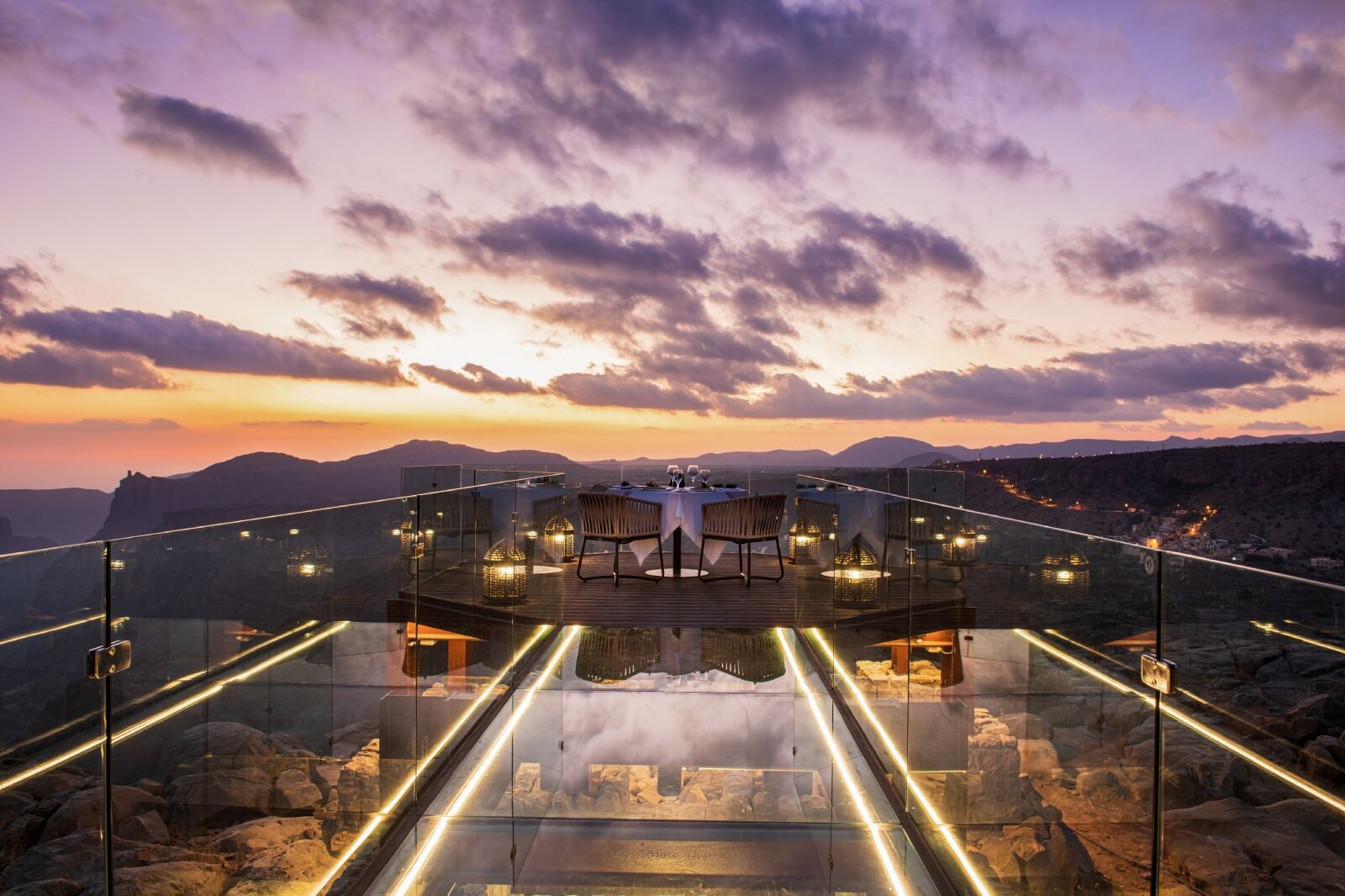
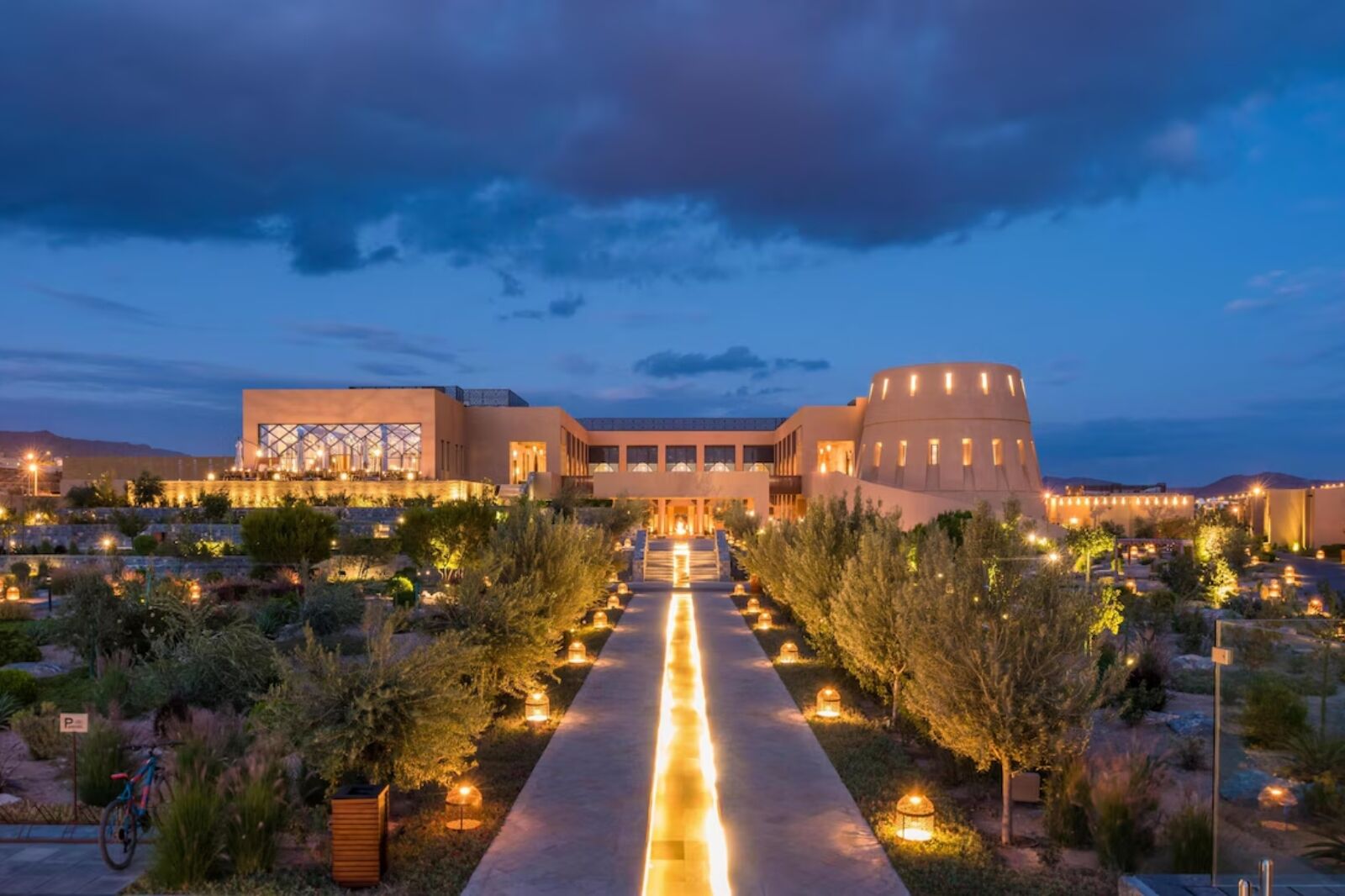
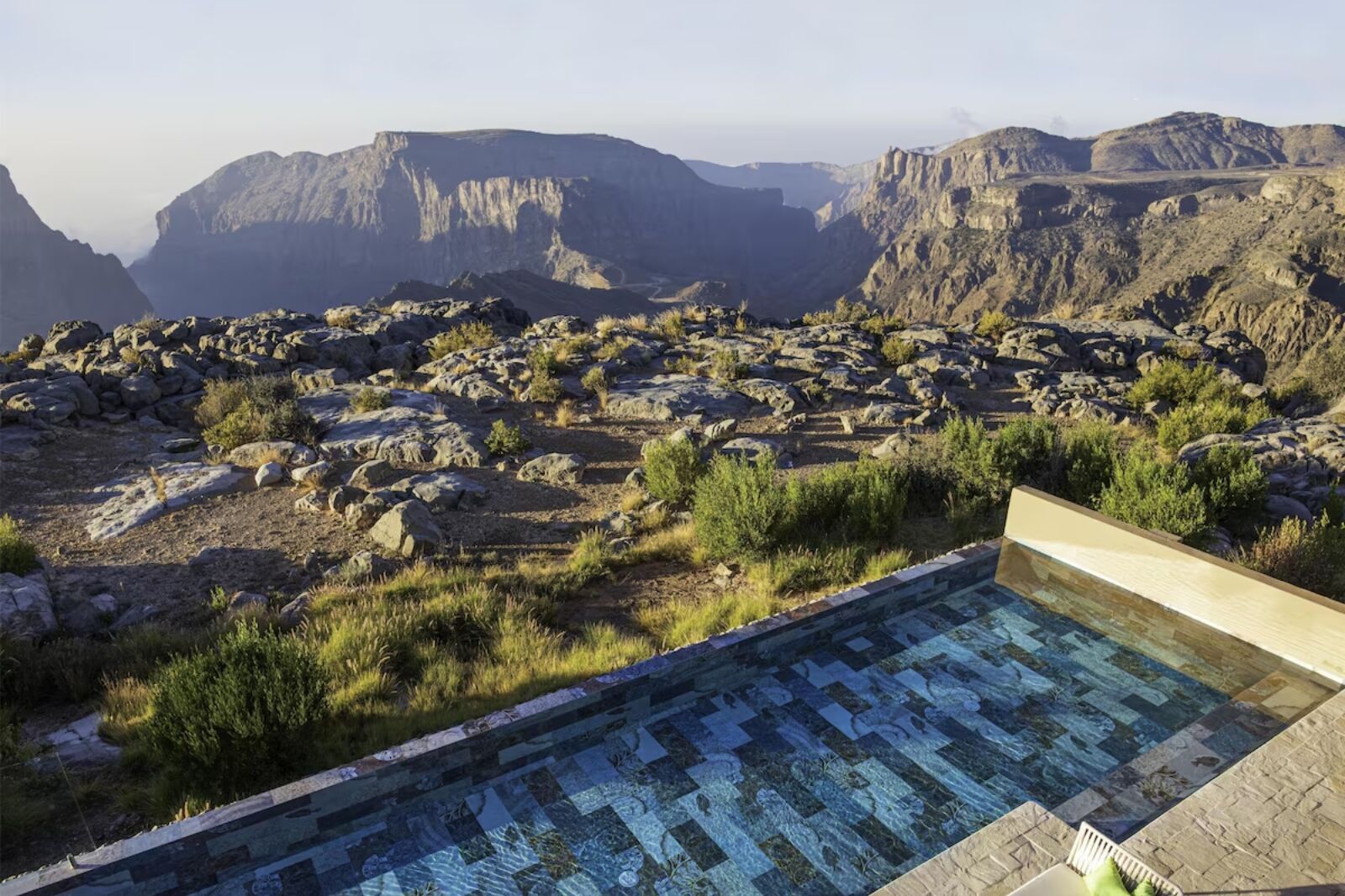
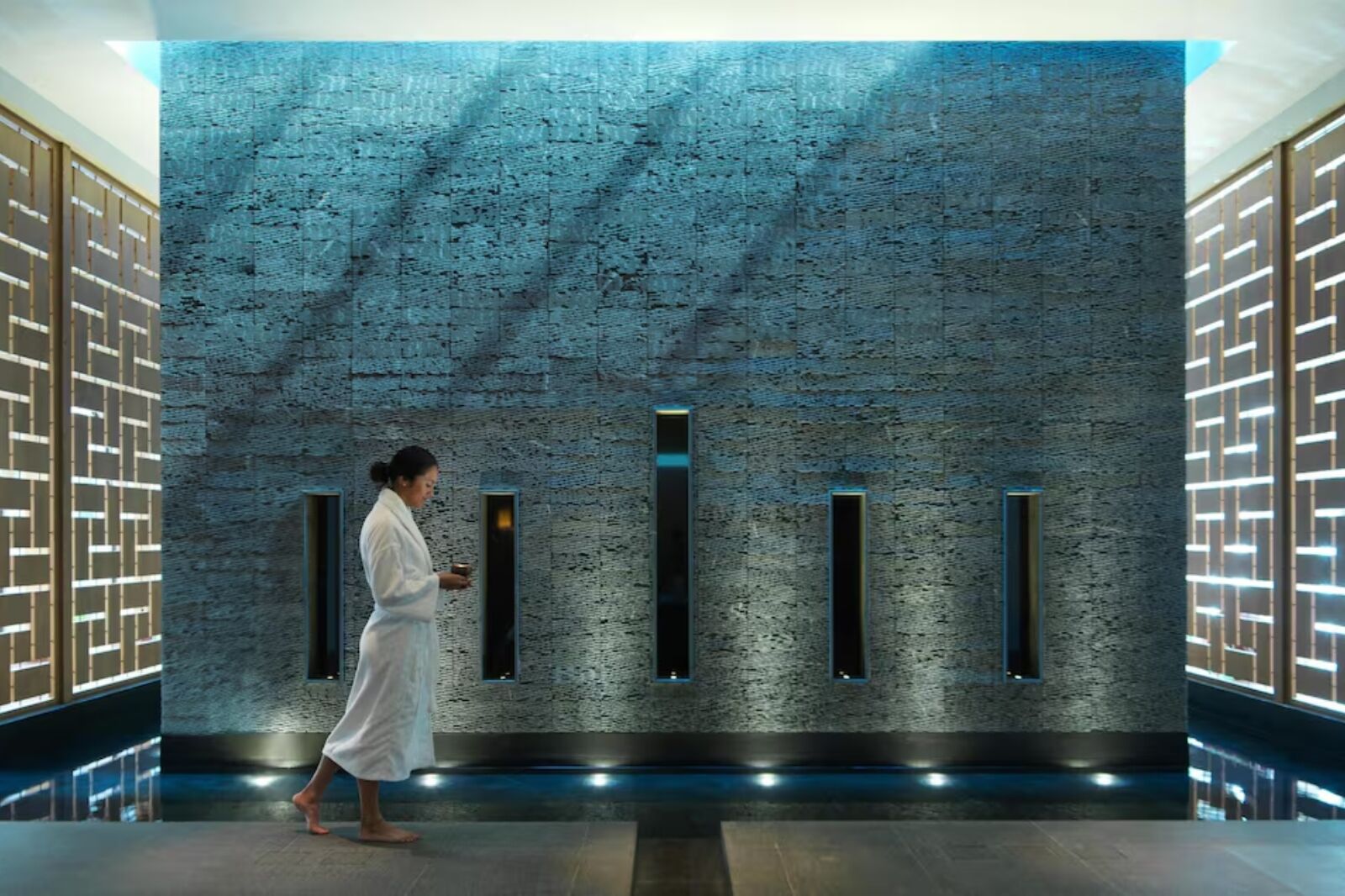
Oman’s Al Hajar Mountains run along the northeastern edge of the Arabian Peninsula, and the Anantara is propped 6,500 feet up on the Saiq Plateau, about two hours from Muscat, on the lip of a canyon that drops away from the resort’s infinity pool and glass balcony walkway. One of those viewpoints is called Diana’s Point, named for the Princess of Wales who visited in the ’80s. The stargazing experience lasts 90 minutes, starting at sunset — guests are driven about 15 minutes from the resort to a dark platform away from any ambient light, where an astronomer leads the session through the telescopes and across the night sky. A private group of up to four people pays $260 for the session; for larger groups of up to 30, the price drops to $65 per person. Book at least a week before you arrive.
Remote skies over Indonesia, Bawah Reserve
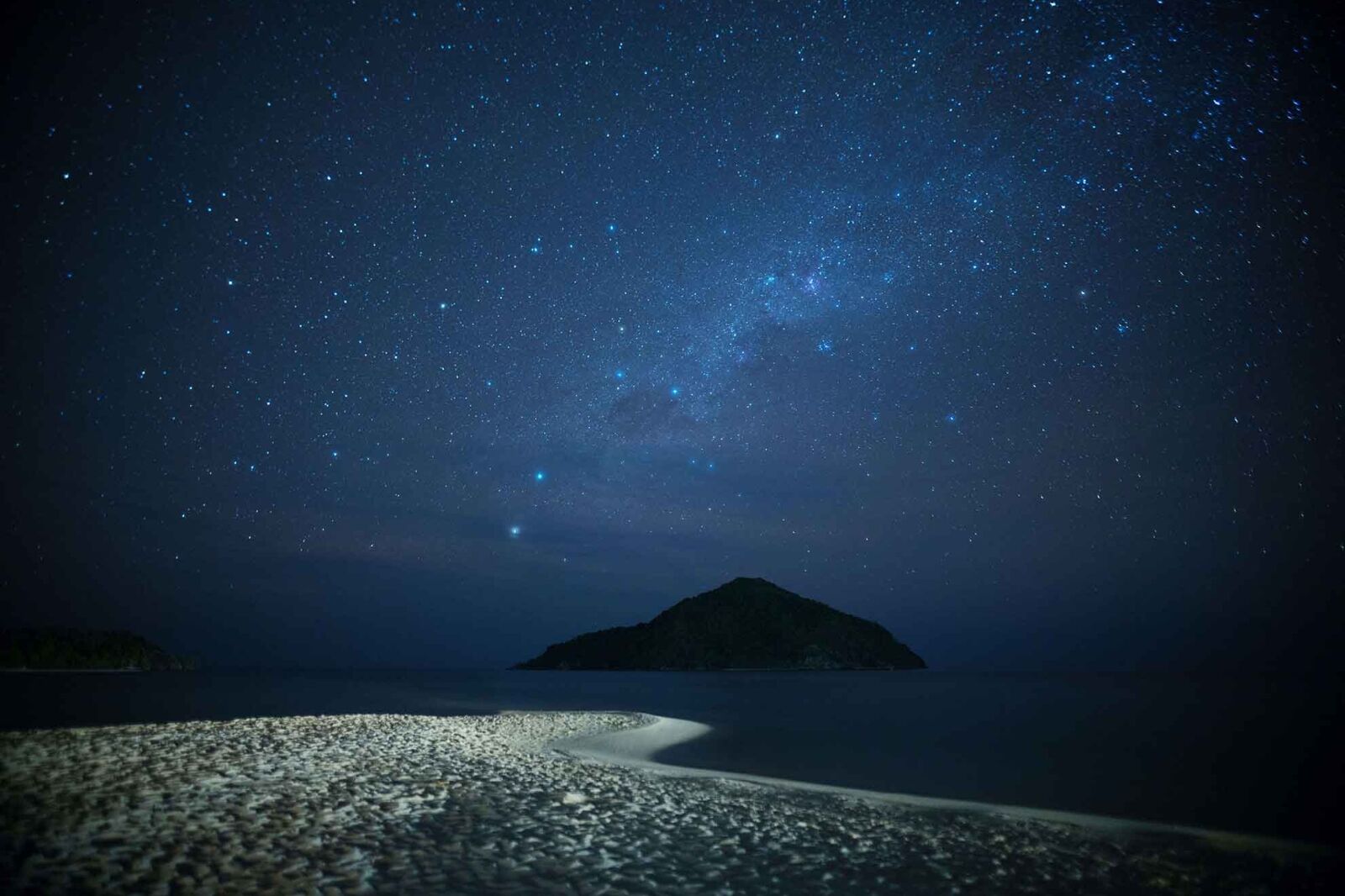
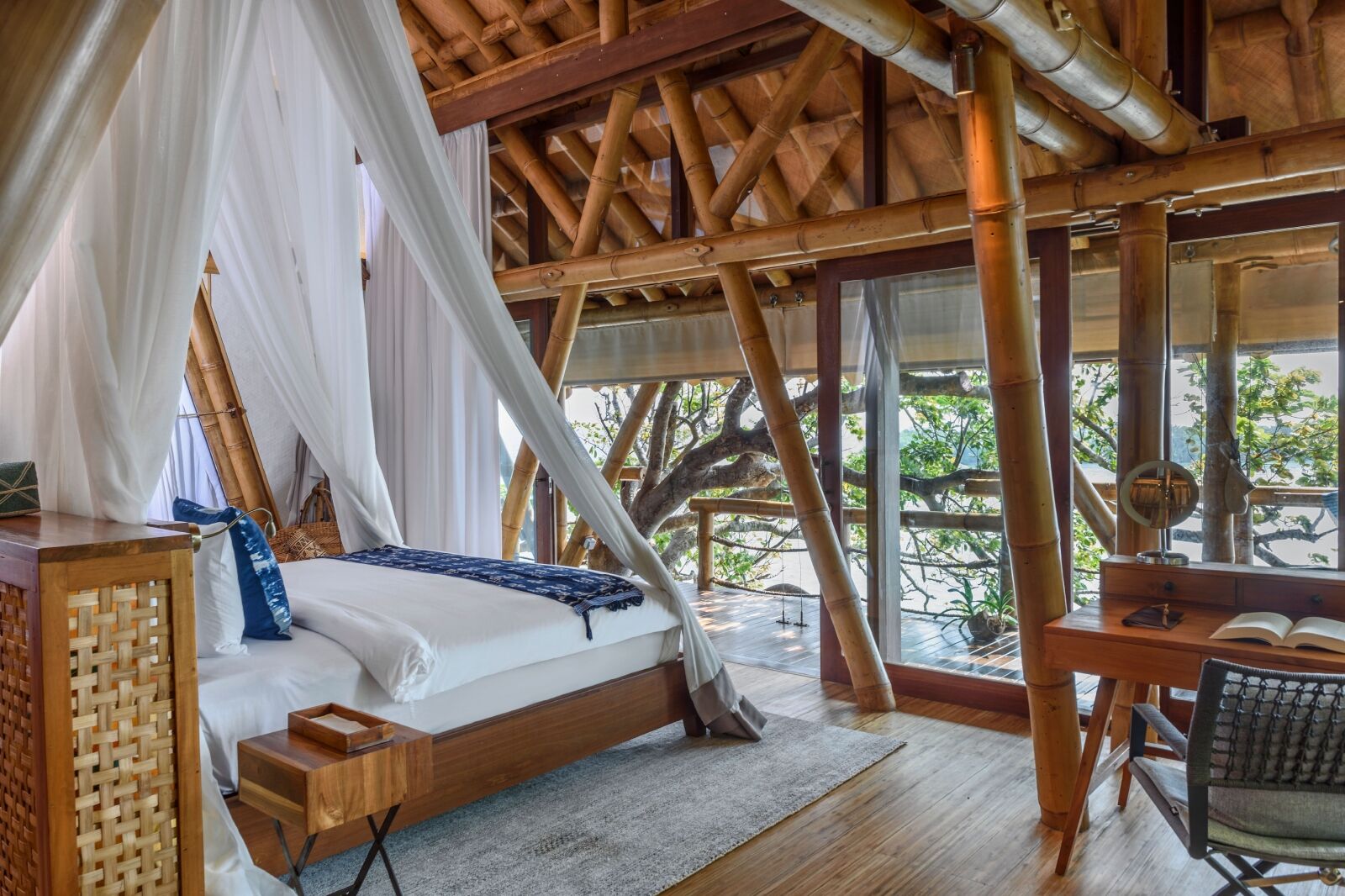
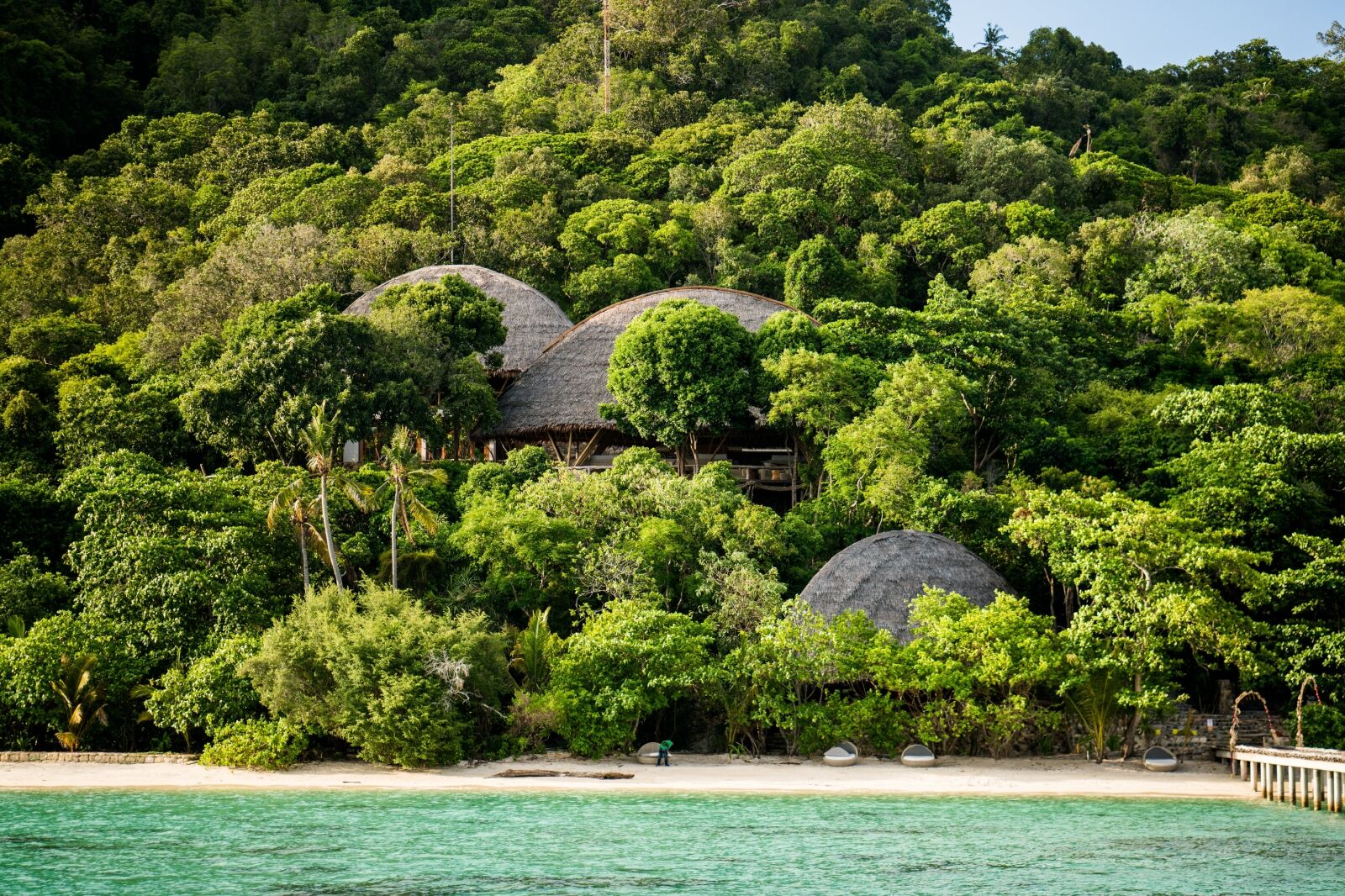
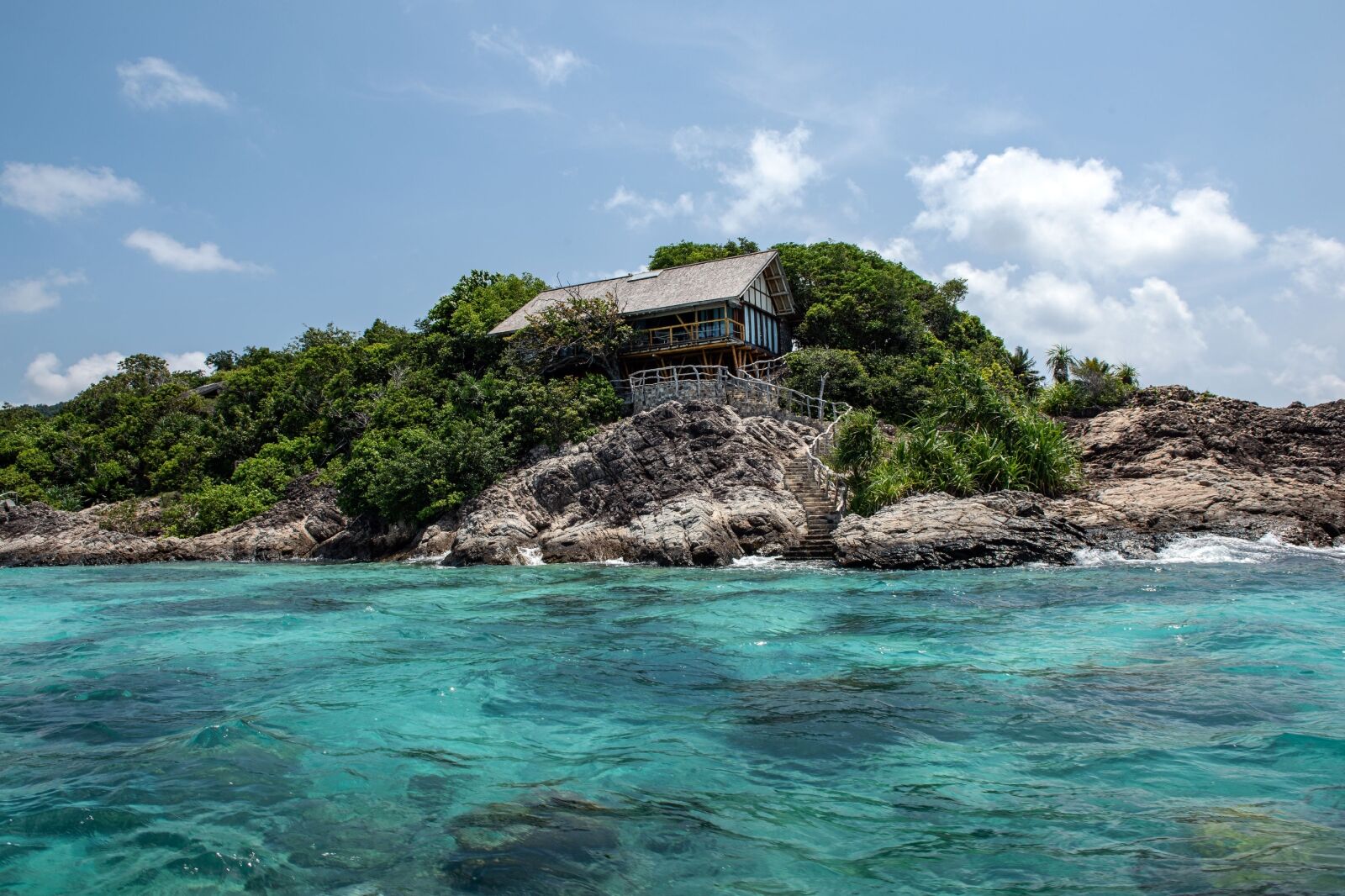
The Anambas archipelago sits in the South China Sea, roughly 160 nautical miles northeast of Singapore, so far out to sea that the night sky here is completely uninterrupted by artificial light. Bawah Reserve occupies six private islands within it — three lagoons, 13 beaches, and water so clear you can see the coral and stingrays below from the seaplane window on the way in. That journey starts in Singapore, where resort staff collect you, handle the ferry to Batam and the paperwork at the border, then put you on a seaplane for the final 75-minute flight over open sea. Each night the activities team runs stargazing sessions on the beach and jetty, the lack of any light pollution means the whole breadth of the southern sky opens up overhead, and the resort’s telescope is on hand for a closer look at the moon and planets. Villas start at $1,980 a night and include all meals, daily spa treatments, and most activities.
Big Bend desert skies, The Summit at Big Bend
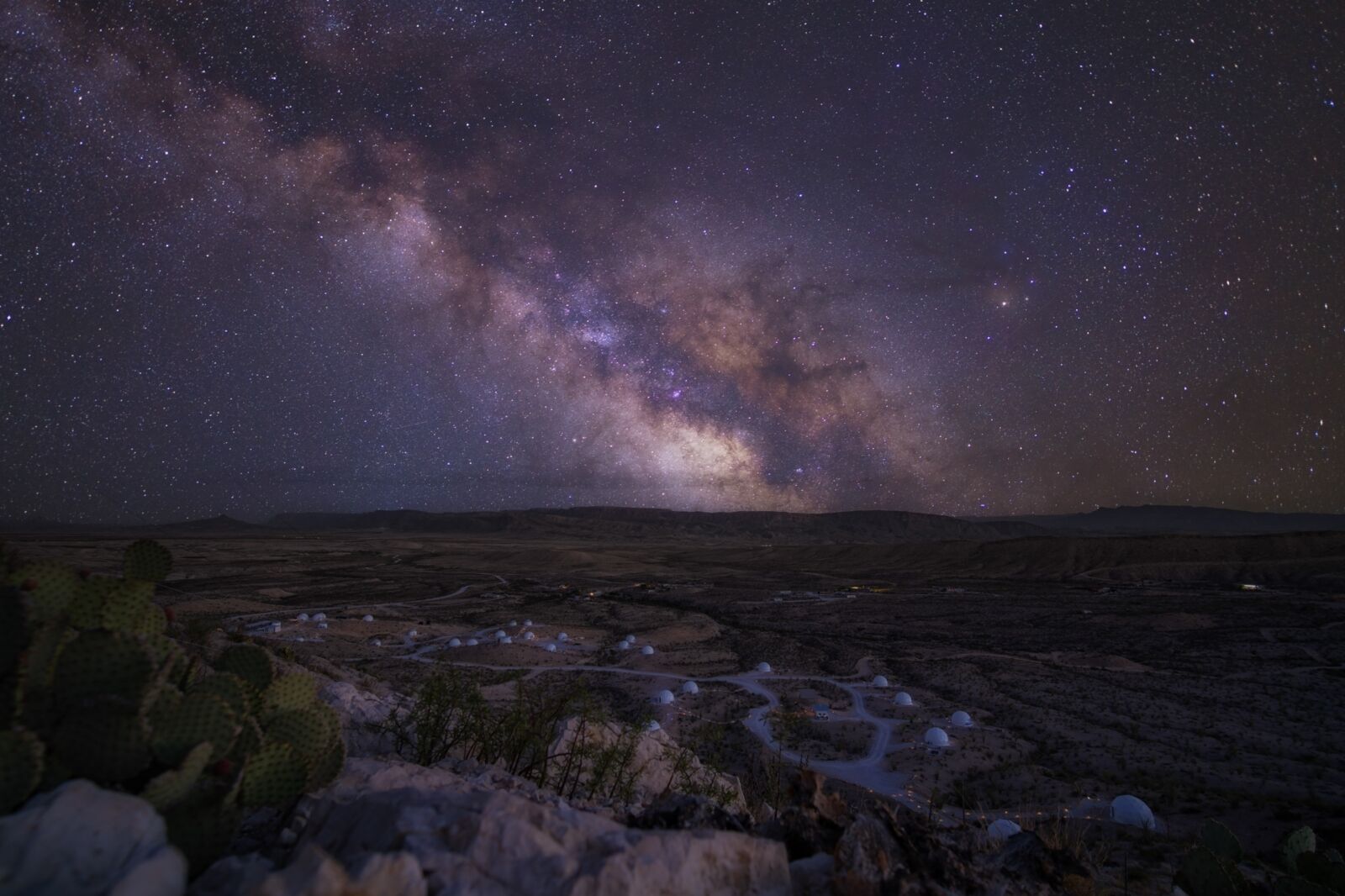
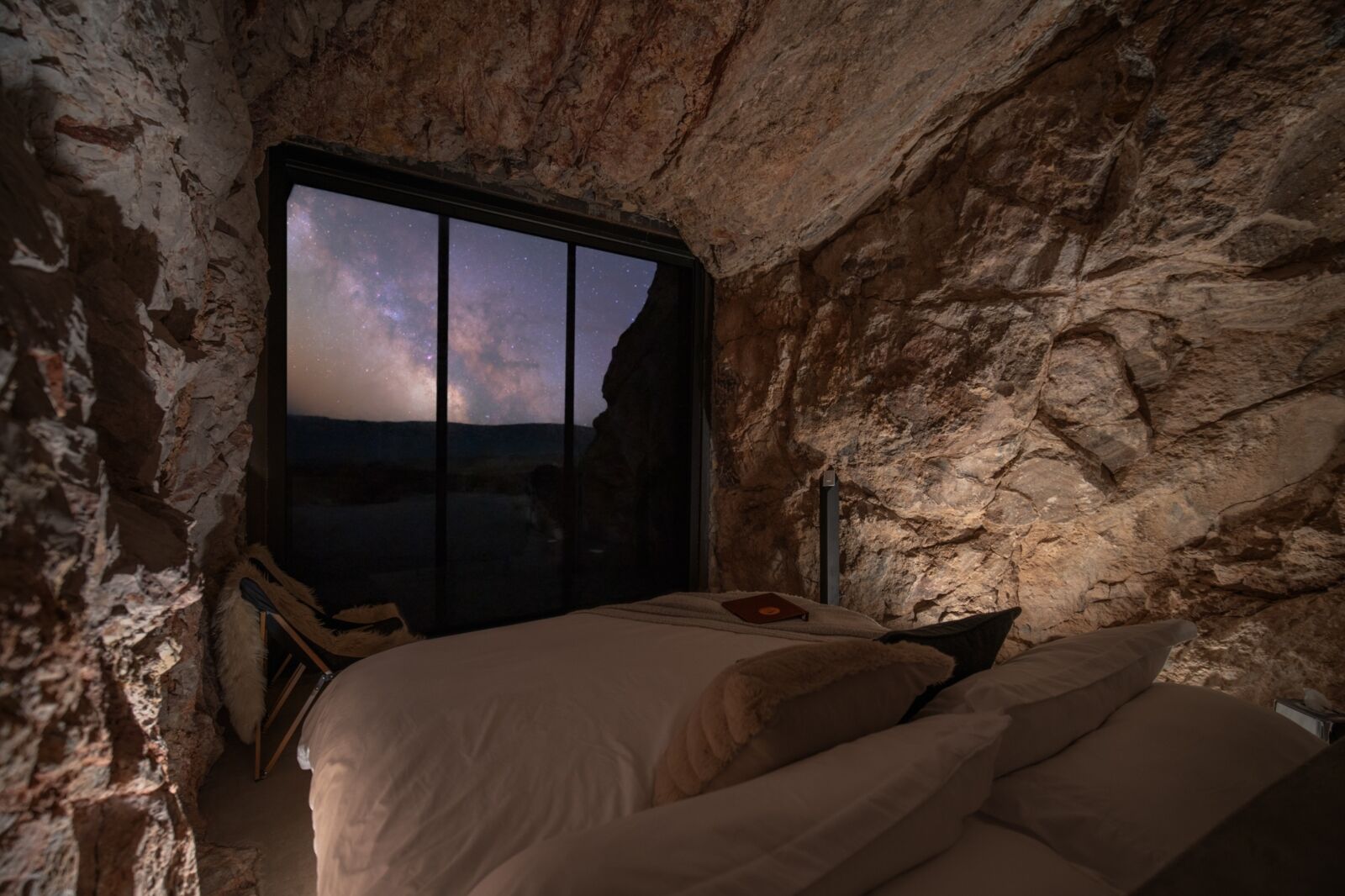
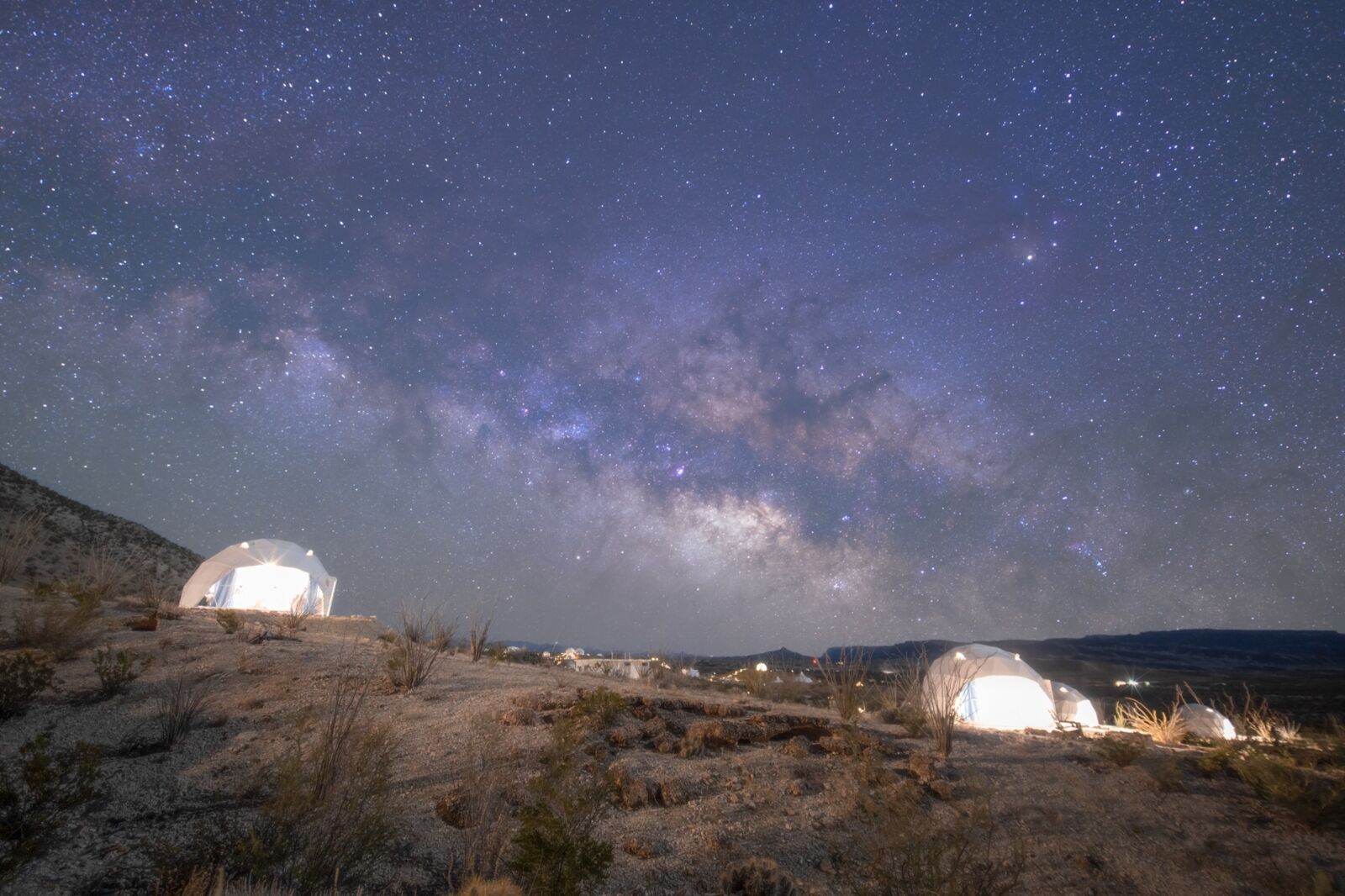
Terlingua is located in far west Texas, about eight hours from Dallas, wedged between Big Bend National Park and Big Bend Ranch State Park in the Chihuahuan Desert. The whole region falls inside the Greater Big Bend International Dark Sky Reserve, the largest certified dark sky place in the world at over 15,000 square miles, which is why the night sky here is dark enough that the Milky Way is visible from horizon to horizon with the naked eye. The Summit occupies 1,000 acres of that desert, and the most sought-after rooms are two caves carved into the side of Tres Cuevas Mountain, on what was a cinnabar mining site — the only cave hotel rooms in Texas. For a different version of the same sky, the Stargazing Domes have a clear ceiling portal positioned directly above the king bed, so you watch the stars move overhead until you fall asleep. 